



Austria
Nine states wrapped around the eastern Alps, where imperial cities give way to glacier valleys inside a two-hour train ride. Austria rewards travelers who pair one grand city with one mountain base, ride the trains between them, and slow down for the coffee houses and the peaks.
Austria splits neatly in two. Give it ten days to two weeks, pair Vienna with an alpine base, and let the trains carry you between the culture and the mountains.
Pack Lightly editorial team
At a glance
- Some of Europe’s safest streets and best-run transport, plus an Alps-and-empire combination few places match. Austria scores 95 for both safety and infrastructure.
- Budget around $60 a day backpacking, $135 mid-range. Alpine Austria runs close to Italy on price and above Spain.
- Late spring through early fall (May, June and September) suits the cities and lakes. December through March is ski season in the west.
- Ten days pairs Vienna with Salzburg and the Salzkammergut lakes. Two weeks adds Tyrol, the high alpine roads or Graz.
- The catch: the two halves pull in opposite seasons. Peak hiking and peak skiing never overlap, so decide which Austria you came for before you book.
Everything to know before you book
The essentials for an Austria trip: entry rules, money, the climate window and power, in one scan.
What Austria does best, and where it doesn’t
Ten categories scored 0 to 100 from tourism data, traveler reports and on-the-ground experience.
Among the safest, best-organized countries in Europe, wrapped around an alpine playground that runs on trains and cable cars. Getting around is effortless and the scenery does the rest.
Alpine prices apply, close to Italy and above Spain. Service tends to be efficient rather than warm, though a little German goes a long way.
Best places to visit in Austria
Twelve destinations that anchor most trips. Filter by region to plan your route.
Vienna
Imperial palaces, Klimt and the coffee houses, wrapped in the grand ring boulevard and one of the easiest big cities in Europe to get around.Salzburg
Mozart’s baroque old town under a hilltop fortress, with the Salzkammergut lakes and the Sound of Music hills on the doorstep.Innsbruck
A cable car from the old town to high peaks in twenty minutes, framed by the Nordkette range and the Habsburg landmarks below.Hallstatt
A cliffside village mirrored in an alpine lake, with the oldest salt mine in the world in the mountains above it. Go early or stay the night.Graz
A red-roofed old town under a clock-tower hill, a lively student and design scene, and Styria’s vineyards and pumpkin-seed-oil country around it.Zell Am See
A lake ringed by peaks with a glacier ski area next door, the classic base for the Grossglockner road and summer hiking alike.Wachau Valley
Terraced vineyards, hilltop abbeys and ruined castles along a bend of the Danube, an easy day trip west from Vienna.Solden
A glacier resort high in the Otztal that skis into early summer, plus a mountaintop film location perched above 10,000 feet / 3,050 m.Grossglockner
The Kaiser-Franz-Josefs-Hohe viewpoint overlooks the Pasterze Glacier along Austria’s highest mountain road.Kitzbuhel
This medieval Tyrolean town hosts the Hahnenkamm downhill race and offers linked ski terrain for about 8,000 residents.St Anton am Arlberg
The Galzigbahn base station anchors this Arlberg ski town, known for heavy snowfall and steep terrain.Melk Abbey
This baroque Benedictine abbey overlooks the Danube about 50 miles / 80 km from Vienna, with a frescoed library and marble hall.The Danube & Upper Austria
Salzburg & the Lakes
Tyrol & the High Alps
Carinthia & the South
Austria at a glance
Click a pin to open that destination guide.


All Austria guides
Every Pack Lightly guide for planning, preparing and exploring the country.
Planning & Logistics
Practical & Preparation
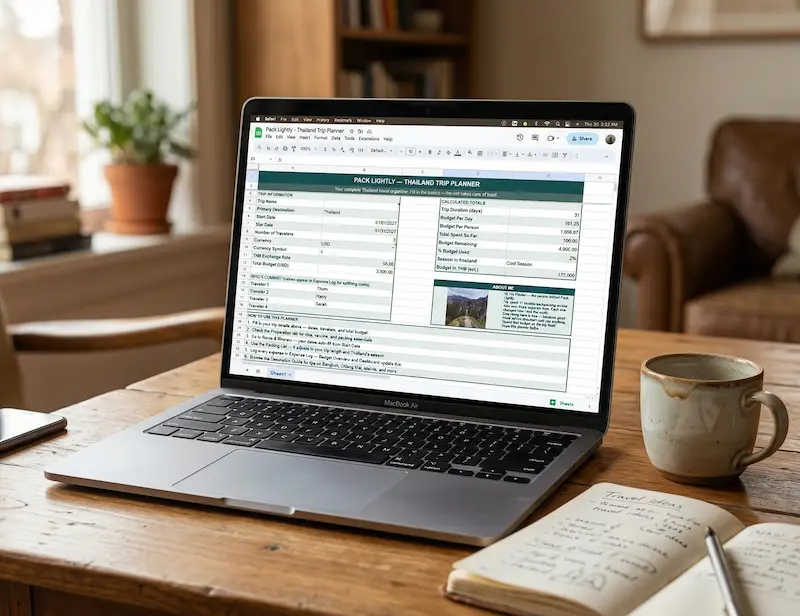
Plan your Austria trip
A free Google Sheets template: itinerary planning, daily expenses, budget tracking and a packing list, with a dashboard that updates as you go.
Get the Free TemplateWhat Austria costs per day
Per person per day in USD, drawn from the Pack Lightly budget calculator. Accommodation and food lead, and the ski resorts run higher.
Austria, month by month
Vienna: temperature (°F) and rainfall (inches). The alpine west runs colder and snowier, but the shoulder-season pattern holds nationwide.
Austria in one first impression
A quick sweep of the country before you plan the trip.

What if…
Austria by trip length
Real day-by-day itineraries, one for each trip length. Pick the time you have and open the full plan.
Feel the vibrant energy of Vienna’s imperial architecture, the serene charm of Salzburg’s baroque streets, and the breathtaking tranquility of Hallstatt’s alpine lake.
See the full day-by-day planExperience the vibrant energy of Vienna’s imperial palaces, then transition to Salzburg’s charming baroque streets. Enjoy the serene lakeside beauty of Hallstatt before immersing yourself in the alpine culture of Innsbruck.
See the full day-by-day planBook your Austria trip
Everything to sort before departure, at the same price as booking direct. It helps keep these guides free.
Before you commit
Why Austria works
It runs on two engines. The east is imperial cities, coffee houses and the Danube; the west is glaciers, ski resorts and the high Alps. Fast trains stitch them together, so one trip can hold both.
Everything works. The transport is punctual, the streets are safe, and the mountains open up on cable cars and cog railways rather than long approach hikes. Order the regional dish and a local wine and you rarely go wrong.
Honest downsides
- Prices are alpine. Austria sits close to Italy and above Spain, and ski-season resort towns climb higher still
- The seasons split. Peak hiking and peak skiing never overlap, and the shoulder weeks in April and November can be quiet to the point of shut
- Hallstatt is mobbed. Day-trip buses fill the tiny lakeside village by mid-morning, so arrive early or sleep over
- Service is formal. Efficient and correct rather than chatty, and a little German is appreciated everywhere
Austria with kids
An easy sell to children: cable cars, salt mines, palace grounds and lake swimming, with cog railways and glaciers that turn a travel day into the outing itself.
Distances between the main bases are short by train, so transfers stay painless. In summer build the day around the lakes and the cool of the mountains; in winter the family ski areas near Zell am See and Innsbruck are made for it.
Frequently asked questions
Do US citizens need a visa for Austria?
No visa for tourism. US citizens can stay in Austria and the wider Schengen Area for up to 90 days within any 180-day period. The ETIAS travel authorization, a quick online pre-approval, is expected to become mandatory at some point during 2026, so check before you fly.
How much does Austria cost per day?
Budget around $60 per person per day backpacking, with hostels, self-catering and bakery lunches. Mid-range is closer to $135 with hotels and restaurant dinners; comfort travel runs $300 and up. Prices sit close to Italy and above Spain, and ski resorts run higher in winter.
When is the best time to visit Austria?
Late spring through early fall (May, June and September) is ideal for the cities and lakes, with warm days and thinner crowds. December through March is ski season in the western Alps. April and November are quiet shoulder weeks when many mountain resorts close between seasons.
Is Austria safe for travelers?
Yes. Austria is one of the safest countries in Europe, with a safety score of 95 in this guide. Violent crime against tourists is very rare. The main considerations are alpine ones: check weather and avalanche reports in winter, and stick to marked trails and cable-car times in the mountains.
How many days do you need in Austria?
Ten days pairs Vienna with Salzburg and the Salzkammergut lakes at a comfortable pace. Two weeks adds Tyrol, the high alpine roads or Graz in the south. A week is enough for a single focus, either the imperial east or the western Alps.
Should you visit Austria in summer or winter?
It depends which Austria you want. Summer is for lake swimming, city sightseeing and alpine hiking, with long days and green valleys. Winter is for skiing and snowboarding in the western resorts, plus Christmas markets in Vienna and Salzburg. The two rarely overlap, so pick the season that matches the trip.
Photo credits: Photo: Renedrivers / Wikimedia Commons, CC BY-SA 3.0 at · Photo: Martin Falbisoner / Wikimedia Commons, CC BY-SA 4.0 · Photo: Bahnfrend / Wikimedia Commons, CC BY-SA 4.0 · Photo: acediscovery / Wikimedia Commons, CC BY 4.0 · Photo: Tournasol7 / Wikimedia Commons, CC BY-SA 4.0 · Photo: Prashanta.guha / Wikimedia Commons, CC BY-SA 4.0 · Photo: MrPanyGoff / Wikimedia Commons, CC BY-SA 3.0 · Photo: Jorge Franganillo / Wikimedia Commons, CC BY 2.0 · Photo: Wikimedia Commons / Wikimedia Commons, CC BY-SA 3.0 · Photo: C.Stadler/Bwag / Wikimedia Commons, CC BY-SA 4.0 · Photo: Nick Savchenko from Kiev, Ukraine / Wikimedia Commons, CC BY-SA 2.0 · Photo: C.Stadler/Bwag / Wikimedia Commons, CC BY-SA 4.0 · Photo: Leo-setä / Wikimedia Commons, CC BY 2.0