
On this page
What Budget Travel Actually Costs in 2026
The ranking below uses one formula, applied the same way to every country: a hostel dorm bed for the night, three street-food or local-canteen meals, and a day of local transport (bus, tuk-tuk, metro or shared taxi). Add those three line items together and the result is a real backpacker day, not a marketing estimate. Long-haul flights, visas and big-ticket activities sit outside this number on purpose, because they swing so much by origin city and season that they would drown out the country-to-country comparison. The full trip-cost math, including flights and a proper weekly total, lives on the travel cost breakdown by country.
| Rank | Country | Region | Hostel/night | Street meal | Backpacker day |
|---|---|---|---|---|---|
| 1 | Nepal | South Asia | $4 | $1 | ~$8 |
| 2 | Cambodia | Southeast Asia | $4 | $1 | ~$9 |
| 3 | Laos | Southeast Asia | $4 | $1 | ~$9 |
| 4 | India | South Asia | $5 | $1 | ~$9 |
| 5 | Vietnam | Southeast Asia | $6 | $1 | ~$11 |
| 6 | Egypt | North Africa | $6 | $1.50 | ~$12.50 |
| 7 | Indonesia | Southeast Asia | $7 | $1.50 | ~$13.50 |
| 8 | Bolivia | South America | $8 | $2 | ~$15 |
| 9 | Morocco | North Africa | $8 | $2 | ~$16 |
| 10 | Guatemala | Central America | $10 | $2 | ~$18 |
| 11 | Colombia | South America | $10 | $3 | ~$20 |
| 12 | North Macedonia | Balkans | $10 | $3 | ~$21 |
Nepal takes the top spot not because it is a poorer country than Cambodia or Laos, but because Kathmandu and Pokhara run a mature backpacker trail with dorm beds and dal bhat refills built around Annapurna trekkers, which pushes prices down further than the raw cost of living would predict. That trail effect matters more than GDP when you are ranking daily cost.
Asia: Still the Value Benchmark
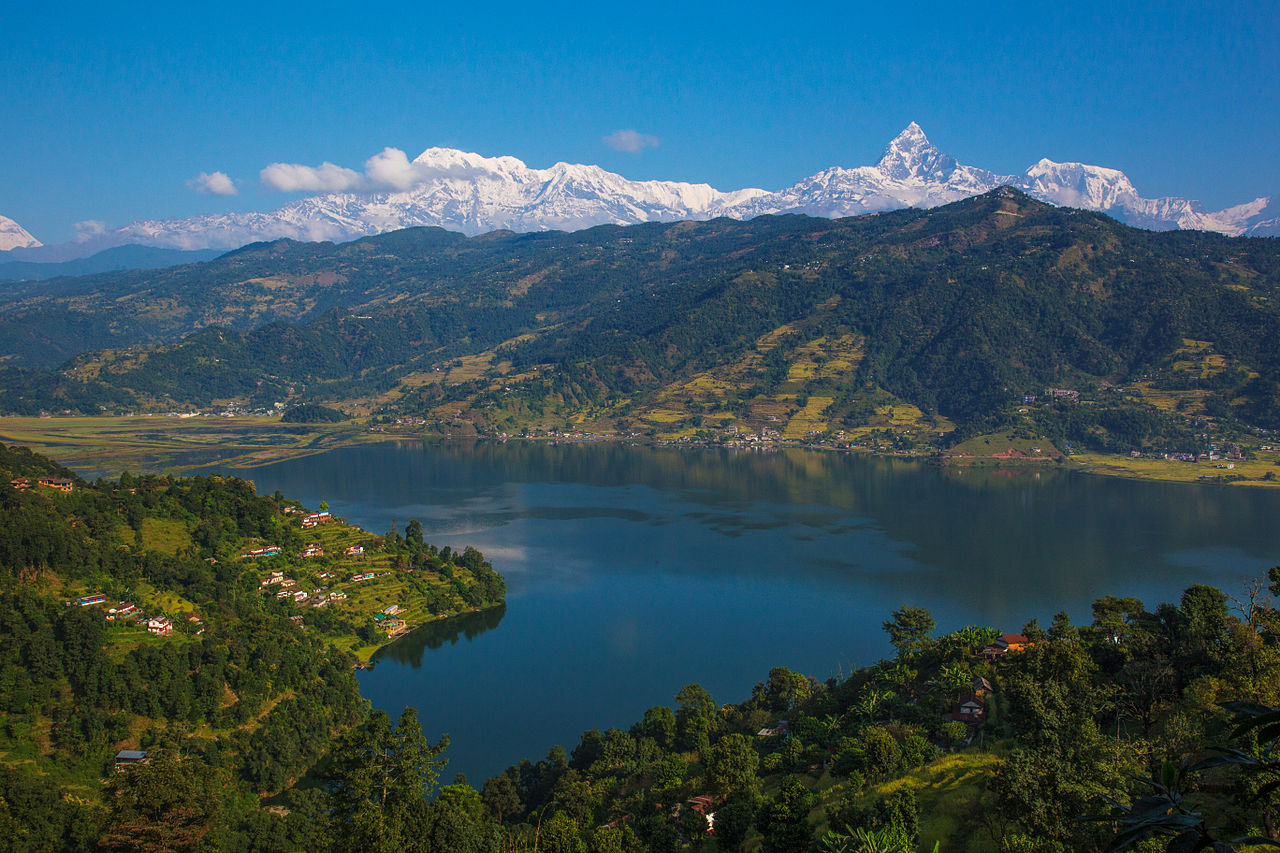
Five of the twelve countries on this list sit in Asia, and that is not an accident of sampling, it is the region where a decade of backpacker infrastructure meets a low cost of local labor. Nepal ($8/day) rewards patience: prices climb the moment you leave a trekking hub for a private guide or a helicopter shortcut, so the budget only holds if you stick to teahouse trekking. Cambodia and Laos (both ~$9/day) run almost identical numbers because both economies are dollarized or near-dollarized, which keeps prices stable and predictable in a way that floating-currency countries are not. India ($9/day) is the outlier of the group: it is cheap everywhere, but the range between a $3 sleeper-class overnight train and a $150 luxury houseboat in Kerala is the widest on this entire list, so the daily average hides more variance than any other country here. Vietnam ($11/day) and Indonesia ($13.50/day) cost more mainly because both have shifted toward mid-range tourism infrastructure in the last five years, private rooms and grab-hailed rides replacing dorm beds and shared minivans as the default. The country-by-country breakdown, including exact city-level hostel and meal prices for all of Southeast and South Asia, is in the cheapest countries in Asia guide, which does not repeat here. For a single-country deep dive, the India budget breakdown and the Vietnam budget breakdown both go city by city.
Key takeaways
- Nepal’s $8/day only holds on the teahouse trekking circuit, not for guided or heli-supported treks.
- Cambodia and Laos price almost identically because both economies are effectively dollarized.
- India’s daily average hides the widest cost range of any country on this list.
Latin America: The Southeast Asia of the Americas

Bolivia is the cheapest country in the Western Hemisphere on this dataset at roughly $15 a day, and the reason is altitude, not poverty in any simple sense: La Paz, Potosi and Sucre sit high enough that food and lodging costs stay tied to the local highland economy rather than the tourist-dollar economy that dominates the Yucatan coast or the Colombian Caribbean. Guatemala (~$18/day) runs the same logic at lower elevation, with Spanish-school towns like Xela and Antigua keeping long-stay travelers in cheap weekly-rate hostels that never show up in a single-night search. Colombia (~$20/day) costs more mainly in Medellin and Cartagena, where a wave of digital-nomad demand over the past few years has pushed co-living rooms and specialty coffee shops toward prices closer to a mid-tier US city, while the coffee-region towns and the Amazon gateway of Leticia still run closer to the Guatemala number. Mexico sits above this list’s threshold once you count its resort coastline, but inland colonial cities like Oaxaca and San Cristobal de las Casas hold much closer to the Central American range, a split covered in full on the Mexico budget breakdown. Nicaragua, still recovering tourist numbers, undercuts even Guatemala in the highland towns around Esteli and Matagalpa, though infrastructure gaps mean the savings come with more travel-time cost. The Guatemala budget breakdown and the Colombia budget breakdown both carry city-level tables.
Europe and the Balkans: The Continent’s Budget Corner
Europe rarely makes a worldwide cheapest-country list, and rightly so for the west of the continent, but the Balkans break the pattern. North Macedonia (~$21/day) is the highest number in this ranking yet still undercuts every Schengen country by a wide margin, because it sits outside the euro zone and outside the EU’s higher minimum-wage floor, which keeps restaurant and transport prices tied to the domestic economy rather than a tourist-adjusted one. Albania runs a similar story along its southern Riviera towns, where a room and a full seafood dinner regularly land under $25 combined outside the July and August coastal peak. Both countries share one practical catch that the daily average does not show: bus and minivan schedules between towns are sparser than in Southeast Asia, so a travel day can cost more in time than in dollars. The full regional ranking, including exact numbers for Albania, Bosnia and Montenegro, is on the cheapest countries in Europe guide.
North Africa: Deserts and Ruins for Less

Egypt (~$12.50/day) is the best value entry-level destination on this entire list for a traveler who wants major world-heritage sites without a Southeast Asia flight, because the Nile Valley’s tourism economy has run at overcapacity for so long that hostel and koshary-stall prices have stayed compressed even as visitor numbers recover. Morocco (~$16/day) costs more mainly in the imperial cities, Marrakech and Fes riads price well above the national average during peak season, while the desert towns around Merzouga and the Atlas foothill villages hold much closer to the Egypt number. Both countries share a practical advantage over the Asia and Latin America entries on this list: short flight times from Europe keep the total trip cost, not just the daily cost, genuinely low for a European traveler, even if the daily number alone ranks them mid-table.
Every number on this page is one input in a full trip budget, not the whole picture. Stack a real itinerary length, flights and activities on top of these daily rates.
How to Actually Hit These Numbers
A daily average is only useful if the traveler actually lands near it, and most first-time budget travelers overshoot by 30 to 50 percent without realizing where the extra spend leaked in. The gap almost never comes from one big splurge, it comes from small daily defaults: booking a hostel the night before instead of shopping around, eating at the restaurant next to the hostel instead of walking two more blocks to the local canteen, and taking a private tuk-tuk because it is easier than finding the shared route. None of that is a moral failing, it is just the default a tired traveler falls into, which is exactly why it is worth naming in advance.
Do
- Book hostels 2 to 3 days ahead, not same-day.
Same-day hostel and hotel bookings run 15 to 25 percent above the advance rate in most of these twelve countries.
- Eat where the queue is local, not where the menu is in English.
A street stall or market canteen full of locals typically runs half the price of the nearest tourist-facing restaurant for the same dish.
- Default to shared transport (local bus, shared taxi, tuk-tuk share) over a private ride.
A private tuk-tuk or taxi routinely costs 3 to 5 times a shared or public equivalent over a full day of moving around.
Don’t
- Don’t exchange currency at the airport.
Airport counters mark up 5 to 10 percent above the mid-market rate; an ATM withdrawal in town beats it almost everywhere on this list.
- Don’t assume a lower headline currency number means a cheaper trip.
A weak exchange rate can hide inflation that has already caught up with local prices; check the real cost, not just the number of zeros.
- Don’t plan a fixed daily budget without a buffer for transit days.
Long-haul travel days (overnight buses, multi-leg flights) regularly run 2 to 3 times a normal day’s spend and quietly wreck a tight average.
Two tools make the planning side of this concrete instead of guesswork. The currency converter catches the real mid-market rate before an airport counter or a bad hostel exchange desk eats into the budget, and the best travel time map flags the shoulder-season windows where hostel and flight prices drop in every one of these twelve countries without the rainy-season trade-off.
Frequently Asked Questions
01What is the cheapest country to travel to in the world?
By hostel, street food and local transport costs combined, Nepal ranks cheapest at roughly $8 a day, followed closely by Cambodia and Laos at around $9 a day. All three depend on staying on the established backpacker trail rather than booking private guides or resort-style stays.
02How much money do I need per day to travel on a budget?
A realistic backpacker day, covering a hostel dorm bed, three meals and local transport, ranges from about $8 in Nepal to around $21 in North Macedonia across the countries on this list. Add roughly 20 to 30 percent on top for activities, visas and the occasional splurge day.
03Is Southeast Asia or Latin America cheaper to travel?
Southeast Asia is cheaper on average: Cambodia, Laos and Vietnam all land between $9 and $11 a day, while even Bolivia, the cheapest Latin American country on this list, runs closer to $15. The gap comes mainly from Latin America’s higher baseline transport and meal costs outside the highland regions.
04What is the cheapest country to visit in Europe?
North Macedonia and Albania are the cheapest countries to visit in Europe, both landing full backpacker days under $25 outside their July and August coastal peaks. Both sit outside the euro zone, which keeps domestic prices from tracking western European tourist rates.
05Can I really travel on $20 a day?
Yes, in nine of the twelve countries on this list a $20 daily budget covers a hostel bed, three meals and local transport with room to spare. It gets tighter in Colombia and North Macedonia, where $20 covers the basics but leaves little buffer for activities or a transit day.
06Do visa fees change which countries are actually cheapest?
Yes, and it can reorder the list. Egypt and Indonesia both charge a visa-on-arrival fee in the $25 to $35 range, which adds roughly two to three days of local spending to a short trip, while Nepal, Cambodia and most of the Balkans keep visa costs low or waived for many nationalities.
Photo credits: Photo: Diego Delso / Wikimedia Commons, CC BY-SA 4.0 (header image) · Photo: Diego Delso / Wikimedia Commons, CC BY-SA 4.0 · Photo: Jmhullot / Wikimedia Commons, CC BY-SA 3.0 · Photo: Javier Perez Montes / Wikimedia Commons, CC BY-SA 4.0 · Photo: Bjørn Christian Tørrissen / Wikimedia Commons, CC BY-SA 3.0