



Cape Verde
Ten volcanic islands scattered in the Atlantic off West Africa, half of them beach and half of them mountain. Cape Verde runs on trade winds, Creole rhythm and a pace that rewards travelers who pick one or two islands and stay put.
Cape Verde earns a slower trip. Give it ten days, pick two islands, and let the wind set the schedule.
Pack Lightly editorial team
At a glance
- One of Africa’s safest and most relaxed destinations, scoring 85 for downtime and 80 for safety.
- Budget around $55 a day on a backpacker pace, closer to $130 mid-range in a beach resort.
- The dry, breezy window runs November through June. Sal and the eastern islands stay warm year round.
- One island suits a week. Two islands, one flat and one mountainous, fill ten days without rushing.
- The catch: inter-island travel eats time and money, and ferry schedules shift often, so build slack around every hop.
Everything to know before you book
The essentials for a Cape Verde trip: entry, money, climate window and power, in one scan.
What Cape Verde is, and what it isn’t
Ten categories scored 0 – 100 from tourism data, traveler reports and on-the-ground experience.
Cape Verde is built for slow beach days and easy encounters. It feels calm, safe and welcoming in a way few destinations manage.
Island logistics carry a cost, and services thin out fast once you leave the resort strips on Sal and Boa Vista. Plan around it rather than fight it.
Best places to visit in Cape Verde
Twelve island anchors most first trips: Sal, the flat, wind-swept beach hub in the northeast.
Sal
Flat, dry and built for the beach. Santa Maria’s long white sand and steady trade winds make Sal the country’s resort and kitesurfing capital, and the easiest island to fly into.Praia
Waves crash at Quebra Canela beach as locals gather for sunset in Cape Verde’s capital.Santa Maria
Fishing boats work the pier along Santa Maria’s long sandy beach in the salt breeze.Sao Vicente
Funana music spills from waterfront bars along Avenida Marginal in the port city of Mindelo.Sao Filipe
Cobbled streets and colonial architecture define this main town on Fogo Island.Pico do Fogo
Volcanic soil scent mixes with crisp mountain air at Cha das Caldeiras, below the peak.Cidade Velha
This historic coastal town near Praia holds UNESCO World Heritage sites as the first European settlement in the tropics.Sao Nicolau
Quiet hiking trails lead through this rugged island to the old town of Ribeira Brava.Pedra de Lume
This village on Sal’s east coast is known for its salt-mining crater and hyper-saline floating pools.Tarrafal
A palm-backed bay gives this Santiago town the island’s calmest swimming beach.Cha Das Caldeiras
The sun sets over vineyards inside this volcanic caldera on Fogo Island.Maio
Long, empty white-sand beaches and salt flats mark this flat, sleepy island near Santiago.Cape Verde at a glance
Click a pin to open that destination guide.


All Cape Verde guides
Every Pack Lightly guide for planning, preparing and exploring the country.
Planning & Logistics
Practical & Preparation
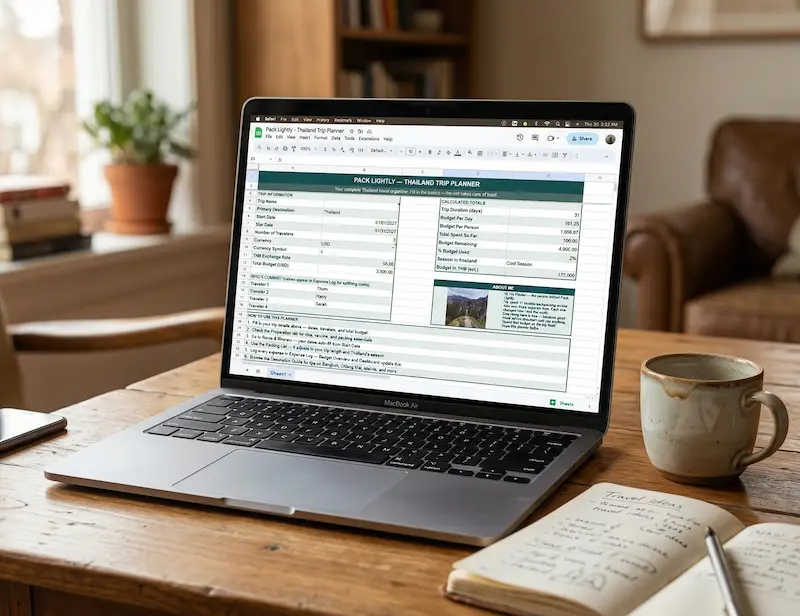
Plan your Cape Verde trip
A free Google Sheets template: itinerary planning, daily expenses, budget tracking and a packing list, with a dashboard that updates as you go.
Get the Free TemplateWhat Cape Verde costs per day
Per person per day in USD, drawn from the Pack Lightly budget calculator. Accommodation and inter-island flights are the biggest lines.
Cape Verde, month by month
Sal and the eastern beach islands: temperature (°F) and rainfall (inches). Warm and dry all year, with a short humid spell late summer.
What if…
Cape Verde by trip length
Real day-by-day itineraries, one for each trip length. Pick the time you have and open the full plan.
Feel the sun on your skin as you transition from the flat beaches of Sal Island to the surreal salt flats of Pedra de Lume, and finally to the sweeping dunes of Santa Maria.
Experience the stark contrast between Sal’s sun-soaked beaches, Praia’s vibrant markets, and Sao Vicente’s lively music scene. Sal offers endless kite surfing and salt flats, while Praia immerses you in colonial history.
See the full day-by-day planBook your Cape Verde trip
Everything to sort before departure, at the same price as booking direct, and it helps keep these guides free.
Before you commit
Why Cape Verde works
It is two trips in one archipelago. The eastern islands, Sal and Boa Vista, are flat, dry and all about the beach and the wind. The western islands, Santo Antao, Fogo and Sao Vicente, bring green valleys, a live volcano and the country’s music scene.
The draw is the mix of easy and wild. You can spend a whole week barefoot on Sal, or trade the sand for a mountain ridge a short flight away. Add year-round warmth and a genuinely safe, friendly feel, and the long-ish flight starts to make sense.
Honest downsides
- Island logistics cost you, both in time and money, since every hop means a flight or a shifting ferry schedule
- Infrastructure thins fast once you leave the resort strips, with rough roads and limited services on the smaller islands
- Sal itself is stark, a flat desert island where the beach, not the scenery, is the point
- It is windy, which is a gift for kiters but can wear on anyone hoping for still, glassy beach days
Cape Verde with kids
The beach islands are an easy family choice: safe, warm, and packed with gentle-water resorts on Sal and Boa Vista that run kids’ clubs and shallow swimming.
Catamaran trips, salt-pool floats at Pedra de Lume and turtle-watching in season keep it interesting. Skip the ambitious island-hopping with young children, since the transfers are the one real strain.
Frequently asked questions
Do US citizens need a visa for Cape Verde?
No visa is required for stays of up to 30 days, but you must register and pay the airport security fee online through the EASE platform before you arrive. Keep the confirmation on your phone for immigration.
How much does Cape Verde cost per day?
Budget around $55 per person per day on a backpacker pace with guesthouses and self-catering. Mid-range in a beach resort runs closer to $130, and comfort travel with inter-island flights and better hotels is $290 and up. Flights between islands are the line that surprises people.
What’s the best time to visit Cape Verde?
November through June is the dry, breezy window and the best all-round time, with warm days and reliable wind for watersports. August to October is hotter and more humid with a few short rains, though the beach islands stay pleasant year round.
Is Cape Verde safe for tourists and solo travelers?
Yes. Cape Verde is one of the safer countries in the region and scores well for friendliness. Petty theft happens in nightlife areas and around Praia, so use normal city sense, but violent crime against visitors is rare and solo travel is common.
How long do you need in Cape Verde?
A week is enough for one island, usually Sal or Boa Vista for the beaches. Ten days lets you add a mountain island like Santo Antao or Fogo without rushing. Two weeks covers three islands at a relaxed pace with time for the ferries.
How do you get between the islands in Cape Verde?
By plane or by ferry. Domestic flights link the main islands in under an hour and are the reliable option, while ferries are cheaper but run on schedules that shift with the sea and weather. Book flights ahead in the busy winter season.
Photo credits: Photo: Cayambe / Wikimedia Commons, CC BY-SA 3.0 · Photo: Cayambe / Wikimedia Commons, CC BY-SA 3.0 · Photo: Miguel Discart from Bruxelles, Belgique / Wikimedia Commons, CC BY-SA 2.0 · Photo: Herbert wie / Wikimedia Commons, CC BY-SA 4.0 · Photo: Cayambe / Wikimedia Commons, CC BY-SA 3.0 · Photo: IDS.photos from Tiverton, UK / Wikimedia Commons, CC BY-SA 2.0 · Photo: Cayambe / Wikimedia Commons, CC BY-SA 3.0