



Cook Islands
Fifteen islands scattered across a slice of the South Pacific the size of Western Europe, self-governing but tied to New Zealand. Rarotonga is the green volcanic hub, Aitutaki holds one of the most photographed lagoons on earth, and the pace never rises above a Sunday.
The Cook Islands reward travelers who slow down and stay put. Pick Rarotonga as a base, add a few nights on Aitutaki, and let the lagoon set the schedule.
Pack Lightly editorial team
At a glance
- Ties the top score, 95, for both relaxation and friendliness. This is a place to unwind and swim, not to tick off sights.
- Aitutaki’s lagoon ranks among the most beautiful on the planet, and it is the single reason to fly this far south.
- The drier season runs April to November, with less rain and lower humidity. December to March is the wet, cyclone-risk stretch.
- Ten days is plenty: a week on Rarotonga plus two or three nights on Aitutaki covers the highlights without rushing.
- The catch: everything is imported and priced accordingly. Groceries, fuel and the short flight to Aitutaki all cost more than the beach setting suggests.
Everything to know before you book
The essentials for a Cook Islands trip: entry rules, money, the climate window and power, in one scan.
What the Cook Islands do best, and where they don’t
Ten categories scored 0 to 100 from tourism data, traveler reports and on-the-ground experience.
Relaxation and friendliness tie at the top, and the lagoons back up the nature score. This is a low-crime, low-stress island stay where locals actually welcome you.
Almost everything arrives by ship or plane, so food, fuel and the Aitutaki hop run high. Value is the one category that consistently disappoints.
Best places to visit in the Cook Islands
The one destination worth building a trip around, plus the lagoon that anchors it.
Aitutaki
A triangular lagoon ringed by uninhabited motu, with water so clear the shadows of the fish land on the sand. Fly over from Rarotonga and spend a full day on the lagoon cruise to One Foot Island.Rarotonga
Muri Beach’s shoreline softens under sunset light on the main island of the Cook Islands.Muri Beach
Paddle motus dot the lagoon at this white sand beach on Rarotonga’s east coast.Aitutaki Lagoon
Boats depart Arutanga Harbor for lagoon cruises across this multi-hued atoll north of Rarotonga.One Foot Island
This uninhabited motu in Aitutaki’s lagoon has a tiny post office that stamps visitor passports.Avarua
Local markets and cafes line the Cook Islands capital on Rarotonga’s north coast.Punanga Nui Market
Fresh fruit and local crafts fill this open-air market on Avarua’s waterfront every Saturday morning.Atiu
Swiftlets call inside limestone caves near Mapumai village on this raised coral outer island.Black Rock
The sky turns vibrant hues as the sun dips below the horizon at this beach.Wigmores Waterfall
A cool pool at the base of this waterfall offers a refreshing dip after the hike.Cross Island Track
Rushing water at Wigmore’s Waterfall drowns out other sounds along this jungle hiking route.Mangaia
Waves lap gently against black sand beaches along the edge of this outer island’s turquoise lagoon.Outer Islands & Lesser-Known Spots
The Cook Islands at a glance
Click a pin to open that destination guide.


All Cook Islands guides
Every Pack Lightly guide for planning, preparing and exploring the country.
Planning & Logistics
Practical & Preparation
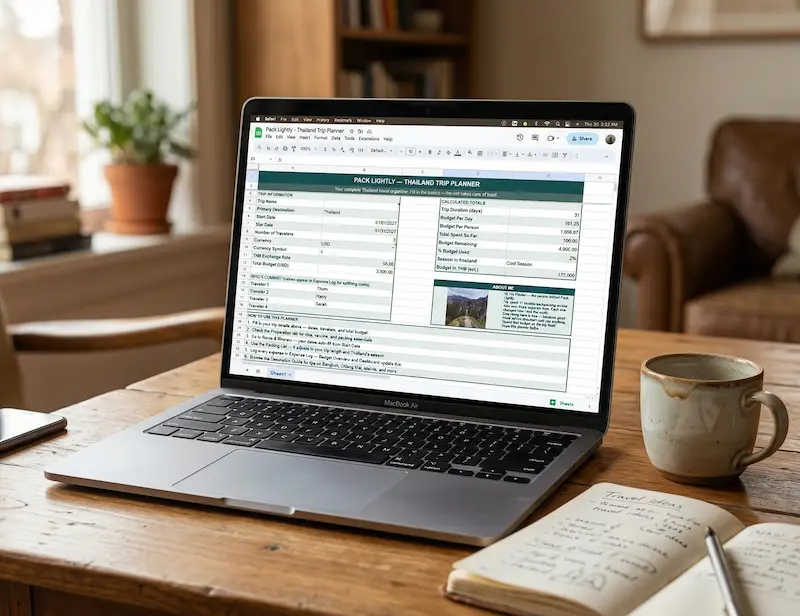
Plan your Cook Islands trip
A free Google Sheets template: itinerary planning, daily expenses, budget tracking and a packing list, with a dashboard that updates as you go.
Get the Free TemplateWhat the Cook Islands cost per day
Per person per day in USD, drawn from the Pack Lightly budget calculator. Imported goods and the Aitutaki flight push everything higher than the beach setting suggests.
Cook Islands, month by month
Rarotonga temperature (°F) and rainfall (inches). Averaged from 2021-2023 records.
What if…
Cook Islands by trip length
Real day-by-day itineraries, one for each trip length. Pick the time you have and open the full plan.
Feel the sun on your skin as you trek across Rarotonga’s volcanic peaks, then glide through the tranquil waters of Muri Lagoon, and finally, bask in the stunning beauty of Aitutaki’s crystal-clear lagoon.
See the full day-by-day planFeel the vibrant pulse of Rarotonga’s markets, then transition to the serene wilderness of the Cross-Island Trek Region, where lush jungles and stunning summits await.
See the full day-by-day planBook your Cook Islands trip
Everything to sort before departure, at the same price as booking direct. It helps keep these guides free.
Before you commit
Why the Cook Islands work
This is Polynesia without the resort-strip scale of Fiji or the price tag of Bora Bora. Rarotonga is small enough to circle by scooter in an afternoon, and the welcome is genuinely warm rather than staged.
English is official alongside Cook Islands Māori, the currency is the New Zealand dollar, and US citizens get 31 days visa-free. The logistics are easy; the hard part is only getting here.
Honest downsides
- It is expensive. Nearly everything is imported, so groceries, fuel and dining run well above the beach-shack look
- Getting here is long. Most routes connect through Auckland, and the seasonal Los Angeles direct does not run year-round
- Aitutaki is a separate flight. The short hop from Rarotonga is pricey and books out in peak season
- Sundays go quiet. Church shapes the day and many places close, so plan food and activities around it
The Cook Islands with kids
Calm, shallow lagoons make this an easy sell for families: Muri Beach on Rarotonga and the Aitutaki lagoon are safe for young swimmers and full of fish to spot with a mask.
Distances are tiny, the crime rate is low, and locals dote on children. Build in shade and midday breaks, and let the island bus, which loops all day, become part of the fun.
Frequently asked questions
Do US citizens need a visa for the Cook Islands?
No visa for tourism. US citizens can stay up to 31 days, provided you arrive with an onward or return ticket and proof of pre-booked accommodation. Extensions are possible locally for longer stays.
How much does a Cook Islands trip cost per day?
Budget around $90 per person per day, with a guesthouse, self-catering and simple meals. Mid-range is closer to $200 with a hotel and restaurant dinners; comfort travel runs $500 and up. Imported goods and the Aitutaki flight push costs higher than the setting suggests.
When is the best time to visit the Cook Islands?
The drier season from April to November is best, with less rain, lower humidity and warm days around the high 70s Fahrenheit. December to March is the wet season with heavier rain and cyclone risk, though temperatures stay warm year-round.
Are the Cook Islands safe for travelers?
Yes. The Cook Islands are one of the safer destinations in the South Pacific, with a safety score of 90 in this guide. Serious crime is rare. The main risks are ocean-related, such as strong reef currents, and road safety on scooters.
How many days do you need in the Cook Islands?
Seven days is a comfortable minimum: five or six on Rarotonga plus a day or two on Aitutaki. Ten days lets you slow down and add extra lagoon time, while two weeks suits anyone wanting to add remote islands or simply do nothing by the water.
Is Aitutaki worth the extra flight?
Yes. Aitutaki’s lagoon is the main reason to fly to the Cook Islands, and the short flight from Rarotonga is the only practical way to reach it. Aim to stay two or three nights rather than day-tripping so you see the lagoon in the best light.
Photo credits: Photo: Mr Bullitt / Wikimedia Commons, CC BY 2.5 · Photo: Gemma Longman / Wikimedia Commons, CC BY 2.0