



Egypt
The pyramids are only the opening act. Egypt runs 4,000 years of temples, tombs and desert down the length of the Nile, and it rewards travelers who trade the tour bus for a few slow days on the water.
Egypt delivers more history per mile than almost anywhere. Give it ten days to two weeks, base around the Nile, and let a cruise or an overnight train handle the distances.
Pack Lightly editorial team
At a glance
- Culture and history score a top 95, and the ancient sites earn it: Giza, Karnak and the Valley of the Kings are the real thing.
- Budget around $30 a day backpacking, $70 mid-range. This is one of the cheaper trips covered in this guide.
- October through April is the window. Summer in the south is brutal, with Luxor and Aswan pushing past 105°F / 41°C.
- Ten days covers Cairo plus a Nile stretch. Two weeks adds Abu Simbel, the Red Sea or the Western Desert.
- The catch: constant hustle at the big sites and uneven infrastructure mean you trade some comfort for the history.
Everything to know before you book
The essentials for an Egypt trip: visa, money, climate window and power, in one scan.
What Egypt is, and what it isn’t
Ten categories scored 0 – 100 from tourism data, traveler reports and on-the-ground experience.
Egypt is a history trip first, and few places on Earth compete. Prices stay low, and the hospitality is genuine once you get past the touts.
Infrastructure is uneven and the hustle at big sites is relentless. Most trips are trouble-free, but stay alert to scams and check current advisories for the Sinai interior.
Best places to visit in Egypt
Twelve anchors for most Egypt trips, from the pyramids on Cairo’s edge to the temple cities of the south.
Pyramids of Giza
The last standing wonder of the ancient world: three pyramids and the Sphinx on the edge of the city. Go at opening time, before the heat and the crowds settle in.Cairo
A sprawling capital on the Nile: the Egyptian Museum, the mosques of Islamic Cairo and the maze of Khan el-Khalili, loud and rewarding in equal measure.Luxor
The open-air museum of the south: Karnak, Luxor Temple and the royal tombs of the Valley of the Kings, all within a short drive or river crossing.Saqqara
A desert necropolis near Cairo, home to the Step Pyramid of Djoser.Dahshur
A quiet pyramid field 25 miles / 40 km south of Cairo with the Bent and Red Pyramids built for Sneferu.Memphis
The ruins of Egypt’s ancient capital, marked by a colossal statue of Ramses II.Aswan
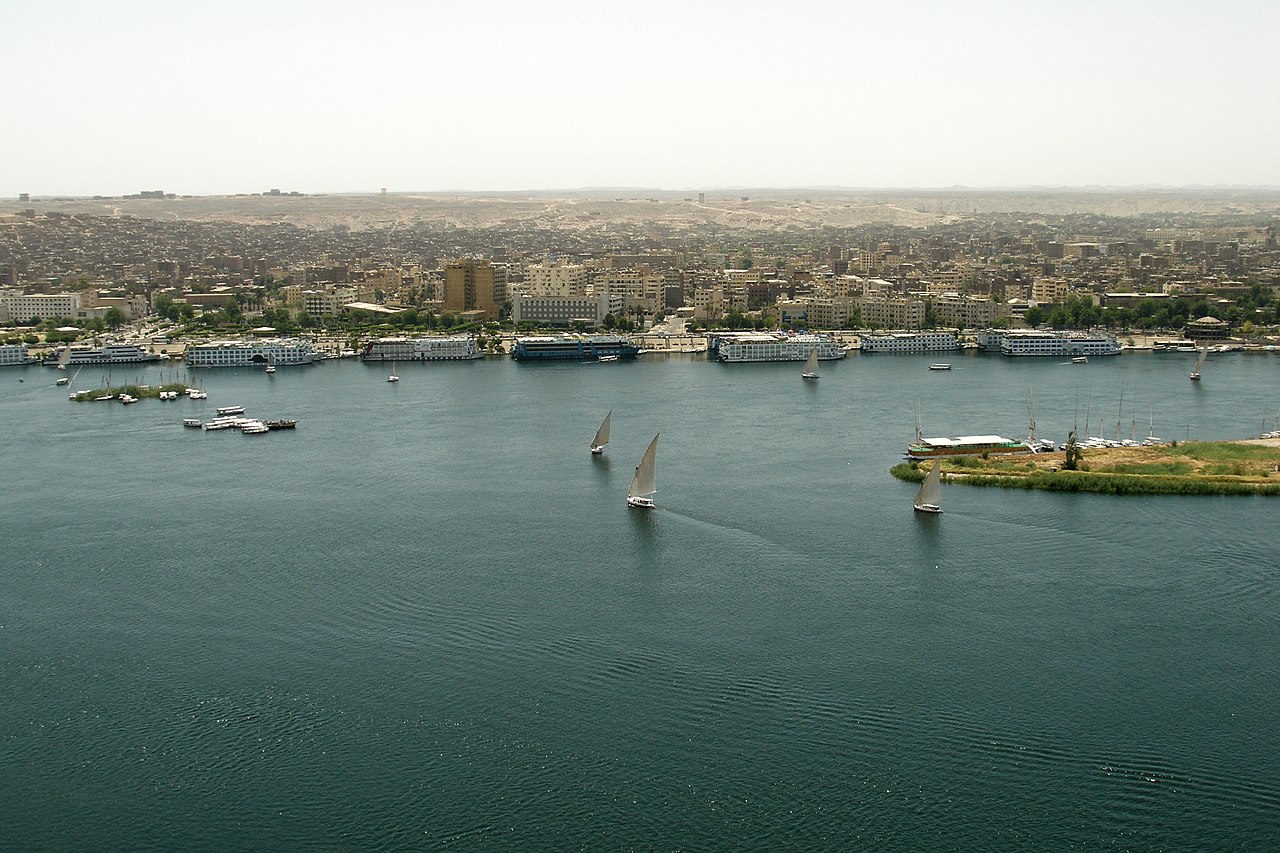
A Nile river city where feluccas glide past granite cliffs near Elephantine Island.Abydos
A temple site holding the intricate reliefs of the Temple of Seti I.Dendera
A temple complex near Qena famed for the well preserved Temple of Hathor.Edfu
A Nile town with a central market just a few blocks from the waterfront.Esna
A Nile town known for its bustling market filled with spice vendors.Kom Ombo
A river town with a bustling market of spices and fresh produce near its double temple.Sinai & Red Sea Coast
Western Desert Oases
Mediterranean & Delta
Ancient Sites & Nile
Egypt at a glance
Click a pin to open that destination guide.
All Egypt guides
Every Pack Lightly guide for planning, preparing and exploring Egypt.
Planning & Logistics
Practical & Preparation




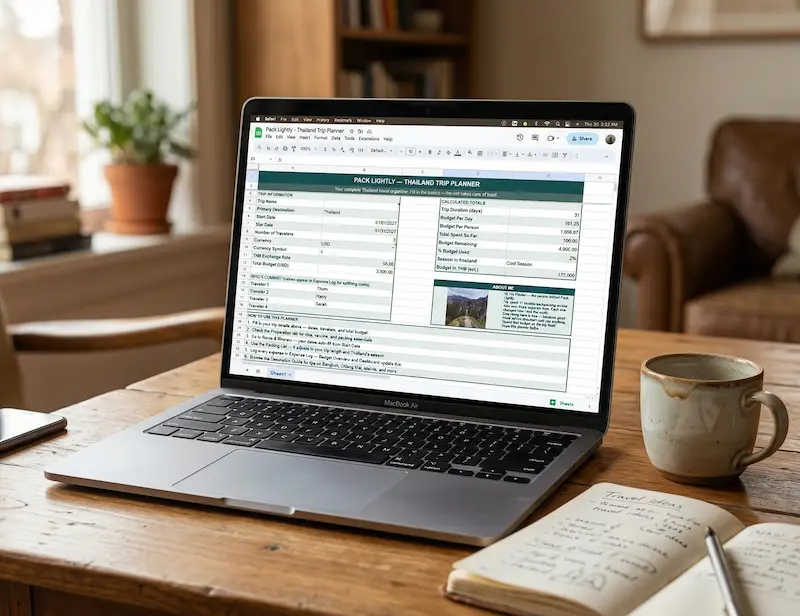
Plan your Egypt trip
A free Google Sheets template: itinerary planning, daily expenses, budget tracking and a packing list, with a dashboard that updates as you go.
Get the Free TemplateWhat Egypt costs per day
Per person per day in USD, drawn from the Pack Lightly budget calculator. Sightseeing and Nile boats are the lines that move most.
Egypt, month by month
Cairo temperature (°F) and rainfall (inches). The Nile Valley runs hotter still: Luxor and Aswan add roughly 10°F / -12°C in summer.
What if…
Egypt by trip length
Real day-by-day itineraries, one for each trip length. Pick the time you have and open the full plan.
Experience the stark contrasts of Egypt’s landscapes: the bustling streets of Cairo, the serene temples of Luxor, and the tranquil Nile in Aswan.
See the full day-by-day planExperience the stark contrast between the bustling streets of Cairo, where the air is filled with the scent of spices and the sounds of honking horns, and the serene beaches of the Red Sea, where the sun sets over tranquil waters.
See the full day-by-day planExperience the stark contrast between Cairo’s bustling streets and the serene beaches of the Red Sea. Over three weeks, immerse in the rich history of the Giza pyramids, the grandeur of Luxor’s temples, and the tranquil waters of Aswan.
See the full day-by-day planBook your Egypt trip
Everything to sort before departure. Same price as booking direct, and it helps keep these guides free.
Before you commit
Why Egypt works
Nowhere else stacks this much ancient history in one trip. Giza, Karnak, the Valley of the Kings and Abu Simbel are the originals, not reconstructions, and they are close enough to link in under two weeks.
It is also cheap by any measure. Food, transport and guides cost a fraction of what they do in Europe, so the budget goes to the experiences: a Nile cruise, a private Egyptologist, a dawn balloon over Luxor.
Honest downsides
- The hustle is constant at big sites: expect touts, camel-ride pitches and steady requests for tips (baksheesh)
- Summer heat is extreme in the south, with Luxor and Aswan regularly above 105°F / 41°C from June to August
- Infrastructure is uneven: queues, crowd control and site upkeep vary a lot day to day
- Check advisories for the Sinai interior and the Western Desert border zones before planning routes there
Egypt with kids
Kids who like pyramids and mummies get the trip of their lives, and a Nile cruise turns the travel days into the fun part rather than dead time between sites.
Heat is the real constraint. Aim for the cooler months, start sightseeing early, and keep afternoons free for the hotel pool. Camel and horse-cart rides at Giza are easy wins between the walking.
Frequently asked questions
Do US citizens need a visa for Egypt?
Yes. US passport holders need a tourist visa, most easily bought online as an e-visa before departure. A visa on arrival is also sold at major airports for about $25, single entry, valid for a 30-day stay. Keep US dollars handy for the on-arrival option.
How much does Egypt cost per day?
Budget around $30 per person per day backpacking, using guesthouses, local food and shared transport. Mid-range is closer to $70 with better hotels and a guide or two; comfort travel runs $160 and up. Egypt is one of the cheaper destinations in this guide.
What’s the best time to visit Egypt?
October to April is the comfortable window, with warm days and cool nights across the Nile Valley. December and January are peak season. Summer, from May to September, is very hot, and Luxor and Aswan can pass 105°F / 41°C, so plan early starts and midday breaks.
Is Egypt safe for tourists and solo travelers?
Most Egypt trips along the standard Nile and Red Sea routes are trouble-free, and the main annoyance is persistent touts rather than danger. Solo travelers, especially women, should expect attention and dress modestly. Check your government advisory for the Sinai interior and remote desert border zones before going.
How long do you need in Egypt?
Ten days covers Cairo, the Pyramids of Giza and a Nile stretch from Luxor to Aswan at a reasonable pace. Two weeks adds Abu Simbel, a few days on the Red Sea, or a desert side trip. A week is enough for Cairo plus Luxor if you fly between them.
Is a Nile cruise worth it in Egypt?
For most travelers, yes. A cruise between Luxor and Aswan links the great riverside temples, Edfu and Kom Ombo among them, with no repacking or long road transfers. Multi-night boats range from budget to luxury; a felucca sail is the slower, simpler alternative for a night or two.
Photo credits: Photo: Fotograf/Photographer: Peter J. Bubenik (1995) / Wikimedia Commons, CC BY-SA 2.0 · Photo: youssef_alam / Wikimedia Commons, CC BY 3.0 · Photo: Marc Ryckaert (MJJR) / Wikimedia Commons, CC BY 3.0 · Photo: Vyacheslav Argenberg / Wikimedia Commons, CC BY 4.0 · Photo: Ahmed Ragheb 97 / Wikimedia Commons, CC BY-SA 3.0 · Photo: Tanya Dedyukhina / Wikimedia Commons, CC BY 3.0 · Photo: Jorge Láscar from Melbourne, Australia / Wikimedia Commons, CC BY 2.0 · Photo: René Hourdry / Wikimedia Commons, CC BY-SA 4.0