



Eswatini
A tiny landlocked kingdom wedged between South Africa and Mozambique, ruled by one of the last absolute monarchies on earth. Eswatini packs rhino-tracking reserves, mountain hiking and living Swazi culture into a country you can cross in an afternoon, which makes it the easiest wildlife-and-culture add-on to a South Africa trip.
Eswatini is a side trip, not a headline, and it works best that way. Give it three to five days between Kruger and the coast, base in the Ezulwini Valley, and let the reserves and the crafts markets set the pace.
Pack Lightly editorial team
At a glance
- One of the friendliest, most culturally intact countries in southern Africa. Eswatini scores 90 for friendliness and 85 for culture, its two strongest cards.
- Cheap by regional standards: around $40 a day backpacking, $100 mid-range. The lilangeni is pegged to the South African rand, so prices track South Africa.
- The dry winter (May to September) is prime for wildlife, with thinned bush and animals drawn to water. Summer is green, humid and wetter.
- Three to five days covers the wildlife reserves, the Ezulwini and Malkerns valleys and a cultural village. It slots neatly onto a South Africa or Mozambique route.
- The catch: tourist infrastructure is thin and public transport is unreliable, so a rental car or a booked transfer is close to essential. This is not a place to wing it on local minibuses.
Everything to know before you book
The essentials for an Eswatini trip: entry rules, money, the climate window and power, in one scan.
What Eswatini does best, and where it doesn’t
Ten categories scored 0 to 100 from tourism data, traveler reports and on-the-ground experience.
Warm, unhurried people and a monarchy that keeps Swazi tradition genuinely alive, not staged for tour buses, are the real reason to come. Compact reserves put rhino, hippo and hiking within easy reach.
Tourism plumbing is basic: limited flights, patchy signage and unreliable public transport. A rental car or a booked driver turns a frustrating trip into an easy one.


Best places to visit in Eswatini
Every destination guide for the country, grouped by area.
Lobamba
The traditional and legislative capital sits in the Ezulwini Valley, home to the national museum and royal residences.Mantenga Falls
A waterfall in the Ezulwini Valley set within a nature reserve, near the Mantenga Cultural Village.Manzini
Eswatini’s largest city and commercial hub has a population of around 110,000 and a well-known craft market.Mbabane
The administrative capital sits in the Highveld, centered on the Swazi Market with spices and handmade crafts.Sibebe Rock
A vast granite dome just north of Mbabane, drawing hikers for its steep ascent and sweeping views.Lowveld & Wildlife Reserves
Highveld Valley & Villages
Eswatini at a glance
Click a pin to open that destination guide.
All Eswatini guides
Every Pack Lightly guide for planning, preparing and exploring the country.
Planning & Logistics
Practical & Preparation
Nature & Activities
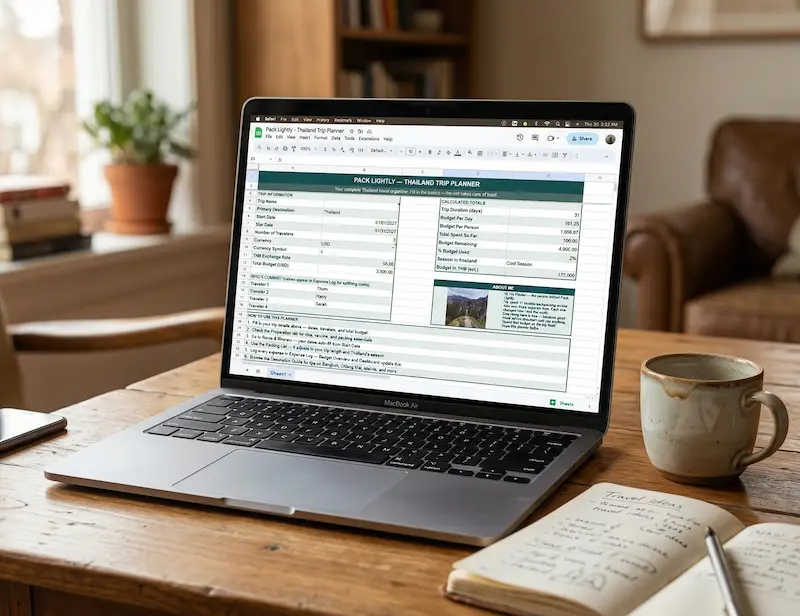
Plan your Eswatini trip
A free Google Sheets template: itinerary planning, daily expenses, budget tracking and a packing list, with a dashboard that updates as you go.
Get the Free TemplateWhat Eswatini costs per day
Per person per day in USD, drawn from the Pack Lightly budget calculator. Prices track South Africa through the currency peg, and a rental car is the line that moves the total most.
Eswatini, month by month
Mbabane temperature (°F) and rainfall (inches). Averaged from 2021-2023 records.
What if…
Eswatini by trip length
Real day-by-day itineraries, one for each trip length. Pick the time you have and open the full plan.
Experience the vibrant craft markets of Ezulwini, the wildlife adventures in Mlilwane, and the thrilling big game safaris in Hlane.
Experience the vibrant pulse of Mbabane, where bustling markets and local street food awaken your senses.
Book your Eswatini trip
Everything to sort before departure, at the same price as booking direct. It helps keep these guides free.
Before you commit
Why Eswatini works
It is small, safe and welcoming, with a monarchy that keeps Swazi tradition alive as daily life rather than performance. The reserves are compact and low-key, so rhino, hippo, zebra and mountain trails all sit within an easy drive of one valley base.
As an add-on to South Africa it is hard to beat: a short border crossing buys you a completely different culture, cheaper prices and reserves you will often have close to yourself.
Honest downsides
- Thin infrastructure. Few international flights, limited signage and unreliable public transport make a rental car or booked driver close to essential
- Malaria in the lowveld. The eastern regions around Hlane carry a seasonal risk, so ask a doctor about prophylaxis
- Small in scope. This is a short stop, not a two-week destination. Three to five days is the sweet spot
- Political context. Eswatini is an absolute monarchy and has seen periodic unrest; check current advisories before you travel
Eswatini with kids
An easy sell for families. Mlilwane lets children walk and cycle safely among grazing zebra, warthog and antelope, and the distances between sights are short, so there are no marathon drive days.
Add a craft-market afternoon and a cultural village show, keep the lowveld malaria zone in mind for younger children, and the whole country reads as a gentle, low-stress introduction to African wildlife.
Frequently asked questions
Do US citizens need a visa for Eswatini?
No visa for tourism. US citizens can enter Eswatini visa-free for stays of up to 30 days, extendable on request. Your passport should be valid for at least six months beyond your arrival date and have a couple of blank pages for the border stamps.
How much does Eswatini cost per day?
Budget around $40 per person per day backpacking, with guesthouses, self-catering and local meals. Mid-range is closer to $100 with lodges and guided activities; comfort travel runs $280 and up. The lilangeni is pegged to the South African rand, so prices track South Africa.
When is the best time to visit Eswatini?
The dry winter, May to September, is best for wildlife: the bush thins out, animals gather at water, and days are sunny and mild. The summer months, October to April, are green and warm but humid, with heavy afternoon storms and higher malaria risk in the lowveld.
Is Eswatini safe for travelers?
Generally yes, with a safety score of 80 in this guide. Tourist areas and reserves are calm and violent crime against visitors is rare. Petty theft happens in town centers, and the country has seen periodic political unrest, so keep an eye on current advisories and avoid demonstrations.
How many days do you need in Eswatini?
Three to five days is the sweet spot. That covers the main wildlife reserves at Mlilwane and Hlane, the Ezulwini and Malkerns valleys, and a cultural village or craft market, without rushing. As a side trip from South Africa, even two or three nights is worthwhile.
Is it Eswatini or Swaziland?
Both name the same country. In 2018, King Mswati III officially renamed Swaziland to the Kingdom of Eswatini, the siSwati name meaning land of the Swazi. Older maps and guides still say Swaziland, but Eswatini is now the official name in use.
Photo credits: Photo: Vaiz Ha / Wikimedia Commons, CC BY 2.0 · Photo: Nomsa Skosana / Wikimedia Commons, CC BY-SA 4.0 · Photo: René C. Nielsen / Wikimedia Commons, CC BY-SA 2.0 · Photo: Sekos08 / Wikimedia Commons, CC BY-SA 4.0