



Fiji
Over 330 islands scattered across the South Pacific, tied together by boat transfers and a national talent for making strangers feel like family. Fiji rewards travelers who pick one or two island groups, slow all the way down, and let the reef do the entertaining.
Fiji is built for doing less. Give it seven to ten days, base yourself on one or two island groups, and let the boat schedule set the pace.
Pack Lightly editorial team
At a glance
- Ties the top score, 95, for both relaxation and friendliness. The reef snorkeling and the warmth of the welcome are the reason to come, and both deliver.
- Budget around $70 a day backpacking, $170 mid-range. Island resorts and boat transfers are what push the numbers up, not daily spending.
- Dry season (May to October) is ideal: less rain, less humidity, calmer seas. The wet season runs November to April and carries cyclone risk.
- Ten days covers Nadi plus the Mamanuca and Yasawa islands at an easy pace. A week is enough for one island group done well.
- The catch: the islands are only reachable by boat or small plane, and transfers eat time and money. Pick a base and stay put rather than island-hopping every night.
Everything to know before you book
The essentials for a Fiji trip: entry rules, money, the climate window and power, in one scan.
What Fiji does best, and where it doesn’t
Ten categories scored 0 to 100 from tourism data, traveler reports and on-the-ground experience.
Relaxation and friendliness tie at the very top, and the reef and rainforest back them up. This is a place people come to switch off, and it does that better than almost anywhere.
Getting to and between the islands is the expense, not daily life. Boat transfers and resort meals stack up, so a budget trip means fewer islands and simpler stays.
Best places to visit in Fiji
The two island groups that anchor most trips, both reached by boat from Nadi.
Mamanuca Islands
A ring of postcard islets closest to Nadi, with white sand, easy reef snorkeling and everything from backpacker dorms to overwater luxury a short boat ride apart.Yasawa Islands
A remote volcanic chain north of the Mamanucas, known for limestone caves, manta rays and villages where the pace slows to almost nothing.Beqa Lagoon
Dive boats from Pacific Harbour run daily shark dives to feed and observe bull sharks in this lagoon.Coral Coast
Natadola Beach anchors this stretch of southern Viti Levu known for grilled seafood shacks along the shore.Denarau Island
Port Denarau marina connects this resort island to yachts, restaurants, and Nadi’s main hotel strip.Nadi
Fresh tropical fruit stalls fill the produce market at the center of Fiji’s main airport town.Suva
Vendors call out in Fijian and Hindi at the Suva Municipal Market on the capital’s waterfront.Sigatoka
The river-valley town is known for its sand dunes and access to the Coral Coast’s cultural sites.Kadavu
Outrigger canoes gather at Vunisea Harbor while dive boats head out to the surrounding reef systems.Rainbow Reef
Schools of colorful fish move through the currents at the Great White Wall dive site.Taveuni
Wet earth and tropical flowers scent the Lavena Coastal Walk near Bouma village on this island.Vanua Levu
Savusavu’s natural hot springs steam over the calm harbor waters on Fiji’s second-largest island.Mamanuca & Yasawa Extras
Viti Levu Towns
Northern & Outer Islands
Surf & Adventure
Fiji at a glance
Click a pin to open that island guide.


All Fiji guides
Every Pack Lightly guide for planning, preparing and exploring the country.
Planning & Logistics
Practical & Preparation
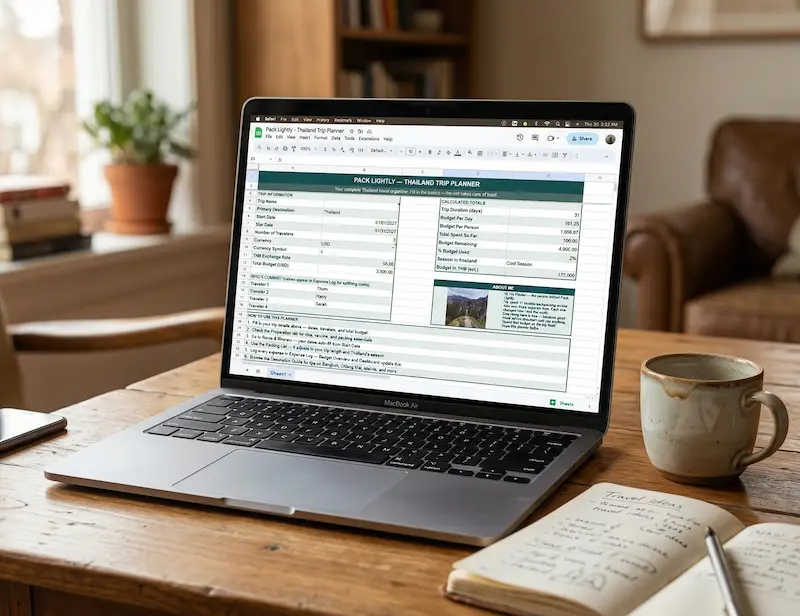
Plan your Fiji trip
A free Google Sheets template: itinerary planning, daily expenses, budget tracking and a packing list, with a dashboard that updates as you go.
Get the Free TemplateWhat Fiji costs per day
Per person per day in USD, drawn from the Pack Lightly budget calculator. Accommodation and boat transfers lead, and the resort islands run higher.
Fiji, month by month
Suva temperature (°F) and rainfall (inches). Averaged from 2021-2023 records.
What if…
Fiji by trip length
Real day-by-day itineraries, one for each trip length. Pick the time you have and open the full plan.
Feel the vibrant pulse of Nadi’s bustling markets, then transition to the serene beaches of the Mamanuca Islands, where the rhythm of the waves replaces the city buzz.
See the full day-by-day planExperience the vibrant energy of Nadi, where local markets buzz with life and the aroma of street food fills the air. Transition to the serene Mamanuca Islands, where turquoise waters invite you to snorkel and unwind on pristine beaches.
See the full day-by-day planBook your Fiji trip
Everything to sort before departure, at the same price as booking direct. It helps keep these guides free.
Before you commit
Why Fiji works
It is a switch-off destination, not a sightseeing one. The draw is the reef, the water and a welcome that regularly ranks among the warmest anywhere, not a checklist of monuments.
Pick one or two island groups and stay put. The Mamanucas are closest to Nadi and easiest for families and short trips, while the Yasawas trade convenience for wilder scenery and quieter villages.
Honest downsides
- Transfers cost real money. Boats and seaplanes to the islands add up fast, so pick a base rather than hopping nightly
- The wet season (November to April) is hot, humid and carries cyclone risk. The dry months are worth the premium
- Resort islands run pricey for food and drinks, since eating off-site is rarely possible once you are out there
- Wi-Fi is patchy on the outer islands. Treat it as part of the appeal, not a fault to fix
Fiji with kids
An easy sell to children: calm lagoons, reef you can snorkel from the beach and family resorts with kids’ clubs, most of them in the Mamanucas within a short boat ride of Nadi.
Keep transfers short with young children and lean on the closer islands. Build in downtime for the midday heat, and let a village visit or a reef swim be the day’s big event.
Frequently asked questions
Do US citizens need a visa for Fiji?
No visa for tourism. US citizens are granted a free visitor permit on arrival for stays of up to 4 months, which can be extended to a total of 6 months once you are in the country. You just need an onward ticket and a passport valid for your stay.
How much does Fiji cost per day?
Budget around $70 per person per day backpacking, using island dorm lodges and the catamaran. Mid-range is closer to $170 with resorts and included meals, and comfort travel runs $500 and up. The boat and seaplane transfers are what push Fiji higher than its daily spending suggests.
When is the best time to visit Fiji?
The dry season from May to October is ideal, with lower humidity, less rain and calmer seas for boat transfers and diving. The wet season from November to April is hot, humid and carries cyclone risk, though it is quieter and cheaper.
Is Fiji safe for travelers?
Yes. Fiji is a safe destination for visitors, with a safety score of 85 in this guide. Violent crime against tourists is rare. Petty theft can happen in Nadi and Suva, so use normal city caution, and take the usual reef precautions when snorkeling and diving.
How many days do you need in Fiji?
Seven days is enough for one island group done well, such as the Mamanucas straight from Nadi. Ten days lets you add the Yasawas without rushing the boat transfers, and two weeks gives room to slow right down or reach the more remote lodges.
How do you get around Fiji’s islands?
Most travelers fly into Nadi, then reach the islands by boat or small plane. A daily catamaran links Nadi with the Mamanuca and Yasawa islands on one ticket, seaplanes and helicopters serve the pricier resorts, and villages on the main island are connected by local buses and taxis.
Photo credits: Photo: Rickard Törnblad / Wikimedia Commons, CC BY-SA 4.0 · Photo: JaumeBG / Wikimedia Commons, CC BY-SA 4.0 · Photo: American / Wikimedia Commons, CC BY-SA 3.0 · Photo: Anton Leddin / Wikimedia Commons, CC BY-SA 3.0