



French Polynesia
One hundred and eighteen islands scattered across an ocean the size of Western Europe, from the lagoon lodges of Bora Bora to the black-sand valleys of Tahiti. This is a splurge trip built around water, so pick two or three islands, book the overwater bungalow you came for, and let the pace go slow.
French Polynesia is a water trip, not a sightseeing one. Give it ten days, pair Tahiti with one lagoon island, and spend the money where it counts.
Pack Lightly editorial team
At a glance
- Nature, relaxation and hotels all score a perfect 95. This is the South Pacific at its most postcard, and the lagoons live up to it.
- Budget realistically. Backpacking runs around $180 a day and a comfort trip climbs past $1,200, making this one of the priciest destinations Pack Lightly tracks.
- May through October is the dry, cooler season and the window most travelers want. November to April is hotter, wetter and holds the cyclone risk.
- Ten days covers Tahiti plus Bora Bora at a comfortable pace. Two weeks lets you add a third island like Mo’orea or a Tuamotu atoll without rushing the ferries and inter-island flights.
- The catch: everything ships in by boat or plane, so groceries, fuel and dinners cost far more than you expect. The overwater bungalow is only the start of the bill.
Everything to know before you book
The essentials for a French Polynesia trip: entry rules, money, the climate window and power, in one scan.
What French Polynesia does best, and where it doesn’t
Ten categories scored 0 to 100 from tourism data, traveler reports and on-the-ground experience.
Nature, relaxation and hotel quality all tie at the top, and few places on earth match these lagoons for color. This is what you are paying for, and it delivers.
The one real weakness, and a big one. A budget score of 15 means almost everything is imported and expensive, so this is a destination you save for rather than stumble into.
Best places to visit in French Polynesia
Twelve islands anchor most trips: the capital gateway and the lagoon everyone pictures.
Bora Bora
The lagoon that sells the whole country: an emerald-and-turquoise ring around Mount Otemanu, ringed by overwater bungalows, snorkel drift and coral gardens. This is the splurge, and it earns it.Tahiti
The main island and your point of arrival, home to Papeete, black-sand surf beaches, waterfall valleys and the roulotte food trucks by the harbor. Do not just connect through it.Moorea
Opunohu Bay’s fishing boats bob beneath jagged green volcanic peaks just offshore from Tahiti.Papeete
French Polynesia’s capital on Tahiti draws visitors with its markets and street food stalls.Rangiroa
Divers gather at the Tiputa Pass dive center on the northern shore of this large atoll.Huahine
Vanilla farms near Fare Harbor scent the breeze on this lesser-visited Society Island.Fakarava
The reef meets the lagoon near Tetamanu harbor on this UNESCO biosphere reserve atoll.Maupiti
Fishermen unload their catch at the small harbor cafe in Vaiea village on this quiet island.Tetiaroa
This coral atoll near Tahiti, once owned by Marlon Brando, holds an eco-resort and bird sanctuary.Teahupoo
A heavy reef wave off this southwest Tahiti village draws surfers from around the globe.Nuku Hiva
Horses cross the Toovii plateau past the village of Taiohae harbor on this Marquesan island.Manihi
The sun sets over the Tairapa pass, casting light across this pearl-farming atoll’s lagoon.


All French Polynesia guides
Every Pack Lightly guide for planning, preparing and exploring the country.
Planning & Logistics
Practical & Preparation
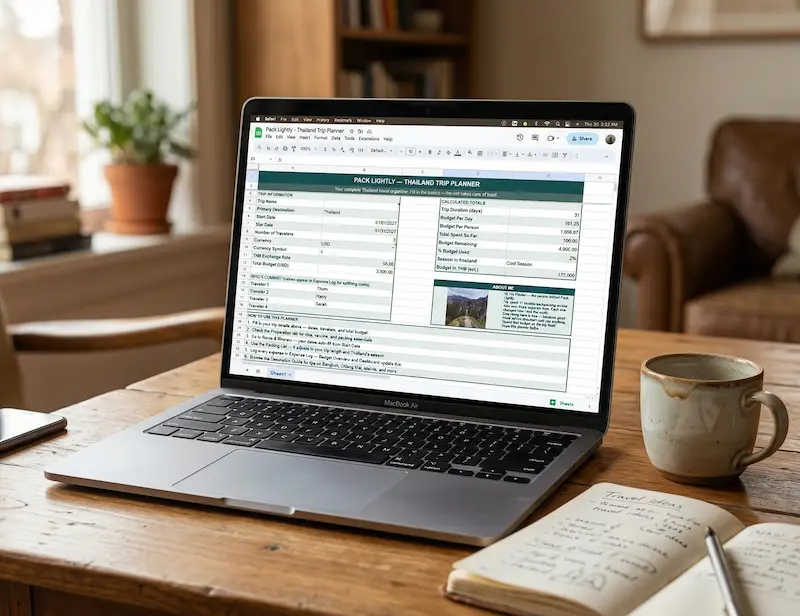
Plan your French Polynesia trip
A free Google Sheets template: itinerary planning, daily expenses, budget tracking and a packing list, with a dashboard that updates as you go.
Get the Free TemplateWhat French Polynesia costs per day
Per person per day in USD, drawn from the Pack Lightly budget calculator. Almost everything is imported, so even the budget tier runs high.
French Polynesia, month by month
Papeete temperature (°F) and rainfall (inches). Averaged from 2021-2023 records.
What if…
French Polynesia by trip length
Real day-by-day itineraries, one for each trip length. Pick the time you have and open the full plan.
Experience the vibrant market scene of Papeete, where the air is filled with the scent of fresh produce and local spices.
See the full day-by-day planExperience the vibrant market of Papeete, the serene lagoons of Moorea, and the luxurious overwater bungalows of Bora Bora. Each hub offers a distinct atmosphere: bustling city life, tranquil island vibes, and breathtaking ocean views.
See the full day-by-day planBook your French Polynesia trip
Everything to sort before departure, at the same price as booking direct. It helps keep these guides free.
Before you commit
Why French Polynesia works
The lagoons are the real thing. That impossible blue in the photos is exactly what you get, and the reefs, rays and coral gardens back it up on an easy snorkel. Nature and relaxation both score a perfect 95.
It is also low-stress. The islands are safe, friendly and unhurried, built around water rather than a checklist of sights, so a trip here is about slowing down, not covering ground.
Honest downsides
- It is genuinely expensive. A budget score of 15 is the lowest Pack Lightly tracks, and almost everything is shipped or flown in
- Inter-island travel adds up. Air Tahiti flights and ferries between islands cost real money and eat into the days
- The wet season is long. November to April brings heavy rain, humidity and cyclone risk
- Not a nightlife or big-city trip. Come for the water and the quiet, not restaurants and shopping
French Polynesia with kids
Older kids who like the water will love it: warm lagoons, easy snorkeling, rays and reef fish within wading distance of the beach. Many pensions and resorts are set up for families.
The cost is the real limiter, and the long haul from the mainland US is a full travel day. Build in downtime after arrival, and keep the itinerary to one or two islands so the flights between them do not dominate the trip.
Frequently asked questions
Do US citizens need a visa for French Polynesia?
No visa for tourism. US citizens can stay up to 90 days. French Polynesia is a French overseas collectivity rather than part of the Schengen Area, so it sets its own entry rules and a valid passport is enough for a standard visit.
How much does French Polynesia cost per day?
This is a pricey destination. Budget around $180 per person per day even backpacking, closer to $400 mid-range, and $1,200 or more for a comfort trip with resorts and overwater bungalows. Almost everything is imported, which drives the cost.
When is the best time to visit French Polynesia?
May through October is the dry, cooler season and the window most travelers want, with lower humidity and calmer seas. November to April is hotter, wetter and carries a cyclone risk, though it can still bring bright days between the downpours.
Is French Polynesia safe for travelers?
Yes. French Polynesia is a safe destination for visitors, with a safety score of 90 in this guide. Crime against tourists is rare. The main things to respect are the ocean itself: currents, coral and sun, so snorkel with care and use reef-safe sunscreen.
How many days do you need in French Polynesia?
Ten days covers Tahiti plus Bora Bora at a comfortable pace, with time on the water rather than in airports. Two weeks lets you add a third island such as Mo’orea or a Tuamotu atoll. A week is enough for two islands if you keep the plan simple.
Which islands should first-timers pick?
Start with Tahiti and Bora Bora. Tahiti is your gateway and gives you culture, surf beaches and the Papeete food trucks, while Bora Bora is the lagoon and the overwater bungalow most people picture. Mo’orea makes an easy third island on a longer trip.
Photo credits: Photo: makemake at de.wikipedia / Wikimedia Commons, CC BY-SA 3.0 · Photo: User: (WT-shared) Tensaibuta at wts wikivoyage / Wikimedia Commons, CC BY-SA 1.0 · Photo: rachel_thecat / Wikimedia Commons, CC BY-SA 2.0 · Photo: The original uploader was Sba2 / Wikimedia Commons, CC BY 2.5 · Photo: The TerraMar Project / Wikimedia Commons, CC BY 2.0 · Photo: Matthew Dillon from Hollywood, CA, USA / Wikimedia Commons, CC BY 2.0