



Greece
Six thousand islands, three thousand years of ruins, and a coastline you are never far from. Greece rewards travelers who pick one island group, base themselves for a few nights each, and let the ferries and long tavern dinners set the rhythm.
Greece is a country to island-hop slowly. Give it ten days to two weeks, pick one island group, and pair it with a few days in Athens.
Pack Lightly editorial team
At a glance
- The birthplace of Western civilization, scoring 95 for culture and 90 for both food and pure relaxation.
- Budget around $50 a day backpacking, $120 mid-range. Good value overall, though island prices spike in August.
- Late spring (May, June) and early fall (September, October) are ideal. July and August are hot, packed and ferry-booked-out.
- Ten days covers Athens and one island group. Two weeks adds the mainland ruins or a second cluster of islands.
- The catch: ferries are the whole game, and summer wind or booked-out boats can reshuffle a plan. Build slack in, and cluster islands to avoid backtracking.
Everything to know before you book
The essentials for a Greece trip: entry rules, money, the climate window and power, in one scan.
What Greece does best, and where it doesn’t
Ten categories scored 0 to 100 from tourism data, traveler reports and on-the-ground experience.
Ancient history, island beaches and long slow meals are the whole point, and Greece delivers all three better than almost anywhere. This is a country built for unwinding.
Island prices climb in peak summer, and getting between islands takes planning around ferry schedules and the occasional wind cancellation. Neither is a dealbreaker.
Best places to visit in Greece
Twelve destinations that anchor most trips. Filter by region to plan your route.
Athens
The Acropolis over a sprawling, gritty, thrilling city, plus the ferry port that launches every island trip.Santorini
White villages on a flooded volcano, the caldera sunset, and the most photographed view in Greece.Mykonos
Windmills, whitewashed lanes and the party-island reputation, plus some of the best beaches in the Cyclades.Crete
The biggest island: Minoan palaces, Venetian harbors, mountain villages and beaches you need a week to reach.Rhodes
A walled medieval old town, long beaches and the acropolis of Lindos above the sea.Meteora
Monasteries perched on sheer rock pillars, the most surreal landscape on the Greek mainland.Corfu
The greenest of the big islands, with a Venetian old town and a softer, more Italian feel than the Aegean.Nafplio
An elegant seaside town below a Venetian fortress, the best base for the ancient sites of the Peloponnese.Milos
Volcanic rock formations at Sarakiniko Beach line Milos’s northern coast, shaped by wind and sea erosion over centuries.Kos
Kos is a flat Dodecanese island with ancient ruins, long sandy beaches, and the Asklepieion healing site near Kos Town.Olympia
The ancient ruins of the Temple of Zeus at Olympia mark the birthplace of the ancient Olympic Games.Hydra
Hydra bans motor vehicles, so donkeys and mules still carry goods from Mandraki harbor through the car-free town.Athens & the Mainland
The Peloponnese
The Cyclades
The Dodecanese & Aegean
The Ionian, Sporades & Saronic


All Greece guides
Every Pack Lightly guide for planning, preparing and exploring the country.
Planning & Logistics
Practical & Preparation
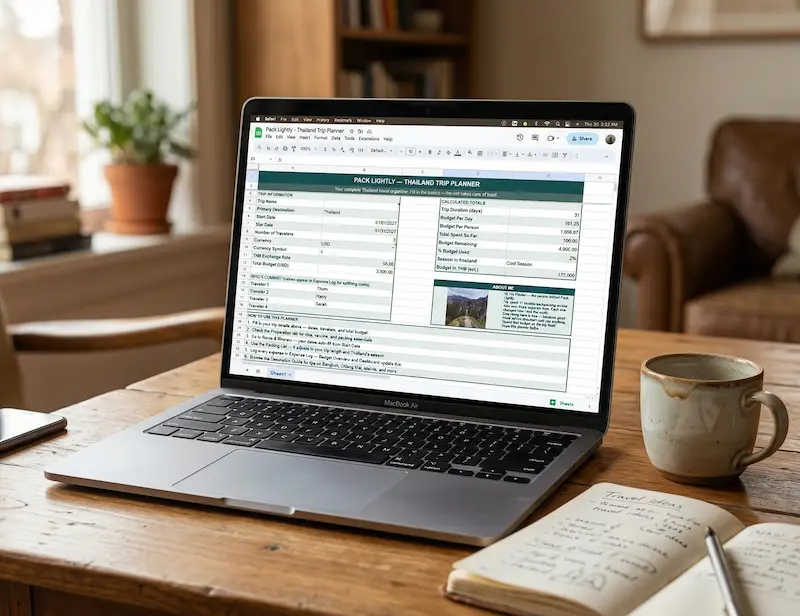
Plan your Greece trip
A free Google Sheets template: itinerary planning, daily expenses, budget tracking and a packing list, with a dashboard that updates as you go.
Get the Free TemplateWhat Greece costs per day
Per person per day in USD, drawn from the Pack Lightly budget calculator. Island prices climb sharply in July and August.
Greece, month by month
Athens: temperature (°F) and rainfall (inches). The islands stay a touch milder and breezier; the northern mainland runs cooler in winter.
Greece in one first impression
A quick sweep of the country before you plan the trip.

What if…
Greece by trip length
Real day-by-day itineraries, one for each trip length. Pick the time you have and open the full plan.
Experience the vibrant energy of Athens, where ancient history meets bustling streets, then unwind in Mykonos with its lively nightlife and stunning beaches, before soaking in the breathtaking caldera views of Santorini.
See the full day-by-day planExperience the vibrant energy of Athens, where ancient ruins meet bustling streets, then unwind on Naxos’s serene beaches, savoring fresh seafood under the sun.
See the full day-by-day planExperience the vibrant energy of Athens, where ancient history meets bustling streets, then transition to the serene landscapes of Delphi and the Peloponnese.
See the full day-by-day planArrive in Athens, where the ancient Acropolis towers over bustling streets filled with aromas of grilled meats and fresh pastries.
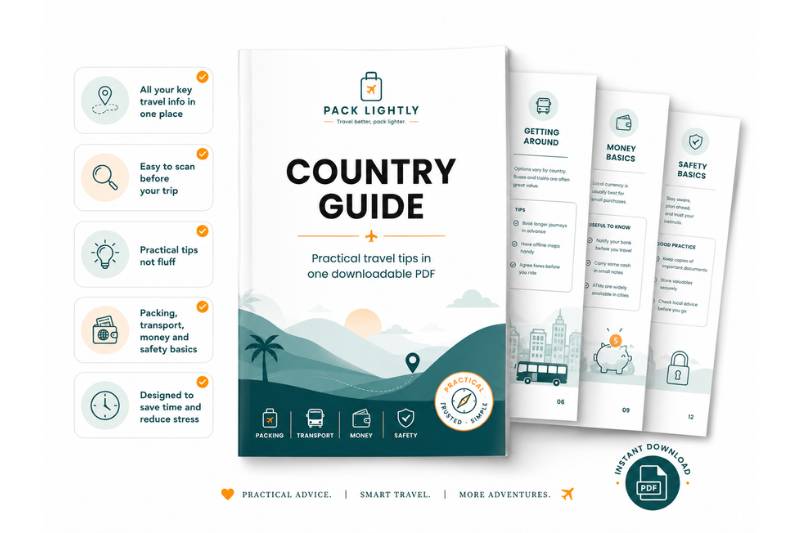
Take the whole Greece guide offline
Every practical decision for Greece sits in one PDF: what a day costs, when to go, how Athens, Santorini and Mykonos fit into one trip, and what to book before you leave.
- Routes that hold up: route options from 7 to 28 days, with the stops worth the travel time and the ones worth skipping.
- Real numbers: daily budgets from $50 to $280 per person, split over beds, food, transport and activities.
- Weather, crowds and price: which months are dry, which are cheap, and where the two overlap.
- The practical layer: money, transport, connectivity, safety and the local etiquette that saves you a misstep.
Opens the PDF straight away. Save it to your phone and it works offline.
Book your Greece trip
Everything to sort before departure, at the same price as booking direct. It helps keep these guides free.
Before you commit
Why Greece works
It is beach and history in one trip. Mornings at ancient sites, afternoons in the sea, and long tavern dinners that run past dark. Few countries combine ruins and relaxation this well.
The food is simple and superb: grilled fish, village salads, and whatever the day brought in. Order the specials, drink the local wine, and never eat right under the Acropolis.
Honest downsides
- Summer is intense. July and August bring heat, crowds and sold-out ferries. May, June, September and October are far better
- Ferries rule the plan. Wind cancellations and full boats happen. Book ahead and keep a spare day
- Santorini is overtouristed. The caldera towns are beautiful and mobbed. Go early, stay the night, or pick a quieter island
- Island prices spike in August, when a simple room can triple. Shoulder season fixes most of it
Greece with kids
Easy and rewarding: warm shallow seas, ruins that bring myths to life, and a culture that adores children. Late Greek dinners suit families, and kids are welcome everywhere.
Pick one island as a base rather than hopping constantly, mix a beach day with a castle or a boat trip, and the calm shallow bays of the bigger islands suit young children well.
Frequently asked questions
Do US citizens need a visa for Greece?
No visa for tourism. US citizens can stay in Greece and the wider Schengen Area for up to 90 days within any 180-day period. The ETIAS travel authorization, a quick online pre-approval, is expected to become mandatory at some point during 2026, so check before you fly.
How much does Greece cost per day?
Budget around $50 per person per day backpacking, with dorms, ferries and taverna meals. Mid-range is closer to $120 with hotels and restaurant dinners; comfort travel runs $280 and up. Island prices climb sharply in July and August.
When is the best time to visit Greece?
Late spring (May and June) and early fall (September and October) are ideal, with warm seas and thinner crowds. July and August are hot, packed and ferry-booked-out. Winter is quiet and mild in Athens but many island services close.
Is Greece safe for travelers?
Yes. Greece is a safe country for visitors, with a safety score of 85 in this guide. Violent crime is rare. The main issues are pickpocketing in Athens tourist areas and on the metro, and summer heat, so keep bags close and stay hydrated.
How many days do you need in Greece?
Ten days covers Athens and one island group, such as the Cyclades, at a comfortable pace. Two weeks adds the mainland ruins or a second island cluster. Three weeks or more lets you slow-travel Crete or the Peloponnese without rushing the ferries.
Which Greek islands should first-timers pick?
For a first trip, the Cyclades deliver the classic look: Santorini for the caldera, Mykonos for the beaches and nightlife, and Naxos or Paros for a more balanced, better-value base. Cluster two or three in one group rather than crossing the Aegean for a single stop.
Photo credits: Photo: Wilnel José Verdú Guerrero / Wikimedia Commons, CC BY-SA 4.0 · Photo: tamara semina / Wikimedia Commons, CC BY-SA 3.0 · Photo: Zde / Wikimedia Commons, CC BY-SA 4.0 · Photo: dronepicr / Wikimedia Commons, CC BY 2.0 · Photo: CeeGee / Wikimedia Commons, CC BY-SA 4.0 · Photo: kallerna / Wikimedia Commons, CC BY-SA 4.0 · Photo: A.Savin / Wikimedia Commons, CC BY-SA 3.0 · Photo: LBM1948 / Wikimedia Commons, CC BY-SA 4.0 · Photo: dronepicr / Wikimedia Commons, CC BY 2.0 · Photo: dronepicr / Wikimedia Commons, CC BY 2.0 · Photo: Bernard Gagnon / Wikimedia Commons, CC BY-SA 4.0 · Photo: Stathis floros / Wikimedia Commons, CC BY-SA 4.0 · Photo: Martin Falbisoner / Wikimedia Commons, CC BY-SA 4.0 · Photo: The original uploader was Brastite / Wikimedia Commons, CC BY-SA 3.0