



Group Travel
A trip with friends is the best kind there is, right up until the group chat goes quiet and nobody books anything. Great group trips are not about the destination. They are about the handful of decisions that get seven people on the same flight. This is how you make it happen.
Everyone has been on the group trip that never happened. A brilliant idea in a group chat, a flurry of destination links, a spreadsheet nobody filled in, and then silence until the dates passed. It is almost never the fault of the place. Group trips live or die on two things that have nothing to do with where you go: how the group makes decisions, and how it handles money. Sort those and the rest is just a very fun holiday.

This guide is built around that. It covers the roles every group has and why naming them matters, a five-step method to go from “we should do a trip” to a booked one without the endless chat, how to split costs so nobody quietly seethes, and the destinations that actually suit a group. When the group is torn between options, the free comparison tool at the bottom settles the vote with facts instead of opinions.
Start here
Three ways into this guide
The group dynamic
The roles every group has, and why the trip fails on people and money, not the place.
Meet the group →Actually book it
The five-step method that turns a group chat into a booked trip, without the endless polls.
Get to booked →Where to go
The destinations built for a group: room for everyone, easy logistics and something for each of you.
See the destinations →At a glance
- Group trips fail on decisions and money, not destinations. Fix how the group decides and how it splits costs, and almost any place works.
- Give one person the lead. A group without a nominated organiser plans nothing. Name a lead, agree the non-negotiables early, and vote once, not endlessly.
- Pick a place with room for everyone. Group villas, easy transport and a mix of things to do beat a single-vibe destination. The comparison tool below settles a split vote.
Why group trips are really about the group
Every group has the same cast, and recognising yours is the first step to a trip that happens. The point is not to label your friends, it is to make sure the useful roles are filled and the unhelpful ones are managed. A group where nobody is the organiser plans nothing; a group where everyone tries to be sinks in disagreement.
Give them the lead
The organiser
Happy to make a spreadsheet, chase replies and hold the bookings. Every group needs exactly one, and the trip stalls without them.
Manage by: naming them out loud and giving them the authority to set deadlines, so it is a role, not a burden they carry alone.
Set a deadline
The ghost
Keen in theory, silent when it is time to commit or pay. One ghost can hold a whole trip hostage while everyone waits.
Manage by: a hard “in or out” date. After it, the trip books without them. Kind, clear and it saves the trip.
Hear them early
The budget-watcher
Quietly worried the trip is drifting out of their range but reluctant to say so in front of everyone. Often the reason a ghost is really ghosting.
Manage by: agreeing a budget band before anyone links a five-star villa, so nobody has to be the one who says it is too much.
Channel them
The maximiser
Wants to do everything, book every excursion and fill every day. Great energy, but can steamroll the people who came to relax.
Manage by: handing them the optional-activities list. Anyone who wants in joins; nobody is dragged along on a rest day.
Key takeaways
- Group trips succeed or fail on decisions and money, not on the destination.
- Name one organiser and give them the authority to set deadlines. A leaderless group plans nothing.
- Set the two non-negotiables, rough dates and a budget band, before anyone falls for a specific place.
- Decide once with a single vote on a short shortlist, rather than an open-ended chat that never closes.
- Split money with a shared app and clear rules up front, so nobody keeps a private tally of who owes what.
How to plan a group trip that happens
The reason group trips stall is almost always process, not enthusiasm. An open group chat is the worst possible planning tool: every message reopens every decision. This five-step method closes decisions instead of reopening them, and it is the difference between a trip you talk about and one you take.
Name a lead and a deadline
One person holds the plan and sets dates by which each decision closes. Not a dictator, a coordinator. Everything below runs faster because someone owns it.
Lock the two non-negotiables first
Rough dates and a budget band, agreed before anyone falls for a destination. These two rule out most of the arguments before they start, because half of “where” is really “when” and “how much”.
Shortlist three, then vote once
The lead proposes three places that fit the dates and budget. The group votes one time, majority wins, and the decision is closed. Endless open voting is how trips die.
Book the big rocks together
Flights and the group accommodation get booked on one call or one evening, with everyone paying their share then and there. What is booked cannot un-happen, and a ghost cannot ghost a paid flight.
Leave the days loose
Plan one or two anchor activities everyone does together, and leave the rest open. Nobody wants a group of eight scheduled to the minute. Free time is where friends actually enjoy each other.
Splitting the money fairly
Money is the quiet killer of group trips: the friend who always covers the taxi, the one who forgets to pay it back, the running mental tally nobody admits to keeping. The fix is to make it boring and automatic, decided once at the start rather than negotiated at every meal.
| The cost | How to handle it |
|---|---|
| The big shared bookings | Everyone pays their share at the moment of booking, straight to whoever holds the reservation. No IOUs on four-figure sums. |
| Day-to-day shared costs | Use one expenses app (Splitwise and similar) where anyone can log a shared cost. It settles up at the end with one transfer each, not twenty. |
| The group kitty | For groceries, taxis and tips, a shared pot everyone tops up avoids the same person always fronting cash. Refill it when it runs low. |
| Personal spending | Kept out of the shared system entirely. Your souvenirs and your extra cocktails are yours, and keeping them separate stops most of the friction. |
The best destinations for groups
A group destination needs three things: places to stay that sleep everyone under one roof, transport that moves a crowd without a logistics headache, and enough variety that the maximiser and the relaxer both get their trip. These six deliver all three. Each links to a full Pack Lightly country guide.
Spain
Something for everyone
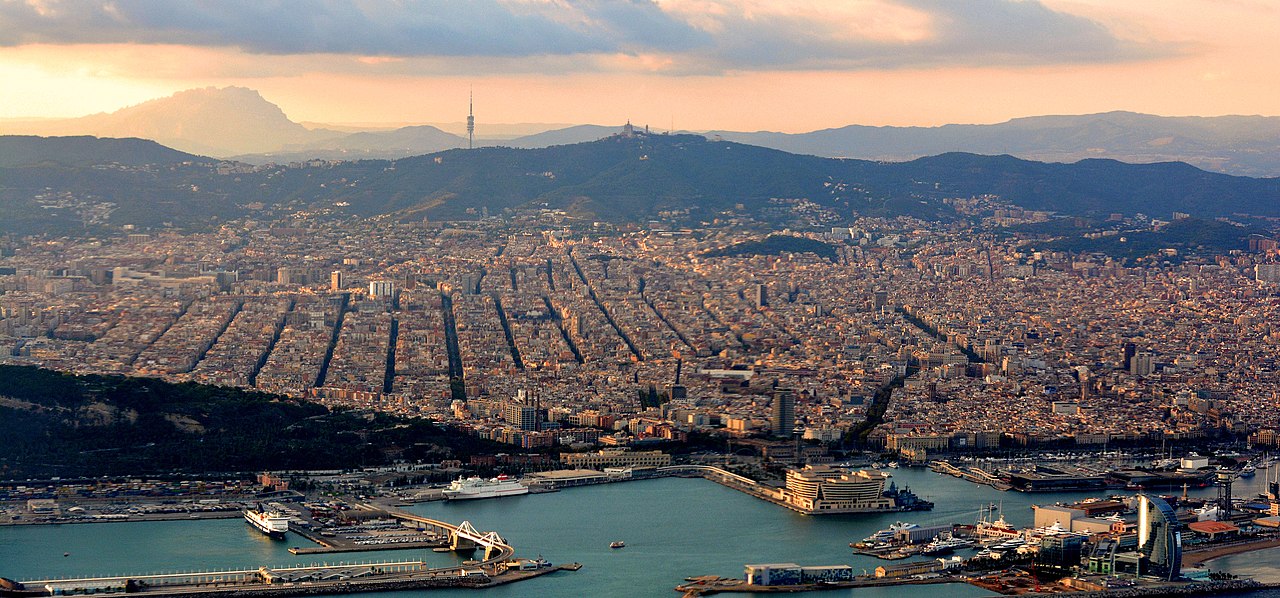
Barcelona’s beach clubs, Madrid’s late-night bars and Andalusia’s whitewashed hill towns give a group three different trips in one country. Group apartments are plentiful, and cheap regional flights make splitting into two cities easy.
Explore Spain →
Croatia
The sailing week
A skippered yacht down the Dalmatian coast turns a group into a crew, with a different island cove to swim from each day. Split, Hvar’s bars and Dubrovnik’s old town cover the nightlife when the boat docks.
Explore Croatia →
Thailand
The crowd-pleaser
Cheap enough that a tighter budget and a looser one travel together happily: the islands for the party crowd, Chiang Mai’s temples and night markets for the ones who want quiet. Big villas and easy transport make a group of any size simple.
Explore Thailand →
Vietnam
The adventure route
A north-to-south trail from Hanoi and Ha Long Bay down to Hoi An and Ho Chi Minh City keeps a group moving through new scenery on a budget that suits everyone. Ready-made group tours run the whole route if nobody wants to organise the legs.
Explore Vietnam →
Italy
The villa trip
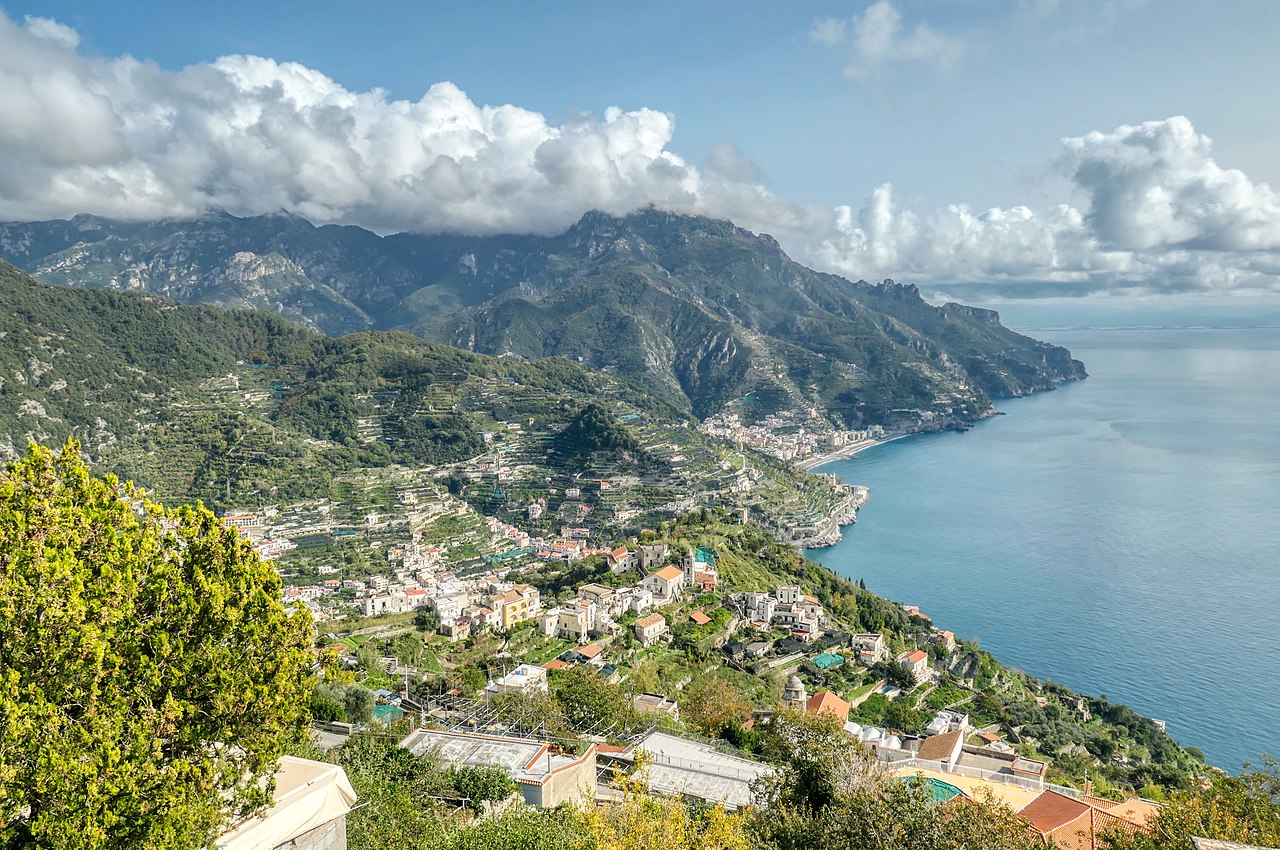
A Tuscan or Puglian villa with a pool is the classic group holiday: one house, long dinners, day trips for whoever wants them. Trains link the cities beyond it, so a bigger group moves without a fleet of rental cars.
Explore Italy →
Greece
Island-hopping as a crew
A ferry route through the Cyclades, Santorini’s caldera, Naxos’s beaches, Mykonos’s nightlife, gives every member of the group a different island’s version of the trip. Book the ferries first; everything else flexes around them.
Explore Greece →Group destinations compared
A quick read on how the strongest group destinations differ on what matters for a crowd: the kind of stay that suits a group, the vibe, an approximate daily spend per person, and when to go. Daily figures assume shared accommodation and a mid-range style; the budget calculator pins an exact number for your group.
| Destination | Group stay | The vibe | Budget day p.p. | Best months |
|---|---|---|---|---|
| Spain | City apartments | Culture and going out | $70 to $120 | May, Jun, Sep |
| Croatia | Sailing yacht or apartments | Islands and old-town bars | $50 to $90 | May, Jun, Sep |
| Thailand | Villas and hostels | Islands and nightlife | $30 to $55 | Nov to Mar |
| Vietnam | Hostels and tours | Overland adventure | $30 to $50 | Oct to Apr |
| Italy | Countryside villas | Long dinners, day trips | $90 to $150 | May, Jun, Sep |
| Greece | Island villas or ferries | Island-hopping and beach clubs | $60 to $100 | May, Jun, Sep |
More places that work for groups
Beyond the six above, plenty of countries suit a crowd, grouped by region. Each links to a full Pack Lightly country guide.
Europe
The Algarve’s coast and Lisbon’s Bairro Alto give a group cheap flights, easy apartment rentals and nightlife that runs past midnight.
Kotor Bay’s fjord-like coast and Budva’s old town deliver a Balkan sailing week and beach nightlife for a fraction of Croatia’s prices.
The Albanian Riviera around Sarande and Ksamil is Greek-island scenery at a third of the cost, with Tirana’s bars for the nights.
Asia and the Pacific
Bali’s private villas, often with a cook and a driver, split cheaply across a big group, with surf, temples and rice-field roads to fill the days.
The Americas
A group rental near Tulum or Playa del Carmen on the Riviera Maya puts cenotes, ruins and beach clubs within a short taxi for everyone.
La Fortuna’s adventure sports paired with Manuel Antonio’s beach split a group neatly between the thrill-seekers and the ones who want to relax.
For a party-first trip, Greece’s islands and Spain’s coast are hard to beat; for an active crew, Costa Rica’s adventure sports and Montenegro’s fjords split a big group perfectly. Whatever the shortlist, agree the dates and the budget band before you argue about the place.


Settle the group vote
When the shortlist is down to two or three and the group cannot agree, opinions rarely settle it. Facts do. The free Country Comparison tool puts up to four candidate countries side by side on cost, the best months to visit, safety and more, so the group votes on the same information instead of talking past each other. It is the fastest way to turn “I think Spain is cheaper” into a decision everyone can see is fair.
Country Comparison Tool
Put up to four countries side by side on cost, best months, safety and scores across 146 destinations. Free, no account, works on your phone. The fair way to settle a split group.
Open the country comparison toolTool not loading? Open the full tool in a new tab. Want to split the cost across the group? The budget calculator works out the per-person spend for any destination.
Sort the rest of the trip
Some links are affiliate links. If you book through them, Pack Lightly may earn a commission at no extra cost to you. It never changes what we recommend.
Keep planning
Where to go next
Great country guides for groups
More travel by type
Guides to plan around
Tools that help you decide
Common questions
01What is the ideal size for a group trip?
Four to six is the sweet spot: big enough for energy and splitting costs, small enough to fit one villa, one table and one decision. Beyond about six, the trip needs real structure, book a place that sleeps everyone, split into smaller groups for some activities, and expect to plan more. Very large groups work best with a clear organiser and a couple of anchor events rather than a shared minute-by-minute plan.
02How do you handle a friend who will not commit or pay?
Set a hard “in or out” date, communicated to everyone, and hold to it. After that date, the trip books with whoever has paid their deposit, and the rest can join later if space allows. It feels awkward, but the alternative is one undecided person holding the whole group hostage while prices rise. A paid booking cannot be ghosted, which is exactly why step four of the method is to book the big rocks early.
03How do you split costs fairly in a group?
Make it automatic. Everyone pays their share of the big bookings at the moment they are made, day-to-day shared costs go into one expenses app that settles up at the end, and a shared kitty covers small cash items so the same person is not always fronting money. Keep personal spending out of the system entirely. Agree up front whether costs split evenly or the pricier extras are opt-in, so a tighter budget is not quietly subsidising everyone else.
04What if one friend cannot afford the trip?
This is why the budget band comes before the destination. If you set it early and honestly, most affordability problems never arise, because the trip is scoped to what the group can actually manage. If someone is still stretched, choose a lower-cost destination or a shorter trip, make the expensive extras optional rather than shared, and let people opt into the pricier activities individually. A good group trip includes everyone who wants to come, rather than pricing a friend out quietly.
05Should we book a group tour or plan it ourselves?
A pre-built group tour makes sense when nobody wants to be the organiser, the destination is complex to plan (a multi-country overland route, a trek), or the group is short on time. It trades control and some cost for zero logistics. Planning it yourselves is cheaper, more flexible and better for a straightforward destination like a beach or a city, provided one person is genuinely willing to lead. For many groups the best answer is a hybrid: self-organise the base, and book a couple of guided day trips for the hard parts.
06How far ahead should you plan a group trip?
Earlier than a solo or couple trip, because you are coordinating several diaries. Three to six months out is a good target: it gives everyone time to book leave and spread the cost, and it secures group accommodation, which is scarcer and books up faster than a single room. Set the dates first of all, since aligning calendars is usually the hardest part, and lock the big bookings as soon as the group has voted, not once everyone has “had a think”.
Image credits: Barcelona, Spain (M McBey / Wikimedia Commons (CC BY 2.0)); Dubrovnik, Croatia (Wikimedia Commons); Bangkok, Thailand (Ninara / Wikimedia Commons (CC BY 2.0)); Ha Long Bay, Vietnam (Taewangkorea / Wikimedia Commons (CC BY-SA 4.0)); Venice, Italy (kallerna / Wikimedia Commons (CC BY-SA 4.0)); Oia, Santorini, Greece (Norbert Nagel / Wikimedia Commons (CC BY-SA 3.0)); Railay Beach, Thailand (Wikimedia Commons); Amalfi Coast, Italy (Bruno Rijsman / Wikimedia Commons (CC BY-SA 2.0)); Seville, Spain (Wikimedia Commons); Portugal (Vitor Oliveira / Wikimedia Commons (CC BY-SA 2.0)); Japan (Jordy Meow / Wikimedia Commons (CC BY-SA 3.0)); Costa Rica (Rhododendrites / Wikimedia Commons (CC BY-SA 4.0)).
Photo credits: Photo: kallerna / Wikimedia Commons, CC BY-SA 3.0 · Photo: Bruno Rijsman / Wikimedia Commons, CC BY-SA 2.0 · Photo: M McBey / Wikimedia Commons, CC BY 2.0 · Photo: Zysko serhii / Wikimedia Commons, CC BY-SA 4.0 · Photo: Ninara from Helsinki, Finland / Wikimedia Commons, CC BY 2.0 · Photo: Taewangkorea / Wikimedia Commons, CC BY-SA 4.0 · Photo: kallerna / Wikimedia Commons, CC BY-SA 4.0 · Photo: TomasEE / Wikimedia Commons, CC BY 3.0 · Photo: Carlos Delgado / Wikimedia Commons, CC BY-SA 4.0 · Photo: Norbert Nagel / Wikimedia Commons, CC BY-SA 3.0 · Photo: Vitor Oliveira from Torres Vedras, PORTUGAL / Wikimedia Commons, CC BY-SA 2.0 · Photo: Jordy Meow / Wikimedia Commons, CC BY-SA 3.0 · Photo: Rhododendrites / Wikimedia Commons, CC BY-SA 4.0