



Guadeloupe
A butterfly-shaped slice of France in the Caribbean, split between the rainforest and volcano of Basse-Terre and the sugar-white beaches of Grande-Terre. Euros, baguettes and rum, wrapped in Creole cooking and jungle waterfalls.
Watch: Guadeloupe in motion

Guadeloupe rewards travelers who rent a car and split their time. Give it ten days, base once on each wing, and let the volcano and the beaches balance each other out.
Pack Lightly editorial team
At a glance
- Nature is the headline. A 90 for scenery: a live volcano, a rainforest national park, waterfalls and reef, all on one small archipelago.
- This is France, so it runs on euros and prices show it. Budget around $75 a day backpacking, $160 mid-range, more than most Caribbean neighbors.
- The dry season, December to April, is the window. It stays warm year round, but late summer and fall bring heavy rain and hurricane risk.
- Basse-Terre is the wild half: jungle, La Soufriere, waterfalls. Grande-Terre is the flat, dry half with the best beaches and nightlife.
- The catch: almost nothing runs on time without a car, and public transport thins out fast. Rent one for the whole stay or plan on taxis eating the budget.
Everything to know before you book
The essentials for a Guadeloupe trip: entry rules, money, the climate window and power, in one scan.
What Guadeloupe does best, and where it doesn’t
Ten categories scored 0 to 100 from tourism data, traveler reports and on-the-ground experience.
One small archipelago packs a live volcano, a rainforest park, waterfalls, reef and quiet beaches, and the Creole-French kitchen backs it up. This is why you come.
French prices in the Caribbean sting: imported groceries, pricey rentals and restaurant bills add up faster than on the neighboring islands.
Best places to visit in Guadeloupe
Start with the volcano that crowns Basse-Terre, then branch out across the two wings.
La Soufriere
The Lesser Antilles’ highest peak and an active volcano, still hissing steam from summit vents. A muddy, cloud-wrapped hike climbs to the crater through rainforest and hot springs.Deshaies
A west-coast village on Basse-Terre with Grande Anse beach and tropical flower scent along the shore.Pointe des Chateaux
A rugged cliff point at Grande-Terre’s eastern tip, where Atlantic waves crash against the rocks.Les Saintes
A cluster of small islands south of Basse-Terre, with harbor cafes serving grilled seafood in Terre-de-Haut.Sainte Anne
A Grande-Terre seaside town of about 7,000, known for its calm turquoise lagoon and beaches.Saint Francois
A resort town on Grande-Terre’s southeast coast, with a marina and lagoon beaches.Pointe-a-Pitre
Guadeloupe’s largest city, where Saint-Antoine Market fills the center with spices and street chatter.Reserve Cousteau
A marine reserve off Basse-Terre’s west coast, with turquoise water around the Pigeon Islets for diving.Carbet Falls
A trio of waterfalls on Basse-Terre, reachable by trail through rushing water and dense forest.Guadeloupe National Park
A protected rainforest around La Soufriere volcano, thick with wet earth scent and wild orchids.Marie Galante
A round, rural island south of Grande-Terre with sugarcane fields and La Feuillere Beach’s white sand.Bouillante
A west-coast village of about 3,000 with a geothermal plant and access to the Cousteau reserve.Basse-Terre Side
Grande-Terre & Outer Islands
Guadeloupe at a glance
Click the pin to open that destination guide.


All Guadeloupe guides
Every Pack Lightly guide for planning, preparing and exploring the country.
Planning & Logistics
Practical & Preparation
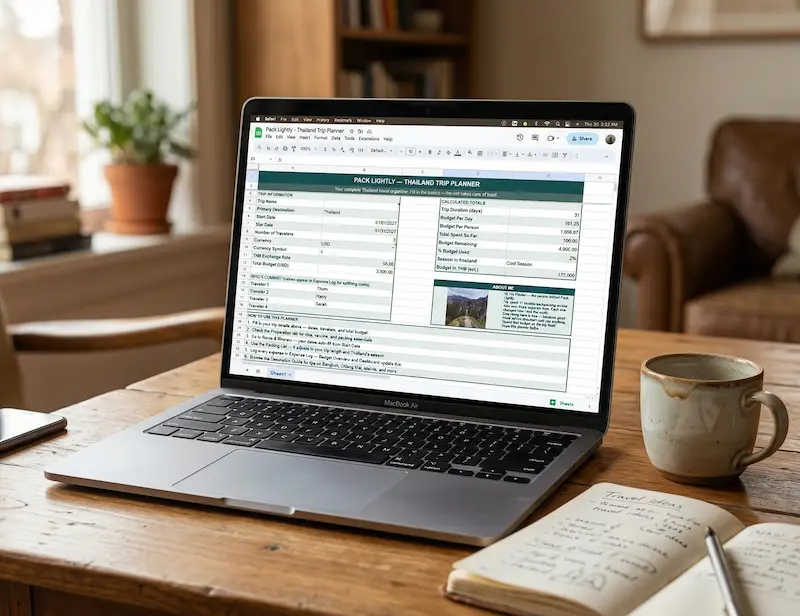
Plan your Guadeloupe trip
A free Google Sheets template: itinerary planning, daily expenses, budget tracking and a packing list, with a dashboard that updates as you go.
Get the Free TemplateWhat Guadeloupe costs per day
Per person per day in USD, drawn from the Pack Lightly budget calculator. Accommodation and food lead, and imported goods run higher than the neighboring islands.
Guadeloupe, month by month
Pointe-a-Pitre temperature (°F) and rainfall (inches). Averaged from 2021-2023 records.
What if…
Guadeloupe by trip length
Real day-by-day itineraries, one for each trip length. Pick the time you have and open the full plan.
Experience the vibrant market bustle of Pointe-a-Pitre, where the air is filled with the aroma of Creole spices, then transition to the lush, humid trails of Basse-Terre’s rainforest, and finally unwind on the sun-soaked beaches of Grande-Terre.
Experience the vibrant streets of Pointe-a-Pitre, where colonial architecture meets bustling markets, then transition to the lush, humid trails of Basse-Terre, filled with waterfalls and volcanic hikes.
Book your Guadeloupe trip
Everything to sort before departure, at the same price as booking direct. It helps keep these guides free.
Before you commit
Why Guadeloupe works
It is two islands in one, joined by a bridge over a mangrove channel. Basse-Terre is mountainous, wet and green, with the volcano, the national park and the waterfalls. Grande-Terre is flat, dry and sunny, with the resorts and the best swimming beaches.
Because it is France, the roads are good, the water is safe to drink, and the food swings from Creole stew to proper patisserie. Rum is the local pride, and the distilleries are open to visitors.
Honest downsides
- You need a car. Buses are slow and sparse, and the two wings are too far apart to rely on taxis
- Prices are French, so groceries, rentals and restaurants cost more than on nearby Dominica or the Dominican Republic
- Sargassum seaweed can pile up on the Atlantic-facing coasts, mostly spring through summer. Check recent reports before booking a beach base
- Little English is spoken outside the resorts, so a few French phrases go a long way
Guadeloupe with kids
The calm, shallow lagoons at Sainte-Anne and Saint-Francois are made for small children, and the reef snorkeling off Malendure is gentle enough for beginners.
Balance the beach days with easy nature: the shorter park trails, the aquarium in Le Gosier and a rum-free stop at a banana or cocoa plantation. Save the full volcano climb for older, sure-footed kids.
Frequently asked questions
Do US citizens need a visa for Guadeloupe?
No visa for tourism. Guadeloupe is an overseas region of France, and US citizens can visit for up to 90 days without one. It sits outside the Schengen Area, so it is stamped on its own and the coming ETIAS authorization does not apply here. You just need a passport valid for the length of your stay.
How much does Guadeloupe cost per day?
Budget around $75 per person per day backpacking, with guesthouses, self-catering and market meals. Mid-range is closer to $160 with hotels and restaurant dinners; comfort travel runs $380 and up. French import prices make it pricier than most Caribbean islands, and a rental car is close to essential.
When is the best time to visit Guadeloupe?
December to April is the dry season and the best window, with warm, sunny days and lower humidity. It stays hot all year, but the wet season from August to October brings heavy rain and the risk of hurricanes. May and June are a quieter shoulder that still catches mostly dry weather.
Is Guadeloupe safe for travelers?
Yes. Guadeloupe is a safe destination for visitors, with a safety score of 80 in this guide. Violent crime against tourists is rare. The usual precautions apply: watch for petty theft on busy beaches, do not leave valuables in a parked rental car, and respect the ocean, as some Atlantic coasts have strong currents.
How many days do you need in Guadeloupe?
Seven days is enough to see both wings without rushing: a few nights for the volcano, park and waterfalls of Basse-Terre, then the beaches of Grande-Terre. Ten days lets you add a ferry trip to Les Saintes or Marie-Galante. Two weeks covers the outer islands at a slow pace.
Do you need a car in Guadeloupe?
For most trips, yes. Public buses are slow and infrequent, and the two halves of the island are too far apart to rely on taxis, which get expensive fast. A rental car lets you reach the trailheads, waterfalls and quieter beaches on your own schedule. Book ahead in the December to April high season.
Photo credits: Photo: Ofol / Wikimedia Commons, CC BY 2.5 · Photo: Enrevseluj / Wikimedia Commons, CC BY-SA 4.0 · Photo: Filo gèn' / Wikimedia Commons, CC BY-SA 4.0 · Photo: Enrevseluj / Wikimedia Commons, CC BY-SA 4.0 · Photo: Grook Da Oger / Wikimedia Commons, CC BY-SA 3.0