



Ireland
A small island you drive rather than fly across, where the road matters as much as the stops. Ireland rewards travelers who rent a car, chase the west coast, and leave time for a slow afternoon in a pub with live music and no agenda.
Ireland is a driving trip. Give it ten days to two weeks, rent a car, and point it at the Wild Atlantic Way rather than trying to see every county.
Pack Lightly editorial team
At a glance
- The friendliest country in this guide, scoring 95, backed by a 90 for nature: sea cliffs, bog, mountains and green in every direction.
- Budget around $65 a day backpacking, $150 mid-range. Ireland is one of the pricier corners of Western Europe, and Dublin costs the most.
- May through September brings the long days and the driest weather. July and August are busiest and priciest, but the rain is never far off in any month.
- One week covers Dublin and a western loop. Two weeks lets you drive the whole Atlantic coast from Cork to Donegal without rushing.
- The catch: the weather is genuinely unpredictable and the best scenery is rural, so a rental car and a rain jacket do more for the trip than any itinerary.
Everything to know before you book
The essentials for an Ireland trip: entry rules, money, the climate window and power, in one scan.
What Ireland does best, and where it doesn’t
Ten categories scored 0 to 100 from tourism data, traveler reports and on-the-ground experience.
The welcome is the headline here, and it is not a cliche: locals will walk you to where you are going. Wrap that around dramatic Atlantic scenery and it is an easy country to like.
Prices bite, especially in Dublin, where hotels and pints add up fast. The food has improved sharply but still trails the Mediterranean, though the seafood and the breakfasts are excellent.
Best places to visit in Ireland
Twelve destinations that anchor most trips. Filter by region to plan your route.
Dublin
Georgian streets, literary pubs and the Guinness Storehouse, plus the airport and rail hub that starts nearly every Ireland trip.Galway
The most fun small city in Ireland: trad music spilling out of every bar, a lively food scene, and the gateway to the west.Cork
The rebel city and its riverside lanes, the English Market for lunch, and Blarney and the coast within easy reach.Killarney
Lakes, mountains and a national park on the doorstep, and the launch pad for the Ring of Kerry and the Dingle drives.Dingle Peninsula
Slea Head Drive, empty beaches and a harbor town of painted shopfronts, quieter and prettier than the Ring of Kerry.Cliffs of Moher
Seven hundred feet of Atlantic sea cliff, the most visited natural sight in Ireland, best in the last light of the day.Kilkenny
A walkable medieval city built around a castle, with a craft-and-design trail and an easy stop between Dublin and the south.Connemara
Bog, mountains and a shredded coastline west of Galway, plus Kylemore Abbey and some of the last living Gaeltacht.Blarney Castle
Blarney Castle’s gardens surround the 15th-century tower, home to the famous Blarney Stone.Glendalough
The Upper Lake at Glendalough sits within a valley of early monastic ruins and craggy hills.Ring of Kerry
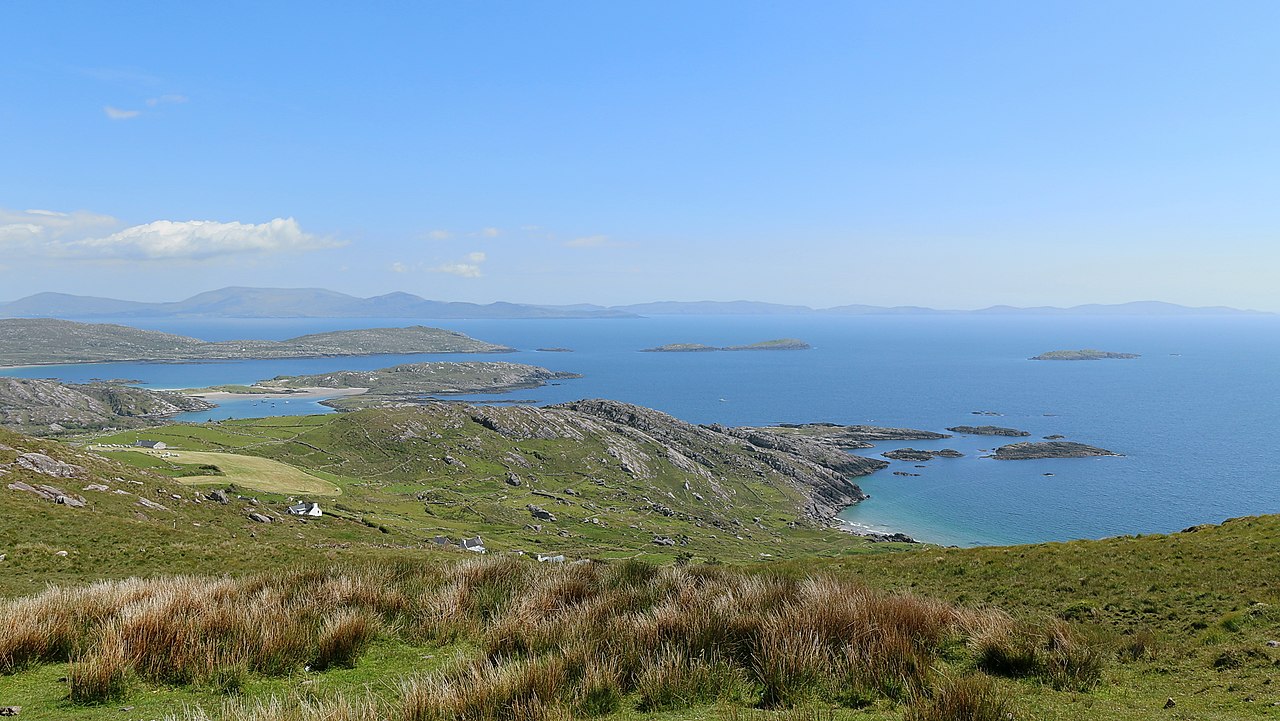
Rossbeigh Beach lies along the Ring of Kerry’s southern coastal loop, mixing sea air with peat smoke.Westport
Westport Quay hosts traditional Irish music sessions along its waterfront in County Mayo.Dublin & the East
Cork & the South Coast
Kerry & the Southwest
The West & Wild Atlantic
Ireland at a glance
Click a pin to open that destination guide.


All Ireland guides
Every Pack Lightly guide for planning, preparing and exploring the country.
Planning & Logistics
Practical & Preparation
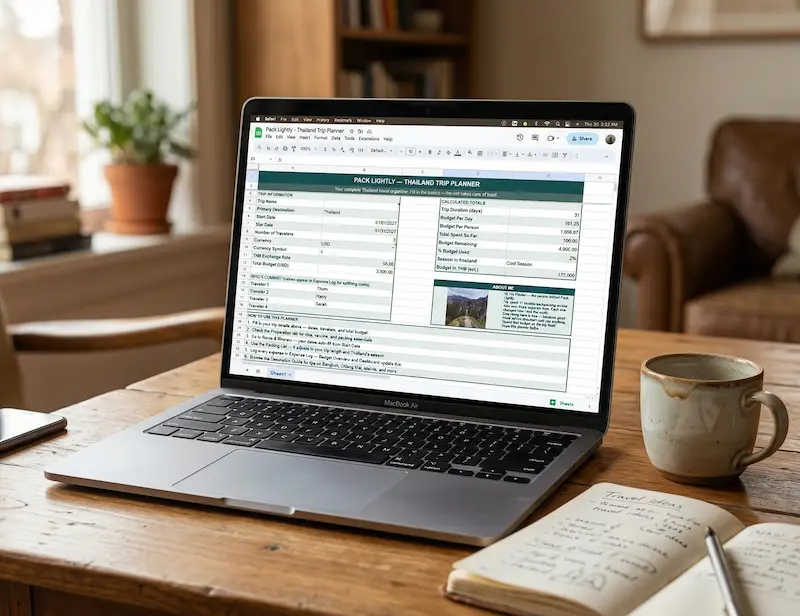
Plan your Ireland trip
A free Google Sheets template: itinerary planning, daily expenses, budget tracking and a packing list, with a dashboard that updates as you go.
Get the Free TemplateWhat Ireland costs per day
Per person per day in USD, drawn from the Pack Lightly budget calculator. Accommodation leads, and Dublin runs higher than the rest.
Ireland, month by month
Dublin: temperature (°F) and rainfall (inches). The east coast is the driest side of the island; the west sees more rain and softer light in every season.
Ireland in one first impression
A quick sweep of the country before you plan the trip.

What if…
Ireland by trip length
Real day-by-day itineraries, one for each trip length. Pick the time you have and open the full plan.
Experience the vibrant energy of Dublin’s historic streets, then transition to Galway’s lively Latin Quarter, where the pace slows and the seafood delights.
See the full day-by-day planExperience the vibrant energy of Dublin’s streets, where the air buzzes with laughter and the scent of fresh-baked soda bread fills the cafes.
Book your Ireland trip
Everything to sort before departure, at the same price as booking direct. It helps keep these guides free.
Before you commit
Why Ireland works
It is a road trip more than a city break. The set pieces, the Cliffs of Moher, the Ring of Kerry, Connemara and Dingle, are rural and strung along the Atlantic, so a rental car turns them into one continuous drive rather than a series of tours.
The welcome is real. Pub culture is the social glue: order a pint, catch the trad session, and it is normal for a stranger to strike up a conversation. That ease is the reason Ireland scores 95 for friendliness.
Honest downsides
- Prices are steep. Dublin hotels and restaurant bills rival London, and a scoring of 45 for value reflects it
- The weather is fickle. Four seasons in a day is not a joke, so pack layers and a waterproof shell in any month
- Driving is on the left on narrow rural roads with stone walls close to the tarmac. Take the smaller car and the extra insurance
- Distances feel longer than the mileage suggests. Coastal roads are slow, so plan fewer stops per day
Ireland with kids
An easy sell to families: castles to storm, cliffs to gawp at from a safe fence, and beaches with buckets even when the water is bracing. Farm visits and sheepdog demonstrations fill the gaps between drives.
Keep the daily driving short, because rear-seat patience runs out fast on winding roads. Break the journeys with a village, a playground or a bowl of chowder, and let the long summer evenings stretch the day.
Frequently asked questions
Do US citizens need a visa for Ireland?
No visa for tourism. US citizens can stay in Ireland for up to 90 days on arrival. Ireland is not part of the Schengen Area and has no ETIAS or electronic travel authorization requirement, so a valid passport is all you need. Note that a separate stamp applies if you cross into Northern Ireland, which is part of the United Kingdom.
How much does Ireland cost per day?
Budget around $65 per person per day backpacking, with hostels, self-catering and pub lunches. Mid-range is closer to $150 with hotels and restaurant dinners; comfort travel runs $330 and up. Ireland is one of the pricier countries in Western Europe, and Dublin costs the most.
When is the best time to visit Ireland?
May through September is the best window, with the longest days and the driest, mildest weather. July and August are the busiest and priciest months. Spring and early fall are quieter and still pleasant, but rain is possible in any month, so the season is about odds, not guarantees.
Is Ireland safe for travelers?
Yes. Ireland is one of the safer countries in Europe, with a safety score of 90 in this guide. Violent crime against tourists is rare. The main issues are petty theft in busy parts of Dublin and the genuine hazard of driving on narrow rural roads, so watch your bags in the city and take it slow behind the wheel.
How many days do you need in Ireland?
One week covers Dublin and a loop through the west, such as Galway, the Cliffs of Moher and Killarney. Two weeks lets you drive the full Atlantic coast from Cork up to Donegal without rushing. Ten days is the comfortable middle, enough for the southwest and the west at a relaxed pace.
Do you need to rent a car in Ireland?
For the scenery, yes. The headline sights along the Wild Atlantic Way are rural and thinly served by public transport, so a rental car is the difference between seeing them and skipping them. If you are staying in Dublin, Galway and Cork only, the train and bus network links the cities well and a car is more hassle than help.
Photo credits: Photo: Robert Linsdell from St. Andrews, Canada / Wikimedia Commons, CC BY 2.0 · Photo: Tony Webster from San Francisco, California / Wikimedia Commons, CC BY 2.0 · Photo: Annie Japaud / Wikimedia Commons, CC BY-SA 4.0 · Photo: David Stanley from Nanaimo, Canada / Wikimedia Commons, CC BY 2.0 · Photo: Nigel Thompson / Wikimedia Commons, CC BY-SA 2.0 · Photo: Denzillacey / Wikimedia Commons, CC BY-SA 4.0 · Photo: Marathon / Wikimedia Commons, CC BY-SA 2.0 · Photo: William Murphy / Wikimedia Commons, CC BY-SA 4.0 · Photo: Ingo Mehling / Wikimedia Commons, CC BY-SA 3.0 · Photo: Einaz80 / Wikimedia Commons, CC BY-SA 4.0 · Photo: Joseph Mischyshyn / Wikimedia Commons, CC BY-SA 2.0 · Photo: Alvesgaspar / Wikimedia Commons, CC BY-SA 4.0