



Italy
Twenty regions that each cook, speak and build differently, tied together by the fastest trains in Europe. Italy rewards travelers who go deep on a few places, eat where the menu has no pictures, and leave the fourth city for next time.
Italy is best taken slowly. Give it two to three weeks, pick three or four bases, and let long lunches set the pace.
Pack Lightly editorial team
At a glance
- The world leader in UNESCO sites (59) and a food culture that changes every region. Italy ties its top score, 95, for food and culture.
- Budget around $60 a day backpacking, $140 mid-range. Cheaper than France, pricier than Spain, and the coast costs more than the interior.
- Spring (April to June) and fall (September, October) are ideal. July and August are hot, crowded and expensive on the coast.
- Ten days covers the Rome, Florence and Venice triangle. Two to three weeks adds the south, the coast or Sicily.
- The catch: the famous sights are mobbed and the food near them is a trap. Book timed tickets and eat two streets back from the piazza.
Everything to know before you book
The essentials for an Italy trip: entry rules, money, the climate window and power, in one scan.
What Italy does best, and where it doesn’t
Ten categories scored 0 to 100 from tourism data, traveler reports and on-the-ground experience.
Food and culture tie at the very top, and no country packs more art and history into a train ride. This is the reason most people come, and it delivers.
The costs stack up fast in the big cities and on the coast, and Italy is more about culture and cuisine than adventure sport. The Dolomites are the exception.
Best places to visit in Italy
Twelve destinations that anchor most trips. Filter by region to plan your route.
Rome
The Colosseum, the Vatican and three thousand years of layered ruins, plus the best carbonara you will fight strangers for.Venice
No cars, just canals, and a city that looks unreal until you are standing in it. Go early or stay the night.Florence
The Renaissance in one walkable city: the Duomo, the Uffizi, and Tuscany starting at the edge of town.Milan
Fashion, aperitivo and the Last Supper, plus the fast-train hub for the north and the lakes.Naples
Raw, loud and the birthplace of pizza, with Pompeii and Vesuvius on the doorstep and the Amalfi Coast a train away.Amalfi Coast
Cliffside villages, lemon groves and a corniche road that terrifies and dazzles in equal measure.Cinque Terre
Five painted fishing villages stitched together by cliff trails and a single rail line.Lake Como
Villa gardens, ferry hops and Alpine water, an easy escape from Milan’s summer heat.Pisa
Cafes along Borgo Stretto sit steps from Piazza dei Miracoli, home to the Leaning Tower and Pisa’s cathedral complex.Positano
Spiaggia Grande’s pebbled shore sits below Positano’s cliffside houses, the main beach access point on the Amalfi Coast.Lake Garda
Oleander lines Jamaica Beach on Lake Garda’s southern shore, a swimming spot near Sirmione and Desenzano.Bologna
Mercato di Mezzo in the Quadrilatero district sells fresh mortadella and other regional specialties in Bologna’s historic center.The North & the Lakes
The Dolomites & the Alps
Tuscany & Central Italy
The South & Puglia
Sicily, Sardinia & the Islands


All Italy guides
Every Pack Lightly guide for planning, preparing and exploring the country.
Planning & Logistics
Practical & Preparation
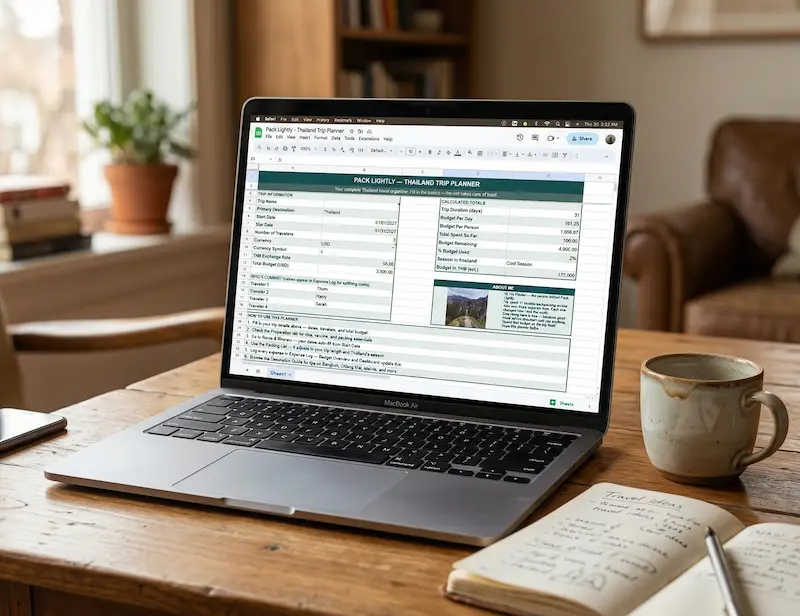
Plan your Italy trip
A free Google Sheets template: itinerary planning, daily expenses, budget tracking and a packing list, with a dashboard that updates as you go.
Get the Free TemplateWhat Italy costs per day
Per person per day in USD, drawn from the Pack Lightly budget calculator. Accommodation and food lead, and the coast runs higher.
Italy, month by month
Rome: temperature (°F) and rainfall (inches). The north runs cooler and the south warmer, but the shoulder-season pattern holds nationwide.
Italy in one first impression
A quick sweep of the country before you plan the trip.

What if…
Italy by trip length
Real day-by-day itineraries, one for each trip length. Pick the time you have and open the full plan.
Experience the vibrant chaos of Rome, where ancient ruins meet bustling piazzas, then transition to Florence’s serene streets filled with Renaissance art, and finally unwind in Venice’s enchanting canals, where every turn reveals a new perspective.
See the full day-by-day planExperience the stark contrasts of Italy’s iconic landscapes, from the serene canals of Venice to the rugged cliffs of the Amalfi Coast. Savor the rich flavors of Tuscan cuisine in Florence, then immerse yourself in the ancient history of Rome.
See the full day-by-day planFrom the ancient ruins of Rome to the stunning cliffs of the Amalfi Coast, this journey unfolds a rich tapestry of history, art, and culinary delights.
See the full day-by-day planImagine starting your journey in the serene beauty of Lake Como, where the crisp alpine air greets you, and then transitioning to the vibrant streets of Sicily, where the Mediterranean sun bathes ancient ruins in golden light.
Book your Italy trip
Everything to sort before departure, at the same price as booking direct. It helps keep these guides free.
Before you commit
Why Italy works
It is twenty regions pretending to be one country. Piedmont, Tuscany, Campania and Sicily eat, speak and build differently, and the high-speed trains let you sample several in a single trip.
Food is regional to the town, not the country. Order what the place is known for: carbonara in Rome, bistecca in Florence, pizza in Naples, and never the tourist menu next to the monument.
Honest downsides
- The big sights are mobbed. The Colosseum, the Vatican, the Uffizi and Venice need timed tickets booked well ahead
- Tourist-trap dining rings every major sight. Walk two or three streets away before you sit down
- Driving in cities means ZTL restricted zones and automatic fines. Park outside and walk, or take the train
- Pickpockets work Rome’s transport and Naples’ center. Keep bags zipped and in front
Italy with kids
An easy sell to children: pizza and gelato on every corner, gladiator ruins, gondolas and volcanoes that turn a history lesson into an adventure.
Distances between the headline cities are short by train, so transfers stay painless. Build in downtime for the midday heat in summer, and let the evening passeggiata be the day’s big outing.
Frequently asked questions
Do US citizens need a visa for Italy?
No visa for tourism. US citizens can stay in Italy and the wider Schengen Area for up to 90 days within any 180-day period. The ETIAS travel authorization, a quick online pre-approval, is expected to become mandatory at some point during 2026, so check before you fly.
How much does Italy cost per day?
Budget around $60 per person per day backpacking, with hostels, self-catering and pizza-by-the-slice lunches. Mid-range is closer to $140 with hotels and restaurant dinners; comfort travel runs $310 and up. Rome, Venice and the coast cost more than the interior.
When is the best time to visit Italy?
Spring (April to June) and fall (September and October) are ideal, with warm days and thinner crowds. July and August are hot, crowded and expensive, especially on the coast. Winter is quiet and good for the cities, though the north gets cold and damp.
Is Italy safe for travelers?
Yes. Italy is a safe country for visitors, with a safety score of 80 in this guide. Violent crime against tourists is rare. The main issue is pickpocketing and bag-snatching around the busy sights and on public transport in Rome, Naples and Milan.
How many days do you need in Italy?
Ten days covers the Rome, Florence and Venice triangle at a comfortable pace. Two weeks adds the Amalfi Coast or the northern lakes. Three weeks or more lets you reach Puglia, Sicily or the Dolomites without rushing the transfers.
Which regions should first-timers pick?
For a first trip, base yourself in Rome, Florence and Venice, and add a day trip into Tuscany or the Veneto. On a second visit, go deeper: the Amalfi Coast and Naples, the Dolomites, or Sicily and the south each reward a full week on their own.
Photo credits: Photo: Carlo cattaneo fotografie / Wikimedia Commons, CC BY-SA 4.0 · Photo: kallerna / Wikimedia Commons, CC BY-SA 4.0 · Photo: Benjamin Smith / Wikimedia Commons, CC BY-SA 4.0 · Photo: Carsten Steger / Wikimedia Commons, CC BY-SA 4.0 · Photo: Arne Müseler / Wikimedia Commons, CC BY-SA 3.0 de · Photo: Carsten Steger / Wikimedia Commons, CC BY-SA 4.0 · Photo: FeaturedPics / Wikimedia Commons, CC BY-SA 4.0 · Photo: kallerna / Wikimedia Commons, CC BY-SA 4.0 · Photo: Gary Campbell-Hall / Wikimedia Commons, CC BY 2.0 · Photo: Jiuguang Wang / Wikimedia Commons, CC BY-SA 3.0 · Photo: Vyacheslav Argenberg / Wikimedia Commons, CC BY 4.0 · Photo: JeCCo / Wikimedia Commons, CC BY 4.0 · Photo: This Photo was taken by Timothy A. Gonsalves. Feel free to... / Wikimedia Commons, CC BY-SA 4.0 · Photo: Ray in Manila / Wikimedia Commons, CC BY 2.0