



Madagascar
Lemurs that live nowhere else, baobabs older than the roads, and drives measured in days rather than hours. Madagascar rewards travelers who plan loosely, fly the long legs, and let the wildlife set the pace.
Madagascar earns the effort. Give it two to three weeks, fly the long transfers instead of driving them, and build the route around wildlife rather than distance.
Pack Lightly editorial team
At a glance
- Nature scores a near-perfect 95, and it is deserved: roughly 90% of the wildlife here, every lemur included, exists nowhere else on Earth.
- Budget around $30 a day backpacking, $75 mid-range. This is one of the cheaper trips covered in this guide, though getting around eats into that.
- The dry season runs April through October; September to November is the sweet spot for baby lemurs and clear roads.
- Two weeks covers one region properly. Three weeks lets you pair the wildlife interior with a coast or an island without a forced march.
- The catch: roads are slow and rough, and internal distances are huge. Overland transfers can swallow whole days, so budget flights for the long hops.
Everything to know before you book
The essentials for a Madagascar trip: visa, money, climate window and power, in one scan.
What Madagascar is, and what it isn’t
Ten categories scored 0 – 100 from tourism data, traveler reports and on-the-ground experience.
Wildlife is the whole reason to come, and Madagascar delivers it at a level almost nowhere else can match. The trekking and the welcome back it up.
Roads, transfers and rooms are the trade-off. Outside a few lodges, comfort is basic and logistics take patience. Plan around that instead of fighting it.
Best places to visit in Madagascar
Twelve destinations that anchor most trips, from the western baobabs to the northern islands.
Avenue of the Baobabs
A dirt road lined with towering Grandidier’s baobabs near Morondava, best at sunrise and sunset when the trunks glow orange.Nosy Be
The main island escape off the northwest coast: warm water, dive sites, and the easiest beach base after a hard overland run.Antananarivo
Grilled street food scents fill Analakely Market in the capital’s city center each morning.Tsingy de Bemaraha
Razor-sharp limestone pinnacles rise around the Great Tsingy suspension bridge in this UNESCO site.Andasibe Mantadia National Park
Indri lemur calls echo through the forest near Vakona Reserve at dawn.Ankarana Reserve
Sharp limestone formations and cave systems cut through forest on this northern plateau.Diego Suarez
Kitesurfers cross the turquoise water at Sakalava Bay, driven by steady coastal wind.Tulear
Ifaty Beach’s sunset views make this southern port city a base for coastal trips.Mahajanga
A warm port city on a wide bay, known for its beaches and an iconic old baobab tree.Antsirabe
Analakely Market fills with vendors selling fresh produce and handmade crafts in this highland city.Fianarantsoa
Narrow lanes lined with brick houses make up Fianarantsoa’s old quarter.Amber Mountain National Park
A forested volcanic massif in the north offers a cooler climate, waterfalls, and dense biodiversity.Southern Madagascar
Eastern Coast
Northern & Western Madagascar
Central Highlands
Madagascar at a glance
Click a pin to open that destination guide.


All Madagascar guides
Every Pack Lightly guide for planning, preparing and exploring the country.
Planning & Logistics
Practical & Preparation
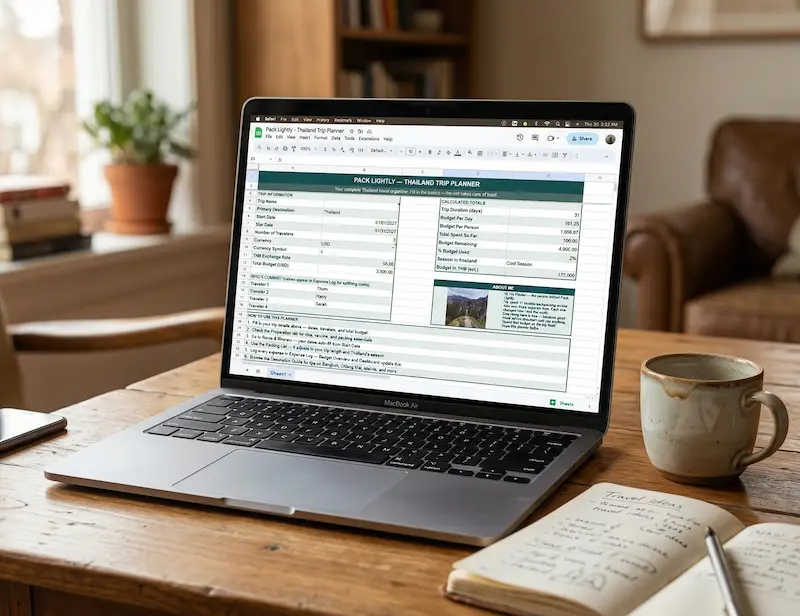
Plan your Madagascar trip
A free Google Sheets template: itinerary planning, daily expenses, budget tracking and a packing list, with a dashboard that updates as you go.
Get the Free TemplateWhat Madagascar costs per day
Per person per day in USD, drawn from the Pack Lightly budget calculator. Transport is the line that surprises people.
Madagascar, month by month
Antananarivo in the central highlands: temperature (°F) and rainfall (inches). The coast runs warmer year round. Southern Hemisphere seasons, so winter falls in July.
What if…
Madagascar by trip length
Real day-by-day itineraries, one for each trip length. Pick the time you have and open the full plan.
Experience the vibrant chaos of Antananarivo, where bustling markets and rich history collide. Transition to the serene forests of Andasibe, home to playful lemurs and lush greenery.
Experience the stark contrast of Madagascar’s landscapes and climates as you journey from the bustling highlands of Antananarivo to the lush rainforests of Andasibe, then venture into the dramatic limestone formations of Tsingy de Bemaraha, and finally unwind along the iconic Baobab Avenue in Morondava.
See the full day-by-day planExperience the vibrant contrasts of Madagascar over three weeks, from the bustling highlands of Antananarivo to the serene beaches of Nosy Be.
See the full day-by-day planFrom the bustling streets of Antananarivo, where the aroma of street food fills the air, to the serene beaches of Nosy Be, this 28-day trek unfolds a spectrum of experiences.
Book your Madagascar trip
Everything to sort before departure. Same price as booking direct, and it helps keep these guides free.
Before you commit
Why Madagascar works
It is a wildlife trip before anything else. Roughly nine in ten species here live nowhere else, so a walk through the right patch of forest turns up lemurs, chameleons and birds you cannot see on any other continent.
The landscapes back it up. Baobab avenues, limestone tsingy, rainforest and desert canyons all sit on one island, and the pace stays slow enough that the travel itself becomes the experience.
Honest downsides
- The roads are slow: distances look short on a map and take twice as long as you expect on rough surfaces
- Infrastructure is thin: outside a few lodges and towns, rooms and services are basic
- Health prep matters: malaria is present, so pills, repellent and travel insurance are non-negotiable
- Cyclone season: the wet months from November to March can close roads and cancel boats, especially on the east coast
Madagascar with kids
Older kids who like animals will remember it for life: lemur walks, chameleon spotting and easy reserve trails are a natural fit, and Malagasy welcomes for families are warm.
The constraints are practical rather than about safety. Keep daily drives short, choose parks with gentle walks, and take the health prep seriously. This is an adventure trip, not a resort one.
Frequently asked questions
Do US citizens need a visa for Madagascar?
Yes, but it is straightforward. US passport holders can get a visa on arrival at the airport or apply for an eVisa online beforehand. Tourist stays of up to 90 days are allowed, and the fee is paid in US dollars or euros. A passport valid for at least six months is required.
How much does Madagascar cost per day?
Budget around $30 per person per day backpacking, with guesthouses, local food and shared transport. Mid-range runs closer to $75 with better lodges and private drivers, and comfort travel is about $180. Guides, park fees and internal flights are the costs that add up fastest.
What’s the best time to visit Madagascar?
The dry season from April to October is the main travel window, with the best roads and wildlife viewing. September to November is ideal for baby lemurs and clear conditions. Avoid the cyclone-prone wet season from January to March, when roads flood and the east coast can shut down.
Is Madagascar safe for tourists and solo travelers?
Madagascar is generally welcoming, but petty theft and pickpocketing happen in Antananarivo and busy transport hubs, so keep valuables low-key and avoid walking alone after dark in cities. Rural areas and national parks feel calmer. Solo travelers do fine, and hiring local guides is standard and adds a layer of safety.
How long do you need in Madagascar?
Two weeks covers one region well, such as the RN7 route south or the wildlife parks near the capital. Three weeks lets you pair the interior with a coast or an island without rushing. Anything under ten days means flying between highlights rather than driving, because overland distances are long.
How do you get around Madagascar?
The main options are private drivers, shared taxis-brousses and internal flights. Roads are paved on major routes like the RN7 but slow, and side roads can be rough or seasonal. For long north-to-south hops, flying saves days, though schedules change, so keep the itinerary flexible.
Photo credits: Photo: Charles J. Sharp / Wikimedia Commons, CC BY-SA 4.0 · Photo: Charles J. Sharp / Wikimedia Commons, CC BY-SA 4.0 · Photo: JialiangGao www.peace-on-earth.org / Wikimedia Commons, CC BY-SA 4.0 · Photo: Sascha Grabow www.saschagrabow.com / Wikimedia Commons, CC BY-SA 3.0 · Photo: Diego Delso / Wikimedia Commons, CC BY-SA 4.0 · Photo: NP023 / Wikimedia Commons, CC BY-SA 4.0 · Photo: mwanasimba from La Réunion / Wikimedia Commons, CC BY-SA 2.0