



Malta
A three-island archipelago the size of a large city, stacked with 7,000 years of history: megalithic temples, a walled Baroque capital, and diving among the clearest water in the Mediterranean. Malta rewards travelers who slow down, base themselves in one place, and let the buses do the driving.
Malta punches far above its size. Give it five days to a week, base in or near Valletta, and take the islands at a walking pace.
Pack Lightly editorial team
At a glance
- Three UNESCO sites and megalithic temples older than the pyramids, on an island you can cross in under an hour. Malta scores 90 for culture and 90 for safety, its two highest marks.
- Budget around $60 a day backpacking, $135 mid-range. Island logistics push costs above the Spanish mainland, though below Italy’s headline cities.
- Spring (April to June) and fall (September, October) are ideal. July and August are hot, dry and packed on the beaches.
- A long weekend covers Valletta and its harbor towns. A week adds Mdina, Gozo and the dive sites without rushing.
- The catch: summer heat and cruise-ship day crowds hit the small streets hard, and swimmable sandy beaches are few. Come in the shoulder season and rent a car or learn the bus map.
Everything to know before you book
The essentials for a Malta trip: entry rules, money, the climate window and power, in one scan.
What Malta does best, and where it doesn’t
Ten categories scored 0 to 100 from tourism data, traveler reports and on-the-ground experience.
Layered history and near-total English fluency make Malta one of the easiest Mediterranean trips going, and it is safe and warm to strangers. This is the reason it works so well for first-timers.
Everything ships to an island, so prices sit above the Spanish mainland. It leans culture and coast over adventure sport, though the wreck diving is genuinely world-class.
Best places to visit in Malta
The capital anchors most trips, with the rest of the archipelago a short bus or ferry ride away.
Valletta
A tiny walled capital built by the Knights of St John: Baroque churches, Grand Harbour views and Caravaggio’s masterpiece in the co-cathedral, all in a grid you can walk end to end in fifteen minutes.Blue Grotto
A series of sea caves on Malta’s south coast, reached by small boat trips from the nearby harbor.Hagar Qim
A prehistoric megalithic temple complex on a clifftop above the sea, among the oldest freestanding structures in the world.Marsaxlokk
A fishing village on the southeast coast known for its colorful luzzu boats and Sunday waterfront fish market.Golden Bay
A sandy beach on Malta’s northwest coast, backed by open countryside, about ten minutes from Mellieha.Mellieha
A hill town in northern Malta perched above Mellieha Bay, the island’s largest sandy beach.Sliema
A coastal town across the harbor from Valletta, known for its long seafront promenade and waterfront cafes.St Julians
A coastal resort district north of Sliema known for its nightlife, restaurants, and the Portomaso waterfront marina.Three Cities
Three fortified harbor towns, Vittoriosa, Senglea, and Cospicua, facing Valletta across the Grand Harbour.Dwejra
A coastal area on Gozo known for its inland lagoon, diving spots, and the collapsed remains of the Azure Window.Ramla Bay
A wide red-sand beach on Gozo’s north coast, backed by dunes and known for clear, shallow waters.Victoria
Gozo’s capital, also called Rabat, built around the hilltop Citadella fortress with views over the island.Malta at a glance
Click the pin to open the destination guide.


All Malta guides
Every Pack Lightly guide for planning, preparing and exploring the country.
Planning & Logistics
Practical & Preparation
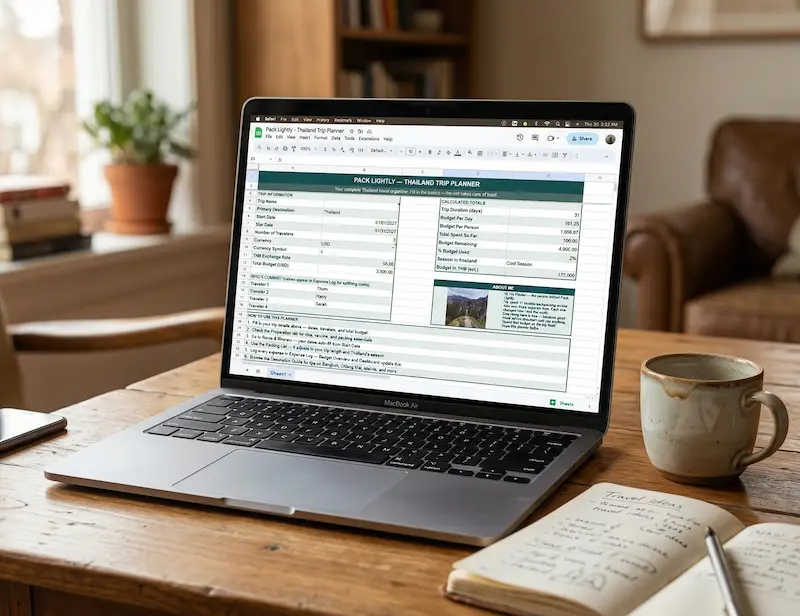
Plan your Malta trip
A free Google Sheets template: itinerary planning, daily expenses, budget tracking and a packing list, with a dashboard that updates as you go.
Get the Free TemplateWhat Malta costs per day
Per person per day in USD, drawn from the Pack Lightly budget calculator. Accommodation and food lead, and summer rates run higher.
Malta, month by month
Valletta: temperature (°F) and rainfall (inches). The sea keeps the swing gentle, with warm dry summers and mild, wetter winters.
What if…
Malta by trip length
Real day-by-day itineraries, one for each trip length. Pick the time you have and open the full plan.
Experience the vibrant streets of Valletta, where the sun glints off the fortified harbor, then transition to the serene, ancient walls of Mdina, where time seems to stand still.
See the full day-by-day planExperience the vibrant energy of Valletta’s bustling streets, then transition to the serene silence of Mdina’s ancient walls, and finally unwind on the rural charm of Gozo’s coastal cliffs.
See the full day-by-day planBook your Malta trip
Everything to sort before departure, at the same price as booking direct. It helps keep these guides free.
Before you commit
Why Malta works
It is an outsized history lesson on a pocket-sized archipelago. Phoenicians, Romans, Arabs, the Knights of St John and the British each left a layer, and you can walk through the whole timeline in a few days without a long transfer between sights.
English is an official language, so nothing here needs translating, and the euro and Schengen rules make it as frictionless as the mainland. The food leans Sicilian with a British streak: rabbit stew, pastizzi and strong local wine.
Honest downsides
- Summer is hot and dry, and the sandy swimmable beaches are few and get crowded fast
- Cruise-ship day crowds pack Valletta’s small streets midday. See the sights early or late
- Island prices run above the Spanish mainland, since almost everything is shipped in
- Getting around means buses that bunch and run late, or a rental car on narrow left-hand-drive roads
Malta with kids
An easy sell to children: harbor boat rides, knights’ forts to storm, and warm shallow water for swimming through the long summer. Distances are tiny, so no transfer eats a whole day.
Build the day around the heat: sightsee in the morning, rest through the afternoon, and head out for an early dinner by the water. English everywhere keeps it stress-free for first-time visitors.
Frequently asked questions
Do US citizens need a visa for Malta?
No visa for tourism. US citizens can stay in Malta and the wider Schengen Area for up to 90 days within any 180-day period. The ETIAS travel authorization, a quick online pre-approval, is expected to become mandatory at some point during 2026, so check before you fly.
How much does Malta cost per day?
Budget around $60 per person per day backpacking, with hostels, self-catering and pastizzi lunches. Mid-range is closer to $135 with hotels and restaurant dinners; comfort travel runs $300 and up. Because everything ships to an island, prices sit a little above the Spanish mainland.
When is the best time to visit Malta?
Spring (April to June) and fall (September and October) are ideal, with warm days, swimmable sea and thinner crowds. July and August are hot, dry and packed on the beaches. Winter is mild but wetter, and quiet enough that some resort spots wind down.
Is Malta safe for travelers?
Yes. Malta is one of the safer countries in Europe, with a safety score of 90 in this guide. Violent crime against tourists is rare and the streets feel easy at night. The main hazards are summer road traffic on narrow lanes and the usual care with bags in crowded tourist spots.
How many days do you need in Malta?
A long weekend covers Valletta, its harbor towns and Marsaxlokk. Five days adds Mdina and the megalithic temples. A full week lets you reach Gozo, the Blue Lagoon on Comino and a couple of dive sites without rushing the ferries.
Do you need a car in Malta?
Not for the capital. The Tallinja bus network reaches nearly every village from the terminus outside Valletta’s gate, and a passenger ferry links the harbor towns. A rental car helps for Gozo and out-of-the-way coves, but the roads are narrow, British-style left-hand drive, and parking near Valletta is tight.
Photo credits: Photo: Tango7174 / Wikimedia Commons, CC BY-SA 4.0 · Photo: Frank Vincentz / Wikimedia Commons, CC BY-SA 3.0 · Photo: Frank Vincentz / Wikimedia Commons, CC BY-SA 3.0 · Photo: Felix König / Wikimedia Commons, CC BY 3.0 · Photo: Tony Hisgett from Birmingham, UK / Wikimedia Commons, CC BY 2.0 · Photo: JVimagesmalta / Wikimedia Commons, CC BY-SA 4.0 · Photo: Mandyy88 / Wikimedia Commons, CC BY-SA 4.0