



Martinique
A slice of France in the eastern Caribbean, with rum distilleries, an active volcano and one of the best beaches in the Antilles. Martinique rewards travelers who rent a car, eat where the menu is in Creole, and split their days between the wild north and the beach-lined south.
Watch: Martinique in motion

Martinique is a beach trip with a French accent and a volcano in the north. Give it a week, rent a car, and let the rhum agricole set the evening pace.
Pack Lightly editorial team
At a glance
- French-Creole culture, euro prices and a food scene that ties for the top score, 90. This is the reason to come, and it delivers on the plate.
- The dry season runs December to April, with warm days near 84°F / 29°C and the lightest rain of the year. That is peak, and it prices accordingly.
- Budget around $80 a day backpacking, $170 mid-range. Everything is imported and euro-priced, so this is not a cheap Caribbean island.
- Five days covers the south beaches and Fort-de-France. Eight days adds the northern rainforest and the climb up Mount Pelee.
- The catch: there is almost no public transport worth the name, and the best of the island is spread out. Without a rental car you will see very little.
Everything to know before you book
The essentials for a Martinique trip: entry rules, money, the climate window and power, in one scan.
What Martinique does best, and where it doesn’t
Ten categories scored 0 to 100 from tourism data, traveler reports and on-the-ground experience.
French pastry meets Creole cooking, the roads are good and the island feels safe and easy to travel. This is a relaxed beach-and-food trip that runs smoothly.
Euro prices and imported everything make this one of the pricier Caribbean islands. The scenery is free, but the hotels and restaurants are not.
Best places to visit in Martinique
The one beach that anchors most southern trips, with the rest of the island an easy drive away.
Les Salines
A mile of white sand backed by coconut palms and salt ponds at the island’s southern tip, widely rated the best beach in Martinique. Arrive early on weekends before the local crowd fills the shade.Fort-de-France
Martinique’s capital, with a covered spice market near the waterfront Fort Saint-Louis.Sainte-Anne
A southern resort village where Les Salines beach sits behind grilled-seafood shacks and calm water.Le Diamant
A south-coast village facing Diamond Rock, a 575-foot basalt islet just offshore, with steady breeze for sailing.Saint-Pierre
A northern town rebuilt after the 1902 Mount Pelee eruption, with ruins along Anse Turin beach.Mount Pelee
Martinique’s active volcano, with the Morne Rouge trailhead leading hikers through forest to the summit.Jardin de Balata
A tropical botanical garden north of Fort-de-France, with treetop bridges through dense plantings.Les Trois Ilets
A south-coast village near Anse Mitan beach, birthplace of Empress Josephine.Le Marin
A marina town in the south, with a bustling market where fishermen sell the daily catch.Sainte Luce
A low-key southern village of about 5,000, with sheltered beaches and a rum distillery at Trois-Rivieres.Anse Couleuvre
A black-sand beach on Martinique’s rugged northern coast, reached via a coastal hiking trail.Le Carbet
A quiet coastal town of about 3,000 where Columbus is said to have first sighted Martinique.North Coast & Nature
South Coast Villages
Martinique at a glance
Click a pin to open that destination guide.


All Martinique guides
Every Pack Lightly guide for planning, preparing and exploring the country.
Planning & Logistics
Practical & Preparation
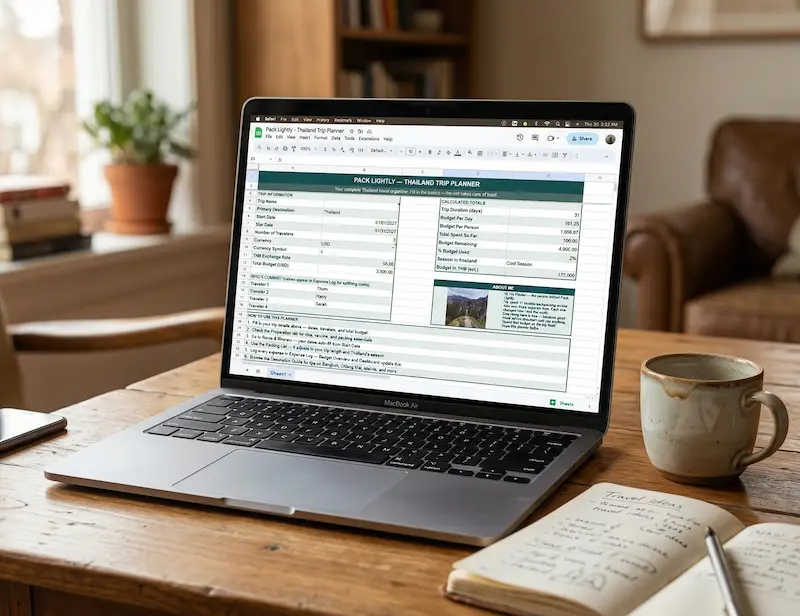
Plan your Martinique trip
A free Google Sheets template: itinerary planning, daily expenses, budget tracking and a packing list, with a dashboard that updates as you go.
Get the Free TemplateWhat Martinique costs per day
Per person per day in USD, drawn from the Pack Lightly budget calculator. Accommodation and food lead, and the euro pricing runs high.
Martinique, month by month
Fort-de-France temperature (°F) and rainfall (inches). Averaged from 2021-2023 records.
What if…
Martinique by trip length
Real day-by-day itineraries, one for each trip length. Pick the time you have and open the full plan.
Experience the vibrant contrasts of Martinique: the bustling markets and colonial charm of Fort-de-France, the haunting volcanic ruins of Saint-Pierre, and the serene beaches of Sainte-Anne.
See the full day-by-day planExperience the vibrant pulse of Fort-de-France, where colonial architecture meets bustling local markets. Transition to the serene trails of Mount Pelee, where lush rainforests and volcanic landscapes invite adventure.
See the full day-by-day planBook your Martinique trip
Everything to sort before departure, at the same price as booking direct. It helps keep these guides free.
Before you commit
Why Martinique works
It is France in the Caribbean, which means good roads, safe streets, French bakeries and euro-standard hospitals, wrapped around a Creole culture that is entirely its own. The result is an easy, comfortable island trip with real depth on the plate.
The south is beaches and warm shallow water, the north is rainforest and a live volcano, and the whole island is small enough to see both in a week. Rum ties it together: a dozen distilleries make the only AOC-protected rum on earth.
Honest downsides
- It is expensive. Euro prices and imported goods make this one of the pricier Caribbean islands for food and lodging
- You need a car. Public transport is thin and unreliable, and the best spots are spread across the island
- Sargassum seaweed can pile up on east-coast beaches in some months, though the southern beaches are usually spared
- Limited English. Signs and menus are in French, and basic French goes a long way outside the resorts
Martinique with kids
Easy going. The southern beaches have calm, shallow water made for young swimmers, and the drives between them are short. Sainte-Anne and Les Trois-Ilets make relaxed family bases.
Older kids get more out of the north: the volcano, the rainforest trails and the boats out to the bay. Build in downtime for the midday heat, and let a late-afternoon beach be the day’s big event.
Frequently asked questions
Do US citizens need a visa for Martinique?
No visa for tourism. Martinique is a French overseas department, but it sits outside the Schengen Area, so US citizens get their own 90-day allowance for stays here. You need a passport valid for the length of your trip and, technically, proof of onward travel.
How much does Martinique cost per day?
Budget around $80 per person per day with guesthouses and self-catering, closer to $170 mid-range with hotels and restaurant dinners, and $400 and up for comfort travel. Everything is euro-priced and largely imported, so it runs higher than most Caribbean islands.
When is the best time to visit Martinique?
December to April is the dry season, with warm days near 84°F / 29°C, plenty of sun and the lightest rain of the year. This is peak season and prices rise accordingly. August to October is the wettest stretch and the peak of hurricane risk.
Is Martinique safe for travelers?
Yes. Martinique is a safe destination, with a safety score of 85 in this guide. Violent crime against tourists is rare. Take normal precautions against petty theft in Fort-de-France, do not leave valuables in a parked rental car, and respect the sea conditions on the wilder Atlantic coast.
How many days do you need in Martinique?
Five days is enough for the southern beaches and a taste of Fort-de-France. Eight days lets you add the northern rainforest, the town of Saint-Pierre and a climb up Mount Pelee at a comfortable pace. Beyond that, you are settling in rather than sightseeing.
Do you need a car in Martinique?
Effectively yes. Public transport is limited and unreliable, and the best beaches, the distilleries and the northern volcano are spread across the island. A rental car is the standard way to get around. The ferry across the bay to Fort-de-France is a useful exception.
Photo credits: Photo: G.Mannaerts / Wikimedia Commons, CC BY-SA 4.0 · Photo: JLXP / Wikimedia Commons, CC BY-SA 4.0 · Photo: Mickaël BRUNO / Wikimedia Commons, CC BY-SA 4.0