



Reunion
A French island in the Indian Ocean built around one of the planet’s most active volcanoes and three collapsed calderas that only hikers reach. Reunion rewards travelers who come for the trails, rent a car, and treat the beach as the reward at the end.
Reunion is a hiking island first and a beach island second. Give it ten days, rent a car, and point the trip at the volcano and the cirques.
Pack Lightly editorial team
At a glance
- Nature and adventure both score 95, the joint top of this guide. An active volcano, three amphitheater cirques and 600 miles / 965 km of marked trails carry the whole trip.
- Budget around $70 a day backpacking, $160 mid-range. This is France, so prices track the mainland and undercut nothing in the region.
- May through November is the dry, cooler window and the time to come. January through March is cyclone season with heavy rain.
- Ten days covers Piton de la Fournaise, a cirque or two and the west-coast lagoon. A week works if you skip the long guided treks.
- The catch: swimming is restricted on much of the coast after a run of shark attacks. Stick to the protected lagoon at Hermitage or a pool, and read the beach signs.
Everything to know before you book
The essentials for a Reunion trip: entry rules, money, the climate window and power, in one scan.
What Reunion does best, and where it doesn’t
Ten categories scored 0 to 100 from tourism data, traveler reports and on-the-ground experience.
Nature and adventure tie at the top, and they are the whole reason to come: a live volcano, three cirques you reach on foot, and French-grade roads and rescue behind it all.
Prices are French, imported goods carry a markup, and there is no cheap-island shortcut here. Self-catering and a picnic on the trail are how you keep the daily number down.
Best places to visit in Reunion
The one destination that anchors most trips, with the trailheads and viewpoints around it.
Piton de la Fournaise
One of the world’s most active volcanoes, reached across the lunar Plaine des Sables to the Pas de Bellecombe rim, where a full-day loop drops onto the caldera floor past cinder cones and hardened lava.Cirque de Mafate
Volcanic gravel crunches underfoot on the trail to La Nouvelle, a village reachable only on foot inside Cirque de Mafate.Cirque de Cilaos
Hot springs steam at Bras Sec in the pine-scented mountain air of Cirque de Cilaos.Cirque de Salazie
The Voile de la Mariee waterfall rushes near Hell-Bourg’s central square inside Cirque de Salazie.Piton des Neiges
At sunrise, clouds glow below the summit of Piton des Neiges, Reunion’s highest peak.Trou de Fer
Waterfalls cascade into the depths of the Trou de Fer canyon, viewed from its dramatic rim.Hell Bourg
Colorful creole villas line the streets of Hell-Bourg, a village set inside Cirque de Salazie.Saint Pierre
The Saturday market fills the air with fresh spices and local produce in this south coast town.Saint Leu
A west-coast town known for its left-hand reef surf break and paragliding launches from the Colimacons hillside.Grand Bassin
A cascading waterfall in the central highlands, reached by a steep trail down into the valley.Boucan Canot
Calm waters and a lively beachfront promenade define this popular west coast swimming spot.Anse des Cascades
Waterfalls cascade directly into the ocean at this coconut-grove picnic spot on the east coast.Coastal Towns & Highland Plateau
Reunion at a glance
Click a pin to open that destination guide.


All Reunion guides
Every Pack Lightly guide for planning, preparing and exploring the country.
Planning & Logistics
Practical & Preparation
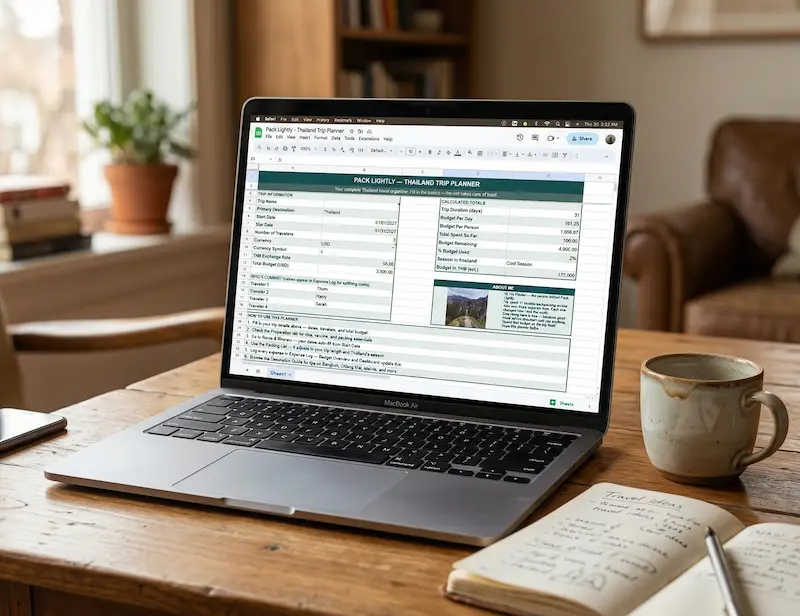
Plan your Reunion trip
A free Google Sheets template: itinerary planning, daily expenses, budget tracking and a packing list, with a dashboard that updates as you go.
Get the Free TemplateWhat Reunion costs per day
Per person per day in USD, drawn from the Pack Lightly budget calculator. Accommodation and food lead, and imported goods run higher than the mainland.
Reunion, month by month
Saint-Denis temperature (°F) and rainfall (inches). Averaged from 2021-2023 records.
What if…
Reunion by trip length
Real day-by-day itineraries, one for each trip length. Pick the time you have and open the full plan.
Experience the vibrant coastal life of Saint-Denis, where the air is filled with the scent of local spices and the sound of waves crashing against the promenade.
Feel the vibrant pulse of Saint-Denis with its colonial architecture and bustling markets, then transition to the serene mountain air of Cilaos, where thermal springs await.
Book your Reunion trip
Everything to sort before departure, at the same price as booking direct. It helps keep these guides free.
Before you commit
Why Reunion works
It is an Alpine hiking destination and a tropical volcano stacked on one island the size of a large county. Piton de la Fournaise erupts most years, three collapsed cirques hide villages you can only walk into, and the whole thing runs on French roads, hospitals and rescue.
The food is Creole first: cari cooked in a pot over wood, samosas at the roadside, rum arrange behind every bar. Eat where the locals queue, not where the tour bus parks.
Honest downsides
- Swimming is restricted. A run of shark attacks closed much of the coast to open-water swimming and surfing. Use the protected lagoon at Hermitage or a pool
- You need a car. Buses are slow and thin, and the best trailheads and viewpoints assume you drove there
- Prices are French. Imported goods carry a markup and nothing here is a budget-island bargain
- Weather turns fast in the hills. Clear mornings cloud over by noon, so start the big walks early
Reunion with kids
The lagoon beaches at Hermitage and Saint-Gilles are calm, shallow and reef-protected, which makes them the natural base for a family. The rim viewpoint over the volcano and the Maido lookout are short walks that pay off big.
Save the multi-day cirque treks for older children or a sitter. Distances are short by car, so you can be at a beach in the morning and a waterfall or a lava field by afternoon.
Frequently asked questions
Do US citizens need a visa for Reunion?
No visa for tourism. Reunion is a French overseas department, and US citizens can visit for up to 90 days. It sits outside the Schengen Area, so it has its own 90-day allowance separate from a trip to mainland France or the rest of Europe.
How much does Reunion cost per day?
Budget around $70 per person per day backpacking, with a guesthouse, self-catering and picnic lunches on the trail. Mid-range is closer to $160 with hotels and restaurant dinners; comfort travel runs $400 and up. Prices are French, and imported goods cost more than on the mainland.
When is the best time to visit Reunion?
May through November is the dry, cooler season and the best window for hiking and clear volcano views. January through March is the wet cyclone season with heavy rain and possible storm damage. The coast stays warm year-round, but the highlands turn cold at night.
Is Reunion safe for travelers?
Yes. Reunion is a safe destination with a safety score of 85 in this guide, backed by French infrastructure and emergency services. The real risks are natural: shark attacks have closed much of the coast to swimming, and the volcano and cirque trails demand respect for weather and access closures.
How many days do you need in Reunion?
Ten days is the sweet spot: a full day at Piton de la Fournaise, two or three in the cirques, and time on the west-coast lagoon. A week works if you skip the long guided treks. Two weeks lets you walk into Mafate and slow down.
Can you swim at the beaches in Reunion?
Only in specific places. After a run of shark attacks, open-water swimming and surfing are banned along much of the coast. The reef-protected lagoon at Hermitage and Saint-Gilles is the safe exception, and many hotels have pools. Always read the beach signs and local warnings.
Photo credits: Photo: © Geolina / Wikimedia Commons, CC BY-SA 4.0 · Photo: Mart.wain / Wikimedia Commons, CC BY-SA 4.0 · Photo: fabien rozé / Wikimedia Commons, CC BY-SA 4.0 · Photo: Philippe Bourjon / Wikimedia Commons, CC BY-SA 3.0