



Switzerland
Four languages, some of the highest peaks in Europe, and a train network so precise you can plan a day around it. Switzerland rewards travelers who pick a couple of valleys, ride the scenic lines slowly, and accept that the views cost real money.
Switzerland is about depth, not distance. Give it ten days to two weeks, base in two or three valleys, and let the mountain railways set the pace.
Pack Lightly editorial team
At a glance
- The Alps at their most polished: the Matterhorn, the Jungfrau peaks and lake cities linked by scenic rail. Switzerland ties its top score, 95, for nature, safety, active travel and hotels.
- Budget around $100 a day backpacking, $220 mid-range. This is the most expensive country in Europe, and its budget score of 25 is by far its weakest.
- Summer (June to September) is ideal for hiking; December to March is the ski season. Shoulder months can close the high cable cars.
- A week covers Zurich, Lucerne and the Bernese Oberland. Two weeks adds Zermatt, Lake Geneva and Ticino.
- The catch: everything is pricey, and the best value is the rail pass. A Swiss Travel Pass covers trains, boats and many cable cars, so buy it before you tally single tickets.
Everything to know before you book
The essentials for a Switzerland trip: entry rules, money, the climate window and power, in one scan.
What Switzerland does best, and where it doesn’t
Ten categories scored 0 to 100 from tourism data, traveler reports and on-the-ground experience.
Nature, safety, active travel, hotels and infrastructure all tie at 95. Few places pair alpine scenery this dramatic with trains this reliable, and the whole country runs like clockwork.
The price tag is the real drawback: a budget score of 25 makes this the most expensive stop in Europe. Locals are polite and correct rather than effusive, which reads as reserved to some visitors.
Best places to visit in Switzerland
Twelve destinations that anchor most trips. Filter by region to plan your route.
Zurich
The financial capital on its own lake, with a walkable old town, world-class museums and the main international gateway into the country.Lucerne
A medieval bridge, a lake ringed by peaks, and cog railways up Rigi and Pilatus, all within an easy day of Zurich.Interlaken
The adventure base between two lakes, with paragliding overhead and the trains up to the Jungfrau peaks leaving from the door.Zermatt
The car-free village under the Matterhorn, with year-round skiing on the glacier and some of the best hiking in the Alps.Geneva
The French-speaking diplomatic hub on the lake, with the Jet d’Eau fountain, the UN quarter and Mont Blanc on the horizon.Bern
The overlooked capital: a sandstone old town of covered arcades wrapped in a bend of the Aare, and a UNESCO site in full.Grindelwald
A valley under the Eiger north face, with gondolas to First and Männlichen and the fastest route up toward the Jungfraujoch.Lauterbrunnen
A glacial valley walled by cliffs and threaded with 72 waterfalls, with the car-free hamlets of Wengen and Mürren above.Jungfraujoch
The Ice Palace inside Jungfraujoch, Europe’s highest railway station, displays sculptures carved into glacier ice.St Moritz
Lake St Moritz freezes solid in winter, drawing skiers and polo events to this alpine resort town.Montreux
Montreux’s lakeside promenade on Rue du Marche overlooks Lake Geneva, host to the annual jazz festival.Rhine Falls
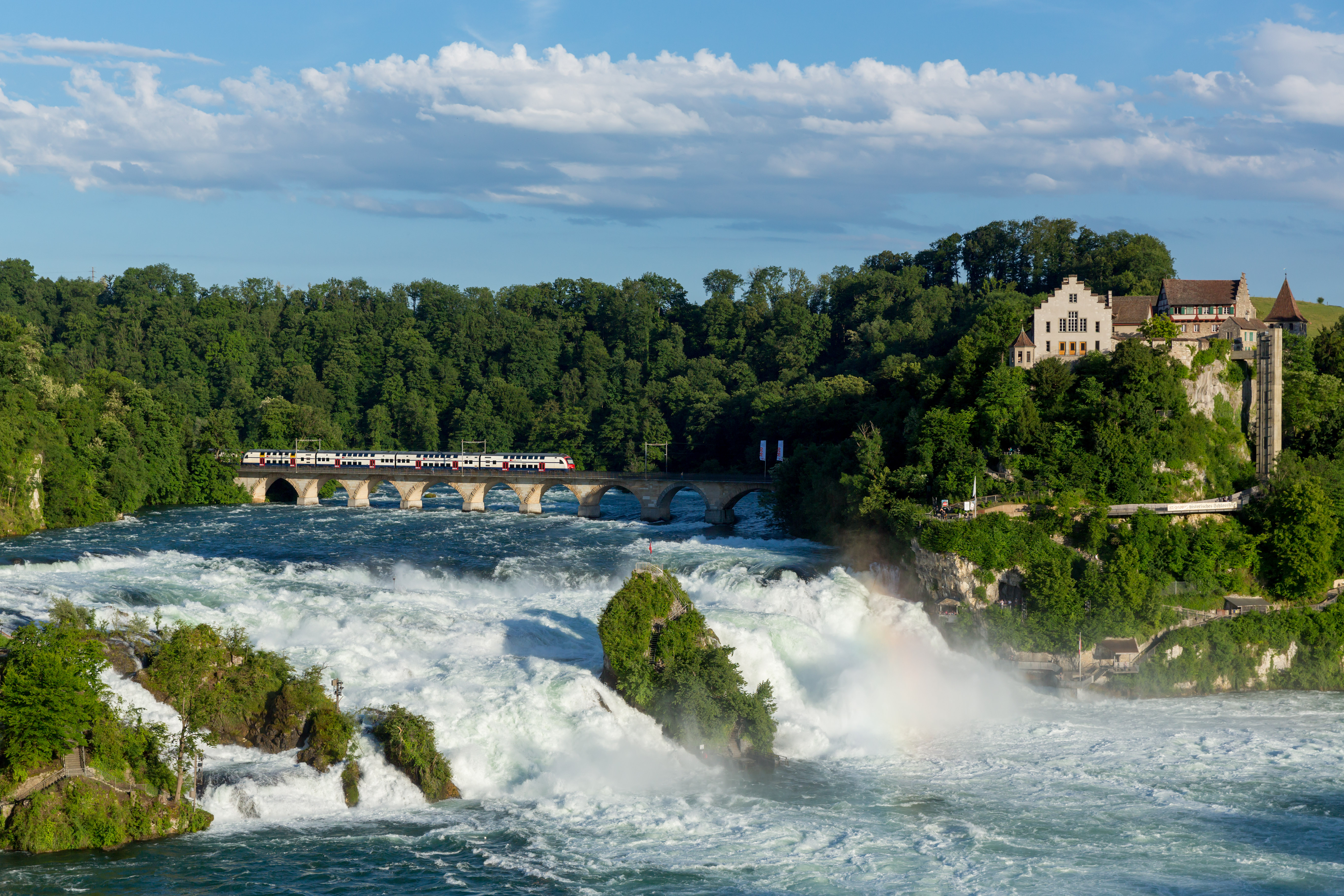
Laufen Castle’s viewing platform overlooks Rhine Falls, Europe’s largest waterfall, near Schaffhausen.Bernese Oberland & the North
Lake Geneva & the West
The Alps & Ski Resorts
Ticino & the South
Switzerland at a glance
Click a pin to open that destination guide.



All Switzerland guides
Every Pack Lightly guide for planning, preparing and exploring the country.
Planning & Logistics
Practical & Preparation
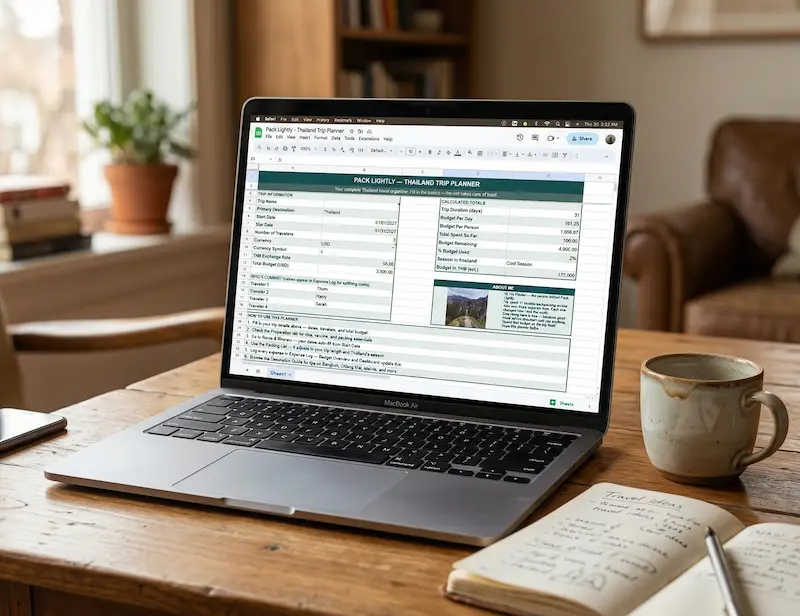
Plan your Switzerland trip
A free Google Sheets template: itinerary planning, daily expenses, budget tracking and a packing list, with a dashboard that updates as you go.
Get the Free TemplateWhat Switzerland costs per day
Per person per day in USD, drawn from the Pack Lightly budget calculator. Accommodation and food lead, and the mountain resorts run higher still.
Switzerland, month by month
Zurich: temperature (°F) and rainfall (inches). The lowland cities stay mild; the high Alps hold snow into summer and the passes close in winter.
Switzerland in one first impression
A quick sweep of the country before you plan the trip.

What if…
Switzerland by trip length
Real day-by-day itineraries, one for each trip length. Pick the time you have and open the full plan.
Experience the serene beauty of Lake Lucerne, where the calm waters reflect the surrounding mountains, then transition to the adrenaline-fueled adventures in Interlaken, nestled between two lakes and surrounded by towering peaks.
See the full day-by-day planExperience the stark contrasts of Switzerland’s landscapes and climates as you journey from Zurich’s urban charm to Zermatt’s alpine majesty.
See the full day-by-day planBook your Switzerland trip
Everything to sort before departure, at the same price as booking direct. It helps keep these guides free.
Before you commit
Why Switzerland works
It packs four cultures into a small space. The German-speaking north, the French-speaking west, Italian Ticino and Romansh Graubünden each cook and speak differently, and the trains stitch them together in a few hours.
The transport is the trip. Punctual trains, lake boats and cable cars reach places that would need a guide elsewhere, and a Swiss Travel Pass turns the whole network into one ticket.
Honest downsides
- The cost. This is the most expensive country in Europe, with a budget score of 25. A coffee, a sandwich and a cable car add up fast
- Weather closes the heights. Clouds can hide the Matterhorn and Jungfrau for days, so keep flexible dates for the summit trips
- Shoulder seasons stall. Late spring and late fall close many high cable cars and mountain hotels between the hiking and ski seasons
- Sunday is quiet. Most shops shut, so stock up on Saturday
Switzerland with kids
An easy sell to children: cog railways, lake paddle-steamers, cable cars and toboggan runs turn the scenery into a ride. Distances are short and the trains are stroller-friendly.
Budget is the catch, so lean on picnics, supermarket meals and the family rates many resorts offer. Children under six travel free on most trains, and a Swiss Family Card covers older kids with a paying parent.
Frequently asked questions
Do US citizens need a visa for Switzerland?
No visa for tourism. US citizens can stay in Switzerland and the wider Schengen Area for up to 90 days within any 180-day period. Switzerland is not in the EU but is part of Schengen. The ETIAS travel authorization, a quick online pre-approval, is expected to become mandatory at some point during 2026, so check before you fly.
How much does Switzerland cost per day?
Budget around $100 per person per day backpacking, with hostels, self-catering and supermarket meals. Mid-range is closer to $220 with hotels and restaurant dinners; comfort travel runs $450 and up. Switzerland is the most expensive country in Europe, and its budget score of 25 reflects that.
When is the best time to visit Switzerland?
Summer (June to September) is ideal for hiking, lake swimming and the high mountain railways, with all the cable cars running. December to March is the ski season. Late spring and late fall are quiet and cheaper, but many high lifts and mountain hotels close between the two peaks.
Is Switzerland safe for travelers?
Yes. Switzerland is one of the safest countries in the world, with a safety score of 95 in this guide. Violent crime against tourists is very rare and petty theft is low. The real hazards are in the mountains: fast weather changes, altitude and closed trails, so check conditions before heading high.
How many days do you need in Switzerland?
A week covers Zurich, Lucerne and the Bernese Oberland at a comfortable pace. Ten days adds Zermatt and the Matterhorn. Two weeks or more links Lake Geneva, Ticino and the scenic rail routes without rushing the transfers.
Is the Swiss Travel Pass worth it?
For most itineraries, yes. Swiss transport is expensive per ticket, so a Swiss Travel Pass that covers trains, lake boats, city transit and many cable cars usually pays off once you take a few scenic routes. Price your planned trips first, then compare against the pass and the half-fare card.
Photo credits: Photo: Lorenz Poffet / Wikimedia Commons, CC BY-SA 4.0 · Photo: Kabelleger / David Gubler / Wikimedia Commons, CC BY-SA 4.0 · Photo: Giles Laurent / Wikimedia Commons, CC BY-SA 4.0 · Photo: Daniel Schwen / Wikimedia Commons, CC BY-SA 2.5 · Photo: Pmau / Wikimedia Commons, CC BY-SA 4.0 · Photo: Taxiarchos228 / Wikimedia Commons, FAL · Photo: Thomas Wolf, www.foto-tw.de / Wikimedia Commons, CC BY-SA 3.0 de · Photo: Slav Yakounin / Wikimedia Commons, CC BY-SA 4.0 · Photo: Chensiyuan / Wikimedia Commons, CC BY-SA 4.0 · Photo: fr:Utilisateur:Stéphane_Pecorini / Wikimedia Commons, CC BY-SA 2.0 fr · Photo: Cristo Vlahos / Wikimedia Commons, CC BY-SA 3.0 · Photo: Chensiyuan / Wikimedia Commons, CC BY-SA 4.0