



Tanzania
The Serengeti, the roof of Africa and the spice islands, in one country. Tanzania runs on two clocks: safari season up north and beach season out on Zanzibar. Getting both right takes real planning.
Tanzania rewards a focused plan. Give it ten days to two weeks, pair one safari region with Zanzibar, and budget for the park fees that make the trip worth it.
Pack Lightly editorial team
At a glance
- Nature scores a perfect 95. The Serengeti, Ngorongoro Crater and Kilimanjaro sit within a few hours of each other in the north.
- Budget around $45 a day outside the parks, but safari days run far higher once park fees and a guide are added.
- The dry season, June through October, is prime for wildlife and climbing. Zanzibar stays warm almost year round.
- One to two weeks is the sweet spot: a northern safari loop plus a few days on the coast.
- The catch: park fees, guides and internal flights add up fast, and travel outside the parks moves slowly. Build in buffer days.
Everything to know before you book
The essentials for a Tanzania trip: visa, money, climate window and power, in one scan.
What Tanzania is, and what it isn’t
Ten categories scored 0 – 100 from tourism data, traveler reports and on-the-ground experience.
Wildlife and landscape carry Tanzania. Nature ties the top score, and active travel, from game drives to the Kilimanjaro climb, is the whole point of coming.
Two honest marks. Roads and services outside the parks are basic, and park fees plus internal flights make Tanzania pricier than the low daily budget suggests.
Best places to visit in Tanzania
Twelve anchors for a Tanzania trip: the northern safari parks, the roof of Africa, and the Zanzibar coast.
Serengeti National Park
Endless plains and the annual wildebeest migration. This is the classic Tanzania game drive, best paired with neighboring Ngorongoro and Tarangire.Mount Kilimanjaro
Africa’s highest point at 19,341 feet / 5,900 m. A guided climb takes five to nine days with no technical gear, just altitude and stamina on the walk to Uhuru Peak.Zanzibar
Turquoise water, dhow boats and the old alleys of Stone Town. The archipelago is where most travelers unwind after safari, an hour’s flight from the mainland.Arusha National Park
Features Mount Meru, the Momela Lakes, and Ngurdoto Crater, making it a common day trip from Arusha.Mount Meru
Momella Gate trailhead leads hikers up Tanzania’s second-highest peak through forest alive with wildlife calls.Olduvai Gorge
Archaeological site known for early human fossils and tools, with a small museum explaining the finds.Lake Natron
Flamingos wade through shimmering red waters beneath the Ol Doinyo Lengai volcano on the Rift Valley floor.Pemba Island
Clove plantations and the Chake Chake harbor give this quieter island a different pace than Zanzibar’s main coast.Mafia Island
Dhows unload their catch at dawn in Kilindoni Harbor, near some of Tanzania’s best whale shark diving.Paje
Southeast coast village of about 2,000 people known for kitesurfing conditions and a laid-back beach scene.Prison Island
A 15-minute boat ride from Stone Town brings visitors to giant Aldabra tortoises and quiet beaches.Bagamoyo
Former caravan and slave-trade terminus north of Dar es Salaam, with colonial architecture and crumbling ruins.Northern Circuit Safari Parks
Zanzibar Beaches & Stone Town
Dar es Salaam & the North Coast
Arusha, Moshi & the Usambara Highlands
Western Lakes & Chimpanzee Trails
Southern Safari Circuit & Highlands
Tanzania at a glance
Click a pin to open that destination guide.


All Tanzania guides
Every Pack Lightly guide for planning, preparing and exploring the country.
Planning & Logistics
Practical & Preparation
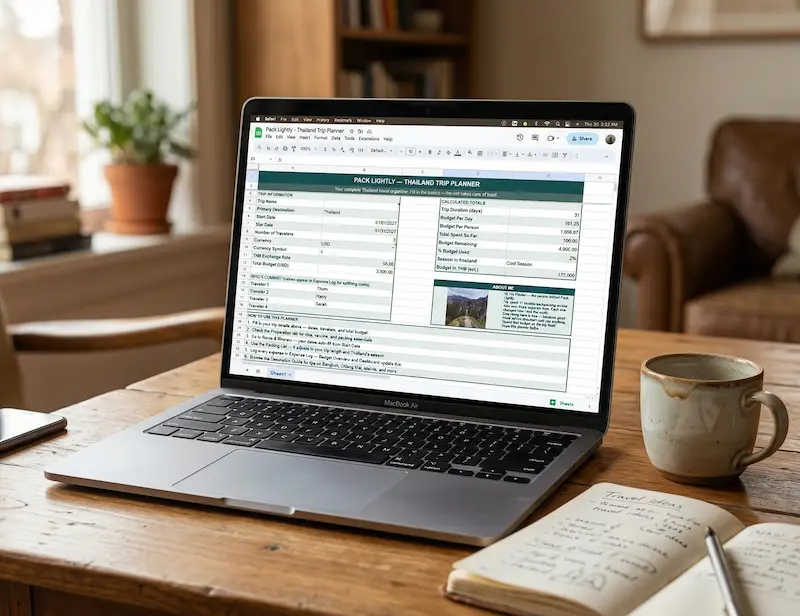
Plan your Tanzania trip
A free Google Sheets template: itinerary planning, daily expenses, budget tracking and a packing list, with a dashboard that updates as you go.
Get the Free TemplateWhat Tanzania costs per day
Per person per day in USD outside the parks. Safari days themselves run far higher, often $250 to $600 a day once park fees, a vehicle and lodging are added.
Tanzania, month by month
Arusha, the northern safari gateway. Temperature (°F) and rainfall (inches). Zanzibar and the coast run several degrees warmer and more humid.
What if…
Tanzania by trip length
Real day-by-day itineraries, one for each trip length. Pick the time you have and open the full plan.
Experience the stark contrast between the vast, sun-drenched Serengeti, where wildlife roams freely, and the lush, green Ngorongoro Crater, teeming with life.
See the full day-by-day planExperience the vibrant local markets of Arusha, where the air is filled with the scent of spices and fresh produce.
See the full day-by-day planOver three weeks, transition from the bustling markets of Arusha to the serene beaches of Zanzibar Island. Feel the heat of the African sun on your skin as you explore the wildlife-rich Tarangire National Park and the vast plains of the Serengeti.
Arriving in Arusha, the air is filled with the aroma of fresh coffee and the vibrant energy of local markets. Transitioning to the serene beaches of Zanzibar, the pace slows, and the scent of spices wafts through the air.
Book your Tanzania trip
Everything to sort before departure, same price as booking direct, and it helps keep these guides free.
Before you commit
Why Tanzania works
Few destinations pack this much into one trip. The northern parks hold some of the densest wildlife in Africa, Kilimanjaro is the continent’s highest summit, and Zanzibar delivers a proper beach finish, all reachable on short internal flights.
The wildlife is the reason to come. The Serengeti and Ngorongoro Crater deliver lions, elephants and the great migration at a scale that is hard to match anywhere else.
Honest downsides
- Park fees are steep: daily conservation and vehicle fees push safari costs well above the daily budget
- Slow overland travel: roads outside the parks are rough and distances long, so internal flights save days
- Uneven infrastructure: beyond the safari circuit and Zanzibar, services thin out fast
- Malaria risk: most of Tanzania is a malaria zone, so bring prophylaxis and repellent
Tanzania with kids
Safari is a genuine thrill for children, and the Ngorongoro Crater packs big animals into a short, easy game drive. Many lodges set minimum ages, so check before booking.
Zanzibar’s calm north-coast beaches are an easy reward at the end. Keep drives short, mind the sun, and stay on top of malaria precautions.
Frequently asked questions
Do US citizens need a visa for Tanzania?
Yes. US citizens need a visa, most easily arranged as a single-entry e-visa online before travel for about $50. Visas on arrival are also available at major airports, though the online route avoids the queue. A passport valid at least six months beyond arrival is required.
How much does Tanzania cost per day?
Outside the national parks, budget around $45 per person per day backpacking and $150 mid-range. Safari days are far more expensive: a guided game drive with park fees, a vehicle and lodging typically runs $250 to $600 per person per day.
What’s the best time to visit Tanzania?
June to October is the dry season and the prime window for safari and climbing Kilimanjaro, with thinner vegetation and easier wildlife spotting. The Serengeti migration river crossings peak around July to September. Zanzibar is warm almost year round, wettest in April and May.
Is Tanzania safe for tourists and solo travelers?
Tanzania is generally safe on the well-traveled safari and Zanzibar routes, where most visits are trouble free. Petty theft happens in cities like Dar es Salaam and Arusha, so keep valuables low-key. Solo travelers do fine, and guided safaris with reputable operators are the norm rather than independent driving.
How long do you need in Tanzania?
One week covers a focused northern safari loop. Ten days to two weeks lets you add Zanzibar or climb Kilimanjaro without rushing. Three weeks opens up the quieter southern parks like Nyerere and Ruaha.
Do you need a guide for a Tanzania safari?
Yes, in practice. Independent driving in the national parks is allowed but rare, and most parks require a licensed guide or a booked safari operator. A good guide handles the park permits, spots wildlife you would miss, and manages the logistics, which is why nearly all visitors travel this way.
Photo credits: Photo: Grahampurse / Wikimedia Commons, CC BY-SA 4.0 · Photo: Mbz1 / Wikimedia Commons, CC BY-SA 3.0 · Photo: xorge / Wikimedia Commons, CC BY-SA 2.0 · Photo: Matt Crypto / Wikimedia Commons, CC BY-SA 3.0 · Photo: Muhammad Mahdi Karim / Wikimedia Commons, GFDL 1.2 · Photo: Mario Falcetti / Wikimedia Commons, CC BY 4.0 · Photo: Sergey Pesterev / Wikimedia Commons, CC BY-SA 4.0 · Photo: Sansibar-freundeskreis.de / Wikimedia Commons, CC BY-SA 4.0