



Travel in Africa
Africa gets flattened into a single word: safari. That erases the Saharan desert kingdoms, the island chains where lemurs outnumber people, and the coastal cities that never see a game drive. Africa is four trips, not one, and only you know which one you’re chasing.
At a glance
- Divide Africa by the experience, not the map: safari and summit in the east, desert and ancient cities in the north, islands and coast on the edges, culture and cities in the west and interior.
- Safari season runs June to October in East and Southern Africa: dry, clear, peak wildlife viewing. Green season, November to May, is cheaper, wetter, and lush.
- Budget splits hard: overland travel in the north and east runs $30-70 per day, while safari lodges and island resorts demand $200-500 per night.
Africa’s size hides its fragmentation. Twenty-three time zones, 54 countries, and travel rhythms that barely resemble one another sit inside a single continent name. A first-time traveler who books Kilimanjaro and Cape Town’s Winelands into the same two-week trip burns both cash and schedule chasing distances that don’t fold together. The continent rewards focus instead: one region, one experience, one strategy per trip.
The four regions behave nothing alike. The north runs on trade-route history: Marrakech’s medinas, the Giza plateau, the dunes outside Merzouga. The east is wildlife on a scale nowhere else matches: the Serengeti’s migration, Kilimanjaro’s six-day ascent, Zanzibar’s reef-ringed coast. The south pairs infrastructure with wilderness: Cape Town’s restaurant scene, Kruger’s lodges, Namibia’s self-drive emptiness. The west and the islands hold the rarer finds: Senegal’s river delta, Seychelles’ empty beaches, Madagascar’s species found nowhere else on earth. Budget, logistics, and pacing all follow from which one you pick first.
Match the trip to the experience
Four experiences, not one continent
Skip the map for a moment. Decide what you actually want out of the trip first, then let that answer point you to the countries built for it.
Migration, mountains, gorillas
Safari & Wildlife
Kenya, Tanzania, Uganda, and Rwanda own the classic circuit: the migration’s river crossings, Kilimanjaro at dawn, gorilla treks through the interior highlands. Botswana, Zambia, and Zimbabwe add walking safaris and canoeing further south. Expect $2,000-5,000 per week all-in for a guided lodge stay.
Sahara, medinas, buried cities
Desert & Ancient
Morocco, Egypt, and Tunisia span the Sahara’s old trade routes. Marrakech’s medina lanes lead to the Merzouga dunes, the Nile valley stacks 4,000 years of temples, and Matmata’s underground dwellings anchor Tunisia’s off-road margin. Four weeks overland runs $30-50 per day on buses and shared taxis.
Reefs, lemurs, resort isolation
Coast & Islands
Mauritius and Seychelles are groomed, expensive, and predictable. Madagascar is none of those things: lemurs, baobabs, and reefs across an island where entire species exist nowhere else. Zanzibar, Cape Verde, and Mozambique‘s northern atolls sit in between at $50-150 per day.
Forts, capitals, delta towns
Culture & Cities
Senegal‘s Dakar and river delta and Ghana‘s coastal heritage forts carry narrative weight without a single game drive. Rwanda’s Kigali works the same way further east: a city break, not a safari base. Fold these into a regional itinerary as a launch point, not the whole trip. Budget a day or two, not a week.
The seven strongest starting points
Every country on this continent rewards a visit, but these seven rank highest as a first or second Africa trip, ranked on range, logistics, and how well the guide underneath each one holds up once you start planning. Islands, national parks, best-places round-ups, and budget breakdowns sit one click deeper for the countries that earn them.
South Africa
The all-rounderCape Town commands the southwest: Table Mountain, the Winelands, and the coastal views around Constantia Nek. The Garden Route runs 300 kilometers of forest and lagoons east from the city. Kruger anchors the safari half of the trip, self-drive, guided lodge, or a three-day walking trail, and seven to ten days packs the essential circuit. See the scenic spots across South Africa or push into the Karoo for the quieter interior.

Morocco
The accessible northMarrakech’s Jemaa el-Fnaa square and medina lanes lead into High Atlas trekking within a single afternoon. The Merzouga Sahara anchors a five-day loop from Marrakech, or push deeper to Erg Chigaga’s dunes and Tafraoute for fewer crowds. Fes and Chefchaouen round out the return leg. Budget $40-60 per day overland, and direct flights from Europe run a quarter of the cost of east African routes.

Egypt
Ancient density without peerThe Giza plateau’s pyramids are tourist infrastructure, not remote ruins, and Luxor’s temples crowd the Nile Valley across 4,000 years of buried history. A route runs a Nile cruise south to Aswan, a flight to Abu Simbel, then Red Sea diving in Hurghada. Cairo to the Mediterranean coast takes two weeks at $45-70 per day. Check the Nile and Red Sea islands for the diving-heavy detour.

Tanzania
The safari and summit iconThe Serengeti’s July-October migration is the planet’s largest terrestrial animal movement, 1.5 million wildebeest fording the Mara River. Ngorongoro Crater stacks predator and prey inside a single caldera, and Kilimanjaro’s 5,895-meter ascent takes six days. Zanzibar’s Stone Town and Pemba’s diving anchor the coast. A lodge week runs $2,500-4,000; a climbing permit alone costs $900.

Kenya
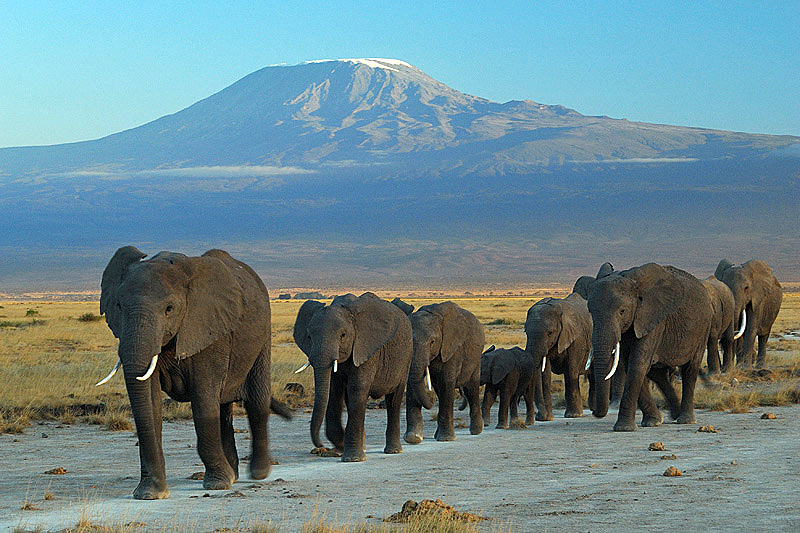
The classic safariMaasai Mara in dry season fills with the migration’s tail end and heavy big-cat density. Amboseli delivers Kilimanjaro views without Tanzania’s altitude problem, and Lake Nakuru and the Rift Valley lakes work as day trips from Nairobi. Diani Beach on the south coast is the resort fallback once the parks are done. A conservancy-based lodge week costs $2,000-3,500. See Lake Turkana and beyond for the harder, remoter version.
Namibia
Surreal self-drive countrySossusvlei’s red dunes meet Atlantic spray and shipwrecks along the Skeleton Coast within the same loop. Etosha’s salt-pan game drives yield predator chases without a guide, and the Fish River Canyon anchors the south. Rent a 4×4 in Windhoek and drive the C19 loop: two weeks, $1,800-2,200 including fuel and modest lodges. The Kaokoland and Epupa Falls route pushes further off-grid for travelers with time to spare.

Madagascar
Found nowhere elseLemurs rule the canopy, baobabs dominate the avenue between Menabe and Andohahela, and coral reefs encircle Nosy Be and the northeast. No lions, no elephants, no safari protocol: just hiking, beach time, and biological rarity you cannot see anywhere else on the continent. Two weeks runs $60-90 per day, with far fewer tourists than Zanzibar and older infrastructure to match. See what a $50-a-day Madagascar trip actually buys, or the Tsingy Rouge detour for the harder version.

Practical guidance before you book
The route matters less than the season and the budget tier you commit to. Get those two right and almost any pairing above works.
Safari season and timing
June to October is dry season in East and Southern Africa: cooler mornings, clear skies, peak wildlife visibility, and peak prices. Green season, November to May, is wetter, cheaper, and harder on roads, but bird life explodes and the parks empty out. Book lodges 3-6 months ahead for dry season. The Serengeti’s migration itself keeps moving: July-August river crossings, September-November grass grazing, December-March calving in the south.
Logistics and distances
Distances are real. A road journey from Cape Town to the Serengeti runs 6,000-plus kilometers and needs local guides, not a rental car and a map. Internal flights between countries are not a budget option: Dar es Salaam to Nairobi alone costs $200-300. Plan one to two countries per trip, not a continent-spanning loop. Within a country, major cities run reliable taxis and ride-hailing; rural routes still demand a guide. Allow 1.5 times the travel time your first instinct suggests.
Cost split
Overland travel in the north and east runs $30-70 per day on buses, shared taxis, and guesthouses. Safari lodges in reserves run $200-500 per night, often all-inclusive. Island resorts run $150-400, and Mauritius or Seychelles push $300-600. Budget separately for internal flights ($300-600), park fees ($20-100), guides ($50-100 per day), and meals ($15-40 per day). A week in the Serengeti with a lodge lands at $3,500-5,500 total. The real cost of travel guide breaks the wider math down.
Health preparation
Malaria is endemic across sub-Saharan Africa below 2,000 meters. Yellow fever vaccination is required or advised for certain countries, Egypt and parts of East Africa among them. Typhoid, hepatitis A, and routine boosters are sensible additions. Consult a travel health clinic 6-8 weeks ahead of departure, pack insect repellent, and follow whatever antimalarial regimen your clinic prescribes. This is general orientation, not medical advice: confirm country-specific requirements with a clinician before you book.
Explore the region on the map
Every country in Africa links to a detailed travel guide on Pack Lightly, but clicking through them one at a time is slow. The interactive country map below lets you click any nation to jump straight to its guide, browse its sub-regions, and reach the links to national parks, islands, beach towns, and budget breakdowns underneath it. Use it to plan region by region, or to find which countries actually fit your timeline and budget.
Country Map
Reserves, water sources, and towns across every African country, pinned on a free interactive map. No account, works on your phone.
Map not loading? Open the country map in a new tab.
Keep exploring
Where to go next
The seven featured countries
Plan the wider trip
Explore every region
Seven regional guides, one per continent. Pick where you are headed next and jump straight to the countries.
Common questions
01Which African country is best for a first safari?
South Africa is the safest entry point: Kruger’s self-drive safari needs no special guide, roads are paved, and Cape Town offers a non-safari fallback if wildlife isn’t the whole trip. Kenya’s Maasai Mara and Tanzania’s Serengeti or Ngorongoro are the classic north-circuit alternatives, but they demand more planning and budget. South Africa works solo or in a group; the Mara and Serengeti work best with a guide and a lodge booked ahead.
02When is the best time to go on safari?
June through October is dry season in East and Southern Africa. Mornings are cool, skies are clear, and wildlife congregates around shrinking water sources, which makes sightings predictable. Prices peak at the same time. Green season, November to May, is cheaper, wetter, and more lush, but roads can close and wildlife spreads out, making sightings harder. The Serengeti migration itself runs July-September for river crossings and December-March for the calving grounds.
03Do I need vaccinations for Africa?
Often, yes. Yellow fever is mandatory or recommended for most sub-Saharan countries, and malaria is endemic below 2,000 meters, so antimalarial tablets are standard for many itineraries. Typhoid and hepatitis A boosters are also worth considering. Visit a travel health clinic 6-8 weeks before departure: they will confirm country-specific requirements and prescribe the right malaria prevention for your route.
04Is Africa expensive to travel?
It splits hard by region and pace. Overland travel in the north and west costs $30-70 per day on buses, guesthouses, and street food. Safari lodges in reserved land run $200-500 per night, and high-end lodges climb past $1,000. Island resorts in Mauritius or Seychelles demand $300-600 per night. Internal flights are rarely a budget line item, often $200-300 each. A two-week trip can land anywhere from $1,500 overland to $5,000-plus lodge-based, depending on the choices you make.
05Is Africa safe for tourists?
Safety varies by country and region, the same way it does on any continent. South Africa, Namibia, Botswana, and Tanzania sit on standard tourist circuits with predictable risk profiles. Rwanda, Kenya, and Uganda run stable tourism infrastructure but call for normal urban awareness. Morocco, Egypt, and Tunisia in the north are well-traveled and touristed. Remoter interior destinations call for more self-sufficiency and planning. Check your government’s travel advisories per country before booking, and treat this as general orientation, not a safety verdict.
Photo credits: Photo: Danie van der Merwe from Cape Town, South Africa / Wikimedia Commons, CC BY 2.0 · Photo: Yair Haklai / Wikimedia Commons, CC BY-SA 4.0 · Photo: Douwe C. van der Zee / Wikimedia Commons, CC BY-SA 4.0 · Photo: Mario Falcetti / Wikimedia Commons, CC BY 4.0 · Photo: Amoghavarsha JS amoghavarsha.com / Wikimedia Commons, CC BY-SA 3.0 · Photo: Ikiwaner / Wikimedia Commons, GFDL 1.2 · Photo: Pat Hooper from Chicago, IL, USA / Wikimedia Commons, CC BY-SA 2.0