



Zambia
Two of Africa’s great wildlife rivers, the continent’s biggest waterfall, and the park where the walking safari was invented. Zambia rewards travelers who come for the bush over the checklist, and it stays quiet where the big-name safari countries are crowded.
Zambia is a safari-first destination, not a sightseeing one. Give it ten days to two weeks, pair one great park with the falls, and let the game drives set the pace.
Pack Lightly editorial team
At a glance
- Nature scores a 90 and adventure an 85. This is walking-safari country, and the wildlife density on the Luangwa and Zambezi rivers rivals anywhere in East Africa.
- Budget around $55 a day backpacking, $180 mid-range. Fly-in safari lodges push the comfort tier well past $600, so the range here is wide.
- The dry season from May to October is prime for wildlife; September and October are hot but the game viewing peaks as animals crowd the last water.
- Ten days covers one park plus Victoria Falls comfortably. Two weeks lets you add a second park without long transfers.
- The catch: tourist infrastructure is thin outside the parks and lodges, roads are rough, and self-driving to remote camps is not casual. Budget for internal flights or transfers.
Everything to know before you book
The essentials for a Zambia trip: visa, money, safari season and health, in one scan.
What Zambia is, and what it isn’t
Ten categories scored 0 – 100 from tourism data, traveler reports and on-the-ground experience.
Wildlife and wilderness carry Zambia. Walking safaris, high game density and genuinely warm hosts are the reasons to come.
Outside lodges the tourist infrastructure is basic and roads are rough. The food is honest but not a highlight. Plan around both rather than expecting polish.
Best places to visit in Zambia
Twelve destinations anchor most first trips: the falls and a flagship safari park.
Victoria Falls
The largest sheet of falling water on Earth, seen from the Zambian side at Livingstone. High water from February to May brings the roar and the spray; low water opens the Devil’s Pool swims.South Luangwa National Park
The home of the walking safari, and one of Africa’s best parks for leopard. Elephant and buffalo herds cross the Luangwa River while hippo and croc fill the channels below.Livingstone
The scent of grilled maize drifts through the craft market on Mosi-oa-Tunya Road in the city center.Mosi Oa Tunya National Park
The park sits along the Zambezi River next to Victoria Falls, with river frontage and mist visible from the trails.North Luangwa National Park
Wild dogs hunt in packs near the Chindeni River crossing at dusk in this remote northern park.Livingstone Island
Perched on the edge of Victoria Falls, the island is reached by boat in the dry season for swimming at the rim.Ndola
A Copperbelt city of around 200,000 built on a mining and trading history.Kitwe
The industrial heart of the Copperbelt, home to around 400,000 people and Zambia’s mining activity.Kalambo Falls
A gorge carries mist off one of Africa’s tallest single-drop waterfalls near the Tanzania border.Lochinvar National Park
Bird populations and the endemic Kafue lechwe antelope gather on this wetland park south of Lusaka.Shiwa Ngandu
A historic English-style country estate with a grand manor house and gardens in northern Zambia.Mongu
The Barotse Floodplain hosts the Kuomboka ceremony, with decorated canoes and music each year.Lake Kariba & Zambezi Valley
Northern Zambia
Central Zambia
Western Zambia
Kafue & Eastern Wetlands
Zambia at a glance
Click a pin to open that destination guide.


All Zambia guides
Every Pack Lightly guide for planning, preparing and exploring the country.
Planning & Logistics
Practical & Preparation
Nature & Activities
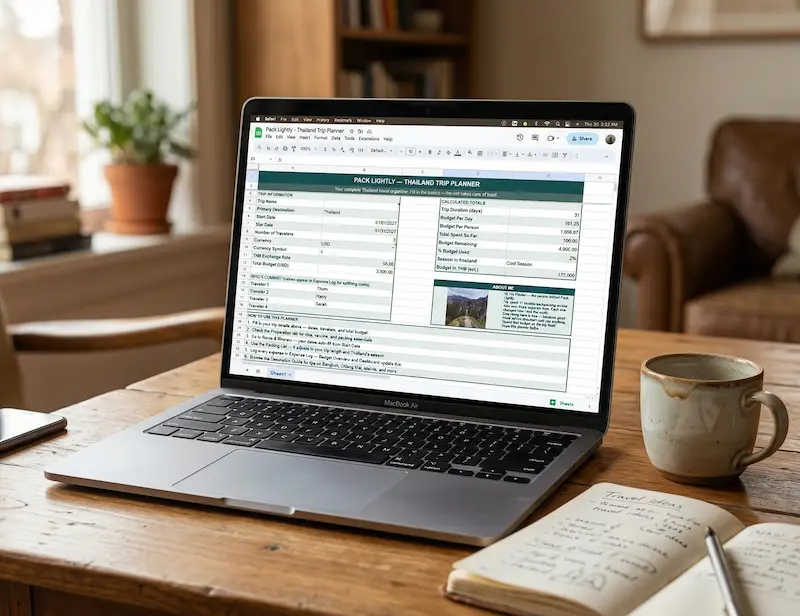
Plan your Zambia trip
A free Google Sheets template: itinerary planning, daily expenses, budget tracking and a packing list, with a dashboard that updates as you go.
Get the Free TemplateWhat Zambia costs per day
Per person per day in USD, drawn from the Pack Lightly budget calculator. Safari lodges are the line that swings the total.
Zambia, month by month
Lusaka on the central plateau: temperature (°F) and rainfall (inches). The dry season runs May to October; the rains fall November to April.
What if…
Zambia by trip length
Real day-by-day itineraries, one for each trip length. Pick the time you have and open the full plan.
Feel the rush of mist from Victoria Falls in Livingstone, then transition to the wild serenity of South Luangwa National Park, where the sounds of nature dominate.
See the full day-by-day planExperience the stark contrasts of Zambia as you journey from the thundering Victoria Falls in Livingstone to the serene wildlife of South Luangwa National Park, then glide along the Zambezi River in Lower Zambezi National Park before concluding in the vibrant urban landscape of Lusaka.
See the full day-by-day planOver three weeks, immerse in the contrasting landscapes of Zambia, from the roaring Victoria Falls to the serene waters of Lake Kariba.
Book your Zambia trip
Everything to sort before departure: same price as booking direct, and it helps keep these guides free.
Before you commit
Why Zambia works
It is a bush destination first. The reason to fly here is wildlife on foot and on the water, in parks that stay quiet where the marquee safari countries are busy. South Luangwa and the Lower Zambezi hold their own against anywhere on the continent.
The falls seal it. Victoria Falls sits on the southern border at Livingstone, an easy flight from the parks, so most trips pair a safari with a day or two at the water without a long detour.
Honest downsides
- Thin infrastructure: outside lodges and Livingstone, tourist services and signage are basic
- Rough roads: reaching remote camps often means an internal flight or a slow, bumpy transfer
- It adds up: budget travel is possible, but quality safari camps run into hundreds of dollars a day
- Malaria: much of Zambia is a risk zone, so pack prophylaxis and repellent
Zambia with kids
Older kids who can handle early starts and long game drives do well here, and many lodges run family tents and shorter activities. The wildlife itself is the entertainment, and guides are used to keeping younger travelers engaged.
Very young children are a harder fit: walking safaris have age limits, malaria is a real concern, and transfers are long. Families with toddlers usually get more out of the Livingstone side, where the falls, a wildlife park and river cruises sit close together.
Frequently asked questions
Do US citizens need a visa for Zambia?
US citizens can enter Zambia visa-free for tourism, for stays of up to 90 days per year. Carry a passport valid for at least six months with blank pages, and be ready to show proof of onward or return travel on arrival.
How much does Zambia cost per day?
Budget around $55 per person per day backpacking with guesthouses, self-catering and public transport. Mid-range is closer to $180 with better lodges and guided activities. Comfort safari travel with fly-in camps runs $650 and up, which makes Zambia’s price range unusually wide.
What’s the best time to visit Zambia?
The dry season from May to October is best for wildlife, as animals concentrate around shrinking water and the bush thins out. September and October are hot but offer the peak game viewing. For the fullest Victoria Falls, come February to May when the river is high.
Is Zambia safe for tourists and solo travelers?
Zambia is generally safe for visitors, and Zambians are known for being welcoming. Petty theft happens in Lusaka and busy transport hubs, so keep valuables discreet. On safari, follow guide instructions closely, since walking safaris put you on foot near big game.
How long do you need in Zambia?
Ten days covers one safari park plus Victoria Falls at a comfortable pace. Two weeks lets you add a second park, such as the Lower Zambezi, or a few slow days on Lake Kariba. A week is enough for a single park and the falls if you fly between them.
What is a walking safari and where do you do it?
A walking safari swaps the vehicle for exploring the bush on foot with an armed, licensed guide, focusing on tracks, birds and smaller detail as much as big game. It was pioneered in South Luangwa in the 1950s, and that park remains the best place in Africa to try one.
Photo credits: Photo: Joachim Huber from Switzerland / Wikimedia Commons, CC BY-SA 2.0 · Photo: LittleT889 / Wikimedia Commons, CC BY-SA 4.0 · Photo: Brian McMorrow / Wikimedia Commons, CC BY-SA 2.5 · Photo: Diego Delso / Wikimedia Commons, CC BY-SA 4.0 · Photo: Worldtraveller / Wikimedia Commons, CC BY-SA 3.0 · Photo: Diego Delso / Wikimedia Commons, CC BY-SA 4.0 · Photo: Geoff Gallice / Wikimedia Commons, CC BY 2.0