



Zimbabwe
One of the great waterfalls on Earth, elephant herds by the thousand, and stone ruins older than any story you were told about Africa. Zimbabwe runs on classic safari and thin infrastructure, so it rewards travelers who plan the logistics and let a guide do the driving.
Zimbabwe is a two-anchor trip: Victoria Falls and a proper safari. Give it ten days, pay in US dollars, and book a guide rather than self-driving the parks.
Pack Lightly editorial team
At a glance
- Nature scores 90 and adventure 85. This is a wildlife and landscape destination first, and it delivers on both.
- Budget around $55 a day backpacking, $130 mid-range. Park fees and lodge safaris are where the money goes.
- The dry season from May to October is prime: cool mornings, thin bush and animals crowding the waterholes.
- Ten days covers Victoria Falls plus one big park. Two weeks adds Mana Pools, Matobo Hills or a Great Zimbabwe detour.
- The catch: tourist infrastructure is thin outside the falls, roads are rough and fuel can be scarce, so lean on guides and lodges rather than a rental car.
Everything to know before you book
The essentials for a Zimbabwe trip: visa, money, safari season and power, in one scan.
What Zimbabwe is, and what it isn’t
Ten categories scored 0 – 100 from tourism data, traveler reports and on-the-ground experience.
Wildlife and landscape carry the trip, backed by genuinely warm people. Zimbabwe is built for active, outdoor travel.
Roads, fuel and services are thin outside the main sights, and the food scene is functional rather than a draw. Plan around both.
Best places to visit in Zimbabwe
Twelve anchors carry most trips: the great waterfall in the west and the elephant country beside it.
Victoria Falls
A mile-wide curtain of the Zambezi dropping into a gorge, plus the adventure town beside it: rafting, bungee, sunset cruises and helicopter flights over the spray.Hwange National Park
Zimbabwe’s biggest park and one of Africa’s great elephant strongholds, an easy add-on a few hours south of the falls with lions, buffalo and pumped waterholes.Harare
Mbare Market draws visitors for street food and morning trade in the capital’s oldest quarter.Bulawayo
Colonial-era streets surround the Bulawayo Railway Museum in Zimbabwe’s second-largest city.Mutare
Zimbabwe’s largest eastern city sits in a green valley near the Mozambique border, with a local museum and market.Gonarezhou National Park
Elephant herds gather below the Red Chilojo Cliffs at sunset in the park’s southern zone.Khami Ruins
Terraced stone platforms and intricate stonework mark this UNESCO site near Bulawayo.Chinhoyi Caves
A limestone cave system north of Harare centers on a cobalt-blue pool used for diving and swimming.Chimanimani
Bridal Veil Falls sits near the village trailhead, the starting point for hikes into the Chimanimani mountains.Nyanga
Pine forest trails lead from Nyanga National Park toward the Mount Nyangani ascent.Zambezi National Park
Game drives along the Zambezi River, 10 miles / 16 km from Victoria Falls, cover elephant and buffalo territory.Kariba Town
Built for the Kariba Dam project, this lakeside town is the main launch point for houseboat trips.Zambezi River
Lakes & Reservoirs
Great Zimbabwe & Masvingo
Midlands & Highlands
More places
Zimbabwe at a glance
Click a pin to open that destination guide.


All Zimbabwe guides
Every Pack Lightly guide for planning, preparing and exploring the country.
Planning & Logistics
Practical & Preparation
Nature & Activities
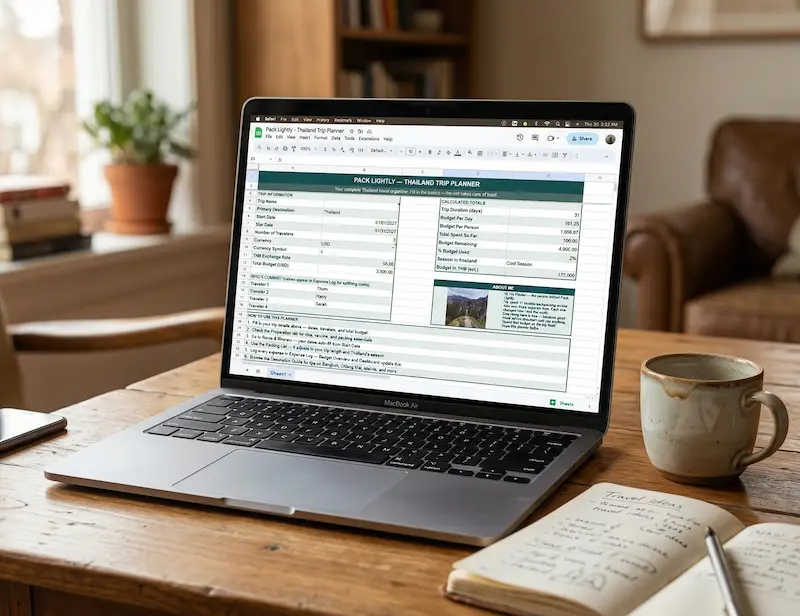
Plan your Zimbabwe trip
A free Google Sheets template: itinerary planning, daily expenses, budget tracking and a packing list, with a dashboard that updates as you go.
Get the Free TemplateWhat Zimbabwe costs per day
Per person per day in USD, drawn from the Pack Lightly budget calculator. Park fees and guided safaris are the big lines.
Zimbabwe, month by month
Harare on the central highlands: temperature (°F) and rainfall (inches). Cool dry winter from May to August, hot wet summer from November to March.
What if…
Zimbabwe by trip length
Real day-by-day itineraries, one for each trip length. Pick the time you have and open the full plan.
Feel the mist of Victoria Falls as it crashes into the Zambezi River, then transition to the vast savannahs of Hwange National Park, where elephants roam freely. Finally, explore the ancient granite hills of Matobo, rich with history and wildlife.
Experience the vibrant rush of Victoria Falls, where the Zambezi River cascades dramatically, before transitioning to the rugged wilderness of Hwange National Park, alive with the sounds of wildlife.
See the full day-by-day planFeel the rush of Victoria Falls as the Zambezi River cascades into mist, then transition to the serene wilderness of Mana Pools National Park where wildlife roams freely.
Book your Zimbabwe trip
Everything to sort before departure: same price as booking direct, and it helps keep these guides free.
Before you commit
Why Zimbabwe works
It packs a full safari story into a compact route. Victoria Falls, elephant country and stone ruins sit close enough that ten days feels rich rather than rushed, and the wildlife density in the dry season is genuinely first tier.
US dollars are the working currency, so pricing is easy to read and there is no exchange-rate guessing. Guides and lodges are warm, professional and used to English-speaking visitors.
Honest downsides
- Thin infrastructure: roads are rough and fuel can run short, so guided transfers beat a rental car
- Cash matters: bring clean US dollar notes, since cards and ATMs are unreliable outside big hotels
- Malaria zones: Hwange and the Zambezi valley need prophylaxis and repellent
- Safari adds up: park fees and lodge rates push the daily cost well above the backpacker figure
Zimbabwe with kids
Older children who can handle early game drives do well here, and the falls town has enough day activities to keep everyone busy between safaris. Most lodges are set up for families and briefed on younger guests.
Keep the itinerary short on transfers and long on waterholes, and mind the malaria zones with the right pills and cover-up clothing at dusk.
Frequently asked questions
Do US citizens need a visa for Zimbabwe?
Yes, but it is straightforward. US passport holders get a tourist visa on arrival or online, typically about $30 for single entry and 30 days. Bring clean US dollar notes to pay in cash, and consider the KAZA UniVisa if you also plan to cross into Zambia.
How much does Zimbabwe cost per day?
Budget around $55 per person per day backpacking with guesthouses and shared transport. Mid-range is closer to $130 with better lodges and some guided activities, and comfort safari travel runs $320 and up once park fees and camps are included.
What is the best time to visit Zimbabwe?
May to October is the dry season and the prime window: cool mornings, thin bush and animals gathering at the waterholes. For the fullest Victoria Falls flow, aim for April to June just after the rains. November to March is hot and wet, with lush scenery but harder game viewing.
Is Zimbabwe safe for tourists?
The main tourist areas of Victoria Falls, Hwange and Matobo are calm and used to visitors, and violent crime against travelers is rare. Petty theft happens in Harare, so keep valuables low key. The bigger practical issues are fuel shortages and rough roads, which is why most people travel with guides.
How long do you need in Zimbabwe?
Ten days covers Victoria Falls plus one major park at a relaxed pace. Two weeks lets you add Mana Pools, the Matobo Hills, Great Zimbabwe or Lake Kariba without long driving days. A quick five-day trip can still pair the falls with a Hwange safari.
Should you visit the Victoria Falls side in Zimbabwe or Zambia?
The Zimbabwe side has the wider panoramic views and most of the falls face, and its town has the deeper choice of lodges and activities. The Zambia side gets you closer to the edge and the Devils Pool in low water. Many travelers cross for a day, which the KAZA UniVisa makes easy.
Photo credits: Photo: Andrew Moore from Johannesburg, South Africa / Wikimedia Commons, CC BY-SA 2.0 · Photo: Brian McMorrow / Wikimedia Commons, CC BY-SA 2.5 · Photo: Suesen / Wikimedia Commons, CC BY-SA 3.0 · Photo: Bernard DUPONT from FRANCE / Wikimedia Commons, CC BY-SA 2.0 · Photo: Diego Delso / Wikimedia Commons, CC BY-SA 4.0 · Photo: JackyR / Wikimedia Commons, CC BY-SA 3.0