

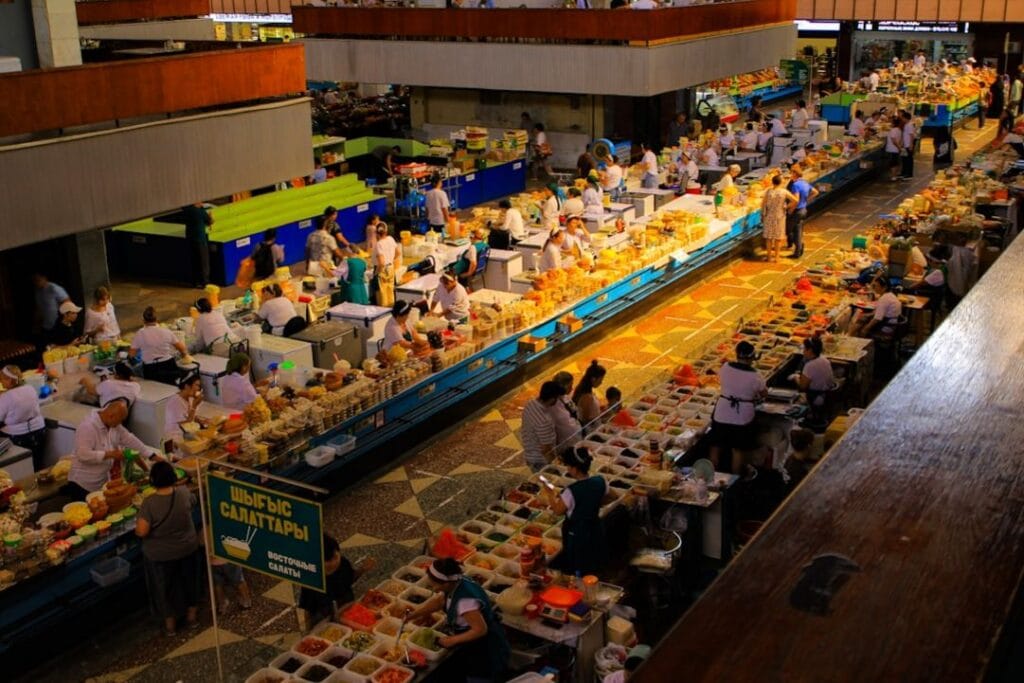
Steam rises from a shared plate of Beshbarmak as hands gather around the family kitchen table in Almaty.
Kazakhstan’s food culture centers on hearty, meat-forward dishes shared in family kitchens, where eating with hands is the norm. Beshbarmak, the national dish of boiled meat and noodles, anchors these communal meals. Drinks like Kumis and Shubat complement the rich flavors and are part of the hospitality ritual. This cuisine demands patience and appetite; it’s not about quick bites but about connection and ceremony. Expect to spend time at family-run guesthouses or paladars where the meal unfolds naturally around the table. Plan to join these settings early in your trip to grasp the full tradition.
Quick answer
Eat Beshbarmak for its hand-eating ritual, Kazy sausage for rich horse meat flavor, Baursak for fried bread snacks, and drink Kumis or Shubat for traditional fermented dairy refreshment.
Key takeaways
- Choose family-run guesthouses in Almaty or Astana for authentic communal meals.
- Order Beshbarmak for lunch or dinner to experience the hand-eating tradition.
- Plan ~$25-45/day for food and drinks in guesthouse or paladar settings, 2026.
- Book a half-day cooking class with a local family to learn Beshbarmak preparation.
- Avoid tourist traps serving Beshbarmak with pre-cut meat; seek whole boiled cuts.
- Try Kumis and Shubat during meals to understand Kazakh hospitality rituals.
- Breakfast often includes Baursak and tea in family kitchens; skip cafes for this.
- Focus on meat and dairy dishes; vegetarian options are limited outside major cities.
Book a food tour or cooking class in Kazakhstan
Cooking classes, market tours, and street-food walks led by local hosts in Kazakhstan — skip the tourist menus and eat what locals actually eat.

Local Food & Drinks tool
Open the interactive Kazakhstan food map — every dish and drink in this guide, plotted on a map with what to order, where to find it, and what it costs.
Eat with a local in Kazakhstan
Cooking classes, market tours, and street-food walks led by local hosts in Kazakhstan — skip the tourist menus and eat what locals actually eat.
Why Kazakhstan eats the way it does

Kazakh cuisine reflects its vast steppe geography and nomadic pastoral traditions, centered on meat and hearty staples. Feeding guests is a ritual of respect and hospitality, often involving communal meals where eating with hands connects diners directly. The harsh continental climate shaped a diet rich in preserved meats and warming dishes like noodles and broths. This food culture thrives in family homes and guesthouses where sharing beshbarmak signals trust and social bonds.
- Kazakh meals revolve around meat, especially horse, mutton, and beef, paired with simple noodles or flatbread.
- Eating with hands during communal meals emphasizes connection and tradition, not just practicality.
- Beshbarmak, the national dish, is served all at once on a shared platter, not in courses.
- Kazakh hospitality requires hosting guests with abundant food, reflecting social status and respect.
Best for: You get the most from Kazakh food culture by joining family-run guesthouses or paladars where hosts serve communal meat dishes. Prioritize a cooking class that teaches hand-eating beshbarmak and the guest-host rituals around it.
Must-try dishes in Kazakhstan

Beshbarmak (Бешбармақ)
Beshbarmak combines boiled horse, mutton, or beef with wide, flat noodles, all served on a single large platter. The dish carries a rich, meaty broth poured over the noodles, creating a hearty, warming texture and taste. Locals eat it with their hands, emphasizing the social ritual over utensils, reinforcing bonds during shared meals.
Where to find it: Enjoy Beshbarmak in family-run guesthouses or at communal gatherings where hosts present it as a sign of respect.
Best for: ideal for group meals and special occasions
Kazy (Қазы)
Kazy is a traditional horse meat sausage, cured and smoked to develop a rich, gamey flavor unique to Kazakh cuisine. It’s often sliced thin and served cold as part of a meat platter or with Beshbarmak. The texture is firm yet tender, and the taste carries a subtle smokiness that complements the fatty richness.
Where to find it: Find Kazy in family homes or at local markets where butchers prepare it fresh for communal meals.
Shashlik (Шашлык)
Shashlik features marinated chunks of mutton or beef grilled over open coals, yielding smoky, juicy meat with a slightly charred exterior. The marinade often includes onions and simple spices, enhancing the natural flavor without overpowering it. It’s a favorite across Kazakhstan for outdoor gatherings and street food.
Where to find it: Taste Shashlik at family-run kampirs (barbecue spots) or during open-air markets and festivals.
Best for: best for casual meals or quick bites
Kurt (Құрт)
Kurt is dried, salted cheese balls made from boiled and fermented sheep or cow milk. The flavor is intensely salty and tangy, with a crumbly, hard texture that lasts long without refrigeration. It serves as a staple snack or accompaniment to tea during communal gatherings.
Where to find it: Commonly found in family kitchens and offered as a snack during social visits or roadside stops.
Best for: suitable for snacking between meals
Baursak (Бауырсақ)
Baursak are deep-fried dough balls, golden and airy with a slightly sweet dough. They often accompany meat dishes or tea and provide a neutral, comforting contrast to rich, salty flavors. The crispy exterior and soft inside invite hand-eating and sharing alongside family meals.
Where to find it: Find Baursak in family-run guesthouses or at communal celebrations where bread plays a central role.
Best for: great as a side or snack during afternoon tea
Kuyrdak (Қуырдақ)
Kuyrdak is a hearty skillet dish of fried mutton offal mixed with onions and potatoes, seasoned simply to highlight the savory, rich flavors. It’s a rustic, filling dish that reflects Kazakh resourcefulness, often cooked at home or during nomadic-style gatherings. The texture balances tender meat with crispy edges.
Where to find it: Most often served in family kitchens or rural guesthouses specializing in traditional fare.
Best for: best for lunch or early dinner in traditional settings
Shubat (Шұбат)
Shubat is fermented camel milk, slightly sour and effervescent, prized for its health benefits and unique flavor. It has a thick, creamy texture and a tang that can surprise newcomers but is deeply rooted in Kazakh nomadic tradition. It’s often served chilled during meals or as a refreshing palate cleanser.
Where to find it: Available in family homes and local markets, especially in southern Kazakhstan where camel herding is common.
Best for: refreshing drink alongside meat-heavy dishes
Kuyrdak Soup (Қуырдақ сорпасы)
Kuyrdak Soup is a broth-based dish made from simmered mutton offal and vegetables, offering a rich, meaty flavor with a clear, savory broth. It’s a warming starter or light meal that complements heavier main dishes in Kazakh homes. The soup reflects the nose-to-tail approach of Kazakh cooking.
Where to find it: Usually served in family kitchens or at communal tables during colder months.
Best for: starter or light meal in traditional settings
Zhent (Жент)
Zhent is a dense, sweet dessert made from crushed toasted wheat mixed with melted butter and sugar or honey. It’s rich and crumbly, often served in small portions after meals or with tea. This simple, rustic sweet reflects the emphasis on wholesome ingredients in Kazakh home kitchens.
Where to find it: Found in family homes and guesthouses as a customary after-meal treat.
Best for: dessert or afternoon snack with tea
Manty (Манты)
Manty are large steamed dumplings filled with seasoned ground lamb or beef mixed with onions. The dough is thick enough to hold the juicy, savory filling, and they’re typically served with sour cream or a light broth. Eating manty by hand fits the communal style, often shared in family kitchens or guesthouses.
Where to find it: Commonly enjoyed in family-run homes and small communal eateries specializing in traditional dishes.
Best for: perfect for lunch or dinner shared with others
Local drinks in Kazakhstan

Shubat (Шұбат)
Shubat is fermented camel milk with a tangy, slightly sour flavor and creamy texture. It carries subtle earthy notes and a natural effervescence from fermentation. Traditionally served cold, it balances the richness of heavy meat dishes like Beshbarmak.
When to drink it: Drink shubat during hot summer days or alongside meat-centered meals such as Beshbarmak to refresh the palate.
Where to find it: Find shubat in family-run guesthouses and local markets, where it is often served fresh and chilled in traditional bowls.
Kumis (Қымыз)
Kumis is fermented mare’s milk with a slightly alcoholic content (~1–2%) and a sharp, sour taste profile. The natural fermentation produces a fizzy, tangy drink that complements Kazakhstan’s meat-heavy cuisine. It symbolizes nomadic heritage and hospitality during communal meals.
When to drink it: Kumis suits celebratory occasions or social gatherings, pairing well with rich dishes like Kazy or Kuyrdak.
Where to find it: Look for kumis at rural family homes and traditional festivals, often poured into shared cups during communal feasts.
Kazakh Tea (Қазақ шайы)
Kazakh tea blends black tea leaves with milk or cream, producing a rich, slightly astringent drink that cuts through heavy meat dishes. It often carries a smoky or buttery undertone depending on the region. Tea serves as a ritual welcome drink, poured repeatedly to honor guests.
When to drink it: Drink Kazakh tea throughout the day, especially during meals like Manty or Baursak, or as a sign of hospitality upon arrival.
Where to find it: Enjoy Kazakh tea in family-run guesthouses and communal dining settings where the host initiates multiple rounds.
Araka (Арақ)
Araka is a local distilled spirit, typically made from grain or potatoes, with a robust alcohol strength around 40%. It delivers a clean, sharp bite that cuts through heavy meats and rich dairy. Araka often accompanies toasts during communal meals, emphasizing respect and social bonds.
When to drink it: Sip araka during celebrations or after meals like Shashlik to aid digestion and mark social connection.
Where to find it: Find araka in family homes during feasts or in small local bars serving traditional drinks alongside hearty dishes.
Where to eat in Kazakhstan

Kazakh meals revolve around family kitchens and communal dining where sharing meat dishes by hand is the norm. Expect hearty, meat-forward meals served in guesthouses and paladars, not formal restaurants. Prioritize eating in family-run settings to experience the full ritual of Beshbarmak and other traditional dishes.
Primary setting: Paladar (family-run communal dining)
Paladars are family homes or guesthouses opening their tables to visitors, often in Almaty or Astana neighborhoods. You sit at a shared table, sometimes on floor cushions, and eat with your hands following local custom. Hosts serve generous platters of meat and noodles, inviting conversation and hospitality. Meals cost around $10–15 per person, including tea and sometimes homemade dairy drinks.
Teahouse (Chaykhana)
Teahouses offer a relaxed setting for lighter meals or snacks, often with a communal table atmosphere. They serve Kazakh Tea alongside pastries like Baursak and simple meat dishes. Prices stay low, around $5–10 per visit, making them ideal for midday breaks.
Market stalls
Markets in Almaty and Karaganda feature vendors selling quick bites like Shashlik and Kurt. These stalls provide a fast, informal way to sample local flavors but lack the communal dining ritual. Expect to pay $2–6 per snack.
Local restaurants
Sit-down restaurants focus on Kazakh classics but with less intimacy than paladars. They require casual dress and sometimes reservations for dinner. Prices range from $15–25 per person, with tipping around 10% customary.
| Type | Price range (2026) |
|---|---|
| Budget eats | Market stalls and teahouses: $2–8 per meal, 2026 |
| Mid-range | Paladars and local restaurants: $10–25 per person, 2026 |
| Splurge | Private home dining experiences with multi-course meals: $40–60 per person, 2026 |
Eat like a local in Kazakhstan
Meals in Kazakhstan revolve around long, communal gatherings where guests are honored with generous servings. The main meal often happens midday or early evening in a paladar, lasting several hours as conversation and hand-eating flow. Breakfast tends to be simple and quick, while Sunday lunch or festive dinners hold the most significance.
- Use your right hand for eating and passing food—this respects the hand-eating tradition central to dishes like Beshbarmak.
- Wait for the host to invite you to start eating; this signals respect and acknowledges the communal bond.
- Pour drinks for others before filling your own glass, especially when sharing Shubat or Kumis during a meal.
- Offer to share Kazy or Baursak pieces rather than taking from the center plate directly; this shows courtesy in communal dining.
- Avoid leaving your plate completely empty as it may signal you are still hungry and the host might offer more.
- When eating Beshbarmak, use your fingers to pick up noodles and meat, but keep hand movements controlled and polite.
Frequently asked questions about food and drinks in Kazakhstan
1Is Beshbarmak worth trying or is it overhyped?
Yes, Beshbarmak is essential for experiencing Kazakh communal dining and hand-eating tradition. It’s heavy and meat-forward, so skip it if you want lighter meals.
2What does a day of eating in Kazakhstan cost?
Roughly $25–$40 per day covers meals in family-run paladars and local guesthouses, including Beshbarmak and snacks like Baursak in 2026.
3Is Kazakhstan good for vegetarians or vegans?
No, Kazakh cuisine centers on meat, especially horse, mutton, and beef. Vegetarian options like Baursak and Kurt exist but full meals require special requests.
4What is Kazy and why is it important in Kazakh food culture?
Kazy is a horse meat sausage rich in flavor, often served during communal meals. It highlights the cultural importance of horse meat in Kazakh hospitality.
5Where can I find authentic Beshbarmak in Kazakhstan?
Almaty’s Zhibek Zholy Street offers family-run paladars specializing in Beshbarmak served on shared platters, ideal for experiencing the hand-eating ritual.
6What is Shubat and when should I drink it?
Shubat is fermented camel milk, a refreshing dairy drink best enjoyed during or after heavy meat meals like Kuyrdak to aid digestion.
7What should I drink with Shashlik at Karaganda Central Market?
Drink Kazakh Tea or Araka, a local spirit, to balance the smoky, grilled flavors of Shashlik found at Karaganda’s market stalls.
8Are there common food mistakes tourists make in Kazakhstan?
Yes, ordering individual portions instead of sharing Beshbarmak misses the communal ritual. Also, skipping local dairy drinks like Kumis reduces the full meal experience.
9What is the best dish to try in Astana’s Old Town for home-style cooking?
Manty, steamed meat dumplings, are a staple in Astana’s Old Town guesthouses and teahouses, reflecting authentic home cooking and family hospitality.
10Can I eat safely at street stalls in Kazakhstan?
Yes, stalls at Karaganda Central Market with grilled meats and snacks like Baursak are reliable if busy and visibly clean, especially during daytime.