

Neon lights flicker over Myeongdong’s crowded streets as sizzling street food scents mix with chatter in rapid Korean speech.
South Korea’s culture stands apart from China and Japan through its intense hierarchy and rapid social pace. The visible gap between Seoul and other regions fuels unique social dynamics. Sensitive topics like North Korea and chaebol criticism remain deeply embedded in daily conversations, reflecting a Gini index of 31.4 that shapes inequality awareness.
Always use age-based speech to navigate Korea’s strict hierarchy; speed and jeong guide social interactions.
Key takeaways
- Remove shoes before entering any home or Buddhist temple.
- Use Kakao T app instead of street taxis for safe transport.
- No tipping in restaurants or taxis; service is included.
- Avoid discussing North Korea or chaebol criticism publicly.
- Seoul’s fast pace contrasts with Gyeongsang’s conservative culture.
History that shaped South Korea today
- 1392 — Joseon Dynasty founded — established Confucian hierarchy shaping social order and respect for authority.
- 1910 — Japanese colonial rule begins — deep scars on national identity and mistrust toward outsiders.
- 1948 — Republic of Korea established — formalized legal system reinforcing centralized government and rapid modernization.
- 1961 — Military coup led by Park Chung-hee — launched economic miracle and intense work culture.
- 2016 — Candlelight protests force president Park Geun-hye's impeachment — demonstrated citizen power and fast political accountability.
The mentality trait of intense respect for hierarchy traces directly to the 1392 founding of the Joseon Dynasty. This era codified Confucian values, embedding strict social ranks and age-based respect into collective memory. The past event → collective memory → present social interaction dynamic is clear: Koreans constantly assess age and status before speaking or acting to preserve harmony and avoid conflict. Tourists will notice quick deference from younger people or subordinates in conversations and decision-making moments. Without knowing this history, visitors often misread this as coldness or formality rather than a deeply rooted social mechanism to maintain order and face. This behavior governs daily life, business, and even casual encounters, making hierarchy visible and unavoidable.
indirect communication
1910 — Japanese colonial rule imposed censorship and forced coded speech among Koreans.
For you as a traveler: Conversations often use hints and nonverbal cues, leaving outsiders guessing true intentions.
deference to authority
1948 — The new Republic reinforced centralized government control and respect for officials.
For you as a traveler: Officials and elders receive unquestioned respect in public and private settings.
rapid social pace
1961 — Park Chung-hee's economic policies accelerated work and urban life speed.
For you as a traveler: People walk briskly, speak fast, and expect efficient service everywhere.
gender role persistence
Joseon Dynasty’s Confucian laws from 1392 institutionalized patriarchal family structure.
For you as a traveler: Traditional gender roles remain visible in workplace dynamics and social interactions.
Religion and spirituality
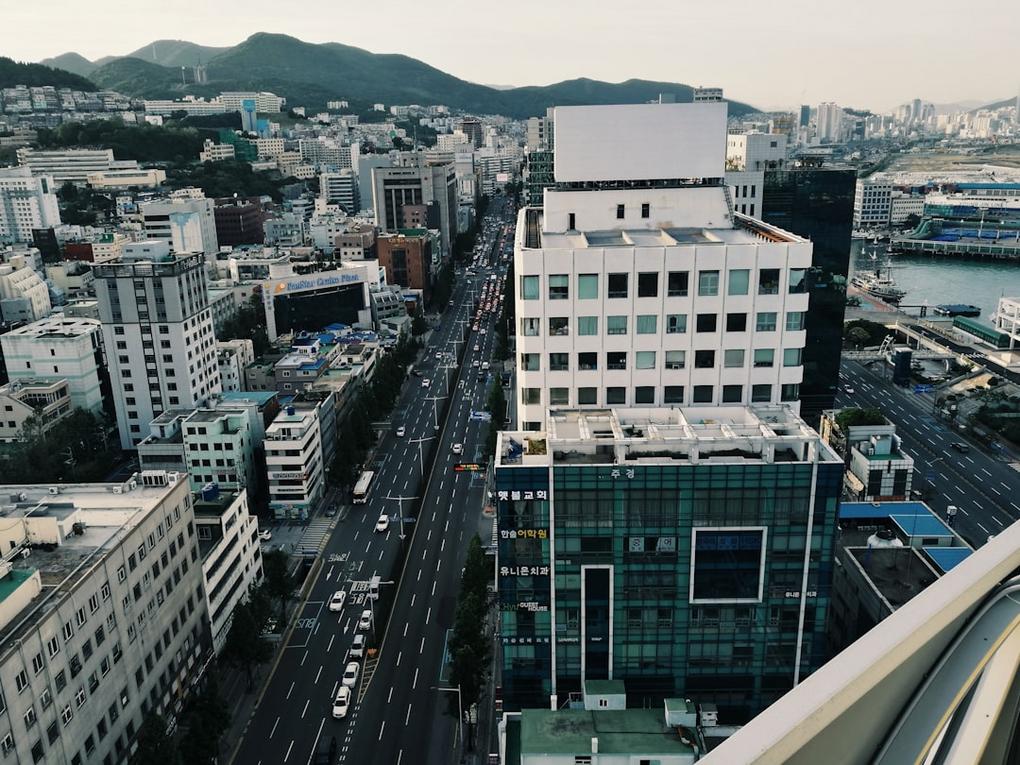
Religion in South Korea shapes the urban soundscape and architecture noticeably, especially in Seoul’s Jongno district and the Jogyesa Temple area. Buddhist temples like Jogyesa fill the air with rhythmic chanting and the toll of large bronze bells, while Protestant churches in Gangnam often broadcast hymns or sermons on Sundays. The scent of incense is common near Buddhist sites, particularly during festival seasons like Buddha’s Birthday in spring. Sundays see many churches full, sometimes causing street congestion around them. Buddhist temples follow a quieter daily rhythm, with early morning prayers and meditation sessions. Visitors will notice temple lanterns lighting the streets at night in spring, contrasting with the modern city bustle. Catholic cathedrals, such as Myeongdong Cathedral, hold masses with Gregorian chants, adding a solemn tone in central Seoul. These religious sounds and sights are woven into daily life and public spaces, reflecting the 2021 Gallup Korea religious survey’s landscape without overt disruption to tourists.
| Religion | % | Core value | What you see |
|---|---|---|---|
| None | 56.1% | Secular modernity, individualism | High urban secularism; few religious symbols in public |
| Protestant | 17.6% | Evangelism, community worship | Sunday church services with loudspeakers in neighborhoods |
| Buddhism | 15.5% | Meditation, ritual, harmony | Incense smoke and chanting at Jogyesa Temple |
| Catholic | 10.6% | Sacraments, liturgy, charity | Mass and Gregorian chant at Myeongdong Cathedral |
At sacred sites
At Gyeongbokgung Palace, observe the palace guards’ changing ceremony only from outside the gates; no photos of guards’ faces or zooming northward allowed. At the DMZ, all visits require strict guide direction; no photos of military personnel or northward zooming on cameras. At Jogyesa Temple, remove shoes before entering the main hall, bow lightly with hands pressed together at chest level, and avoid touching monks unless invited. Donations go into a wooden box near the entrance, never handed directly. At Myeongdong Cathedral, maintain quiet reverence, stand or kneel during mass, and avoid flash photography. These rules protect respect and security at these sensitive sites and ensure smooth tourist flow.
temple-only. Religion rarely interrupts hour-to-hour tourist life outside sacred sites. Expect Sunday church crowds and occasional Buddhist festivals, but daily city life runs secular. Dress is modern and urban; no special religious attire needed except when entering temples or cathedrals. Food is unaffected by religion except for some temple cuisine or Catholic fasting days, which tourists rarely encounter. In rural areas, Buddhist temples may host events, but overall, religion is confined to specific locations and times.
Handle with care
No photography of military personnel or northward zooming at the DMZ results in denied entry or immediate removal from the site.
How locals actually live
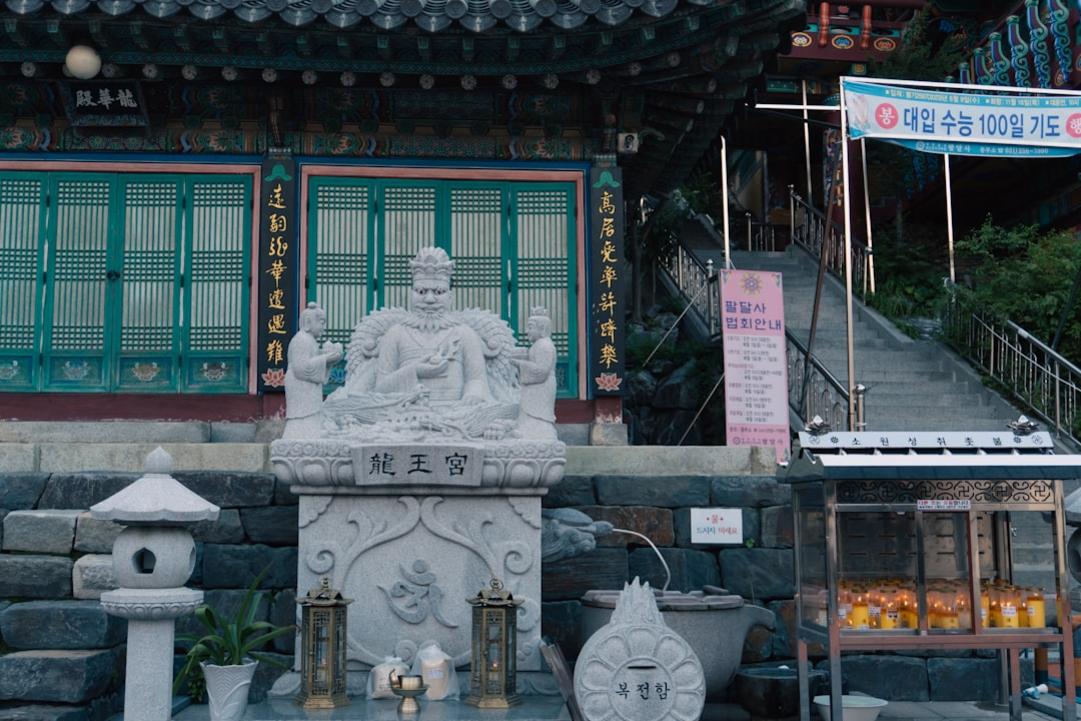
A median-income resident of Seoul earning KRW 3,140,000 (~$2,280) per month typically lives in a mid-rise apartment complex in neighborhoods like Mapo or Seongdong. Their commute involves a 40-minute subway ride, often packed during rush hour, reflecting Seoul’s hyper-competitive pace. Breakfast costs about KRW 4,000 (~$3.00) at a local convenience store or street vendor—think a kimbap roll and instant coffee. The workday runs from 9 AM to 6 PM, with a strict hierarchy dictating interactions and frequent after-work gatherings. Dinner is usually a shared meal of grilled meat or bibimbap at a neighborhood restaurant, costing around KRW 12,000 (~$9.00). Weekends focus on quick trips to nearby parks like Hangang or casual shopping in Hongdae, blending relaxation with the city’s fast rhythm. This daily life balances affordability with the demands of Seoul’s intense work culture and dense urban environment.
Seoul’s wealth gap is starkly visible between Gangnam, a wealthy district with luxury high-rises and designer stores, and nearby Guryong Village, an informal settlement with cramped housing and limited infrastructure. The city’s Gini coefficient stands at 31.4 (2022 KOSIS), while the top 10% control 46.5% of income (WID 2022). This divide reflects economic disparities despite geographic proximity. Tourists easily cross these worlds by visiting Gangnam’s upscale shopping and entertainment venues, then exploring traditional markets or street food stalls in less affluent neighborhoods, experiencing both ends of Seoul’s social spectrum in a short span.
| Region | What's distinctive | What it means for you |
|---|---|---|
| Seoul capital region | Half the population, hyper-competitive, fast-paced urban life. | Use the subway for efficient travel; expect formal politeness and speed. |
| Gyeongsang (Busan, Daegu) | Conservative, industrial, with a distinct dialect and direct communication. | Learn basic dialect phrases; bargaining is less common but respectful. |
| Jeolla (Gwangju) | Progressive politics, food-forward culture, historical rivalry with Gyeongsang. | Try local specialties; expect more relaxed social interactions. |
| Jeju | Volcanic island with matriarchal haenyeo divers and unique folk traditions. | Wear sturdy shoes for rocky terrain; respect local customs around haenyeo. |
Most Seoul households are nuclear, with about 60% renting apartments due to high urban housing costs. Multigenerational living is less common but persists in older neighborhoods. Informal economy work is limited in Seoul compared to other regions, with most labor formalized under chaebol-linked companies or SMEs. Renters face steep prices, pushing many younger workers to smaller studio units or shared housing in districts like Dongdaemun.
Where your path crosses theirs
Tourists cross income groups daily by visiting street-food stalls near traditional markets like Gwangjang and upscale malls such as COEX in Gangnam. They take taxis or Grab rides alongside locals from all classes, and move between night markets and rooftop bars within hours. Tip: Use polite, formal Korean phrases with service staff in upscale venues but keep interactions casual and friendly at street stalls to match local norms without seeming condescending.
Etiquette and the behavior code
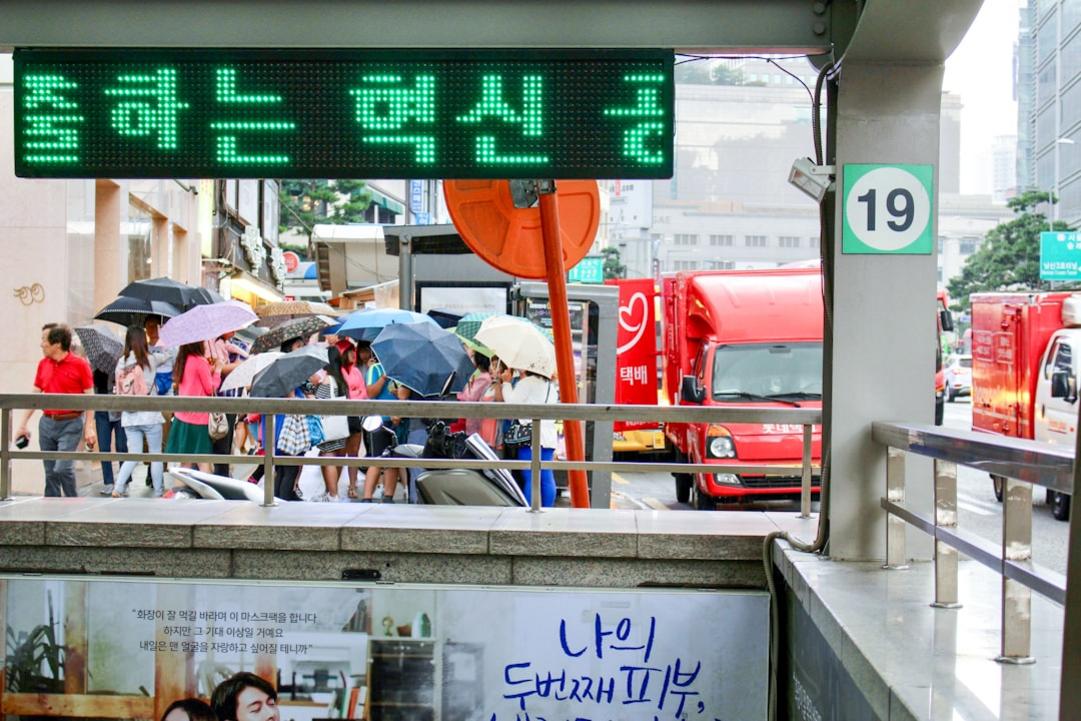
The default greeting: The default greeting is a slight bow; men shake hands in business, women usually wait for initiation. A full phrase and pronunciation guide lives on the South Korea language page.
Dining
Use metal chopsticks and a long-handled spoon; never stick chopsticks upright in rice—it resembles a funeral ritual. Rice is eaten with the spoon, not chopsticks. The payer is usually the person who invited; splitting the bill is common among friends but less so in business. To signal the check, quietly say or gesture to staff; no separate check is common. Street meals cost about 5,000–8,000 KRW ($4–$7), while restaurants range 15,000–30,000 KRW ($12–$24). At the table, pour drinks for others, not yourself. Hosts pour first; refuse politely once or twice before accepting alcohol. Drinking is social; never drink alone or before elders. At a host’s home, wait for the eldest to start drinking before you sip.
What to wear where
| Context | Requirement | Why |
|---|---|---|
| temple/sacred-site | Wear modest clothing covering shoulders and knees; no sleeveless or shorts; breathable natural fabrics preferred. | Denial of entry or social offence for revealing clothing in sacred spaces. |
| beach/resort | Lightweight quick-dry fabrics; swimwear only at beach; cover-ups required off sand; no nudity or topless sunbathing. | Social offence and possible fine for public indecency. |
| government/formal | Dark suits or conservative dresses; long sleeves; closed shoes; no casual fabrics like linen or denim. | Denied entry or loss of respect at official venues. |
| everyday/street | Smart casual with layers; cotton blends or synthetics that breathe in 70–90% humidity; sneakers common; no overly flashy logos. | Heat exhaustion risk ignoring humidity; standing out as tourist can invite hassle. |
Photography rules
At the DMZ/JSA, photos are allowed only under strict guide direction; no northward zoom or shots of military personnel. At Gyeongbokgung Palace, photograph palace guards’ changing ceremony only from outside gates; no zooming on faces. Some museums ban photography entirely—check signs. Always ask monks before photographing inside temples. Photographing police, military, or border guards without permission is illegal. Never photograph individuals without explicit consent; South Korea enforces privacy strictly. Violations can lead to camera confiscation or detention.
Gestures to avoid
1. Feet: Do not point feet at people or sacred objects; it’s rude and disrespectful. 2. Head: Avoid touching others’ heads; it’s considered intrusive and offensive. 3. Left hand: Do not give or receive items solely with the left hand; seen as impolite. 4. Pointing: Use whole hand to indicate objects or directions; pointing with a finger is rude. 5. Beckoning: Do not beckon with palm up; use palm down with fingers waving instead to avoid offense.
Temple / mosque conduct
Upon entering a Buddhist temple, remove shoes at the entrance and place them neatly. Confirm dress covers shoulders and knees; no shorts or sleeveless tops allowed. Approach main hall quietly, entering from the side, not center. Do not touch statues, monks, or altar items. Donations go into a wooden box near the entrance; never hand money directly. Avoid direct eye contact or conversation with monks unless invited. Bow lightly with hands pressed together at chest level when entering and leaving. Silence and respectful posture are mandatory throughout the visit.
Frequently asked questions
1Do I tip at a street-food stall or casual restaurant in South Korea?
No tipping is expected or customary at street-food stalls or casual restaurants. Service charges are included in prices, so leave no extra money. Attempting to tip can cause confusion or mild offense.
2Can I drink tap water safely in South Korea?
Tap water in South Korea is generally safe to drink, meeting strict quality standards. Boiling is unnecessary. Bottled water is widely available but not required for health reasons.
3Where can I bargain when shopping, and where should I avoid it in South Korea?
Bargaining is accepted with a light 10-20% discount at Namdaemun and Dongdaemun markets. Avoid bargaining in malls and Myeongdong, where prices are fixed or flexible but not negotiable. Guesthouse off-season discounts are minor.
4What are the alcohol and drug laws in South Korea as of 2026?
Alcohol is legal for adults 19 and older; public drunkenness is discouraged but not illegal. Drug laws are strict: all recreational drugs are illegal with severe penalties. Recent updates include no change to military Article 92-6 criminalizing same-sex acts among soldiers.
5In which places must I remove my shoes in South Korea?
Shoes must be removed before entering any home and Buddhist temples. Some traditional shops require it, but most restaurants do not. Look for shoe racks or signs as cues.
6What is one key public transport etiquette rule in South Korea?
Priority seats on buses and subways must be vacated immediately for elderly, disabled, pregnant, or injured passengers. Eating and loud phone conversations are prohibited on public transit.
7Which hand gesture should be avoided in South Korea because it can offend?
Avoid pointing with the index finger directly at people. It is considered rude and aggressive. Instead, use an open hand or gesture subtly.
8What is the one phrase worth learning before visiting South Korea?
Learn the basic polite greeting that conveys respect and acknowledges social hierarchy. It opens doors socially and professionally by showing nunchi—reading the room and respecting rank.
9Can I photograph people, religious ceremonies, or police in South Korea?
Photography of people requires permission. Religious ceremonies at temples are sensitive; some are banned. Police and military personnel or bases are strictly off-limits. DMZ/JSA photos allowed only with guides and no northward zoom.
10Is public affection acceptable in South Korea?
Public displays of affection are limited. Couples can hold hands or briefly hug in urban areas like Seoul’s Itaewon. Kissing or intense displays are frowned upon, especially in rural or conservative areas.
The bottom line
South Korea’s intense hierarchy and rapid social pace shape every interaction, from greetings to public behavior, reflecting a culture built on jeong, nunchi, and respect that fuels its modern success.