

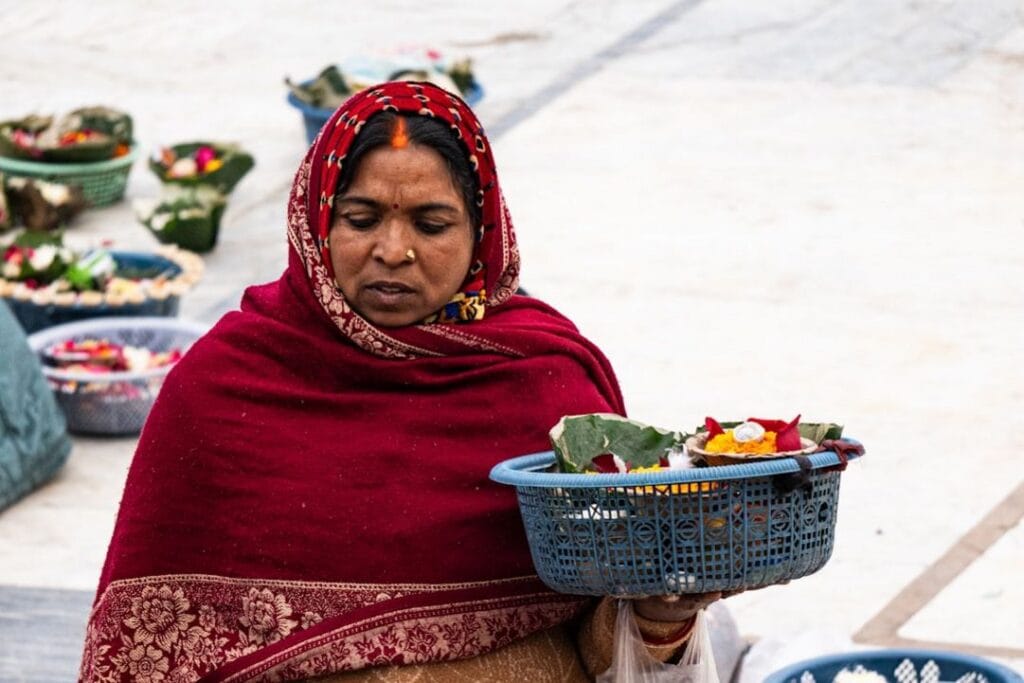
Pack lightweight, breathable cotton and linen clothes for most of India, with modest coverage for temples and cooler layers for northern winters.
Adjust fabrics and layers seasonally to handle the intense monsoon humidity, desert heat, and Himalayan cold.
Stepping out in India, the air hits you like a wall of heat or sudden dampness, your cotton shirt already clinging to your skin before you reach the bustling street. Tourists often pack the wrong fabrics or forget temple dress codes, leaving them uncomfortable or denied entry, especially where the climate flips from desert dry to monsoon wet or Himalayan chill.
This guide breaks down month-by-month climate realities, cultural dress requirements, and fabric choices that survive India’s extremes. It also highlights what’s best to buy locally versus pack from home. Here’s everything needed to pack smart for India.

India — Packing Snapshot
Extremely cheap laundry. Most hotels offer same-day ironed service for $1-3.
Climate Clothing Scorecard
What to pack each month in India
Peak season
Prioritize warm, breathable layers with moisture-wicking cotton; pack modest long sleeves for temple visits and chilly northern nights.
Priority: layered
Peak season
Switch to lighter layers with breathable cotton and linen; modest coverage remains essential for temples.
Priority: layered
Peak season
Warm days call for short sleeves and breathable cotton; keep modesty for cultural sites with loose pants or skirts.
Priority: lightweight
Prepare for hot, dry conditions with very lightweight, loose cotton or linen; cover shoulders and knees for temples.
Priority: lightweight
Peak heat demands ultra-breathable cotton or linen; avoid synthetic fabrics that trap sweat and heat.
Priority: lightweight
Off-season
Start of monsoon: pack quick-dry, breathable fabrics and a lightweight rain jacket; modest coverage still needed at temples.
Priority: rain-ready
Off-season
High humidity and heavy rain require quick-dry fabrics and waterproof gear; avoid heavy cotton as it stays wet too long.
Priority: rain-ready
Off-season
Continue with moisture-wicking, quick-dry fabrics; pack modest, loose clothing to stay comfortable during temple visits in humid monsoon.
Priority: rain-ready
Off-season
Heavy monsoon rain and humidity continue; prioritize quick-dry, breathable fabrics and rain protection.
Priority: rain-ready
Peak season
Dry season begins; pack lightweight cotton and linen with modest coverage for cultural sites and sun protection.
Priority: lightweight
Peak season
Comfortable dry weather favors lightweight layers; modest long sleeves recommended for temple visits and cooler evenings.
Priority: layered
Peak season
Cooler temperatures require warm layers with breathable cotton; modest coverage remains essential for cultural respect.
Priority: layered
Climate Overview — India
Rainfall — India
Best time to visit (for clothing)
India Climate Impact on Clothing

Humidity exceeds 80% from May to October in coastal and southern regions. Cotton stays wet for hours, causing chafing and odor. Avoid pure cotton in monsoon areas during these months.
Average temps above 82°F (28°C) from March to June and Sept. UPF fabrics and sun protection required. Long sleeves and wide-brim hats prevent sunburn, especially in Rajasthan desert and central India.
High mosquito risk during monsoon (June-Oct), mainly in Kerala and eastern states. Wear long, loose, light-colored clothing to avoid bites and dengue risk.
Indoor AC drops temps by 15-20°F (8-11°C) in cities like Delhi and Mumbai. Pack a lightweight layering piece for temples and indoor areas.
Hot & Dry (March to June) — 82-110°F (28-43°C)
Loose, breathable, UPF fabrics with long sleeves and hats. Avoid dark colors.
Fabric focus: Linen, synthetics with UPF, bamboo blends for moisture control.
Tourist mistake
Wearing heavy cotton or dark colors causing overheating.
Monsoon Wet & Humid (July to October) — 75-90°F (24-32°C)
Quick-dry, anti-microbial, loose clothing. Long sleeves for mosquitoes. Avoid cotton.
Fabric focus: Synthetic quick-dry, bamboo/Tencel blends, lightweight merino for AC indoors.
Tourist mistake
Packing mostly cotton that stays damp and smells.
Cool & Dry (November to February) — 50-80°F (10-27°C)
Layering with merino wool or synthetics. Light jackets for northern plains and Himalayan foothills.
Fabric focus: Merino wool, synthetics for layering, linen for day heat.
Tourist mistake
Ignoring temperature swings causing chills indoors.
Material Guide for Indian Climate
For India’s extremes, a quick-dry polyester travel shirt Travel shirts beats cotton by drying fast in 80%+ humidity. Pair with lightweight travel pants Travel pants that resist sticking and chafing.
| Material | Best for | Avoid when | Country-specific note |
|---|---|---|---|
| Linen | Hot, dry months; breathability | Monsoon; slow drying in 80%+ humidity | Wrinkles easily, but culturally accepted in casual wear |
| Merino wool | Cool dry season; AC layering | Hot months; heat retention | Excellent odor resistance, good for indoor-outdoor shifts |
| Synthetic (polyester/nylon) | Monsoon quick-dry; UPF protection | Extended wear without washing; odor buildup | Locally available, often affordable, best for humid zones |
| Cotton | Dry season; casual city wear | Monsoon; stays wet, chafes, mildews | Cheap and widely available but poor for humidity >70% |
| Viscose/Rayon | Draped cultural wear; moderate humidity | Heavy rain; fabric weakens when wet | Popular for Indian ethnic wear but fragile in monsoon |

Avoid cotton in monsoon; wash and dry synthetics daily to prevent odor.
India Dress Code & Social Rules
India demands covered shoulders and knees at religious sites. Removing shoes is mandatory inside temples and mosques. A lightweight [cover-up / travel sarong / scarf] Sarongs & cover-ups solves most modesty requirements in India and works for multiple situations.

View all 5 dress code contexts
| Context | Required clothing | Avoid wearing | Why it matters |
|---|---|---|---|
| Religious sites | Covered shoulders, knees; remove shoes | Sleeveless, shorts above knee, tight clothes | Denied entry or forced to rent cover-up |
| Street/daily life | Lightweight tops, knee-length pants or skirts | Very short shorts, sleeveless tops, visible midriff | Unwanted attention, seen as disrespectful |
| Beach vs. town | Cover-up over swimwear beyond sand | Walking in bikini or swim trunks in town | Locals find it offensive, possible fines |
| Restaurants/nightlife | Smart casual, covered shoulders, neat pants | Tank tops, shorts, flip-flops in upscale places | Refused entry or poor service |
| Government/banks | Conservative clothing, covered shoulders and knees | Casual shorts, sleeveless tops, sandals | Seen as disrespectful, may cause delays |
For women
Women must cover shoulders and knees to avoid stares and maintain respect. Quick-dry fabrics prevent discomfort in 80%+ humidity. Carry a lightweight scarf for temple head covering or sudden modesty needs.
For men
Men should wear quick-dry travel pants and shirts with sleeves. Avoid shorts above the knee in religious and formal places. Showing respect avoids marking as careless tourist.
India Dress Code & Social Rules
In India, clothing signals respect or disrespect instantly. Temple guards and locals watch closely for modesty violations. Showing too much skin or ignoring shoe removal often means denied entry, stares, or poor service.
Do
- Cover your shoulders and knees at temples
Security will deny entry or force you to rent a cover-up worn by many tourists - Remove shoes before entering temples and mosques
Security guards will stop you at the door and refuse entry - Wear a cover-up over swimwear when leaving the beach
Locals will find it offensive and you risk fines - Wear quick-dry travel pants and shirts with sleeves in humid regions
You will stand out as an unprepared tourist and face discomfort that locals avoid - Carry a lightweight scarf for sudden temple head covering or modesty needs
You will be forced to borrow or buy overpriced cover-ups on site
Don’t
- Wear tight or revealing clothes in religious sites
Locals will stare and you may be asked to leave - Wear very short shorts or sleeveless tops on the street
You will attract unwanted attention and be seen as disrespectful - Wear tank tops, shorts, or flip-flops in upscale restaurants
You may be refused entry or receive poor service - Display expensive jewelry or valuables openly
You may attract unwanted attention or theft attempts - Ignore rainy season conditions in Kerala and monsoon areas
You will struggle with wet clothes and locals will see you as unprepared
Insider note
In many temples, men wearing shorts above the knee get stopped even if the shorts look casual. Carrying a sarong or travel wrap saves time and money compared to renting cover-ups on site, which are often worn by hundreds of tourists daily.
Build your packing list
Use our free Packing List Generator to create a personalized list for this destination.
Clothing & Footwear for Key India Activities
A pair of versatile slip-on travel shoes Walking shoes handles city walking, religious sites, and beach-to-bar transitions without repacking.

View all 7 activity recommendations
| Activity | Recommended clothing | Footwear | Pro tip |
|---|---|---|---|
| City walking | Lightweight cotton or linen pants, breathable long-sleeve shirt | Breathable slip-on sneakers or sandals | Use UV-blocking hat and sunglasses; pavement uneven, watch steps |
| Nature/hiking | Moisture-wicking nylon pants, long sleeves, insect-repellent treated | Sturdy hiking shoes with good grip | Cover skin to avoid insects; bring quick-dry socks |
| Religious/cultural sites | Lightweight cover-up or travel sarong over sleeved top and pants | Slip-on shoes, easy to remove | Shoulders and knees must be covered; remove shoes inside |
| Transit | Light synthetic layers, pack a light jacket Rain jackets | Comfortable slip-on shoes | Air conditioning can be cold; layer for variable temps |
| Beach/water | Quick-dry swimwear, lightweight sarong cover-up | Water shoes or sandals | Marine hazards common; cover-up for modesty off beach |
| Markets/street shopping | Breathable cotton pants, short-sleeve shirt | Comfortable closed-toe shoes | Use crossbody bag; expect crowds and uneven ground |
| Dining/nightlife | Smart casual lightweight pants and collared shirt | Closed-toe loafers or dress sandals | Avoid shorts; some upscale places require covered shoes |
Laundry Options in India
Laundry is extremely cheap and widely available. A light travel jacket Rain jackets speeds drying in humid months.

View all 5 laundry options
| Option | Where to find | How it works | Cost | Speed | Quality & risk | How to avoid problems | Best for |
|---|---|---|---|---|---|---|---|
| Hotel/hostel laundry service | Most hotels and guesthouses | Drop off at reception, same-day or next day | $1-3 per load | Same day or 24 hours | Usually good, ironed; risk of lost items low | Label clothes, avoid delicate fabrics | Everyone, especially business travelers |
| Local laundry shops | Near markets and residential areas | Drop off, priced by weight, usually 1-2 days | $0.50-1 per kg | 1-2 days | Variable; risk of shrinkage or color bleed | Separate colors, ask about detergents | Budget travelers and backpackers |
| Self-service laundromats | Rare, mostly in metro cities | Use machines yourself, coins or card payment | $1-2 per wash | 1-2 hours | Good control, but machines rare | Bring own detergent, watch for theft | Independent travelers in big cities |
| Hand washing | Anywhere with water access | Wash small items by hand, wring out well | Free | Several hours to dry | No risk, but labor intensive | Use quick-dry fabrics, wash at night | Backpackers, quick refresh |
| Dry cleaning | Upscale hotels and metro cities | Drop off, 1-3 days turnaround | $5-10 per item | 1-3 days | Good for delicate fabrics | Use only for special items | Business travelers, formal wear |
Drying challenges
High humidity (up to 87%) slows drying, especially June-September. Line-drying takes 1-2 days. Use quick-dry fabrics and indoor drying racks near fans or AC to speed drying.
Where to Shop for Clothing in India
India’s clothing options vary widely by location and budget. Choose based on quality needs and price tolerance. Local markets offer bargains; malls deliver reliable sizing and brands.

View all 5 shopping options
| Shop type | Where to find | What to buy | Price level | Quality | Bargaining | Payment | Tips |
|---|---|---|---|---|---|---|---|
| Shopping malls | Delhi Mall, Mumbai High Street Phoenix, Bengaluru Phoenix Marketcity | Western brands, reliable sizing, quick-dry travel gear | Same as US, higher for imports | Good brand quality, consistent seams and fabrics | Fixed price — don’t try | Cards accepted, UPI apps widely used | Check return policy; sizing matches Western standards |
| Local markets | Chandni Chowk (Delhi), Colaba Causeway (Mumbai), Commercial Street (Bengaluru) | Cotton scarves, sarongs, inexpensive cotton shirts, ethnic wear | 1/3 of US price | Variable; cotton may weaken after 3 washes | Required (start at 50%) | Mostly cash, some accept UPI apps | Bring small bills; inspect seams carefully |
| Supermarkets/convenience stores | Big Bazaar, Reliance Fresh, local kirana stores | Basic socks, underwear, flip-flops | 1/4 to 1/2 of US price | Basic quality, good for disposables | No | Cards and apps accepted | Buy flip-flops here; cheap and replaceable |
| Tailors | Tailor shops near tourist hubs (e.g., Jaipur, Udaipur, Delhi) | Custom linen or quick-dry travel pants, shirts | 1/5 to 1/3 of US custom wear | Varies wildly; check stitching before ordering | Possible for bulk or repeat customers | Mostly cash | Request fabric samples first; bring photos for style |
| Brand outlets | Factory outlets in Gurgaon, Noida, Mumbai outskirts | Discounted western activewear and shoes | Up to 50% off US prices | Same as mall stores, genuine brands | No | Cards accepted | Check sale seasons (Oct-Jan) for best deals |
Sizing notes
Indian clothing sizes run smaller; local XL fits like US Medium. Pants inseams are typically 2-3 inches shorter. Shoe sizes often top out at US 9-10; larger sizes rare. Most clothing cuts suit leaner, shorter frames.
Essential gear for India
Links go to Amazon search results. As an Amazon Associate we earn from qualifying purchases.
The Bottom Line: Packing for India
India’s extreme climate zones demand smart fabric choices and modest coverage for temples. Bring quality basics from home and buy rain gear and accessories locally to save space and cost.
Common Clothing Questions for India Travelers
Answers focus on climate, culture, and practical packing for India’s extremes and customs.

1Do expensive brands or jewelry attract pickpockets?
Yes. Wearing flashy brands or jewelry draws unwanted attention in crowded areas. Keep valuables minimal and concealed. Use a money belt or hidden pouch for essentials.
2Are flip-flops acceptable in the city or seen as disrespectful?
Flip-flops are fine for casual city wear but avoid them in upscale restaurants or offices. They are common and practical in hot weather but not for formal settings.
3How dressy do I need to be for restaurants? Are long pants required for men?
Most restaurants accept casual wear; long pants for men are recommended but not always enforced. Avoid shorts in higher-end places. A collared shirt and neat pants work well.
4Do I really need a warm layer despite the heat?
Yes. Northern India and Himalayan regions can drop below 50°F (10°C) at night, even in spring and fall. Pack a lightweight fleece or insulated layer for evenings and high altitudes.
5What’s the one clothing item everyone forgets but needs here?
A lightweight cover-up or scarf. It solves temple modesty rules, protects from sun, and works as a makeshift shawl in air-conditioned places.
6Can I do the entire trip in one pair of sneakers?
No. Sneakers get soaked and sweaty in monsoon humidity (up to 90%). Bring quick-dry sandals or flip-flops for daily wear and waterproof shoes for hiking.
7Should I buy a cheap poncho locally or bring a quality rain jacket?
Bring a quality rain jacket. Local ponchos are cheap but tear easily and trap humidity. A breathable rain jacket handles Kerala monsoon rains and Rajasthan dust storms better.
8How often can I realistically do laundry?
Laundry is extremely cheap and fast. Hotels offer same-day ironed service for $1-3. Doing laundry every 3-4 days is practical and keeps your clothes fresh.