



Live Indonesia exchange rates
Check live exchange rates for Indonesian rupiah (IDR) before withdrawing or exchanging cash at . This tool helps you track real-time currency values to avoid poor exchange rates and fees during your trip.
Currency Basics: Indonesia
How Payment Works in Indonesia
mixed – Indonesia offers a blend of cash and card acceptance for tourists, with cards working well in urban and tourist hubs but cash still essential in many everyday and remote situations.
Visa and Mastercard cards work widely in Indonesian cities like Jakarta, Bali, and Yogyakarta, especially in hotels, major restaurants, and malls. American Express is less common but accepted in select tourist-focused venues. Foreign cardholders often face small surcharges and occasional connectivity issues, so patience helps.
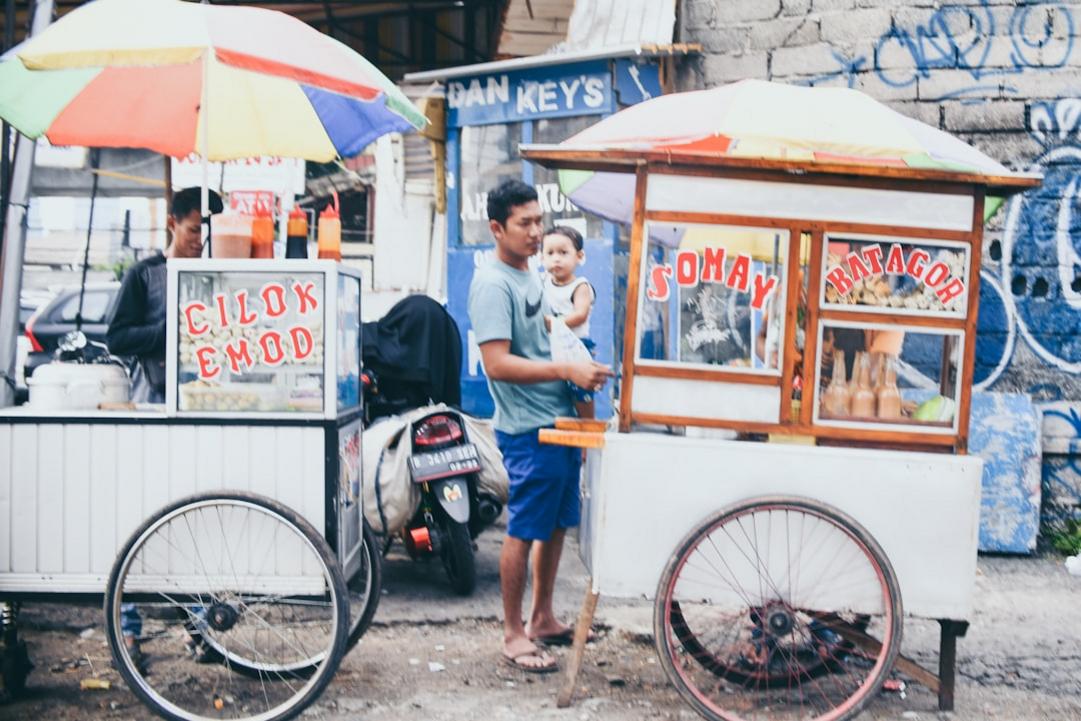
Cash remains king outside major urban centers. Street vendors, local markets, and many small transport options operate on cash only. Rupiah (IDR) is needed in exact amounts, as change can be scarce. ATMs are plentiful in tourist areas but may limit daily withdrawal amounts.
Tourists should carry a mix of cash and cards. Prioritize card use for bigger expenses but prepare to pay cash for daily essentials like food stalls and local transport. Withdraw larger sums from ATMs in cities to avoid frequent fees.
Where you need cash
| Situation | Why cash-only |
|---|---|
| small street food stalls and warungs | No card terminals or mobile payment acceptance; vendors rely solely on cash due to low transaction volumes and infrastructure. |
| local minibuses (angkot) and ojeks (motorcycle taxis) | These informal transport options lack digital payment systems and prefer cash for speed and simplicity. |
| rural guesthouses and homestays | Many rural accommodations have no card readers or internet connectivity, forcing cash-only transactions. |
| temple entrance fees in smaller sites | Ticket sellers operate with cash-only boxes, reflecting traditional management and lack of digital infrastructure. |
| market stalls and souvenir sellers outside tourist zones | Low-cost, high-volume sales discourage card use; cash expedites transactions and reduces fees. |
Where cards work
| Situation | Caveat |
|---|---|
| hotels and resorts in Bali and Jakarta | Surcharges of 1-3% apply; some properties require minimum spend to accept cards. |
| supermarkets and shopping malls in major cities | Cards accepted but occasional system outages can force cash payments. |
| international airport services and car rentals | Cards accepted with minimal fees, but Amex is less widely accepted than Visa/Mastercard. |
| chain restaurants and cafes in tourist districts | Cards accepted but some places prefer contactless or chip over magnetic stripe, causing issues with older cards. |
| larger taxis and ride-hailing apps like Gojek and Grab | Digital payments preferred, but cash option remains dominant; some drivers reject card payments. |
Card network acceptance (Visa, Mastercard, Amex, UnionPay)
| Network | Coverage | Surcharge |
|---|---|---|
| Visa | Widely accepted in urban centers, tourist hotspots, and international airports. | Typically 1-3% foreign transaction fee plus possible merchant surcharge. |
| Mastercard | Strong acceptance in major cities and tourist areas, similar to Visa. | 1-3% surcharge common, with some merchants imposing minimum spend requirements. |
| American Express | Limited to high-end hotels, international airports, and upscale restaurants. | Higher surcharges (up to 4%) and fewer acceptance points. |
| UnionPay | Accepted in some tourist areas and larger retailers catering to Chinese tourists. | Surcharge varies; acceptance far less widespread than Visa/Mastercard. |
Digital wallets
| Wallet | How tourists can use it |
|---|---|
| GrabPay | Tourists can register with a foreign phone number and link international cards to pay for ride-hailing and food delivery in major cities. |
| GoPay | Foreigners can use GoPay by topping up via linked Visa/Mastercard; usable within Gojek app for transport and food delivery. |
| Alipay Tourist Edition | Available for tourists with passports; supports QR payments in Chinese tourist areas and select merchants. |
Wallets that don’t work for tourists
| Wallet | Barrier |
|---|---|
| OVO | Requires Indonesian national ID (KTP) and local SIM for full activation; tourists cannot register fully. |
| Dana | Local phone number and bank account required; foreign users face activation barriers. |
Wise vs Revolut in Indonesia
Wise and Revolut both provide solid options for Indonesia, but Wise holds a slight edge due to better ATM fee transparency. Wise charges no fee on the first $250 withdrawn monthly and uses mid-market exchange rates with minimal markup. Revolut offers fee-free ATM withdrawals only up to a low monthly limit, after which fees apply. Both cards work well in Indonesian ATMs, but Revolut users report occasional card blocking by local banks due to unfamiliar BIN ranges.
Wise’s straightforward fee model and reliable currency conversion make it more practical for longer stays or repeated ATM use. Revolut’s app features and budgeting tools are strong, but travelers should carry a backup card due to occasional acceptance issues.
ATMs & Currency Exchange
Best ATMs for foreign cards
| Bank / ATM | Why use it | Fee note |
|---|---|---|
| BCA (Bank Central Asia) | Widely available ATMs with strong foreign card acceptance and reliable network coverage across Indonesia, including Bali. Most BCA ATMs dispense 50,000 IDR notes only, facilitating easier cash handling. | No local withdrawal fee on BCA ATMs for foreign cards; standard international fees from your bank apply. |
| Mandiri Bank | Mandiri ATMs are common in tourist areas with good foreign card support. Their machines also dispense 50,000 IDR notes predominantly, which matches local cash usage patterns. | Mandiri charges a small local fee (~15,000 IDR) per withdrawal; check your bank’s foreign fee policy. |
| BNI (Bank Negara Indonesia) | BNI ATMs have solid coverage in urban and tourist zones. They accept most foreign cards reliably and dispense 50,000 IDR notes, minimizing small change issues. | BNI charges a local fee of about 15,000 IDR per withdrawal. |
ATMs to avoid
| ATM type | Why to avoid |
|---|---|
| BRI (Bank Rakyat Indonesia) | High local withdrawal fees and frequent reports of foreign card declines. ATMs often dispense large denominations only, complicating small purchases. |
| Standalone Minimart ATMs | High skimming risk in Bali tourist zones; cash dispensed only in 50,000 IDR notes with no option for smaller bills. Frequent DCC attempts reported. |
Withdrawal strategy
Withdraw 1,500,000 IDR (~$100) per transaction to balance ATM fees and local cash needs. Most ATMs limit withdrawals to around 2,000,000 IDR per transaction. Since ATMs dispense only 50,000 IDR notes, withdrawing smaller amounts leads to excessive bills. Limit withdrawals to every 3-4 days to reduce fee impact and avoid carrying excess cash.
Dynamic Currency Conversion – always decline
Dynamic Currency Conversion (DCC) is offered at Indonesian ATMs with a prompt: “Withdraw in USD or IDR?” Always select Indonesian rupiah (IDR). For example, the screen shows: “Withdraw 1,500,000 IDR or $100 USD?” Choosing USD locks in a poor exchange rate and extra fees. No major app-based DCC variants are common in Indonesia ATM withdrawals.
Skimming & card fraud
High-risk ATMs are located in Bali’s Kuta and Seminyak tourist strips, Ngurah Rai Airport terminals, and standalone ATMs inside convenience stores or bars. Perform a 10-second check: wiggle the card slot for looseness, ensure the keypad has a shield, and look for hidden cameras above or beside the machine. Avoid using ATMs at night or in poorly lit areas.
Currency exchange
| Where | Why it works |
|---|---|
| PT Central Kuta Money Changer | Known for transparent rates and no commission in Bali tourist areas. |
| Bank counters (BCA, Mandiri, BNI) | Official rates with no hidden fees; best for large sums. |
Exchange counters to avoid
| Where | Why to avoid |
|---|---|
| Airport exchange booths (Ngurah Rai) | High commission, poor rates, and aggressive upselling. |
| Hotel front desk exchanges | Unfavorable rates and added service fees. |
How much cash to carry
Carry about $50 (750,000 IDR) in your day wallet for daily expenses in cities like Jakarta or Bali, covering meals and local transport. Keep an additional $200 (3,000,000 IDR) securely stashed for emergencies or rural travel where card acceptance is limited. Rural areas require more cash due to fewer ATMs and limited card use.
Emergency backup
Use two cards: one primary and one backup stored separately. Keep emergency cash hidden in your luggage or money belt. If a card is blocked, contact your bank’s Indonesian emergency hotline (e.g., BCA: +62 21 500888) and instantly freeze cards via apps like Wise or Revolut. Avoid calling home first; resolve local issues with bank support to save time.
Scams, Safety & Cash Handling
Common money scams in Indonesia
Taxi Meter Manipulation
How it works: Drivers switch off or reset meters, then quote inflated flat rates, especially from airports or tourist spots. Some claim the meter is broken or only accept cash at higher fares.
How to avoid: Insist on using the meter before starting the ride. Use official apps like Grab or Gojek for transparent pricing. Avoid unmarked taxis or those refusing meters.
Wrong-Change Trick
How it works: Sellers or drivers give incorrect change by quick hand movements or distraction, often swapping bills or shortchanging travelers unfamiliar with Indonesian rupiah (IDR) denominations.
How to avoid: Count change slowly and familiarize yourself with common IDR bills. Use smaller denominations when possible. Avoid paying with large notes for small purchases.
Exchange Sleight of Hand
How it works: Money changers swap bills or shortchange customers during currency exchange, sometimes mixing fake or damaged rupiah with genuine notes.
How to avoid: Use licensed money changers or banks. Count money carefully under good light. Avoid street changers or those offering rates too good to be true.
Fake Police Money Inspection
How it works: Impostor officers stop tourists, claiming to check for counterfeit bills or illegal money, then demand fines or confiscate cash.
How to avoid: Request official ID and badges. Real police rarely conduct random cash checks. Never hand over money without a receipt or official paperwork.
QR Sticker Over Legitimate Payment Codes
How it works: Scammers place fake QR code stickers over official payment codes in shops or taxis, redirecting payments to their accounts.
How to avoid: Verify QR codes with staff before scanning. Use official apps linked to trusted merchants. Avoid scanning codes that look tampered or placed over others.
Transport Surcharge Bait
How it works: Drivers or porters quote low initial prices, then add surcharges for luggage, tolls, or fuel after the service is rendered.
How to avoid: Agree on total price upfront, including all extras. Use ride-hailing apps with fixed fares. Be skeptical of add-on fees without prior agreement.
Anti-theft carry method
Use a neck wallet under your shirt in crowded tourist areas and night markets where pickpocketing is common. Beach areas have lower risk but avoid visible valuables. Public transport and busy markets demand close body contact and quick access, making neck wallets more secure than money belts or hidden pockets.
The three-wallet system
Carry a dummy wallet with small rupiah notes (IDR 10,000 – 20,000) and a few coins to appear credible if targeted. Your day wallet should hold moderate denominations (IDR 50,000 – 100,000), kept in a front pocket or zipped bag. Store passports, extra cash, and cards in the hotel safe. Indonesian rupiah’s large denominations make small bills valuable for daily transactions.
Tipping in Indonesia
| Situation | Amount | Local norm |
|---|---|---|
| Restaurant/sit-down dining | IDR 5,000 – 20,000 ($0.30 – $1.30) | Tipping is appreciated but not obligatory; many places add a 5 – 10% service charge. Avoid large tips that may embarrass staff. |
| Taxi or private driver | IDR 5,000 – 10,000 ($0.30 – $0.65) | Drivers do not expect tips; rounding up fare is common. Avoid insisting on tipping if driver refuses. |
| Hotel staff (porter/cleaner) | IDR 5,000 – 10,000 ($0.30 – $0.65) per service | Tipping is welcomed but not required. Do not tip excessively or in large bills. |
| Tour guide or day trip guide | IDR 20,000 – 50,000 ($1.30 – $3.30) | Tips are voluntary. Do not offer tips before the tour starts. |
| Massage or spa | IDR 10,000 – 20,000 ($0.65 – $1.30) | Tipping is customary but small. Do not tip if a service charge is included. |
Cash handling quirks
Indonesian rupiah (IDR) bills must be clean and intact; many vendors refuse torn or heavily marked notes. Small denominations (IDR 1,000 – 20,000) are essential for small purchases and transport. Breaking large bills (IDR 100,000+) can be difficult outside banks or bigger stores. Street vendors and markets often lack change for large notes.
Bargaining
Haggling is expected in traditional markets (Pasar), street stalls, and informal transport like becak or ojeks, with negotiation margins around 20 – 30%. Avoid bargaining in malls, supermarkets, fixed-price shops, hotels, and religious sites, where prices are non-negotiable and pushing can cause offense.
Quick Reference
5 money rules for Indonesia
- Withdraw cash from BCA or Mandiri ATMs to avoid the 20,000 IDR (~$1.40) foreign card fee common at smaller banks.
- Carry Indonesian rupiah (IDR) in 50,000 and 20,000 IDR notes; these denominations cover most meals and transport fares without needing change.
- Avoid exchanging money at airport counters – rates there are typically 5-10% worse than official bank branches in Jakarta or Bali.
- Use cash for all street food and local transport; card acceptance is limited outside major hotels and malls.
- Notify your bank to enable transactions on Indonesian ATM networks like ATM Bersama and Prima before arrival.
| Daily cash to carry | $40 (~600,000 IDR) |
|---|---|
| Typical ATM fee | 20,000 IDR (~$1.40) per withdrawal at major Indonesian banks |
| Standard tip % | Tipping is not required; rounding up or leaving 5-10% is appreciated in restaurants but uncommon elsewhere. |
| Best foreign card | Wise – Offers low conversion fees and works well with Indonesian ATM networks like ATM Bersama. |
| Worst money mistake | Using airport money changers or small local kiosks with poor rates and hidden fees. |
| Best wallet app for tourists | OVO – Widely accepted for transport and small purchases, with easy top-up options for tourists. |
| Must-carry denomination | 50,000 IDR note |
A street meal in Indonesia typically costs around 20,000 IDR, so carrying 20,000 and 50,000 IDR notes covers most food stops without waiting for change. Public transport fares often require 5,000 or 10,000 IDR bills, which handle short rides efficiently. For market purchases, 10,000 and 20,000 IDR notes are convenient and widely accepted, reducing the need to break large bills.
Frequently Asked Questions
1Should I exchange Indonesian rupiah (IDR) before arriving or after landing?
Exchange a small amount before arrival for immediate expenses, but wait to exchange larger sums at official banks like BCA or Mandiri in city centers for better rates.
2Is tipping expected in Indonesia?
Tipping is not expected. In restaurants, rounding up or leaving 5-10% is appreciated but not required. Drivers and guides usually do not expect tips.
3What should I do if my card is blocked or declined in Indonesia?
Contact your bank immediately and try ATMs from major banks like BCA, Mandiri, or BNI. Some Indonesian ATMs require chip-and-PIN cards; have a backup card ready.
4Can foreign currency (USD, EUR, or other) be used directly in Indonesia?
No. Use Indonesian rupiah (IDR) for all local transactions. Some tourist areas may accept USD at poor rates, but it’s not practical outside major tourist hubs.
5How much cash should I carry for a typical day in Indonesia?
Carry around 600,000 IDR (~$40) daily in mixed denominations to cover meals, transport, and small purchases, especially outside major cities.
6Are ATMs safe to use at night in Indonesia?
Avoid ATMs at night unless in secure locations like malls or major hotels in Jakarta or Bali. Use ATMs of large banks such as BCA or Mandiri for safer transactions.
7Which app should I install before arriving in Indonesia?
Install OVO for easy payments in transport and retail. It supports top-ups via international cards and is widely accepted in urban areas.
8What if I only have large-denomination bills in Indonesia?
Large bills (100,000 IDR and above) can be hard to break in markets and street vendors. Exchange or break them at banks or larger stores to avoid payment issues.