

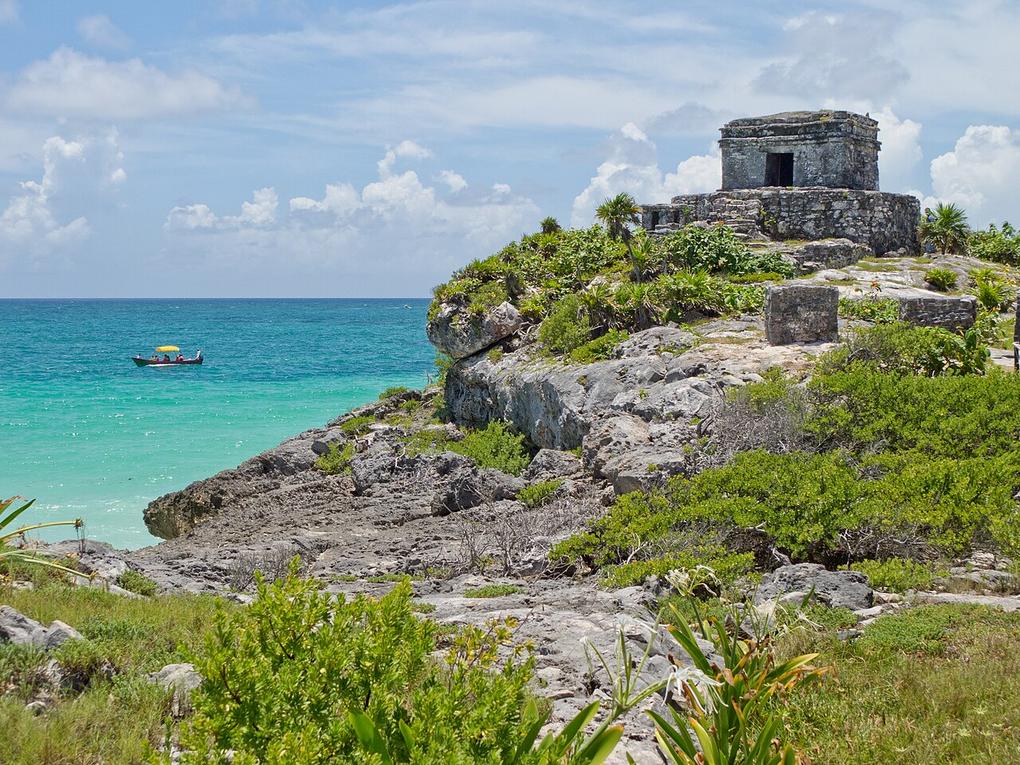
The salty breeze mixes with grilled fish aromas at the beachside cabanas on Playa Paraiso.
Tulum is a Riviera Maya beach town known for its cliff-top Mayan ruins overlooking the Caribbean Sea. Visitors come for the swimmable bays, cenote-filled jungle, and eco-resort strip along the beach road. The town’s main zones include the beach area along the coastal highway, the Pueblo neighborhood inland, and the less crowded Aldea Zama residential zone. Tulum offers a slower, more nature-focused vibe than Cancun or Playa del Carmen but lacks their nightlife and large-scale infrastructure. The population hovers around 35,000, swelling with seasonal visitors drawn by the ruins just 1.5 miles / 2.5 km from the beach. The best way to enjoy Tulum is to balance lazy beach days with short jungle swims in cenotes and sunset drinks at low-key beachfront bars.
Start with the Tulum Mayan ruins for cliff views and history, then snorkel in Gran Cenote for clear freshwater. Spend afternoons swimming and relaxing at Playa Paraiso, and finish with fresh seafood lunches at beach cabanas. Explore the jungle trails around cenotes and unwind at eco-friendly beach bars for sunset.
Key takeaways
- Book Gran Cenote visits early morning to avoid crowds and enjoy clearer water.
- Stay near the beach road for easy access to swimmable bays and sunset bars.
- Rent snorkeling gear from local shops on the beach for ~$10/day, 2026.
- Avoid peak season (December to March) for lower prices and fewer tourists.
- Plan a half-day trip to the Tulum ruins, open daily from 8 AM to 5 PM.
- Use colectivos from Pueblo to the beach area for ~$2 per ride, 2026.
- Carry cash for small purchases at beach cabanas and cenote entrances.
- Expect daily budgets around $60-$120 for mid-range stays and meals, 2026.
Why visit Tulum
Tulum stands apart from Playa del Carmen, Cancun, and Cozumel by combining cliff-top Mayan ruins with swimmable Caribbean bays. Unlike Cancun’s crowded beaches or Playa del Carmen’s party scene, Tulum offers slow days with clear water and thriving reefs right off the shore. The ruins perched above the sea provide a rare blend of history and ocean views, while the inland jungle hides cenotes perfect for cooling off. The bohemian eco-resort strip along the beach creates a relaxed vibe without the all-inclusive crowds of nearby resorts. This balance between natural beauty, cultural landmarks, and laid-back beach life defines Tulum’s distinct appeal.
- Explore the cliff-top Tulum Mayan ruins overlooking the Caribbean Sea, unique among Riviera Maya sites.
- Swim and snorkel directly from the beach in the calm, reef-protected bay at Playa Paraiso.
- Access multiple freshwater cenotes within 10 miles / 16 km, including Gran Cenote and Cenote Calavera.
- Stay in boutique eco-bungalows along the beach strip, avoiding large all-inclusive resorts common nearby.
- Experience slow, sensory beach days with fresh seafood lunches at local beachfront palapas.
- Avoid the party crowds of Playa del Carmen by visiting during the quieter shoulder seasons like May or November.
Best for
Solo travelers or friends who want calm beach days with easy reef snorkeling will appreciate Tulum’s pace. Those who prefer a hammock, cenote swim, and sunset bar over nightlife or large resorts fit best here.
Skip if
Skip Tulum if nightlife or fast-paced beach clubs are priorities; Playa del Carmen offers livelier evenings and more nightlife options.
Top things to do in Tulum
Start with the cliff-top Mayan ruins that overlook the Caribbean Sea, anchoring Tulum’s unique blend of history and ocean views. Follow with swimmable reef bays like Playa Paraiso where snorkeling is effortless right from shore. Inland, explore freshwater cenotes hidden in the jungle, offering cool, clear escapes that contrast the slow beach days perfectly.
1. Tulum Mayan Ruins ·
Experience the only cliff-top Mayan ruins with direct views over the Caribbean, a unique blend of history and sea air.
Walk the shaded trail from the entrance near the main road to reach the cliff-top ruins overlooking the turquoise Caribbean Sea. Explore the well-preserved Castillo, the Temple of the Frescoes, and the Temple of the Descending God. The site stretches along a narrow strip of coastline in the Zona Arqueológica, offering a rare combination of jungle, history, and ocean panoramas. Licensed guide outfits offer tours starting from the main entrance on Carretera Tulum-Boca Paila, but self-guided visits work well with an audio guide app. The coastal breeze and sea views create a distinct atmosphere missing from inland ruins. Book on GetYourGuide.
Choose the Tulum Ruins over inland sites like Coba for the unique cliff-top ocean views combined with Mayan history, a rare setting for ruins in the region.
- When: Visit early morning between 8:00 AM and 10:00 AM on weekdays to avoid crowds and catch soft light on the ruins; avoid midday heat.
- Cost: ~$10, 2026
- Duration: 2 hours
- How to reach: Take a taxi or rental bike south on Carretera Tulum-Boca Paila from Tulum town center; the entrance is about 2 miles / 3 km from the main plaza.
Insider tip: If closed
If the ruins are closed, explore the nearby beach at Playa Paraiso for calm waters and views or visit a cenote inland.
2. Swim and snorkel at Playa Paraiso ·
Relax in the calm reef-protected bay where you can snorkel vibrant coral directly from the white sand beach.
Arrive at Playa Paraiso’s wide white sand stretch on the north end of Tulum’s beach road, where the reef creates a calm lagoon perfect for swimming and snorkeling. The shallow reefs start just a few yards from shore, letting you spot colorful fish and coral heads without a boat. The beach stays quieter in the mornings before day-trippers arrive, ideal for slow swims and hammock naps under scattered palm trees. Small palapa bars line the beach road, offering fresh seafood and cold drinks steps from the water. The reef protection here makes the bay swimmable year-round, unusual for the region.
Playa Paraiso beats busier beaches like Playa Ruinas because of its calmer waters and direct reef access from the sand, perfect for relaxed snorkeling days.
- When: Visit early morning before 10:00 AM or late afternoon after 3:00 PM to avoid crowds and enjoy softer light for snorkeling.
- Cost: Free
- Duration: Half day
- How to reach: Walk or bike east from Tulum town center along the beach road (Avenida Tulum), about 1.5 miles / 2.5 km to the north end of the beach strip.
Insider tip: If closed
If rough seas close the beach, head inland to Gran Cenote for freshwater swimming and snorkeling in calm conditions.
Solo female travel: The beach road is safe for solo female travelers during daylight hours; avoid walking back late after dark due to limited lighting.
3. Gran Cenote ·
Cool off in this large freshwater cenote surrounded by jungle, known for crystal-clear water and easy snorkeling access.
Enter the Gran Cenote park from the main entrance on Carretera Tulum-Boca Paila, where a shaded jungle path leads to a wide, open cenote with crystal-clear water. Swim or snorkel around the submerged rock formations and spot turtles, small fish, and stalactites just below the surface. The cenote’s size and clarity make it comfortable for all skill levels, with wooden platforms for easy water access. Small changing rooms and a snack bar sit near the entrance, and the surrounding jungle offers a cool break from the sun. This cenote has a steady flow of visitors but remains one of the most accessible freshwater spots near town.
Gran Cenote offers easier snorkeling and swimming access compared to smaller, darker cenotes like Cenote Calavera, making it ideal for relaxation and cool-downs.
- When: Arrive at opening time around 8:00 AM or late afternoon after 4:00 PM to avoid midday crowding, especially on weekends.
- Cost: ~$15, 2026
- Duration: 2–3 hours
- How to reach: Take a taxi or rental bike about 2 miles / 3 km east along Carretera Tulum-Boca Paila from Tulum town center; the cenote is well-marked on the roadside.
Insider tip: If closed
If closed, try Cenote Calavera for a quieter swim or Playa Paraiso for ocean swimming and snorkeling.
4. Cenote Calavera ·
Dive into this smaller, less crowded cenote with dramatic openings and a jungle vibe just minutes from town.
Located just off Calle Centauro Sur near the southern edge of Tulum town, Cenote Calavera offers a rawer, more adventurous swimming experience. The cenote features three small openings in the rock—two for jumping and one for easy entry—surrounded by lush jungle greenery. The water is cool and clear, with a mysterious atmosphere amplified by the cavernous ceiling and hanging roots. This spot attracts fewer visitors than Gran Cenote, letting you float quietly amid the jungle sounds. Local guides offer snorkeling gear rentals nearby, and a small parking area sits just off the main road.
Pick Cenote Calavera over Gran Cenote if you want a less commercial, more intimate swim with dramatic natural features close to town.
- When: Go mid-morning between 9:00 AM and 11:00 AM on weekdays to avoid the small weekend crowds and enjoy calmer water.
- Cost: ~$8, 2026
- Duration: 1–2 hours
- How to reach: Walk or bike south from Tulum center along Calle Centauro Sur for about 1 mile / 1.6 km; the cenote entrance is on the right side near the jungle edge.
Insider tip: If closed
If closed, head to Gran Cenote for a larger, more accessible freshwater swim.
Solo female travel: Cenote Calavera’s small parking and jungle path are well trafficked during the day, but avoid visiting alone after sunset due to limited lighting.
5. Beachfront eco-bungalow stay ·
Book a boutique cabana along the beach strip for direct ocean access, hammock time, and fresh seafood nearby.
Choose a small, family-run cabana along the northern stretch of Tulum’s eco-resort beach road, where wooden bungalows sit steps from the sand and sea. These accommodations emphasize natural materials, open-air design, and privacy without large resort crowds. Wake up to the sound of waves and walk right onto the white sand beach or dip into the warm Caribbean. Nearby beach bars and seafood shacks serve freshly caught lobster, ceviche, and grilled fish, perfect for easy lunches or sunset dinners. The beach strip here maintains a relaxed pace, with hammocks strung between palms and no loud music venues.
This option beats large resorts by offering peaceful oceanfront access and a personal vibe, ideal for slow beach days without resort crowds.
- When: Book stays from November through April for the driest, sunniest weather and calmest sea conditions on the beach.
- Cost: ~$80-$120 per night, 2026
- Duration: Overnight
- How to reach: Reach the eco-resort strip by taxi or rental bike from Tulum town center, heading east along Avenida Tulum for about 2 miles / 3 km to the beach zone.
Insider tip: If closed
If beachfront bungalows are fully booked, consider guesthouses in Aldea Zama with easy bike access to the beach.
6. Sunset drinks at a beach bar on the eco-resort strip ·
Catch the Caribbean sunset from a relaxed beach bar with fresh cocktails and ocean breezes along Tulum’s coast.
Head to one of the laid-back beach bars along the eco-resort strip on Avenida Tulum, where open-air palapas and wooden decks face the sea. Order freshly made cocktails featuring local ingredients like mezcal, hibiscus, or tamarind while the sun sinks into the horizon. The sound of waves and the cool ocean breeze create a quiet atmosphere perfect for unwinding after a swim. These bars keep music low and focus on quality drinks and casual seating in hammocks or rustic chairs. Many spots serve small plates of ceviche or grilled seafood, making it easy to linger until dusk fades.
This beats noisy party clubs or crowded restaurants by offering a peaceful, oceanfront setting with fresh drinks and a front-row seat to the sunset.
- When: Arrive around 5:30 PM to secure a good seat and enjoy the full sunset spectacle, especially from November through April.
- Cost: ~$8-$15 per cocktail, 2026
- Duration: 1–2 hours
- How to reach: Walk or bike east from Tulum town center along Avenida Tulum for about 2 miles / 3 km; bars are spaced along the beachfront road.
Insider tip: If closed
If the beach bars are closed or crowded, try the rooftop bar in Tulum town center for sunset views and cocktails.
Solo female travel: These beach bars usually have attentive staff and a relaxed crowd; solo female travelers find them comfortable before 9 PM.
7. Snorkeling tour to the Mesoamerican Reef ·
Take a guided snorkel trip to the second-largest barrier reef, seeing vibrant marine life beyond the shore reefs.
Join one of the licensed guide outfits in Tulum for a boat tour heading to the Mesoamerican Reef, roughly 2-3 miles / 3-5 km offshore. The guides lead you to coral gardens teeming with parrotfish, angelfish, and sea turtles, well beyond the limited snorkeling zones near the beach. The tour usually includes equipment rental and a safety briefing before departure from the beach area near the eco-resort strip. Expect calm waters early in the morning, which makes spotting marine life easier and the water clearer. Book on GetYourGuide.
This tour reaches the reef’s vibrant deeper sections, unlike shore snorkeling that limits you to patchy coral and fewer fish. It beats the crowded beach spots for marine diversity.
- When: Book morning tours from 8:00 AM to 11:00 AM to avoid afternoon winds and choppier water, best from November through April for clearer visibility.
- Cost: ~$50-$70, 2026
- Duration: Half day
- How to reach: Walk or bike along the beach road from Tulum town center to the eco-resort strip, where most operators launch their boats from small docks near the shore.
Insider tip: If closed
Snorkel at Casa Cenote or the reef area directly accessible from Playa Ruinas beach if the sea is rough or tours cancel.
8. Visit Casa Cenote ·
Swim in a freshwater cenote connected to the sea, surrounded by mangroves and calm waters perfect for floating.
Casa Cenote sits just off the main highway east of Tulum town, where freshwater mixes with seawater in a sheltered mangrove environment. The calm, clear water invites easy swimming and snorkeling, with underwater roots and fish visible without strong currents. You can rent snorkel gear on-site or bring your own. The cenote’s proximity to the coast means you get a rare blend of jungle and sea atmosphere, with birds and wildlife often visible in the surrounding mangroves.
Casa Cenote’s connection to the sea sets it apart from inland cenotes, offering a unique mix of salt and fresh water ecosystems that shore snorkel spots lack.
- When: Arrive before noon to avoid crowds and enjoy warmer water; best from December to May when rain is lower and water clarity peaks.
- Cost: ~$10-$15 entrance, 2026
- Duration: 2–3 hours
- How to reach: Take a short taxi or rental scooter ride east along the main highway from Tulum center, about 3 miles / 5 km to the cenote entrance near the beach road.
Insider tip: If closed
Head to Cenote Zacil-Ha for a less crowded freshwater swim with facilities nearby.
9. Relax at Playa Ruinas beach ·
Enjoy a quieter beach right below the ruins, combining swimming with views of the cliff-top site above.
Playa Ruinas sits directly below the famous Mayan ruins on the Caribbean coast, offering a stretch of sand less busy than the main beach further south. The water here is calm enough for swimming and snorkeling along the coral outcrops near shore. The beach has small palapas and local vendors but avoids large crowds due to limited access and no large resorts. You can watch the ruins from the sand, making it easy to combine a morning swim with an afternoon visit to the archaeological site.
The direct proximity to the ruins lets you blend beach time with cultural exploration, unlike busier beaches where the ruins are out of sight and reach.
- When: Go early morning or late afternoon to avoid midday crowds and enjoy cooler temperatures, ideally from November to April when rainfall is lowest.
- Cost: Free
- Duration: 1–3 hours
- How to reach: Walk or bike from Tulum town center down the beach road heading south, about 1 mile / 1.5 km to the small access path below the ruins.
Insider tip: If closed
Visit the beach at the eco-resort strip for a less shaded but more accessible swimming spot if Playa Ruinas is closed for maintenance or weather.
10. Biking along the beach road ·
Rent a bike to explore the eco-resort strip at a relaxed pace, stopping at beach palapas and small cafés.
Rent a cruiser bike from one of the shops near Tulum’s town center or the beach road. The 3-mile / 5 km eco-resort strip offers a flat, scenic route along the coast where you can stop at palm-thatched palapas for fresh coconut water or local snacks. The road is mostly paved with some sandy stretches but easy to navigate. This ride suits a slow day, giving you access to small beach bars, boutique shops, and quiet coves without the hassle of parking or traffic.
Biking combines gentle exercise with beachside exploration and flexibility to pause wherever you want, unlike taxis or walking that limit stops or range.
- When: Cycle early morning or late afternoon to avoid midday heat, with November through May offering the most pleasant weather for outdoor activity.
- Cost: ~$10-$15 per day rental, 2026
- Duration: 2–4 hours
- How to reach: Start from Tulum town center or the hotel zone; bike rentals are available near the main plaza or beach road entrances.
Insider tip: If closed
Walk shorter sections of the beach road or use local colectivos if biking is unavailable or weather is too hot.
Solo female travel: Use well-maintained rental bikes with locks; the beach road is lightly trafficked but keep to daylight hours for best visibility.
11. Fresh seafood lunch at a beachfront palapa ·
Choose any small palapa restaurant on the beach strip for ceviche and grilled fish with ocean views and fresh air.
The beach strip between Tulum town and the ruins has numerous family-run palapas serving fresh seafood caught daily. Expect ceviche made with local fish, grilled snapper or red snapper, and sides like fried plantains or grilled vegetables. These open-air spots offer tables shaded by palm leaves, letting you enjoy ocean breezes while dining. Many palapas source ingredients from local fishermen and small farms, giving the flavors a direct connection to the region.
Eating at a beachfront palapa offers unbeatable freshness and atmosphere compared to inland restaurants or tourist-heavy spots on the main street.
- When: Lunch hours from 12:00 PM to 3:00 PM work best; weekdays tend to be quieter than weekends, and November to May offers pleasant weather for outdoor seating.
- Cost: ~$15-$25 per meal, 2026
- Duration: 1–2 hours
- How to reach: Walk or bike south from Tulum town center along the beach road; palapas are scattered along roughly 2 miles / 3 km of coastline before the ruins.
Insider tip: If closed
Try seafood at one of the small cevicherias near the central plaza if beachfront palapas are closed or crowded.
12. Cenote Zacil-Ha ·
Swim in this smaller, less touristy cenote with clear water and nearby facilities, perfect for a midday dip.
Cenote Zacil-Ha lies a few miles west of Tulum town, offering a well-maintained swimming spot with clear water and a relaxed vibe. Unlike larger cenotes, it’s less crowded and has a small café and restroom facilities onsite. The cenote’s round shape and depth make it ideal for swimming or floating, with easy access via stairs and a shallow entry area. You’ll find locals and visitors alike using it as a refreshing break from the midday sun.
Zacil-Ha avoids the heavy crowds of popular cenotes further south, giving you more space and calm water for a stress-free swim.
- When: Visit late morning to early afternoon when water temperatures peak; dry season months November through May offer the clearest water.
- Cost: ~$8-$12 entrance, 2026
- Duration: 1–2 hours
- How to reach: Rent a bike or take a short taxi west from Tulum town center along the main highway, then follow signs about 2 miles / 3 km off the highway to the cenote entrance.
Insider tip: If closed
Visit Casa Cenote or one of the cenotes near the ruins for similar freshwater swimming options.
13. Visit Tulum Pueblo for local markets ·
Explore the town center for fresh produce, street food stalls, and a glimpse of daily life away from the beach strip.
Tulum Pueblo’s central market area offers a lively contrast to the beach strip’s tourist rhythm. Walk along Avenida Tulum and the side streets to find vendors selling fresh fruits, vegetables, and handmade tortillas. Street food stalls serve quesadillas, tamales, and fresh juices, letting you taste local flavors amid everyday life. The market hums with local shoppers, providing a grounded view of Tulum beyond the resorts.
Opt for this if the beach vibe feels repetitive and you want a relaxed, authentic daily scene with fresh, affordable eats and local color.
- When: Early morning through late morning, especially weekdays to avoid weekend crowds; best from November through April to avoid summer heat.
- Cost: Free to browse; food and produce typically under ~$5, 2026
- Duration: 1-2 hours
- How to reach: Walk or bike 1 mile / 1.6 km west from the beach zone along the main road, Avenida Tulum; taxis also run frequently.
Insider tip: If closed
Visit the small street markets near the bus station for similar local produce and snacks.
14. Yoga class in a jungle studio ·
Join a gentle yoga session in a jungle setting, a calm way to reset after beach or cenote time.
Step into a shaded jungle studio surrounded by lush greenery where instructors lead slow-flow or restorative yoga classes. The natural sounds of birds and breeze create a meditative atmosphere, helping you unwind from the sun and sand. Classes often include breathwork and guided relaxation, ideal for recovery after snorkeling or hiking the ruins. Many studios offer mats and props, making it easy to drop in without gear. Book on GetYourGuide.
Choose this for a low-impact, sensory recharge away from crowds and noise, especially if you want to balance activity with calm in a natural setting.
- When: Morning sessions between 7:00 and 9:00 AM are coolest and most serene; afternoon classes around 4:00 PM suit sunset pacing; year-round availability.
- Cost: ~$15-$25 per class, 2026
- Duration: 1-1.5 hours
- How to reach: Most jungle yoga studios sit 1-2 miles / 1.6-3.2 km south of Tulum Pueblo, accessible by bike or short taxi ride from the center or beach road.
Insider tip: If closed
Try a beachfront sunrise yoga session offered by some eco-hotels along the beach road.
15. Visit the Tulum Art Club ·
Browse contemporary local art in a relaxed gallery setting, supporting local creatives off the main beach strip.
The Tulum Art Club showcases rotating exhibitions of local and regional artists working in painting, sculpture, and mixed media. The gallery space is open and quiet, often with natural light filtering through plants and wood accents. Visiting here gives insight into Tulum’s current creative scene beyond the tourist motifs. You can chat with gallery staff about artists and upcoming shows, making it a low-key cultural stop.
Pick this if you want a slow, contemplative break from the beach with a focus on local art and creative voices not found in tourist shops.
- When: Afternoons on weekdays avoid weekend visitors and offer time to linger; open year-round, typically 11:00 AM to 7:00 PM.
- Cost: Free entrance; art sales vary
- Duration: 30 minutes to 1 hour
- How to reach: Located about 1 mile / 1.6 km west of the beach strip near Tulum Pueblo, reachable by bike or taxi from the center or beach zone.
Insider tip: If closed
Explore small artisan shops along Calle Centauro Sur for local crafts and artwork.
16. Evening walk along the beach road ·
Enjoy a peaceful stroll after sunset, watching the lights come on in eco-resorts and listening to waves close by.
The beach road calms after dark, with fewer tourists and a cooler breeze off the Caribbean. Walk south or north along the sandy shoulder, passing eco-resorts and small bars whose lanterns glow softly. The sound of waves mixes with distant music and the occasional chatter from beachfront tables. This slow walk offers a sensory reset after daytime activity without the bustle of daytime crowds or party scenes.
Choose this for a relaxed, contemplative way to end the day that connects you to the coast and local rhythms without needing a meal or booking.
- When: Start around 7:30 PM after sunset, any evening of the year; quieter on weekdays than weekends.
- Cost: Free
- Duration: 30 minutes to 1 hour
- How to reach: Begin at any point along the beach road; accessible on foot from most beach accommodations or by bike from Tulum Pueblo.
Insider tip: If closed
Take a sunset walk along the public beach near the ruins entrance for a similar vibe.
17. Visit the small cenote at Cenote Escondido ·
Discover a quiet, less visited cenote with calm water and a jungle canopy, ideal for a slow, sensory swim.
Cenote Escondido is a small freshwater sinkhole shaded by dense jungle, creating a cool, peaceful swim spot. The water is calm and clear, perfect for floating or gentle snorkeling without crowds. Surrounding trees and hanging vines block direct sun, enhancing the sensory feel of swimming inside a natural cave-like environment. Facilities are minimal, so bring swim gear and water, and expect a tranquil atmosphere.
This cenote suits those wanting a slow, meditative swim away from the busy tourist cenotes, focusing on quiet and nature immersion.
- When: Mid-morning to early afternoon, from 9:00 AM to 1:00 PM, when light filters into the water; best from November to April for dry conditions.
- Cost: ~$5-$10 entry, 2026
- Duration: 1-2 hours
- How to reach: Located roughly 2 miles / 3.2 km west of Tulum Pueblo, reachable by bike or taxi; the path is unpaved so sturdy shoes help.
Insider tip: If closed
Visit Cenote Calavera nearby for a more active swim with cliff jumps and larger crowds.
72 hours in Tulum
This three-day plan moves at a relaxed pace, ideal for solo or paired travelers who want to blend beachside calm with the cliff-top ruins and jungle cenotes. Each day balances slow mornings with standout afternoons and gentle evenings to maximize Tulum’s unique coastline and jungle vibe.
Day 1
Morning
Start with the morning light spilling over the Caribbean at Playa Paraiso. Arrive early to secure a quiet spot on the soft white sand and snorkel the reef before the beach fills up. A slow walk north along the shore reveals small palapas where locals serve fresh juices and coffee—perfect for a calm, shaded break.
Afternoon
Head to the Tulum Mayan Ruins before mid-afternoon to avoid the late crowds and harsh sun. The cliff-top views over the turquoise sea feel especially vivid in the afternoon light. Walk down to Playa Ruinas afterward for a swim with the ruins as a backdrop, then grab ceviche and grilled fish at a beachfront palapa on the eco-resort strip, choosing a table facing the ocean breeze.
Evening
Settle into a beachfront eco-bungalow for a hammock rest before sunset. Walk along the beach road just as the sun dips, then pick a beach bar on the eco-resort strip for fresh cocktails and unobstructed Caribbean sunset views. Dinner can be light—think fresh seafood tostadas at a casual spot with ocean sounds in the background.
Day 2
Morning
Wake slowly and bike along the beach road, renting a bike near your bungalow for a relaxed pace. Stop at small cafés under palm palapas for a late breakfast or a smoothie, soaking in the quiet jungle-edge atmosphere before the heat sets in. This morning ride offers a different perspective of the eco-resort strip’s quieter northern end.
Afternoon
Choose the Gran Cenote for a refreshing swim in crystal-clear freshwater surrounded by jungle. Arrive by early afternoon to avoid the peak crowd surge. After snorkeling, head to a nearby beachfront palapa for a seafood lunch with grilled fish and a fresh ceviche sampler, sitting where the shade balances sun and sea breeze.
Evening
After a restful afternoon, take sunset drinks at a quieter beach bar farther north on the strip, where the vibe is more intimate and the crowds thin out. For dinner, explore Tulum Pueblo’s central plaza area for a sit-down meal featuring regional dishes like cochinita pibil in a relaxed, open-air setting. The town’s slower rhythm after dark lets you unwind with a local beer or mezcal.
Day 3
Morning
Start early at the Tulum Pueblo market for fresh produce and street food stalls opening with the day. Grab a strong coffee and sample local fruit juices while watching daily life unfold. This slower, sensory morning suits a calm, immersive start away from the beach bustle.
Afternoon
Spend the afternoon visiting the Tulum Art Club, browsing contemporary local art in a quiet gallery setting off the main strip. Follow this with a gentle swim at Cenote Escondido, where the jungle canopy and still water offer a sensory contrast to the more touristy spots. This combination provides a low-key cultural and natural afternoon.
Evening
Finish with an evening walk along the beach road, timing it just after sunset when lights from eco-resorts flicker on and the air cools. For dinner, choose a small eatery near the northern end of the eco-resort strip serving grilled seafood and vegetable dishes, offering a peaceful atmosphere that matches the day’s slower tempo.
If you have a fourth day
Spend the morning at Cenote Calavera, arriving early to enjoy its dramatic openings and jungle vibe before the crowd. Follow with a leisurely lunch at a beachside palapa on the southern end of the eco-resort strip, savoring grilled fish with fresh herbs. This day adds a deeper dive into the cenote landscape without retracing earlier routes.
Best time to visit Tulum
Quick answer
Visit Tulum from April to June or October to early December for warm, mostly dry weather perfect for slow beach days and snorkeling.
| Months to go | April to June, October to early December |
|---|---|
| Months to avoid | July to September due to intense heat and occasional heavy rain showers |
Tulum’s climate offers warm temperatures year-round, ranging from 75.9°F in August to 81.7°F in March. The best months for relaxed beach days and snorkeling stretch from April through June and then October to early December, when rain is moderate and temperatures hover around 78°F to 82°F. July through September bring the hottest weather, with highs near 76°F to 77°F but also the lowest rainfall, though occasional heavy showers can disrupt outdoor plans. The rainy season peaks in May and April, with over 6 inches of rain and nearly 30 rain days, which can limit time spent on the beach or in cenotes. Winter months stay warm but see more frequent rain, so late fall offers a better balance for calm water and fewer interruptions. The slow rhythm of Tulum’s beach life thrives best when the weather is steady and the sea is calm, making these shoulder months ideal for relaxing swims and hammock afternoons under palm shade.
Average temperature (°F)
Monthly weather
Warm with frequent light rain
Warm, steady rain days
Warmest month, moderate rain
Hot with frequent showers
Rainiest month, hot and wet
Warm and mostly dry
Hot, very low rain
Warmest, driest month
Warm with occasional rain
Warm, less rain than summer
Warm with frequent showers
Warm, steady rain days
How to get to Tulum
Nearest airport
Cancún International Airport (CUN), 81 miles / 130 km, about 2 hours by car
From the airport
Take the public airport bus from the Cancún terminal to Tulum town for around $15, 2026. It drops you near the main bus station. Alternatively, a metered taxi costs about $90-$110, 2026, but it’s overpriced for solo travelers. Renting a car at the airport offers flexibility if planning to explore cenotes and jungle beyond Tulum.
Other ways to arrive
- From Playa del Carmen by colectivo van, 40 minutes, ~$7, 2026
- From Cancún by ADO bus, frequent departures, 2 hours, ~$15, 2026
- From Chetumal by bus, 4.5 hours, ~$30, 2026
- From Mérida by bus, 4 hours, ~$35, 2026
Getting around Tulum
Biking dominates local transport, especially along the beach road and eco-resort strip. For solo travelers, renting a bike or electric scooter offers freedom and fits Tulum’s slow, relaxed pace. Taxis serve short hops but can be pricey and inconsistent.
- Bike rental – best for beach road and town; costs ~$10/day, 2026
- Electric scooter rental – faster than bikes, ~$15/day, 2026
- Metered taxi – use for night trips or longer distances; expect $5-$10 per ride within town, 2026
- Colectivo van – cheap for trips to Playa del Carmen or nearby cenotes; ~$3-$5, 2026
- Walking – practical in Tulum town and along the beach strip during daytime
- Car rental – only if planning to explore cenotes or jungle areas beyond town; ~$40/day, 2026
Avoid
Avoid relying on taxis for airport transfers; prices vary widely and are often inflated for solo travelers.
Day trips from Tulum
These day trips extend your Tulum stay with diverse landscapes and cultural layers beyond the beach and ruins. Each destination offers a distinct vibe, from colonial towns to natural wonders that reward early starts and relaxed returns.
Coba
Explore the largest Mayan archaeological site in the Yucatán jungle with towering pyramids.
Why: Coba’s jungle setting contrasts sharply with Tulum’s coastal vibe. Climb the Nohoch Mul pyramid for expansive views over dense canopy. The site is less crowded and more immersive than Tulum ruins, with bike rentals on site to cover the vast area.
Skip if: Not interested in archaeology or jungle hiking.
Akumal
Swim with sea turtles in a calm bay with shallow reefs.
Why: Akumal’s protected bay offers reliable turtle sightings without the crowds of Tulum’s main beaches. Snorkel gear rentals and beachfront eateries make it easy to spend a relaxed morning or afternoon. It’s a quieter alternative for water time outside Tulum.
Skip if: Avoid if sensitive to crowded beaches or prefer snorkeling from shore.
Valladolid
Visit a colonial Yucatán town with colorful streets, cenotes, and historic churches.
Why: Valladolid offers a cultural shift from Tulum’s beach scene with its Spanish colonial architecture and lively markets. The town’s cenote, Zací, is walkable and less touristy than coastal cenotes. It’s a great spot for fresh local food and a slower pace inland.
Skip if: Limited time or prefer nature-focused trips.
Sian Ka’an Biosphere Reserve
Discover a vast UNESCO-protected reserve with wetlands, mangroves, and wildlife tours.
Why: Sian Ka’an’s boat tours through mangroves and lagoons provide wildlife sightings of dolphins, manatees, and birds. The reserve’s remote beaches offer quiet swimming spots away from Tulum’s tourist flow. Booking with a local operator supports conservation efforts.
Skip if: Not interested in guided nature tours or long boat rides.
Combine Tulum with
Extend your trip by linking Tulum with other Riviera Maya and Yucatán destinations. These routes balance beach time with cultural and natural exploration, ideal for a multi-night itinerary beyond Tulum’s laid-back rhythm.
Tulum to Playa del Carmen to Cozumel Tulum → Playa del Carmen → Cozumel
Start in Tulum for beach and ruins, move to Playa del Carmen for urban energy and nightlife, then ferry to Cozumel for world-class diving and quieter island beaches.
Tulum to Mérida to Uxmal Tulum → Mérida → Uxmal
Head inland to Mérida’s colonial streets and vibrant markets, then explore Uxmal’s impressive Mayan ruins with fewer tourists and dramatic architecture.
Tulum to Bacalar to Mahahual Tulum → Bacalar → Mahahual
Travel south to Bacalar’s freshwater lagoon with seven shades of blue, then continue to Mahahual for relaxed Caribbean beaches and snorkeling away from the Riviera Maya crowds.
Where to stay in Tulum
Tulum splits into distinct zones that shape your stay. The Beach Zone runs along the Caribbean coast with boutique eco-resorts and cabanas perched near the cliff-top ruins. Aldea Zama offers a newer, quieter residential feel with condos and villas close to town but away from the beach buzz. The Pueblo area is the historic town center, perfect for walkable access to restaurants and shops with budget guesthouses. La Veleta, south of town, blends local life with affordable boutique stays and a growing creative scene. On the edge of town, the Tankah Bay area offers river and lagoon views with peaceful eco-lodges. The Hotel Zone along the main highway houses mid-range hotels and hostels, balancing convenience and price. Each zone draws a different traveler profile based on access to beach, jungle, or town life.
Pueblo
Budget stays center on simple hostels and family-run guesthouses, mostly in Pueblo and La Veleta. These places deliver clean dorms or private rooms with basic amenities, often without AC or hot water. Expect walkable access to local markets and street food but limited beachfront proximity. The vibe leans local and social, ideal for solo travelers or backpackers prioritizing community over luxury. Many budget spots sit on quieter side streets offering calm nights away from main roads.
Insider tip: Request a room facing the inner courtyard in Pueblo guesthouses to avoid street noise and get better airflow without AC.
Aldea Zama
Mid-range options cluster in Aldea Zama and the Hotel Zone, with boutique hotels, cabanas, and small resorts offering a balance of comfort and charm. Expect AC, private bathrooms, and pools or garden settings. These properties put you within a short bike ride to the beach and a quick drive to town. They lack the exclusivity of beachfront resorts but deliver quiet, well-maintained spaces with easy access to both jungle trails and restaurants. Mid-range stays suit travelers wanting a relaxed rhythm without full luxury prices.
Insider tip: Book directly with Aldea Zama hotels during the low season (May to October) to secure discounts not shown on booking platforms.
Beach Zone
Splurge stays center on the Beach Zone’s eco-resorts and boutique hotels perched near the cliff-top Mayan ruins. These properties combine design-forward architecture, private beach access, and upscale dining. Expect hammocks on terraces, ocean views, and spa services. These resorts excel at slow mornings by the sea and sunset cocktails overlooking the Caribbean. They lack the bustle of all-inclusive mega-resorts, focusing instead on intimate, nature-integrated luxury.
Insider tip: Request a room on the north end of the Beach Zone resorts for quieter beaches and unobstructed views of the ruins at sunset.
Local institution: Azulik — established as a design-driven eco-resort blending luxury with jungle and sea views for over a decade.
Where not to stay
The stretch along the main highway between Tulum town and the airport is noisy and dusty, with heavy traffic and little charm after dark.
Solo female travelers
Choose a guesthouse or boutique hotel in Aldea Zama, where streets are well-lit and secure, with easy daytime and nighttime access to cafes and taxis.
Booking through these links supports Pack Lightly at no extra cost to you.
Neighborhoods in Tulum
Tulum’s neighborhoods form distinct zones shaped by geography and function, from the Caribbean coast to jungle edges. The Beach Zone hugs the shore with eco-resorts and cliff views, while Aldea Zama and Pueblo lie inland with a mix of residential and commercial life. La Veleta and Tankah Bay add layers of local culture and natural scenery, creating a spread that balances beach calm and town bustle.
Pueblo
Pueblo is Tulum’s historic town center, featuring low-rise concrete buildings and a grid of dusty streets. It hosts a mixed community of locals, expats, and budget travelers, with a steady daytime rhythm of markets, shops, and street vendors. Evenings bring a casual energy as families and visitors gather around plazas and casual eateries.
Aldea Zama
Aldea Zama blends modern residential architecture with jungle greenery, featuring low-rise condos and villas with wide streets and sidewalks. It attracts young professionals and families seeking a quieter, upscale atmosphere away from the beach crowds. The neighborhood feels planned but relaxed, with shaded paths and boutique shops.
Beach Zone
The Beach Zone stretches along Tulum’s Caribbean coast, marked by wooden cabanas, eco-resorts, and cliff-top ruins overlooking turquoise waters. The architecture favors natural materials and open-air designs to blend with the jungle. This area pulses with daytime beachgoers and tourists but quiets significantly after sunset due to limited street lighting.
La Veleta
La Veleta sits south of central Tulum and mixes modest local homes with a growing number of boutique guesthouses and creative spaces. The streets are a patchwork of paved and dirt roads, with a strong local community presence and emerging art studios. It carries a grassroots energy with informal markets and street murals.
Tankah Bay
Tankah Bay lies on the edge of Tulum with river and lagoon landscapes, hosting eco-lodges and small cabins nestled in dense jungle. The area has a slow, natural rhythm with limited infrastructure and a focus on tranquility. It attracts travelers seeking nature immersion and water-based relaxation away from busy town centers.
Hotel Zone
The Hotel Zone runs along the main highway entering Tulum, featuring mid-range hotels, hostels, and commercial establishments. The architecture mixes functional tourist lodgings with roadside shops and casual eateries. This zone balances convenience and price, attracting travelers who prioritize access over ambiance.
Where to eat and drink in Tulum
Tulum’s food scene centers on fresh seafood from the nearby fishing port of Punta Allen and regional Yucatecan flavors like achiote and sour orange. The city blends this with a relaxed beachside vibe, favoring small family kitchens, eco-conscious eateries, and open-air markets. Local Mayan influences show up in dishes featuring native ingredients like chaya and pumpkin seeds. Tulum’s markets and neighborhoods reflect its mix of long-time residents and eco-resort visitors, creating a diverse culinary landscape distinct from other parts of Mexico.
Must-try dishes
Cochinita Pibil
Slow-roasted pork marinated in achiote and sour orange, traditionally cooked in underground pits.
This regional Yucatecan dish is a pillar of Tulum’s food identity, especially from family-run kitchens in the Pueblo area that use local achiote paste sourced from nearby producers.
Insider tip: Skip touristy spots and look for the stands that locals queue at during lunchtime.
Tikin Xic
A Mayan-style grilled fish marinated with achiote and wrapped in banana leaf.
This dish highlights Tulum’s coastal roots, often using fresh fish from Punta Allen’s fishermen and prepared by restaurants near the Beach Zone that specialize in regional seafood.
Insider tip: Order it at lunch with a side of local black beans and squash; it’s the real beach-to-table experience.
Fresh Ceviche with Local Catch
Raw fish cured in lime juice with chilies, onions, and cilantro, made exclusively with fish caught in the nearby Caribbean waters.
Tulum’s fishing port supplies uniquely fresh seafood, making the ceviche here notably vibrant and less acidic than versions inland; this dish defines the city’s coastal culinary scene.
Insider tip: Eat it early in the day when the catch is freshest and the flavors are sharpest.
Chaya Salad
A salad featuring chaya, a leafy green native to the Yucatan, mixed with tomato, avocado, and a light citrus dressing.
Chaya is a local ingredient rarely found outside the region; Tulum’s eco-conscious restaurants in Aldea Zama feature it to showcase native plants sustainably.
Insider tip: Pair it with fresh-pressed juice for a nourishing midday meal.
Handcrafted Mezcal Cocktails
Locally sourced mezcal mixed with native fruits and herbs to create cocktails that balance smoky and fresh flavors.
Tulum’s cocktail bars innovate with mezcal from nearby Oaxaca, blending it with regional ingredients like hibiscus and tamarind, creating drinks you won’t find elsewhere.
Insider tip: Try the hibiscus mezcal mule for a refreshing twist on a classic.
Local drinks
- Tulum Cold-Pressed JuicesJuice bars and health cafes in Aldea Zama, especially around the central park area.
Juices made from tropical fruits and native herbs, cold-pressed to retain freshness and nutrients. - Artisanal Coffee from Local RoastersSpecialty coffee shops in Pueblo and Aldea Zama.
Coffee roasted in small batches by local Tulum roasters focusing on organic and sustainable beans from the Chiapas region.
Where to eat – by neighborhood
Pueblo
Offers walkable access to family-run taquerias, casual seafood stalls, and traditional Yucatecan kitchens in a lively town center atmosphere.
Insider tip: Order lunch at the midday peak when cochinita pibil vendors fill the streets with smoke and aroma.
Aldea Zama
Home to boutique bistros and health-conscious cafes serving native ingredients and fresh-pressed juices in a quiet residential setting.
Insider tip: Try the chaya salad paired with freshly roasted coffee at a café near the central park.
Beach Zone
Features open-air seafood shacks, eco-resorts with palapa restaurants, and craft cocktail bars overlooking the Caribbean Sea.
Insider tip: Grab ceviche early in the day when the catch is freshest and enjoy it on a beach bench before the crowds arrive.
La Veleta
Growing creative food scene with affordable eateries mixing local flavors and international influences, popular with locals and expats.
Insider tip: Seek out the small family kitchens off the main streets for authentic Yucatecan breakfasts.
Restaurants worth knowing
Hartwood
Arca
Kitchen Table
Local markets
| Tulum Pueblo Market | Daily, 7:00 AM–3:00 PM – Fresh local produce, regional spices, and street food like tamales and marquesitas. |
|---|---|
| Weekend Artisanal Market | Saturday and Sunday, 9:00 AM–4:00 PM – Local crafts alongside organic foods, fresh juices, and small-batch mezcal tastings. |
Dietary note
Vegetarian and vegan options appear mostly in Aldea Zama’s cafes and boutique bistros; gluten-free travelers should note corn tortillas are widely available, but cross-contamination can occur in traditional kitchens.
Daily budget for Tulum
Tulum’s daily costs run above Mexico’s average due to its booming eco-resort scene and high demand for beachfront lodging. Expect to pay a premium for small boutique bungalows and fresh seafood along the coast.
Shoestring
- lodging – basic guesthouse or shared bungalow away from the beach
- food – street tacos, local cevicherias, and casual beach snacks
- transport – bike rental or colectivo rides within town
- activities – self-guided beach swims and cenote entrance fees
- buffer – occasional bottled water or small extras
Trade-offs: Sacrifice beachfront access and opt for simple rooms inland to keep costs low while still enjoying Tulum’s natural highlights.
Comfort
- lodging – private bungalow or small eco-cabin near the beach strip
- food – fresh seafood lunches, casual sit-down dinners at mid-range restaurants
- transport – frequent bike rentals or short taxi rides
- activities – cenote tours, snorkel gear rental, and entry to Mayan ruins
- buffer – drinks, tips, or occasional splurges
Trade-offs: Paying more for lodging near the beach adds convenience and ambiance but expect some noise from nearby bars during high season.
Splurge
- lodging – boutique eco-resort or cliff-top villa with ocean views
- food – high-end seafood dinners and craft cocktails at beachfront bars
- transport – private transfers or frequent taxis
- activities – guided cenote adventures, private snorkeling trips, and wellness experiences
- buffer – spa treatments, premium souvenirs, or extra tips
Trade-offs: Luxury lodging and curated experiences come at a steep price but deliver unmatched privacy and direct beach access.
Money-saver tip
Rent a bike from one of the local shops near Avenida Tulum for $5-$7/day to skip pricey taxis and explore the beach and town at your own pace.
Splurge that’s worth it
Book a private cenote tour that includes early access and snorkeling gear; the quiet mornings and crystal-clear waters justify the premium.
Skip to save
Avoid beachfront restaurants on the main hotel strip charging double for seafood; instead, eat at small cevicherias on Calle Centauro for fresher food and better prices.
Practical tips for Tulum
Money
Cash or card. Card payments work well in most restaurants and shops in Tulum, especially in the Beach Zone and Aldea Zama. Small street vendors, local markets, and some cenote entrances still prefer cash, so carry small bills for those.
ATMs. ATMs are widespread in Pueblo and Aldea Zama but less common near the beach, where machines often run low on cash. Expect foreign card fees; use a card with no foreign transaction fees like Wise or Charles Schwab to avoid extra charges.
Tipping. Tipping 10-15% is standard in restaurants; for example, leave $3-$5 on a $30 meal. Taxi drivers and hotel staff appreciate small tips around $1-$2 per service, but tipping is less expected than in the U.S.
Safety
Tulum is generally safe during the day, with low violent crime but occasional petty theft targeting tourists. Stay alert in crowded areas and avoid isolated streets after dark. Police presence is stronger around the Beach Zone and Pueblo, but some caution is needed in less touristy spots.
Where to walk at night. Pueblo and Aldea Zama are safe for evening walks with well-lit streets and active nightlife. The Beach Zone is lively but less secure late at night due to dim lighting and fewer locals. La Veleta has some pockets to avoid after dark, especially away from main roads.
Common scams:
- Taxi drivers overcharging by refusing meters or inflating fares
- Fake tour operators offering cenote or ruin tours at inflated prices
- Street vendors switching prices after purchase
Local warnings:
- Strong sun requires sunscreen and hydration year-round
- Roads near ruins and cenotes can be uneven and poorly lit at night
- Rip currents can occur on exposed beaches; swim near lifeguard stations
Connectivity
Mobile data. Mobile coverage is reliable across Tulum with Telcel and Movistar; Telcel SIM cards cost around $15-$20 for a basic data plan. eSIM options exist but are pricier and less flexible for short stays.
Wi-Fi. Wi-Fi quality varies widely; expect slow or unstable connections in budget guesthouses. The Pueblo area has cafes and coworking spots with dependable Wi-Fi, making it the best bet for working remotely.
Late-night transit. Public transit stops around 9 PM; after that, rideshare and taxis are the only options. Pueblo and Aldea Zama rely heavily on taxis late at night, while the Beach Zone has fewer transport choices after dark.
Language
Main language: Spanish. English level: English is widely spoken in the Beach Zone and tourist areas like Pueblo, but less so in Aldea Zama and local markets. Learning basic Spanish phrases improves interactions with locals outside the main tourist hubs.
Cultural notes
- Dress modestly when visiting Mayan ruins and religious sites; avoid swimwear or tank tops there.
- Always ask permission before photographing locals, especially in Pueblo and La Veleta neighborhoods.
- Avoid discussing drug-related topics or local politics in casual conversations.
- Greeting with a simple ‘Buenos días’ or ‘Buenas tardes’ is appreciated in shops and markets.
Solo female travel
Solo female travelers find Pueblo and Aldea Zama comfortable for daytime and early evening outings with plenty of cafes and restaurants. The Beach Zone can feel quieter and less populated at night, so plan transport in advance. Social hostels and boutique guesthouses in Pueblo offer easier ways to meet others.
- Neighborhood: Stay in Aldea Zama for quieter streets and better lighting after dark compared to the Beach Zone.
- Transport: Book taxis via apps like Didi or Uber after sunset to avoid overcharging and ensure safe rides.
- Meeting people: Choose guesthouses in Pueblo with communal areas or join small group tours to meet other travelers.
Do
- Respect coral reefs by avoiding sunscreen with oxybenzone when snorkeling near the reef
- Use refillable water bottles to reduce plastic waste
- Support eco-conscious lodgings that practice water and energy conservation
Don’t
- Touch or stand on coral reefs when snorkeling or diving
- Leave trash on beaches or in cenote areas
- Disturb turtle nesting sites along the coast
Frequently asked questions about Tulum
1Is visiting the Tulum Mayan Ruins worth it?
Yes, the Tulum Mayan Ruins deliver cliff-top views of the Caribbean and a compact historical site. Arrive early to avoid crowds and the midday heat, especially since the ruins sit just 1.5 miles / 2.5 km from the beach.
2Should I stay in Pueblo or Aldea Zama in Tulum?
Choose Pueblo for local markets and authentic street food, ideal if you want a lively town vibe. Aldea Zama suits quieter stays with boutique bungalows and easy access to the beach road, perfect for relaxation-focused visitors.
3Should I do a visit to the small cenote at Cenote Escondido or spend more time at Gran Cenote?
Skip Cenote Escondido and focus on Gran Cenote instead. Gran Cenote offers clearer water, extensive snorkel routes, and better facilities, making it the superior choice for a refreshing jungle swim.
4What is the best time of year to visit Tulum for beach and cenote activities?
The best time is July through October when rainfall drops to 0.2 to 0.6 inches per month, and temperatures hover around 76-79°F. This period offers warm water and fewer tourists, ideal for swimming and snorkeling.
5How much does a typical day in Tulum cost for mid-range travelers?
Expect to spend roughly $60-$120 per day in 2026, covering a beachside bungalow, local seafood meals, and snorkel rentals. Booking accommodations near the beach road helps reduce transport costs.
6Is Playa Paraiso swimmable and good for solo travelers?
Yes, Playa Paraiso’s calm waters make it one of the few swimmable bays on the Riviera Maya. Solo travelers find it safe during daylight, with easy access to beach cabanas and sunset bars along the eco-resort strip.
7Can you safely drink tap water in Tulum?
No, tap water in Tulum is not safe to drink. Always buy bottled water or use filtered water at accommodations to avoid stomach issues.
8Are seafood dishes like Cochinita Pibil and Tikin Xic widely available in Tulum?
Yes, Cochinita Pibil and Tikin Xic are staples in many local eateries, especially in Pueblo markets and beachfront palapas. Try fresh ceviche with local catch for a lighter option along the beach road.
9Is Tulum safe for solo female travelers at night?
Tulum is generally safe for solo females during the day, but limit nighttime outings to well-lit areas like the beach road and central Pueblo. Use taxis or rideshares after dark, as colectivos stop running early.
10How do you get from Tulum airport to the beach area without overspending?
Skip airport taxis charging ~$50 and take a colectivo from Pueblo to the beach for about $2 per ride in 2026. From the airport, a shared shuttle or bus to Pueblo is more cost-effective, then hop on a colectivo heading to the beach zone.
Estimate your daily budget
See realistic daily costs by tier and category.