

One country saves you time and hassle; the other delivers island life and lower daily costs.
Malaysia wins for travelers who want a straightforward trip with fewer logistics headaches. US citizens get 90-day visa-free entry, and Kuala Lumpur’s international airport connects to 60+ destinations. Pack Lightly’s safety score (75/100) and tourist infrastructure score (80/100) reflect a more developed system with reliable public transport like the KLIA Ekspres train. Daily budgets range from $50 to $120 depending on city or nature stays. Malaysia’s mix of city, rainforest, and beaches suits those who want variety without juggling multiple flights or ferry rides.
The Philippines offers cheaper daily costs, often $40 to $90, especially on islands like Palawan or Siargao. US citizens get 30-day visa-free entry but must plan for slower transport—ferries and small airports dominate. Pack Lightly’s safety score (60/100) and tourist infrastructure score (55/100) warn of rougher logistics and less urban polish. The Philippines is best if you want island life with white-sand beaches and don’t mind hopping between islands by boat or small plane. Manila’s heat peaks at 87°F in April, hotter than Kuala Lumpur’s steady 81°F average.
Insider tip: In Malaysia, a $2 hawker meal in Penang beats pricey tourist food in Manila’s airport area.
This means Malaysia offers smoother transport, better signage, and easier booking than the Philippines’ 55 score.
Malaysia vs Philippines: Key Travel Differences
| Topic | Malaysia | Philippines |
|---|---|---|
| Visa Requirements | 90-day visa-free for US citizens | 30-day visa-free for US citizens |
| Safety | Pack Lightly safety score 75/100, low violent crime in KL | Pack Lightly safety score 60/100, petty theft common in Manila |
| Budget Level | $50-$120/day, $2 hawker meals in Penang | $40-$90/day, $1.50 street food in Cebu |
| Transport & Infrastructure | KLIA Ekspres train, Grab widely available | Island ferries, small airports, limited public transport |
| Accommodation Quality | 3-star hotels from $30 in Kuala Lumpur | Beach huts $15 on Siargao, fewer mid-range hotels |
| Best Time to Visit | May to July, less rain in Kuala Lumpur | December to May, dry season for islands |
| Food & Cuisine | Malaysian nasi lemak $2, multicultural street food | Lechon $3 per serving, seafood fresh from the ocean |
| Travel Vibe | Multicultural cities plus rainforests and beaches | Island hopping, beach life, laid-back towns |
| Language Barrier | English widely spoken in cities and tourist spots | English official but accents and dialects vary widely |
| Crowds in Peak Season | KL busy but manageable, tourist spots less crowded | Popular islands like Boracay packed December to April |

Best for Malaysia
- Couples with $70/day for city and rainforest combo
- Solo travelers avoiding complex island transport
- Families needing 90-day visa and reliable healthcare
Best for Philippines
- Solo divers chasing manta rays on $40/day
- Couples with $50/day for 2-week island hopping
- Backpackers who accept slower transport for beach access
Malaysia vs Philippines: Clear Travel Choices
- If you want easier transport and infrastructure, choose Malaysia — Pack Lightly tourist infrastructure score (80/100).
- If your priority is the lowest daily cost with beach focus, choose Philippines — budget-friendly $40-$90/day.
- If safety matters most, choose Malaysia — Pack Lightly safety score (75/100) versus Philippines (60/100).
- If you need longer visa-free stay, choose Malaysia — 90 days versus Philippines 30 days for US citizens.
- If you prefer island life with slower pace, choose Philippines — best time December to May for beaches.
- If you want multicultural cities plus nature, choose Malaysia — Kuala Lumpur averages 81°F year-round with steady rain.
Pack Lightly Scores
11 categories scored from 0 (low) to 100 (high)
Still unsure which country fits your trip?
Use the interactive comparison tool to weigh Malaysia and the Philippines across 11 travel categories. It adjusts scores based on your travel style and priorities to reveal your best fit.
What you’ll actually spend

Malaysia is cheaper for mid-range travelers by about $12 per day. Prices use MYR (1 MYR = 0.2516 USD) and PHP (1 PHP = 0.01663 USD). Expect Philippines to cost more on accommodation and activities, while Malaysia offers better value on local transport and meals.
Daily budget comparison: Malaysia vs Philippines
| Category | Malaysia (MYR/USD) | Philippines (PHP/USD) |
|---|---|---|
| Backpacker daily budget | 60 – 90 MYR ($15.10 – $22.64) | 900 – 1400 PHP ($14.97 – $23.28) |
| Mid-range daily budget | 150 – 250 MYR ($37.74 – $62.90) | 2500 – 4000 PHP ($41.57 – $66.52) |
| Luxury daily budget | 400 – 700 MYR ($100.64 – $176.12) | 7000 – 12000 PHP ($116.41 – $199.56) |
| Street food meal | 4 – 7 MYR ($1.01 – $1.76) | 50 – 100 PHP ($0.83 – $1.66) |
| Restaurant meal | 15 – 30 MYR ($3.77 – $7.55) | 200 – 400 PHP ($3.33 – $6.65) |
| Local transport (per day) | 10 – 20 MYR ($2.52 – $5.03) | 100 – 200 PHP ($1.66 – $3.33) |
| Activities/tours (average) | 50 – 100 MYR ($12.58 – $25.16) | 1500 – 3000 PHP ($24.95 – $49.89) |
Malaysia is cheaper overall, especially on accommodation and tours. The Philippines is more expensive but offers higher friendliness and nature scores. Pack Lightly budgetFriendly: Malaysia 80, Philippines 85. Choose Malaysia for budget control, Philippines if you want island adventure. Hotels MalaysiaHotels Philippines
Pro tip: In the Philippines, book tours directly with local operators to avoid agency markups.
Watch out: Philippines airport terminal fees add unexpected costs on departure.
What you’ll eat

Malaysia wins street food hands down. You get char kway teow for $1.50 at Penang’s hawker stalls and roti canai for $0.70 in Kuala Lumpur. The Philippines has tasty street eats like balut for $0.50 and isaw (grilled chicken intestines) for $0.75, but overall lacks the polish and variety Malaysia offers.
Vegetarians and halal diets are easier in Malaysia. Most food is halal by default, and vegetarian options like nasi lemak without meat are common. The Philippines is less halal-friendly and has fewer vegetarian choices outside Manila’s upscale areas, but gluten-free options are decent thanks to rice-based dishes.
Drink culture favors the Philippines for relaxed island vibes and cheaper alcohol. San Miguel beer runs about $1.50 a bottle, and local lambanog (coconut spirit) is common. Malaysia restricts alcohol more, with beer like Tiger costing $3.50 and fewer open bars, but you’ll find strong local coffee and teh tarik everywhere.
Food and drink face-off
| Category | Malaysia | Philippines |
|---|---|---|
| Signature dish | Char kway teow, $1.50 at Penang hawker stalls | Balut, $0.50 street snack in Manila |
| Street food quality | Wide variety, clean stalls, consistent quality | Limited variety, more rustic, less consistent |
| Vegetarian-friendly | Good halal and vegetarian options widely available | Limited vegetarian, less halal, mostly rice-based dishes |
| Restaurant variety | Diverse Asian cuisines, from Malay to Indian | Mostly Filipino and some international in cities |
| Drink culture | Alcohol restricted, strong coffee culture | Cheap beer and spirits, island bar scene |
Char kway teow
Affordable, iconic Malaysian street food experience
Insider tip: Try Penang’s Gurney Drive hawker center for the freshest char kway teow after 7 PM.
Where to sleep

Malaysia scores higher on hotel quality with a 75 rating versus the Philippines’ 65. Kuala Lumpur’s Bukit Bintang and George Town in Penang offer polished mid-range hotels for $40–$80 per night. In the Philippines, Makati and Bonifacio Global City in Manila have decent hotels but fewer options above $60. Hotels MalaysiaHotels Philippines
Both countries have rough spots. Malaysia’s budget hostels in Langkawi can be hit-or-miss on cleanliness. The Philippines struggles with inconsistent quality outside Manila’s main hubs and online scams on lesser-known islands. Malaysia’s infrastructure makes it easier to avoid these issues, but no place is perfect.
See full lodging breakdown by budget
Sleep options by type and price
| Type | Malaysia | Philippines |
|---|---|---|
| Budget hostels | Hostels in Kuala Lumpur, $10–$20, clean and central | Hostels in Manila, $8–$15, basic but social |
| Mid-range hotels | 3-star hotels in Bukit Bintang, $40–$80, reliable | 3-star hotels in Makati, $35–$70, variable quality |
| Boutique stays | Heritage hotels in George Town, $70–$120, charming | Boutique hotels in Cebu City, $60–$100, limited |
| Luxury resorts | Langkawi beachfront resorts, $150+, well maintained | Boracay luxury resorts, $140+, party scene |
| Alternatives | Airbnb apartments in KL, $30–$60, safe neighborhoods | Beach cottages in Palawan, $40–$80, rustic |
Booking tip: Book Bukit Bintang hotels on Agoda 2 weeks ahead for best deals.
What it actually feels like

Morning in Kuala Lumpur’s Bukit Bintang means street vendors firing up satay grills and the hum of motorbikes weaving past glass skyscrapers. The mix of Malay, Chinese, and Indian influences hits your senses fast.
In Manila’s Makati district at sunset, jeepneys jam the streets as karaoke blares from open windows. The city feels chaotic but alive, with island rhythms leaking into urban noise.
Malaysia demands patience navigating crowded transit and occasional humidity spikes, while the Philippines forces you to accept slower logistics and rougher roads between islands.
Malaysia highlights
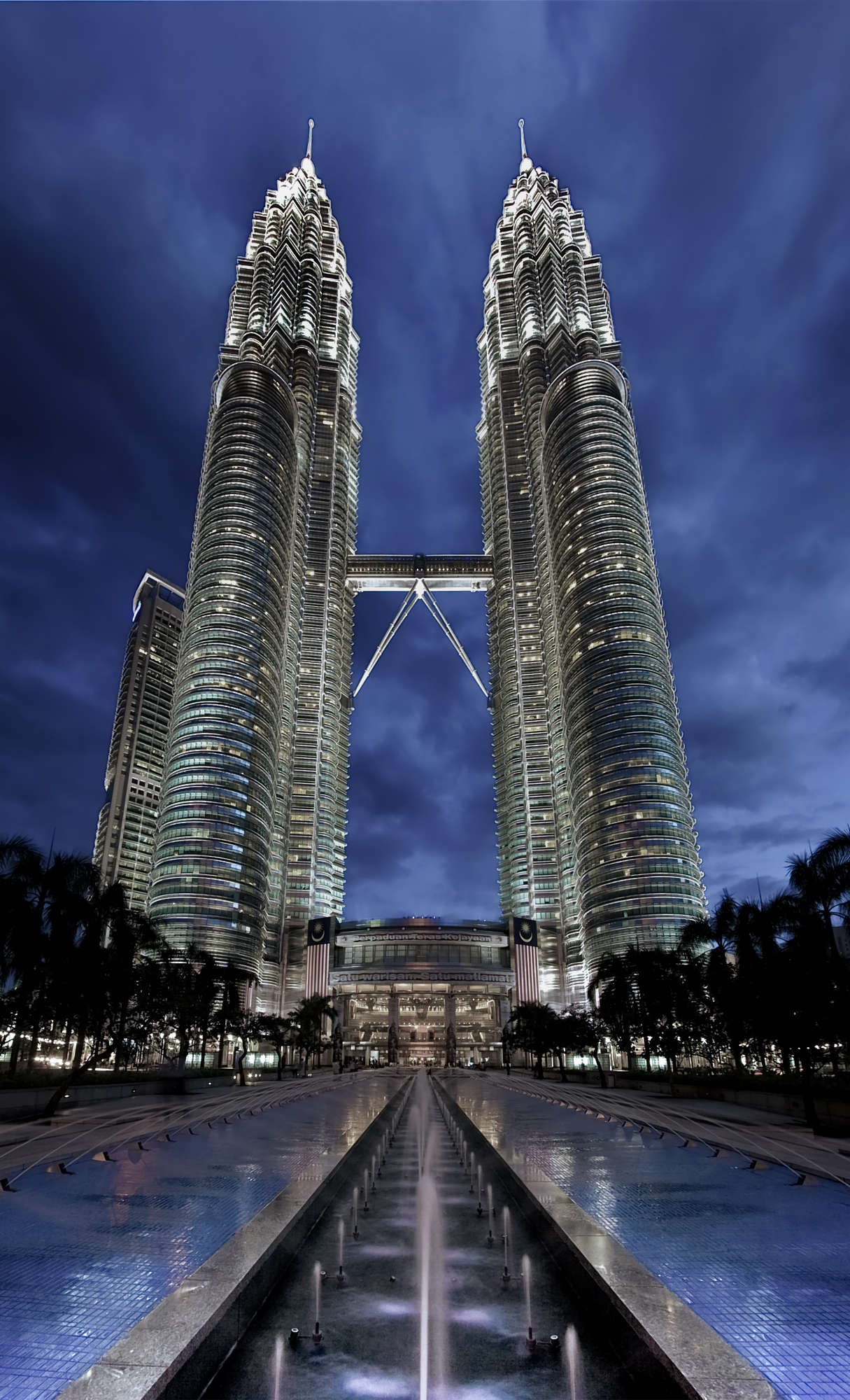
- Petronas Twin Towers(Kuala Lumpur): Iconic skyscrapers with a skybridge and night light shows.
- Cameron Highlands(Pahang): Cool tea plantations and strawberry farms, perfect for day trips.
- George Town Street Art(Penang): Walk colonial streets to see famous murals and heritage buildings.
- Bako National Park(Sarawak): Rainforest trails with proboscis monkeys and mangrove swamps.
Philippines highlights
- El Nido Island Hopping(Palawan): Crystal-clear lagoons and limestone cliffs on multi-island boat tours.
- Intramuros(Manila): Walled city history with Spanish forts and cobbled streets.
- Chocolate Hills(Bohol): Unique limestone formations best seen at sunrise.
- Banaue Rice Terraces(Ifugao): Ancient hand-carved terraces stretching over 2,000 feet high.
Ideal duration: Malaysia: 7–10 days — covers cities, highlands, and rainforest. · Philippines: 10–14 days — island hopping requires travel time.
What to do in Malaysia & Philippines
Malaysia
- Visit Petronas Twin Towers at night for city lights.
- Explore George Town’s street art by bike.
- Take a day trip to Cameron Highlands tea farms.
Philippines
- Book El Nido island hopping tours early morning.
- Walk Intramuros before noon to beat heat and crowds.
- Try snorkeling near Apo Reef for vibrant marine life.
What to skip in Malaysia & Philippines
Malaysia
- Skip Bukit Bintang malls during weekends — too crowded.
- Avoid overcrowded Langkawi beaches during holidays.
- Don’t rely on taxis in Kuala Lumpur; use Grab app.
Philippines
- Avoid Manila’s rush hour traffic between 7–10 a.m. and 5–8 p.m.
- Skip overcrowded Boracay beaches during peak season.
- Don’t depend on last-minute ferries; book inter-island early.
Choose based on
- If you want efficient city travel, choose Malaysia — score 80 in touristInfrastructure.
- If you prioritize island adventures and nature, choose Philippines — nature score 90.
- If you need better safety and hotel quality, choose Malaysia — safety score 75.
- If friendliness and relaxed pace matter most, choose Philippines — friendliness score 95.
Malaysia offers smoother travel and city comforts; Philippines demands patience but rewards with unmatched island experiences.
Real safety picture

Malaysia is safer with a Pack Lightly safety score of 75 compared to the Philippines at 60. Both countries have risks, but Malaysia’s urban and tourist areas generally have fewer violent incidents. The Philippines requires more vigilance around certain neighborhoods and transport options.
See detailed safety factors table
Safety factors compared
| Factor | Malaysia | Philippines | Practical tip |
|---|---|---|---|
| Pickpocketing | Occasional in Kuala Lumpur’s Bukit Bintang area, mostly on crowded streets and markets. | Common in Manila’s Quiapo district and crowded jeepneys. | Use the Grab app for rides and keep valuables in front pockets or a money belt. |
| Tourist scams | Fake taxi meters in KL and overpriced street food stalls near Petronas Towers. | Overcharging by tricycle drivers in Boracay and fake tour operators in Manila. | Confirm prices upfront on official Grab app or government-licensed tours. |
| Solo female traveler safety | Generally safe in tourist areas like Georgetown and KL; avoid late-night isolated spots. | Exercise caution in Manila’s Ermita district and avoid riding solo on motorcycles at night. | Use ride-hailing apps and stay in well-reviewed accommodations with 24/7 security. |
| Health risks | Dengue outbreaks occur seasonally; tap water not safe to drink. | Dengue and leptospirosis common; beware of contaminated water in rural islands. | Use mosquito repellent and drink only bottled water; download CDC travel notices app. |
| Road safety | Traffic in KL can be aggressive but roads are generally well-maintained. | Road accidents frequent, especially on rural roads and motorbike taxis. | Avoid driving yourself; use Grab or official taxis and wear helmets on motorcycles. |
| Natural disasters | Rare earthquakes; occasional flooding during monsoon season in coastal areas. | Typhoons hit regularly from June to November; volcanic eruptions possible near Luzon. | Check weather.gov.ph for typhoon updates and avoid low-lying areas during storms. |
Scam spotlight: Boracay tricycle stands
How it works: Drivers quote inflated fixed fares and refuse to use the meter or negotiate.
How to avoid: Book rides via Grab app or agree on a price before boarding.
Watch out: Paying unlicensed taxi drivers in Manila can cost $50+ for short rides with no receipt.
Insider tip: In KL, avoid using unmarked taxis at night; official taxi counters inside malls offer fixed rates.
Visa & entry rules
US citizens do not need a visa for Malaysia or the Philippines, and both are free to enter. Malaysia requires mandatory MDAC registration within 3 days before arrival via imigresen-online.imi.gov.my. The Philippines requires eTravel registration at etravel.gov.ph at least 72 hours before arrival. Neither is a simple visa-free entry without paperwork.
Full visa & entry requirements table
Visa requirements compared
| Factor | Malaysia | Philippines | Practical note |
|---|---|---|---|
| Visa requirement | No visa required | No visa required | Both countries allow visa-free entry but require pre-arrival registration. |
| Visa type & cost | Visa-free, Gratis | Visa-free, Gratis | No visa fees but mandatory online registration applies. |
| Application process | MDAC registration via imigresen-online.imi.gov.my at least 3 days before arrival | eTravel registration via etravel.gov.ph at least 72 hours before arrival | Complete registration early to avoid entry delays. |
| On-arrival option | No | No | No visa on arrival; must complete online registration first. |
| Max stay & extension | 90 days, extensions possible locally | 30 days, extensions possible at Bureau of Immigration | Plan extensions in advance to avoid fines. |
Visa and registration rules change frequently. Always check official government websites before travel. Secondary systems like MDAC and eTravel can update independently. for coverage in case of entry issues.
How you’ll move

Malaysia is easier to navigate thanks to its extensive rail network and well-organized intercity flights. Pack Lightly touristInfrastructure: Malaysia 80, Philippines 55. The biggest difference is geography—Malaysia’s peninsular and island areas connect efficiently by train and plane, while the Philippines relies heavily on flights and ferries between islands.
Compare every transport option side-by-side
Transport options comparison
| Mode | Malaysia | Philippines | Practical note |
|---|---|---|---|
| Domestic flights | AirAsia and Malaysia Airlines cover routes like Kuala Lumpur to Langkawi for $30–$50. | Cebu Pacific and Philippine Airlines fly Manila to Cebu for $25–$45. | Book AirAsia 2–3 weeks ahead via airasia.com for best rates in Malaysia; Cebu Pacific app offers promos for Philippines flights. |
| Buses | RapidKL and Plusliner run Kuala Lumpur to Penang for $12–$15 with air-conditioned coaches. | Philippine Rabbit and Ceres buses cover Manila to Batangas for $8–$12, often crowded. | Use Easybook app in Malaysia for seat reservations; in the Philippines, buy tickets at terminals early to avoid sold-out rides. |
| Trains | KTM Komuter and ETS trains link Kuala Lumpur to Ipoh for $10–$15, fast and comfortable. | No major passenger rail network; only short local lines in Metro Manila. | Book KTM ETS on ktmb.com.my at least 3 days ahead; no train booking apps needed for Philippines. |
| Taxi/ride-hailing | Grab dominates with fixed fares and upfront pricing in Kuala Lumpur. | Grab also works but expect longer wait times and surge pricing in Manila. | Always use Grab app in both countries; avoid street taxis to skip scams. |
| Ferries | Ferries connect Penang to Langkawi for about $10, reliable schedules. | Ferries are essential for inter-island travel, e.g., Manila to Puerto Galera for $12 but often delayed. | Book ferry tickets at port counters or via 2go.com.ph in the Philippines; Malaysia’s ferry schedules are more punctual. |
| Scooter rental | Available in Langkawi and Penang for $10–$15/day, easy to rent. | Common in island destinations like Siargao, $8–$12/day, often no helmet enforcement. | Use GrabBike in Malaysia for short hops; in the Philippines, rent directly from resorts or shops, check for helmet. |
| Bicycle rental | Limited to tourist spots like Penang, $8/day, mostly for leisure. | Popular in Palawan and Siargao, $5–$7/day, good for short distances. | Rent from local shops; no major apps for bike rentals, negotiate prices upfront. |
Malaysia wins for ease and variety with a Pack Lightly touristInfrastructure score of 80 versus the Philippines’ 55. The KTM train system and Grab app make Malaysia a top choice for efficient travel. The Philippines relies heavily on flights and ferries, which adds complexity and delays. Book transport
App tip: Grab app matters most; one account covers both countries for taxis and scooters.
Sample routes:
Malaysia: Kuala Lumpur → Penang, train KTM ETS, $13, 4 hours
Philippines: Manila → Cebu, flight Cebu Pacific, $30, 1.5 hours
How far English gets you
English works well in Malaysia’s cities and tourist spots. In rural areas and East Malaysia (Sabah, Sarawak), Malay dominates and English fades. The Philippines is more English-friendly nationwide, especially in Manila, Cebu, and tourist islands. Rural Visayas and Mindanao can have language gaps. Use Google Translate to cover local dialects and Malay phrases in Malaysia.
App tip: Google Translate app, offline mode, covers Malay and Filipino dialects well.
Wifi, data, payments
Malaysia has reliable 4G coverage and fast wifi in cities; expect slower rural connections. The Philippines struggles with spotty mobile data outside major cities but improves in Manila and Cebu. Both countries favor cash in markets and small towns; use GrabPay in Malaysia and GCash or PayMaya in the Philippines for card-free payments. Grab and GCash apps handle rides and payments efficiently. Consider local SIMs or eSIMs for best rates and coverage.
eSIM picks:
Malaysia: Malaysia: Airalo, $10 for 3GB, 7-day validity eSIM Malaysia
Philippines: Philippines: Airalo, $10 for 3GB, 7-day validity eSIM Philippines
Cash rules in Philippine provinces; Malaysia’s cities accept digital wallets widely.
When to go

Malaysia’s best travel months are February through April, avoiding heavy rains. The Philippines shines from January to May with dry, warm weather. Malaysia offers a more forgiving shoulder season with less intense rain outside peak monsoon months.
Full season-by-season climate breakdown
Seasonal climate comparison
| Season | Malaysia | Philippines | Best Pick | Notes |
|---|---|---|---|---|
| Winter | Avg temp around 79°F with heavy rain, especially in December and January (up to 17 inches). | Avg temp near 80°F with very low rain in January and February (under 1 inch). | Philippines | Philippines offers dry, pleasant weather; Malaysia faces heavy monsoon rains. |
| Spring | Avg temp near 81°F with moderate rain, peaking in May around 23 inches. | Avg temp rising to 87°F with minimal rain in March and April (under 2.5 inches). | Philippines | Philippines has hot, dry months; Malaysia gets wetter toward May. |
| Summer | Avg temp steady at 81°F with lower rain in July (5 inches), but August spikes again (19 inches). | Avg temp around 81°F with heavy rain in July and September (up to 18.5 inches). | Malaysia | Malaysia’s rain dips in July; Philippines faces heavy monsoon rains. |
| Fall | Avg temp around 80°F with heavy rain, especially September (12 inches) and November (14 inches). | Avg temp near 80°F with moderate to heavy rain, peaking in September (17 inches). | depends | Both countries experience heavy rains; choose based on specific destination. |
Climate tip: January and February in the Philippines offer dry weather and fewer crowds than peak spring.

The call
Malaysia wins overall for safer, easier travel with better infrastructure and more affordable mid-range costs. The Philippines is for travelers prioritizing nature and island life despite tougher logistics and safety concerns. US citizens get visa-free entry to both for up to 30 days. Choose Malaysia for hassle-free city culture and rainforests; pick the Philippines if beaches and friendliness top your list.
Category showdown
| Topic | Winner | Reason |
|---|---|---|
| Budget | Philippines | ~$5.51/day cheaper mid-range overall |
| Nature | Philippines | More diverse islands and marine life |
| Culture | Malaysia | Multicultural cities with rich heritage |
| Cities | Malaysia | Better infrastructure and urban experience |
| Food & drinks | Malaysia | Wider variety and higher quality street food |
| Accommodation | Malaysia | More consistent hotel quality and options |
| Transport | Malaysia | Easier public transit and connectivity |
| Safety | Malaysia | Lower crime rates and safer urban areas |
| Crowds | Philippines | Less tourist congestion outside main hubs |
| Digital infrastructure | Malaysia | Better internet speeds and coverage |
Malaysia edges the Philippines for safer, easier, and more diverse travel overall.
Choose Malaysia for a safer, smoother first or second Asia trip. Pick the Philippines if budget and island adventure outweigh logistics.
Book your trip
Using these links supports Pack Lightly at no extra cost to you.
Your questions, answered
01Which country is cheaper in 2026?
The Philippines is cheaper overall, with daily budgets ranging $30-$70 compared to Malaysia’s $40-$80. Backpackers save about 15% more in the Philippines, especially on food and transport.
02What are the visa requirements for US citizens in Malaysia and the Philippines?
Both countries offer visa-free entry for US citizens. Malaysia grants 90 days with an online MDAC registration required 3 days before arrival. The Philippines allows 30 days but mandates eTravel registration 72 hours before arrival.
03Which country is safer for solo travelers?
Malaysia is safer for solo travelers with a safety score of 75 versus the Philippines’ 60. Urban areas like Kuala Lumpur have better infrastructure and lower petty crime risk than many Philippine islands.
04Which country is better for beaches and island hopping?
The Philippines wins for beaches and island hopping with a nature score of 90 and active vacation score of 85. Malaysia’s beaches are good but less diverse and less accessible compared to the Philippines’ 7,000 islands.
05Which country has better street food and local cuisine?
Malaysia leads with a food and drinks score of 90. Its multicultural cities like Penang and Kuala Lumpur offer vibrant street food scenes with variety and quality that outshine the Philippines’ 70 score.
06Can you realistically combine Malaysia and the Philippines in one trip?
Yes, but it adds complexity. Flights between Kuala Lumpur and Manila are frequent but add travel time and cost. For a 2-week trip, splitting time reduces depth. Best for travelers who want city and island contrast.
07Which country is better for first-time visitors to Southeast Asia?
Malaysia is better for first-timers. It scores higher on tourist infrastructure (80 vs 55) and ease of transport. English is widely spoken, and cultural diversity is easier to navigate than the Philippines’ scattered islands.
08What is the best time to visit Malaysia and the Philippines?
Visit Malaysia between March and early October for dry weather. The Philippines is best from November to May. Avoid the Philippines’ rainy season (June to October), which can disrupt island plans and flights.
Insider tip: Philippines’ island hopping peaks outside rainy season but book flights early; Malaysia’s city and jungle combo fits any dry month.


