

Australia wins for most travelers due to safety, visa ease, and reliable transport.
Choose Brazil only if you want lower daily costs and can handle planning complexity.
Choose between Australia’s order and Brazil’s chaos before booking your next long haul.
You’re staring at two massive countries with famous beaches and huge distances between cities. Australia feels organized but expensive; Brazil is cheaper but chaotic. The real question is whether you want smooth logistics or a raw, unpredictable vibe. Flights alone eat up a chunk of your budget and time, so picking the right destination matters. Both require at least three weeks to get beyond the airport and see something real. This isn’t a casual weekend getaway—this is a serious trip that demands planning and cash. The choice comes down to what you value more: predictability or adventure.
Right now, the travel landscape pushes you to weigh visa hassle, safety, and daily expenses hard. US citizens need a visa for Brazil but not Australia, which shifts the planning effort. Australia’s daily budget for mid-range travelers hits $250 to $350, while Brazil can drop as low as $100 to $150. Safety scores differ sharply too—Australia’s Pack Lightly safety score is 90/100; Brazil’s is 45/100. These gaps affect your experience more than you think. Keep reading to get the facts on transport, accommodation, and when to go so you don’t waste time or money on the wrong choice.
Insider tip: Don’t book flights before locking down your visa and budget priorities—both countries demand serious prep.
Australia’s safety score is twice Brazil’s, meaning you’ll face fewer risks and less stress on the ground.
Australia vs Brazil: Key Travel Differences
| Topic | Australia | Brazil |
|---|---|---|
| Visa requirements | US citizens: no visa needed | US citizens: tourist visa required, $40 online |
| Safety | Pack Lightly safety score 90/100, low street crime | Pack Lightly safety score 45/100, avoid Rio favelas at night |
| Daily budget | $250–350/day mid-range in Sydney and Melbourne | $100–150/day mid-range in Rio and Sao Paulo |
| Transport & infrastructure | Efficient trains and buses in cities, reliable roads | Limited public transit, traffic jams common in Sao Paulo |
| Best time to visit | Spring (Sep-Nov) and fall (Mar-May), 65–75°F | Dry season May–Sep, 70–85°F, avoid rainy Nov |
| Language barrier | English spoken everywhere | Portuguese only, limited English outside tourist spots |
| Accommodation quality | Hotels rated 4+ stars common, $150+ per night | Mid-range hotels $50–$80, variable quality |
| Food & cuisine | Steak and seafood, $20–40 per meal | Feijoada and street food, $5–15 per meal |
| Travel vibe | Organized, relaxed cities with outdoor focus | Chaotic cities with lively street culture |
| Planning effort | Simple bookings, clear routes, easy online visa | Complex visa, language challenges, unpredictable transport |

Best for Australia
- Couples with $300/day for 2-week city and nature trip
- Solo travelers needing English and safe streets
- Families wanting reliable transport and quality hotels
Best for Brazil
- Adventurous couples with $120/day for culture and beaches
- Experienced travelers who speak Portuguese or want to learn
- Backpackers willing to navigate chaos for budget savings
Key Takeaways for Choosing Australia or Brazil
- If you want low risk and smooth logistics, choose Australia — Pack Lightly safety score (90/100).
- If you need a visa-free trip as a US citizen, choose Australia — no visa required.
- If your daily budget is under $150, choose Brazil — cheaper accommodation and food.
- If you want English everywhere, choose Australia — no language barrier.
- If you’re ready for planning hassle and language challenges, choose Brazil — more complex visa and transport.
- If you want reliable transport and hotel quality, choose Australia — Pack Lightly hotel quality score (85/100).
Pack Lightly Scores
11 categories scored from 0 (low) to 100 (high)
Timing makes all the difference
Use the comparison tool to filter by your travel dates and budget. It scores 11 categories weighted by travel style, helping you pick the country that fits your schedule and wallet best.
What you’ll actually spend

Brazil is cheaper for mid-range travelers by about $35 USD per day. Australia uses AUD with an exchange rate of 1 AUD = 0.7159 USD, while Brazil uses BRL at 1 BRL = 0.2014 USD. Expect Australia to cost significantly more on accommodation and activities. Brazil offers better street food and local transport prices but comes with lower tourist infrastructure.
Daily costs comparison: Australia vs Brazil
| Category | Australia (AUD / USD) | Brazil (BRL / USD) |
|---|---|---|
| Backpacker daily budget | 35–55 AUD / 25.06–39.38 USD | 75–110 BRL / 15.11–22.15 USD |
| Mid-range daily budget | 140–200 AUD / 100.43–143.18 USD | 200–250 BRL / 40.28–50.35 USD |
| Luxury daily budget | 350–600 AUD / 250.56–429.54 USD | 600–900 BRL / 120.84–181.26 USD |
| Street food meal | 8–12 AUD / 5.73–8.59 USD | 10–20 BRL / 2.01–4.03 USD |
| Restaurant meal | 25–45 AUD / 17.90–32.22 USD | 40–70 BRL / 8.06–14.10 USD |
| Local transport (per day) | 10–15 AUD / 7.16–10.74 USD | 8–15 BRL / 1.61–3.02 USD |
| Activities/tours (average) | 70–120 AUD / 50.11–85.91 USD | 80–150 BRL / 16.11–30.21 USD |
| Hidden costs | ETA visa $20 USD, tipping expected, park entry fees | Tourist visa $40 USD, tipping common, safety gear rental |
Brazil wins as the cheaper option across every budget level except the backpacker range, where Australia creeps closer. Australia demands bigger spending on accommodation and tours but offers superior tourist infrastructure and safety. Pack Lightly budgetFriendly: Australia 30, Brazil 70. Choose Brazil to stretch your dollar; pick Australia if you want convenience and quality Hotels AustraliaHotels Brazil.
Pro tip: In Brazil, use local bus apps to avoid overpriced taxis in big cities.
Watch out: Australia’s tipping and park fees can add up fast, especially in remote areas.
What you’ll eat

Australia’s street food leans on meat pies ($5 USD) and fish and chips ($10 USD) in neighborhoods like Sydney’s Newtown. Brazil’s street scene beats it with pastel pastries ($2 USD) and coxinha chicken snacks ($1.50 USD) found in São Paulo’s street markets. Brazil wins here for variety and price.
Vegetarian options are stronger in Australia with clear labeling and diverse menus in cities like Melbourne. Brazil offers plenty of fresh fruits and beans but lacks consistent vegetarian labeling outside major cities. Halal is easier to find in Brazil’s São Paulo than in Australia’s less diverse suburbs.
Drink culture in Australia revolves around craft beers like Coopers and local wines, widely available in bars and pubs. Brazil’s caipirinha cocktail is a must-try, with beers like Skol dominating casual spots. Alcohol access is easier and more regulated in Australia, but Brazil’s social drinking vibe is more lively and informal.
Food and drink face-off
| Category | Australia | Brazil |
|---|---|---|
| Signature dish | Meat pie, $5 USD, iconic Aussie pub food | Feijoada, $8 USD, hearty black bean stew with pork |
| Street food quality | Reliable, focused on meat pies and fish and chips | More diverse and cheaper, pastel and coxinha stand out |
| Vegetarian-friendly | Clear labeling, many veggie options in major cities | Limited labeling, fresh produce common but inconsistent |
| Restaurant variety | High-end and casual with global influences | Vibrant local flavors, less international variety outside capitals |
| Drink culture | Craft beers and wines dominate, regulated access | Caipirinhas and local beers, lively street drinking |
Pastel
Cheap, filling, and widely available street snack
Insider tip: Try a meat pie at Harry’s Cafe de Wheels in Sydney for a no-fail Aussie snack.
Where to sleep

Australia scores 85 in hotelQuality, offering polished options in Sydney’s Surry Hills and Melbourne’s Fitzroy. Brazil scores 70, with solid mid-range hotels in Rio’s Ipanema and São Paulo’s Jardins, but quality varies more. Use Hotels Australia for Australian bookings and Hotels Brazil for Brazil to find reliable stays.
Brazil’s accommodation can be hit or miss outside main tourist areas; avoid unknown listings in favelas unless guided. Australia’s high prices hit budget travelers hard, especially in city centers. Both countries require early booking in peak season to lock in decent deals.
See full lodging breakdown by budget
Sleep options side-by-side
| Type | Australia | Brazil |
|---|---|---|
| Budget hostels | Hostels in Melbourne’s CBD, $25-$40 USD/night, clean and social | Hostels in Rio’s Lapa, $10-$20 USD/night, lively but variable quality |
| Mid-range hotels | Boutique hotels in Sydney’s Surry Hills, $100-$150 USD/night | Hotels in São Paulo’s Jardins, $60-$100 USD/night |
| Boutique stays | Design-focused stays in Melbourne’s Fitzroy, $150-$250 USD/night | Charming pousadas in Paraty, $80-$120 USD/night |
| Luxury resorts | High-end resorts on Gold Coast, $300+ USD/night | Beachfront resorts in Búzios, $200-$350 USD/night |
| Alternatives | Airbnbs in urban neighborhoods, $80-$150 USD/night | Guesthouses and farm stays outside cities, $40-$90 USD/night |
Booking tip: Book at least 2 months ahead for best rates in Australia’s peak summer season.
What it actually feels like

A typical day in Sydney starts with a brisk morning walk along the Sydney Harbour Bridge, sharp sea air mixing with the sound of ferries. By noon, Bondi Beach buzzes with surfers and sunbathers, the sun strong and sky clear. Evenings call for rooftop bars in Surry Hills, efficient and orderly.
In Rio de Janeiro, mornings begin with fresh coffee at a street café in Ipanema, the ocean breeze carrying samba rhythms. Streets pulse with energy by midday, from Copacabana’s crowded shore to colorful markets in Lapa. Night spills into lively bars and street parties, loud and unpredictable.
Australia demands long drives between cities and strict schedules for tours; expect higher prices and fewer language barriers. Brazil tests patience with chaotic traffic, spotty safety, and language challenges but rewards with vibrant street life and cheaper eats.
Only in Australia can you combine the Great Barrier Reef dive with a luxury Outback lodge; Brazil offers unmatched jungle treks and carnival street chaos that can’t be replicated elsewhere.
Australia highlights
- Great Barrier Reef(Queensland)
Snorkel or dive among vibrant coral and tropical fish in clear blue water. - Sydney Opera House(Sydney)
Catch a performance or tour this architectural icon by the harbor. - Great Ocean Road(Victoria)
Drive a scenic coastal route with limestone cliffs and wildlife sightings. - Kakadu National Park(Northern Territory)
Explore Aboriginal rock art and wetlands teeming with crocodiles and birds.
Brazil highlights
- Christ the Redeemer(Rio de Janeiro)
Take the tram up Corcovado for panoramic views and the massive statue. - Amazon Rainforest(Manaus)
Join guided jungle tours to spot wildlife and indigenous communities. - Iguazu Falls(Paraná)
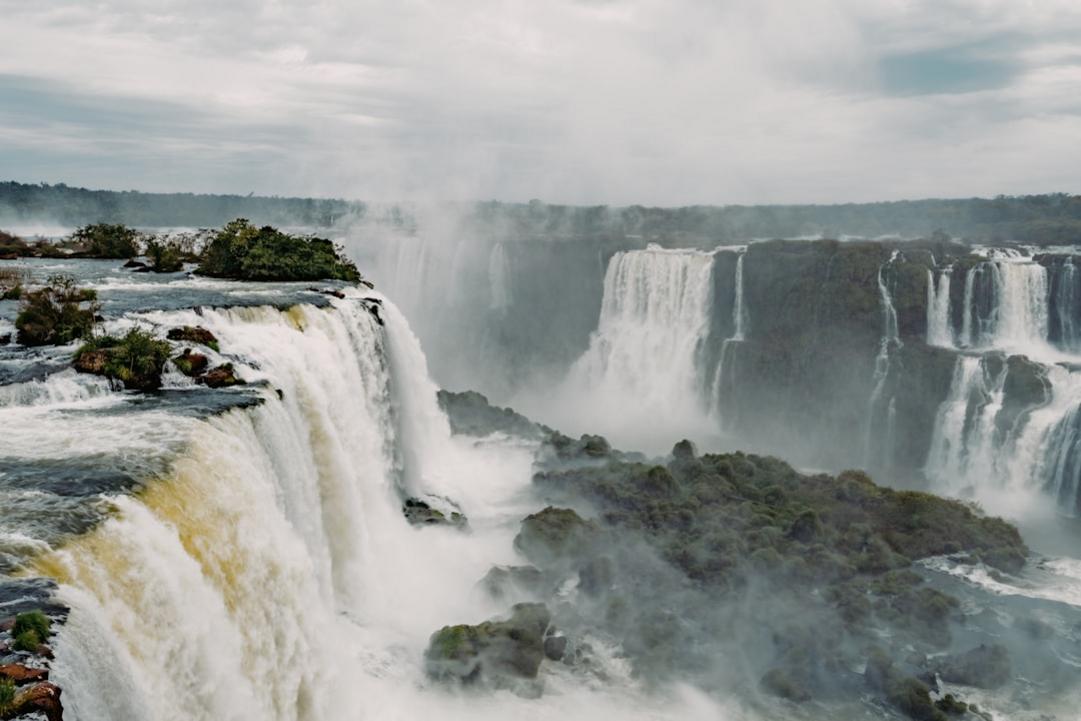
Walk the paths around massive waterfalls, feel the spray and roar. - Pelourinho(Salvador)
Wander colorful colonial streets with Afro-Brazilian music and street food.
Ideal duration: Australia: 18–25 days — Long distances require time for key highlights and road trips. · Brazil: 20–28 days — Vast size and slow transport mean extended stays are needed.
Do
- Australia: Drive the Great Ocean Road from Melbourne to Apollo Bay.
- Australia: Snorkel the Great Barrier Reef near Cairns.
- Australia: Explore Sydney’s Rocks district on foot.
- Brazil: Visit Christ the Redeemer early to beat crowds.
- Brazil: Take a guided Amazon jungle tour from Manaus.
- Brazil: Explore street art and music in Lapa, Rio.
Don’t
- Australia: Skip the overhyped Bondi to Coogee coastal walk on busy weekends.
- Australia: Avoid driving in peak Sydney CBD traffic hours.
- Australia: Don’t rely on public transport outside major cities.
- Brazil: Avoid wandering alone in Rio’s favelas.
- Brazil: Skip late-night bus rides between cities.
- Brazil: Don’t expect English widely outside tourist zones.
Choose based on
- If you want organized infrastructure and safety, choose Australia — score 90 safety.
- If you prioritize budget and cultural variety, choose Brazil — score 70 budgetFriendly.
- If you want world-class nature with less hassle, choose Australia — score 95 nature.
- If nightlife and street culture matter most, choose Brazil — score 90 culture.
Australia demands patience for distances and cost; Brazil demands street smarts for safety and language.
How you’ll move

Australia is easier to navigate thanks to highly developed infrastructure. Pack Lightly touristInfrastructure: Australia 95, Brazil 70. Brazil’s transport is cheaper but less predictable and more fragmented, especially for long distances. Both require planning for long-haul flights or bus trips between major hubs.
Compare every transport option side-by-side
Comparing transport modes in Australia and Brazil
| Mode | Australia | Brazil | Practical Note |
|---|---|---|---|
| Domestic flights | Frequent, reliable, expensive; Qantas and Virgin Australia dominate routes. | Abundant low-cost options like Gol and Azul, but delays common. | Book 3+ weeks ahead on Skyscanner for best fares; Brazil flights often delayed. |
| Buses | Comfortable long-distance buses with reserved seats; Greyhound covers key routes. | Cheaper but crowded and slower; Expresso Brasileiro is a major operator. | Use ClickBus app in Brazil for tickets; Australia’s Greyhound requires early booking. |
| Trains | Limited intercity trains; mostly scenic or regional lines, not practical for travel. | Very limited passenger trains; mostly freight and metro in big cities. | Don’t rely on trains for travel; focus on planes or buses instead. |
| Taxi/ride-hailing | Uber and Ola widely available; fares higher but service consistent. | Uber and 99 dominate; cheaper but watch for surge pricing in cities. | Use Uber app in both countries; confirm fare estimate before ride. |
| Ferries | Common in coastal cities like Sydney; well-timed schedules. | Limited to Amazon region and some coastal areas; less reliable. | Use Sydney Ferries app in Australia; check local info in Brazil’s Amazon. |
| Scooter rental | Available in major cities via Lime and Beam; helmets mandatory. | Emerging market, mostly in São Paulo and Rio; fewer safety controls. | Download Lime for Australia; use local apps like Yellow in Brazil. |
| Bicycle rental | Extensive bike-share programs in cities like Melbourne and Brisbane. | Growing but limited to big cities; bike lanes less common. | Use Lime or local city apps in Australia; check bike condition carefully in Brazil. |
| Budget route — cheapest A-to-B connection | Sydney → Melbourne, bus, $50, 12 hours. | São Paulo → Rio de Janeiro, bus, $20, 7 hours. | Australia’s bus is pricier but more comfortable; Brazil’s bus is cheap but crowded. |
Australia’s transport beats Brazil’s with a 95 vs 70 touristInfrastructure score. You pay more but get reliability and comfort across flights, buses, and urban travel. Brazil’s budget options come with delays and less predictability. Sydney to Melbourne bus costs $50 versus São Paulo to Rio for $20, showing the price-quality tradeoff Book transport.
App tip: Use Skyscanner for flights; ClickBus for Brazil buses; Uber everywhere.
How far English gets you
Australia speaks English everywhere, no surprises there. You’ll never struggle in cities like Sydney, Melbourne, or Brisbane. Brazil is a different story—Portuguese dominates, and English fades fast outside major tourist spots like Rio and São Paulo. Use Google Translate or iTranslate to bridge the gap in smaller towns or markets. Expect some patience when ordering food or asking for directions in Brazil’s interior.
App tip: Download iTranslate for offline Portuguese-English translation and voice recognition on iOS and Android.
Essential phrases cheat sheet
| English | Australia | Brazil | When to use |
|---|---|---|---|
| Thank you | Thank you | Obrigado / Obrigada | Always show gratitude after service or help. |
| How much does this cost? | How much does this cost? | Quanto custa isso? | Use when shopping or at markets in Brazil. |
| Where is the bathroom? | Where is the bathroom? | Onde fica o banheiro? | Essential in any public or restaurant setting. |
Wifi, data, payments in daily life
Australia offers fast, reliable public wifi in cafes and libraries, plus good 4G coverage nationwide. Brazil’s urban areas have decent wifi but expect spotty service and slower speeds in rural zones. Buy a local SIM or eSIM to avoid outrageous roaming fees. Cards work well in Australia everywhere; Brazil still leans cash-heavy in smaller towns and markets. Use apps like PicPay or Mercado Pago for digital payments in Brazil’s big cities.
eSIM picks:
Australia: Telstra, $40 for 10GB data eSIM Australia
Brazil: Claro, $25 for 8GB data eSIM Brazil
Brazil’s cash still rules in markets and small shops; Australia expects card or mobile pay everywhere.
When to go
When to go — month by month
Australia
Brazil
Australia
Brazil

Australia’s best months are October to November and March to May with mild temps and moderate rain. Brazil shines from May to September with dry weather and warm days. Australia offers a more forgiving shoulder season for cooler travelers. Brazil’s dry season is ideal for beach and jungle trips.
Full season-by-season climate breakdown
Seasonal climate comparison
| Season | Australia | Brazil | Best Pick | Notes |
|---|---|---|---|---|
| Winter (Dec–Feb) | Temps 64–69°F, rain 2–4 inches monthly; mild but wet in summer. | Temps 72–73°F, heavy rain 7.4–8.2 inches monthly; humid and wet season. | Australia | Avoid Brazil’s wet season for outdoor plans; Australia cooler but manageable. |
| Spring (Mar–May) | Temps drop from 64°F to 49°F, rain drops sharply from 0.9 to 1.8 inches. | Temps steady 71–72°F, rain declines sharply from 4.3 to 0 inches. | depends | Both improve; Brazil dries out, Australia cools but stays comfortable. |
| Summer (Jun–Aug) | Temps 42–47°F, rain 1.8–1 inch; coldest and driest months. | Temps 67–76°F, almost no rain; warm and dry peak season. | Brazil | Brazil offers warm, dry weather; Australia is cold and less inviting. |
| Fall (Sep–Nov) | Temps rise from 50°F to 69°F, rain 1–3.5 inches; warming and drying. | Temps 75–72°F, rain rises from none to 7.6 inches; humid return. | Australia | Australia’s spring warmth beats Brazil’s rainy buildup. |
Climate tip: Visit Australia in late October for warm weather before summer rains start.
The call
Australia wins overall for travelers who want safety, infrastructure, and predictable weather. Brazil offers better budgets and culture but demands risk tolerance and flexibility. Choose Brazil if budget and vibrant culture outweigh safety concerns. Australia suits those who prioritize comfort, safety, and organized travel.
Category showdown
| Topic | Winner | Reason |
|---|---|---|
| Budget | Brazil | ~$5.51/day cheaper mid-range than Australia |
| Nature | tie | Both have excellent natural diversity and outdoor options |
| Culture | Brazil | Richer cultural mix and vibrant local experiences |
| Cities | tie | Both offer major cities with good amenities |
| Food & drinks | Brazil | More diverse street food and local flavors |
| Accommodation | Australia | Higher quality and more consistent hotel standards |
| Transport | Australia | Better infrastructure and reliable public transport |
| Safety | Australia | Significantly safer with lower crime rates |
| Crowds | Australia | Less crowded tourist spots outside peak seasons |
| Digital infrastructure | Australia | More reliable internet and mobile coverage |
The bottom line
Australia wins for comfort, safety, and infrastructure; Brazil wins for budget and culture.
Choose Australia for safer, smoother trips and Brazil for budget-friendly culture seekers. Australia fits organized travelers; Brazil suits adventurers ready for chaos.
Book your trip
Using these links supports Pack Lightly at no extra cost to you.
Your questions, answered
01Which country is cheaper to travel in 2026?
Brazil is cheaper by a significant margin. Mid-range daily budgets average $75 in Brazil vs. $121 in Australia, a $46 gap. Backpacker and luxury travelers see similar gaps, making Brazil the clear budget winner.
02What is the best time to visit Australia vs Brazil?
Australia’s best window runs from September to November and March to May, avoiding extreme heat and crowds. Brazil shines from May to October, its dry season, perfect for beaches and wildlife spotting.
03How do safety levels compare for solo travelers?
Australia scores 90 on safety, making it far safer for solo travelers than Brazil, which scores 45. Stick to urban centers and tourist areas in Brazil to reduce risks, but Australia offers a much more secure experience.
04What are the visa requirements for US citizens visiting Australia and Brazil?
US citizens don’t need a visa for Australia but must apply for an Electronic Travel Authority (ETA) costing about $13, valid for 90 days. Brazil requires a $81 eVisa applied online, also valid for 90 days, making Australia simpler and cheaper visa-wise.
05Which country offers better nature and adventure activities?
Both score 95 for nature, but Australia edges out with more organized hiking, diving, and national parks infrastructure. Brazil is wilder and less predictable but offers unmatched Amazon and Pantanal experiences.
06Can you realistically combine Australia and Brazil in one trip?
No. Distances and flight times are brutal, plus visa hassles and different peak seasons make combining both inefficient. Pick one country per trip to maximize time and experience.
07Which country has better street food and local cuisine?
Brazil leads with an 85 food and drinks score vs. Australia’s 80. Expect vibrant street food scenes in São Paulo and Rio, while Australia’s food is more polished but less diverse streetwise.
08What is the cheapest month to visit each country?
Visit Australia in June for the lowest prices and fewer tourists. Brazil’s cheapest month is March, just after Carnival, when accommodation and flights drop sharply.
Insider tip: Visiting Brazil in March cuts costs but expect some rain; Australia in June means cooler weather but unbeatable deals.


