


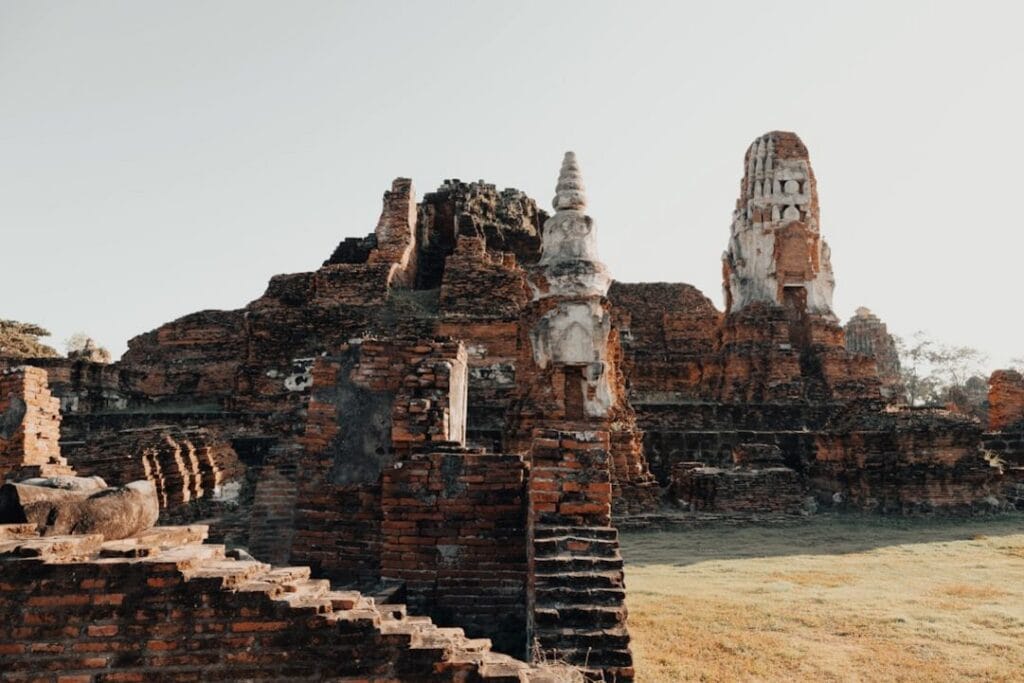
In Bangkok‘s Chinatown, sizzling woks send sharp aromas through narrow alleys as gold-leafed temple spires catch the noon sun’s glare.
Getting Thailand right as a visitor means reading two systems at once: a legal code that punishes disrespect toward the monarchy far more severely than most tourists expect, and an unwritten social code built on face-saving that governs everything from a taxi dispute to a hotel complaint. Miss the first and you risk arrest. Miss the second and you just look like every other tourist who never figured out why the smile in front of you doesn’t mean agreement.
Never criticize the monarchy, even in a private conversation someone might overhear: Article 112 carries 3 to 15 years per count, and counts stack. Everything else in Thai etiquette is forgiving by comparison.
Key takeaways
- Cover shoulders and knees before entering any temple or royal site; rental sarongs exist for a reason.
- Cannabis is medical-only since 26 June 2025: a prescription and a 30-day supply cap, not a walk-in purchase.
- Same-sex marriage has been legal since 23 January 2025, the first in Southeast Asia.
- Renting a car with a child under 6 or under 135cm means a car seat is now the law, not a suggestion.
- Article 112 lese-majeste carries 3 to 15 years per count; multiple counts have produced sentences of several decades.
The 1908 law that still shapes every conversation
- 1782. Founding of Bangkok as capital by King Rama I, establishing the centralized monarchy that still anchors Thai social hierarchy.
- 1908. Introduction of lese-majeste laws, turning respect for the monarchy from custom into a criminal-code obligation.
- 1932. Siam’s absolute monarchy ends with a constitutional revolution, starting the political tensions over royal authority that persist today.
- 2014. Military coup, the most recent of several since 1932.
- 2025. Cannabis returns to a medical-only framework and same-sex marriage becomes legal, two very different signals from the same year.
Face-saving is often linked to the 1908 introduction of lese-majeste laws, which made protecting the monarchy’s image a legal duty rather than only a social one. Whatever the exact historical chain, the practical effect for a visitor is consistent: confrontation is avoided, criticism is indirect, and a flat “no” is rare even when the answer is no. Tourists tend to misread this as evasiveness. It is closer to a habit of preserving everyone’s standing in a conversation, and it shows up in the relentless smile and the vague answer long before it shows up in anything legal.
Why “no” rarely sounds like no
The 1932 constitutional revolution forced political dissent into indirect channels that never fully went away. A Thai colleague, vendor, or hotel clerk who disagrees with you will usually soften it into a maybe, a smile, or a change of subject.
For you as a traveler: if a plan sounds vague or a yes sounds hesitant, treat it as a no. Pushing for a direct answer usually gets you a more polite non-answer, not clarity.
Why hierarchy is visible everywhere
The 1782 founding of Bangkok centralized monarchy power in a way that still runs through offices, schools, and family structure. Age and rank get automatic deference.
For you as a traveler: officials, elders, and monks receive formal respect by default. Match the register: less banter, more of the wai greeting and a slight bow.
Why monk etiquette is strict but not always written law
Buddhism’s dominance since the Sukhothai era built a monk-laity hierarchy that governs temple life, but most of the specific rules (women not touching monks, passing items via a tray) are monastic custom rather than a criminal statute.
For you as a traveler: break one and you’ll get a polite correction, not police involvement, but the custom is followed strictly and consistently enough that ignoring it reads as careless, not quirky.
Religion and spirituality
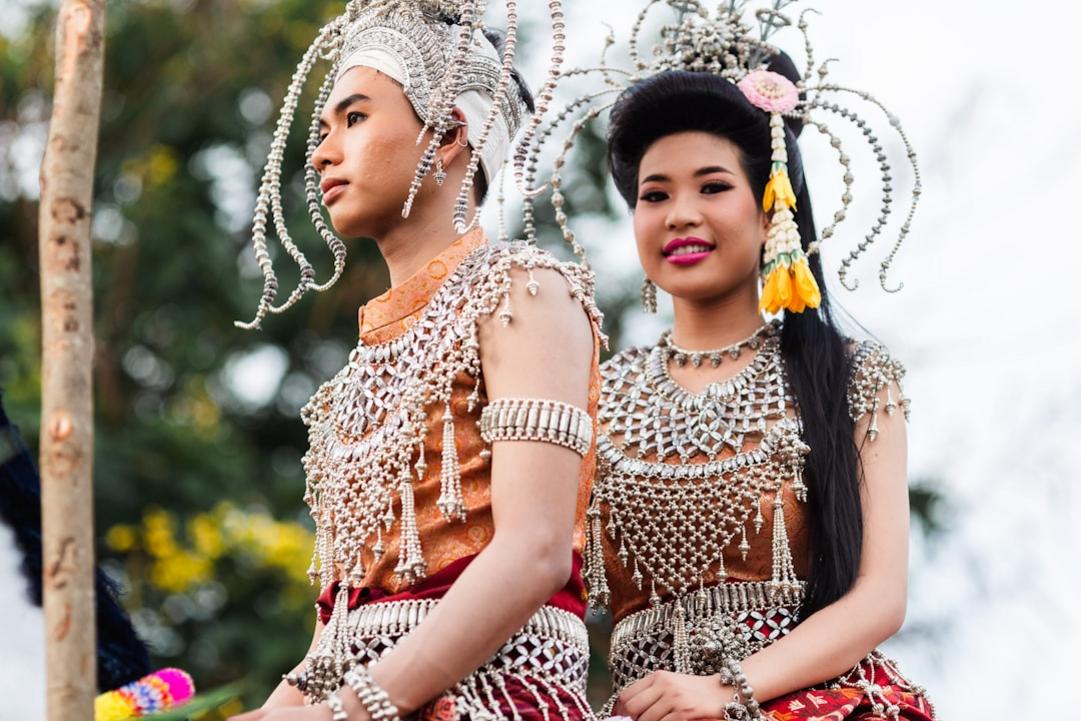
Religion shapes much of the sensory and social fabric tourists encounter in Thailand, especially in Bangkok and the northern city of Chiang Mai. Buddhist temples dominate skylines with ornate golden stupas, intricate murals, and the constant sound of chanting monks or temple bells marking prayer times. In Bangkok, the Grand Palace complex and Wat Pho offer a dense immersion into Buddhist ritual and architecture, while the Muslim call to prayer punctuates daily life in the south of the country and in specific Bangkok neighborhoods with a Muslim community. The smell of incense and jasmine fills temple grounds, signaling ongoing offerings. Festivals such as Songkran (Thai New Year) and Visakha Bucha Day cause citywide slowdowns, with many businesses closing for the day. This religious presence is audible and olfactory as much as visual, and most visitors notice it within the first 48 hours.
| Religion | % | Core value | What you see |
|---|---|---|---|
| Buddhist | 93.5% | Compassion, mindfulness, karma | Monks chanting at dawn in temples |
| Muslim | 5.4% | Prayer, charity, community | Call to prayer, concentrated in the south |
| Christian | 1.1% | Faith, salvation, charity | Sunday mass in urban churches |
| Other | 0.1% | Varied | Minority rituals or festivals |
At sacred sites, the rules are site-specific, not nationwide
At the Grand Palace interior throne halls and Wat Phra Kaew’s Emerald Buddha, photography is strictly forbidden; expect denial of entry or confiscation of a device if you ignore it. When entering these two sites specifically, remove shoes and cover shoulders and knees. Sit with feet pointed away from Buddha images and monks, never with soles pointing toward them. As a matter of monastic custom rather than statute, women avoid touching monks or handing them items directly; pass items via a male companion or place them on a tray instead. Donations go into designated boxes, not into a monk’s hand. At military bases or border checkpoints, especially in the South, photography is a genuine legal risk and can lead to arrest. Approach a monk with a slight bow and hands pressed together in a wai, and skip the handshake.
Outside temples and royal sites, religion punctuates the week rather than dominating every hour: halal food is easy to find in Muslim neighborhoods and throughout the south, market rhythms shift around Buddhist holy days, and festivals cause real, predictable closures rather than a vague slowdown. Dress code loosens once you’re away from a temple, though rural areas still expect more coverage than downtown Bangkok.
Handle with care
No photos inside the Grand Palace throne halls or in front of the Emerald Buddha at Wat Phra Kaew. Staff will stop you before you get the shot, and pushing it risks confiscation.
How locals actually live
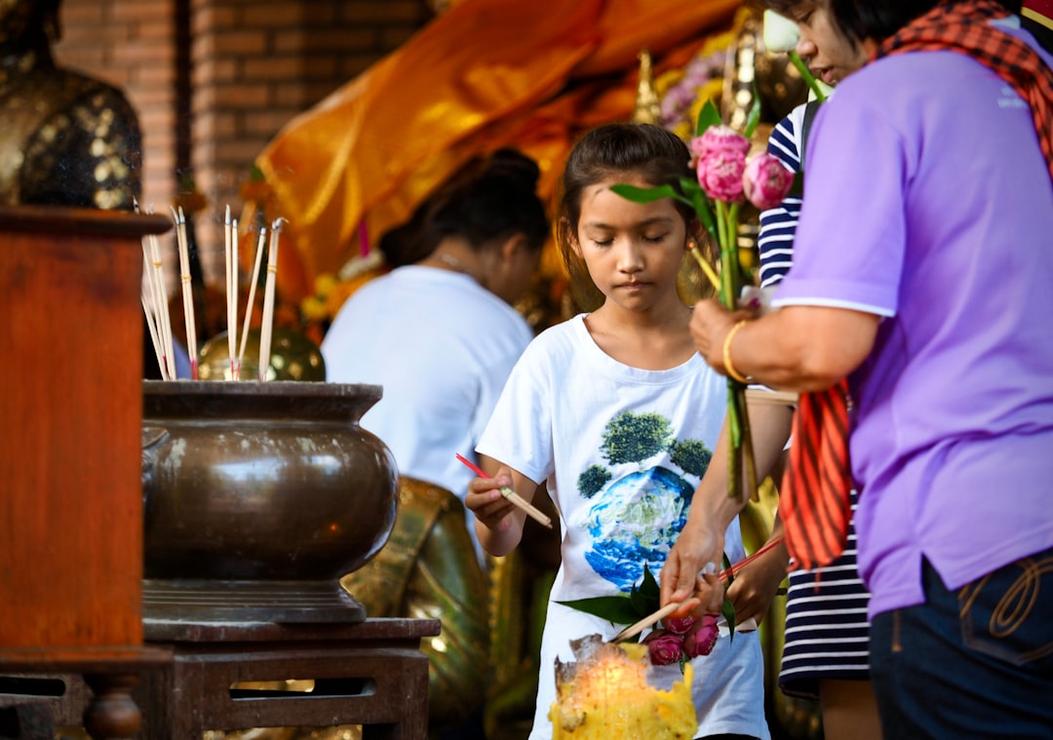
A Bangkok resident on a typical wage rents a modest apartment or small condo in districts like Bang Kapi or Lat Phrao, areas chosen for affordable housing close to public transit rather than for prestige. The daily commute mixes the BTS Skytrain with motorbike taxis for the last stretch, usually 30 to 45 minutes each way. A street-vendor breakfast, jok (rice porridge) or khao man gai (chicken rice), runs somewhere in the range of a dollar or so; dinner at a market stall lands a little higher. Office and service jobs typically run 8 AM to 5 PM with a short lunch break for street food. None of these figures should be read as precise official statistics, they’re indicative of the price band a visitor eating like a local will land in, and they shift with the exchange rate and the neighborhood.
Bangkok’s wealth gap is starkly visible between Sukhumvit, a wealthy district with luxury condos and high-end malls, and Khlong Toei, a working-class area with informal settlements and crowded markets. The numbers back up what the skyline already shows: Thailand’s Gini index sits at 43.3 (World Bank, 2021), the highest in the East Asia and Pacific region, and the richest 10% hold over half of national income and wealth. That is not a rounding difference from a “moderately unequal” country, it is one of the more unequal income distributions in the region, and it is visible within a single BTS ride. Tourists cross this divide constantly without registering it: shopping in Sukhumvit’s malls by day, then eating at Khlong Toei’s market by night.
| Region | What’s distinctive | What it means for you |
|---|---|---|
| Bangkok | Cosmopolitan Thai-Chinese-Mon mix shapes urban life. | Expect diverse food and languages; dress modestly for temples. |
| North | Lanna culture with a distinct dialect and historic temples. | Use respectful language; cover shoulders and knees at temples. |
| Isaan | Lao-influenced culture with sticky rice and Mor Lam music. | Prepare for hotter weather; bargaining is direct but polite. |
| South | Muslim-majority with halal food and Malay linguistic influence. | Dress conservatively; halal food is widely available. |
Most Bangkok households are nuclear families, though multigenerational living stays common among lower-income groups. Informal work, street vendors and day laborers, makes up a meaningful share of urban employment, though the exact share is hard to pin to a single verified current figure and should be read as a rough indication rather than a precise statistic. Renting dominates Bangkok’s central and suburban districts because property prices have outpaced median income; ownership is more common in outer provinces or among higher earners.
Where your path crosses theirs
Bargain at markets with polite, incremental offers, not an aggressive opening lowball; a vendor who feels disrespected will not move on price at all. Tip a Grab driver a little for good service; tipping hotel staff a modest amount is standard practice. Casual friendliness works with street vendors, formal politeness suits luxury venues, and mixing the two up is the fastest way to feel out of place in either.
Etiquette and the behavior code
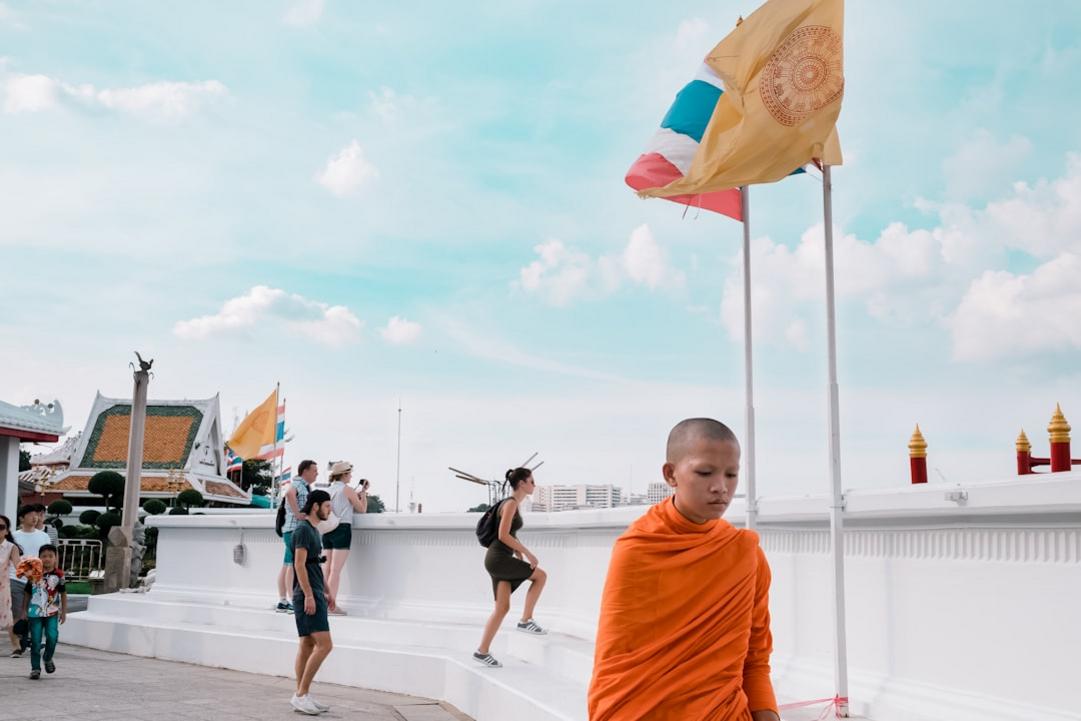
The default greeting: a slight bow with palms pressed together, the wai. Men may shake hands with other men; women generally do not initiate a handshake. A full phrase and pronunciation guide lives on the Thailand language page.
Dining: the fork never reaches your mouth
Rice is the base of nearly every meal and is eaten with a spoon in the right hand, the fork in the left is only there to push food onto the spoon; it never goes in your mouth. Chopsticks are for northern or Chinese-influenced noodle dishes, not rice plates. Whoever extended the invitation usually pays; splitting is uncommon but not offensive if you ask upfront. Street meals run cheap, sit-down restaurants cost noticeably more, and alcohol at the table is common in social settings, but avoid drinking in public or anywhere near a temple. If you’re a guest at someone’s home, wait to be offered a drink rather than assuming.
What to wear where
| Context | Requirement | Why |
|---|---|---|
| temple/sacred-site | Cover shoulders and knees with lightweight, breathable fabric; no sleeveless or shorts. | Denied entry or handed a rental cover-up; the dress code is enforced, not a suggestion. |
| beach/resort | Lightweight, quick-dry fabrics; swimwear stays on the beach, cover up in town. | Swimwear off the beach reads as disrespectful; humidity makes breathable fabric a comfort issue too. |
| government/formal | Lightweight cotton or linen; long pants and a collared shirt; no sleeveless. | Offices expect formal dress; casual clothing can mean a refused appointment. |
| everyday/street | Cotton or moisture-wicking blends; shorts and t-shirts are fine outside temples. | Bangkok humidity regularly climbs toward 90%; heat management matters more than style here. |
Photography rules that actually carry consequences
No photos inside the Grand Palace throne halls or at Wat Phra Kaew’s Emerald Buddha. Military bases and border checkpoints, especially in the South, are a genuine legal risk, not a courtesy request: expect confiscation, fines, or worse if you push it. Ask a monk before photographing them. Photographing police or military personnel is a bad idea anywhere in the country.
Gestures to avoid
Do not point your feet at people or religious images; it is the single most common way visitors give offense without realizing it. Never touch anyone’s head. Avoid using your left hand to give or receive items; it reads as careless rather than unclean, but it’s still noticed. Do not point directly at people with your finger. Never beckon someone with a finger curled upward; that gesture is reserved for animals and will land badly on a person.
Temple and mosque conduct
Shoes off before entering. Shoulders and knees covered; rent or borrow a wrap if you arrive underdressed. Approach a sacred statue or prayer area from the front or side, never from directly behind. Don’t touch Buddha images, monks, or their robes; as monastic custom rather than law, women in particular avoid physical contact with monks. Donations go into the designated box, not into anyone’s hand. Stay quiet during chanting or prayer unless you’ve been invited to speak.
Do’s and don’ts in Thailand
Do
- Cover shoulders and knees at Wat Phra Kaew
Temple staff deny entry without proper dress, which costs time and, if you rent a cover-up, a small fee.
- Ask permission before photographing monks in Chiang Mai
It’s a courtesy that avoids an awkward, sometimes tense refusal.
- Tip modestly if there’s no service charge in Bangkok restaurants
Staff rely on it; skipping it reads as a comment on the service, not just an oversight.
- Bargain at Chatuchak and other street markets
- Book Grab rather than flagging a street taxi after dark in Phuket
Grab drivers are identifiable and tracked; unmetered street taxis are the more common source of scams at night.
- Queue patiently at government offices
Cutting the line causes real friction in a culture built around not making a scene, which makes the fallout worse, not less.
- Pay and receive money with your right hand
It costs nothing to do and avoids a small but noticed offense.
Don’t
- Don’t photograph inside the Grand Palace throne halls
Banned outright; expect confiscation or a fine if you push it.
- Don’t touch monks, especially if you’re a woman
This breaches a monastic custom taken seriously across the country, even though it isn’t a criminal statute.
- Don’t discuss monarchy or 2014 coup politics in public
- Don’t assume cannabis is a walk-in purchase
Since 26 June 2025 it’s a controlled herb: a prescription and a 30-day supply cap. Unlicensed recreational use risks up to a year in prison and a 20,000 baht fine, and sale or advertising to tourists is banned outright.
- Don’t enter military bases or border checkpoints without permission
This is one of the few areas where a wrong step leads straight to arrest, especially in the South.
- Don’t photograph the Emerald Buddha at Wat Phra Kaew
Strictly prohibited; confiscation and fines are enforced, not theoretical.
- Don’t criticize the monarchy publicly, in writing, or online
Article 112 carries 3 to 15 years in prison per count, and counts stack: real cases have produced sentences of several decades.
For solo female travelers
Use Grab or the BTS Skytrain for night transport in Bangkok and Phuket rather than flagging a taxi. Skip Patpong, Soi Cowboy, and Nana Plaza alone late at night, and give Khao San Road a wide berth after the small hours. Lightweight cotton or linen tops with breathable pants or a skirt handle humidity above 90% far better than synthetics. Verbal harassment happens more than physical; locals tend to step in if a situation actually escalates. A useful local habit: shopping malls double as safe, air-conditioned waiting spots after dark.
For LGBTQ+ travelers
Same-sex marriage has been legal in Thailand since 23 January 2025 under the Marriage Equality Act, the first country in Southeast Asia to pass it. Public displays of affection are common and unremarkable in liberal urban districts like Bangkok’s Silom and Chiang Mai’s Nimmanhaemin. In rural areas, the same affection draws more attention without carrying any legal penalty. There are no criminal sanctions tied to LGBTQ+ relationships; the gap between cities and rural areas is social, not legal.
For couples
Holding hands and a light kiss are fine on beaches and in restaurants nationwide. Keep it minimal on public transport. Near religious sites, drop the affection entirely, it can mean a denied entry or a stern word from staff. Same-sex couples get roughly the same reception as different-sex couples in cities; rural areas expect more discretion from everyone, regardless of who you’re with.
Traveling with kids
Children are welcomed in markets, restaurants, and parks without a second glance. Bangkok’s sidewalks are uneven and narrow, so a lightweight folding stroller works better than a full-size one. Kid menus are rare outside international chains. Breastfeeding in public is broadly accepted, especially in family-friendly malls. What’s changed: since 17 August 2023, children under 6 years old or under 135cm tall must be restrained in a car seat, booster seat, or other approved restraint in private cars, under Section 123 of the Road Traffic Act B.E. 2565 (2022), with fines up to 2,000 baht for non-compliance. Scooter helmets for children are legally required too, though enforcement on the road is inconsistent, so don’t count on it as a safety net.
Frequently asked questions
1Can I still buy cannabis in Thailand as a tourist?
No, not the way it worked between 2022 and mid-2025. Since 26 June 2025, cannabis flower is a controlled herb available only with a valid prescription from a licensed doctor, traditional medicine practitioner, pharmacist, or dentist, capped at a 30-day supply. Recreational sale, online sale, and advertising are all banned, and unlicensed recreational use risks up to one year in prison and a 20,000 baht fine. The shops that used to sell openly to tourists are operating under a much narrower medical framework now, and a foreign tourist walking in expecting a casual purchase is the exact scenario the tightened rule targets.
2Do I tip at a street-food stall in Thailand?
Not expected at street stalls. At a casual restaurant without a service charge, round up or leave a small tip.
3Is tap water safe to drink in Thailand?
No. Stick to bottled or boiled water; bottled water is cheap and sold everywhere, so there’s no real reason to risk it.
4Where can I bargain, and where is it pointless?
Bargain hard at street markets like Chatuchak, starting well below the asking price. Skip it in malls, metered taxis, and fixed-price shops; tuk-tuk fares are the one gray area, agree the price upfront and negotiate it before you get in, never after.
5Is same-sex marriage legal in Thailand?
Yes, since 23 January 2025 under the Marriage Equality Act, making Thailand the first country in Southeast Asia to legalize it.
6Do I need a car seat for my child in Thailand?
Yes, if you’re renting a car. Since 17 August 2023, children under 6 or under 135cm must be in a car seat, booster, or approved restraint under Section 123 of the Road Traffic Act, with fines up to 2,000 baht for skipping it.
7When do I need to take my shoes off?
Before entering temples and private homes, and often at small shops or traditional restaurants too.
8What happens if I criticize the monarchy?
Article 112 (lese-majeste) carries 3 to 15 years in prison per count, and counts stack. Real cases have produced sentences of several decades. This applies to public and online criticism, not just formal statements, so keep the topic off social media entirely while you’re there.
9Can I photograph monks or the Emerald Buddha?
Ask monks first; women shouldn’t touch them regardless. No photography inside the Grand Palace throne halls or of the Emerald Buddha at Wat Phra Kaew, and avoid photographing police or military installations anywhere in the country.
10Is public affection acceptable in Thailand?
In Bangkok, Chiang Mai, and Phuket, yes, within reason. In rural areas, keep it discreet. Same-sex PDA carries no legal risk anywhere and is broadly accepted in the cities.
What this actually means for your trip
Thailand’s social code runs on two tracks at once: a strict legal line around the monarchy that carries real prison time, and a much more forgiving everyday etiquette built on face-saving and hierarchy. Respect the first absolutely, and the second becomes easy to pick up within a few days.