


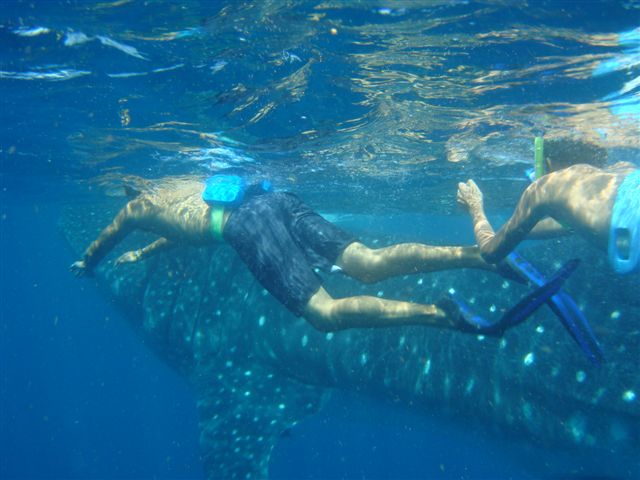
The most reliable places to swim with whale sharks are Isla Mujeres in Mexico (the largest seasonal aggregation on earth, roughly June to September), the Maldives at South Ari Atoll and Utila in Honduras (both close to year-round), Ningaloo Reef in Australia (March to August), Donsol in the Philippines (a wild, ethical alternative to the criticised feeding at Oslob), and Tofo in Mozambique. For travellers in the United States, the nearest dependable option is Mexico.
Whale sharks are harmless plankton feeders. The rules that matter are about your behaviour, not your safety: keep your distance, do not touch, and skip any tour that feeds the animals to guarantee a sighting.
A whale shark is the size of a bus and eats things smaller than a grain of rice. Swimming with one is not dangerous and not difficult, but it is seasonal and place-specific in a way most roundups gloss over. The animal follows plankton, and plankton follows the calendar, so the honest question is not “where” but “where, and in which month, will one actually turn up.” This guide ranks destinations by how dependable the encounter is, using sighting data from across 18 countries, and it is blunt about the one place you should not book.
Best places to swim with whale sharks
Whale sharks are spread across every warm ocean, but reliability varies enormously. A few sites have predictable aggregations where boats post near-daily sightings in season; others are a lucky encounter you might wait a week for. These six are the ones worth planning a trip around, ranked by how close to guaranteed the swim is.
Mexico Isla Mujeres and Holbox
The waters off Isla Mujeres and nearby Holbox host the largest predictable whale shark gathering on earth: 400 or more animals feeding on tuna spawn from late June into September, with July and August the peak. Snorkel tours run out of Isla Mujeres and Cancun, no scuba certification needed. For anyone in the United States this is the nearest reliable swim, a short flight to Cancun. La Paz on the Pacific side runs a separate, calmer season from autumn into spring. Isla Mujeres whale shark tours book out fast in peak weeks.

Maldives South Ari Atoll
South Ari Atoll is the rare place with resident whale sharks present all year rather than a short season, which is why it is the most flexible booking on this list. Snorkel trips run from Maamigili and the nearby resorts, and the protected area means operators work to a code that keeps boats off the animals. Sightings hold up across the calendar, with the southwest monsoon months from May to December the strongest. A liveaboard or a stay on Dhigurah or Maamigili puts you on the water daily.
Honduras Utila, Bay Islands
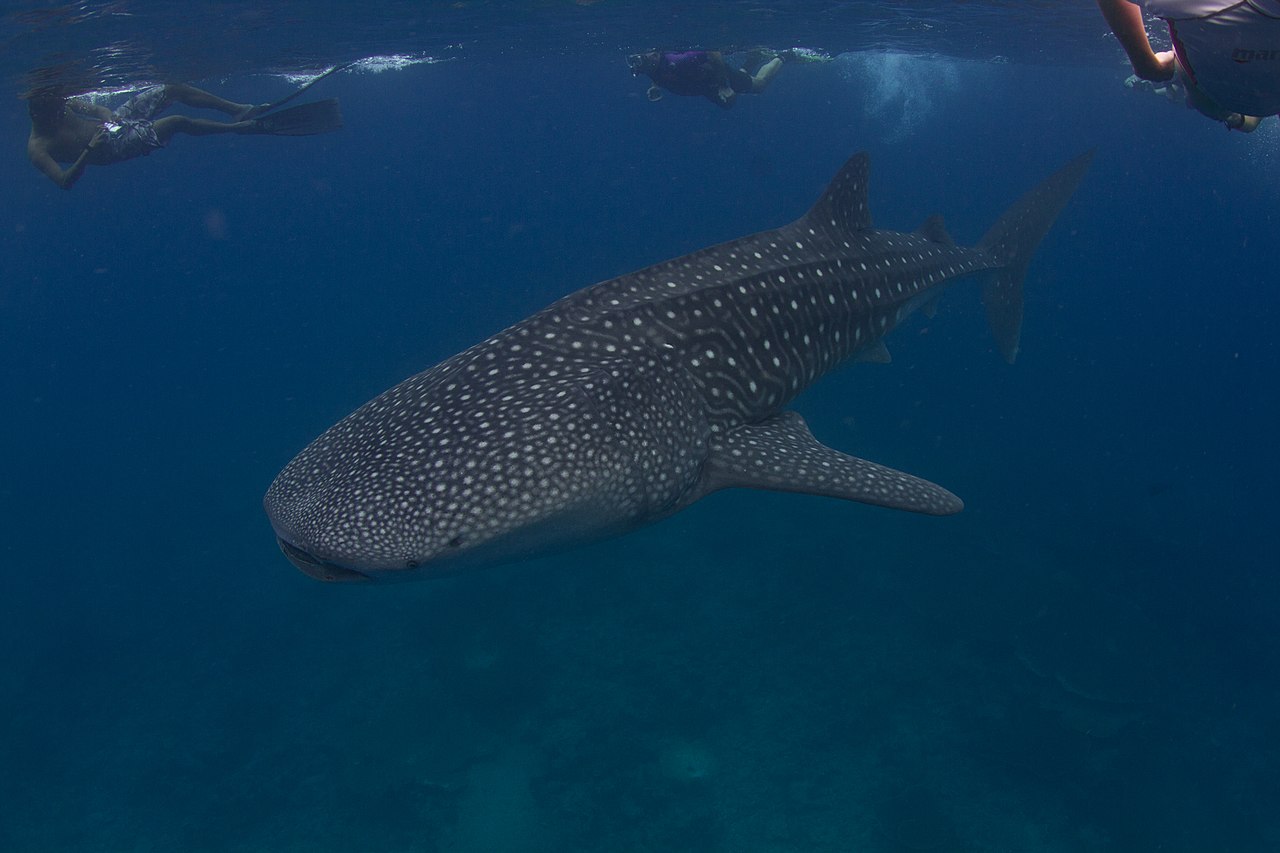
Utila is the only Caribbean island with whale sharks recorded in every month of the year, so it pairs a swim with the cheapest dive certification in the region. Boats off the north shore chase feeding “boils” of tuna and bonito where the sharks surface to feed, with March to May and August to October the most active windows. It is a backpacker hub rather than a luxury one, which keeps the cost down. See the local things to do in Utila for how the dive scene is organised.

Australia Ningaloo Reef
Ningaloo on the coast of Western Australia times its whale shark season to the coral spawning that follows the autumn full moons, running March to August with April to July the core. Spotter planes find the sharks and drop swimmers ahead of them, so the hit rate is high and the operation is tightly regulated. It is the most organised whale shark swim anywhere, and the reef itself is a draw. Boats leave from Exmouth and Coral Bay: see things to do at Ningaloo Reef and book a Ningaloo whale shark swim well ahead in peak season.

Philippines Donsol, Sorsogon
Donsol is the whale shark site to choose in the Philippines, and the reason is ethics. The sharks here are wild, found by spotters watching for them at the surface, with no feeding and no touching. Peak season runs February to April. It is the responsible counterpart to Oslob further south, where the animals are hand-fed to keep them in one bay for tourists (more on that below). Book a BIO-accredited spotter boat through the local interaction office: the Donsol whale shark snorkel is set up to do it properly.

Mozambique Tofo Beach
Tofo on the southern coast offers some of the best year-round whale shark snorkelling in Africa, with plankton blooms pushing the odds up from October to March. It doubles as a manta ray hotspot, so a single ocean safari often delivers both. The town is a long-standing marine research base, which keeps operators serious about distance and conduct. Start with the local whale shark and manta dives in Tofo.
Check whale shark odds by country and month
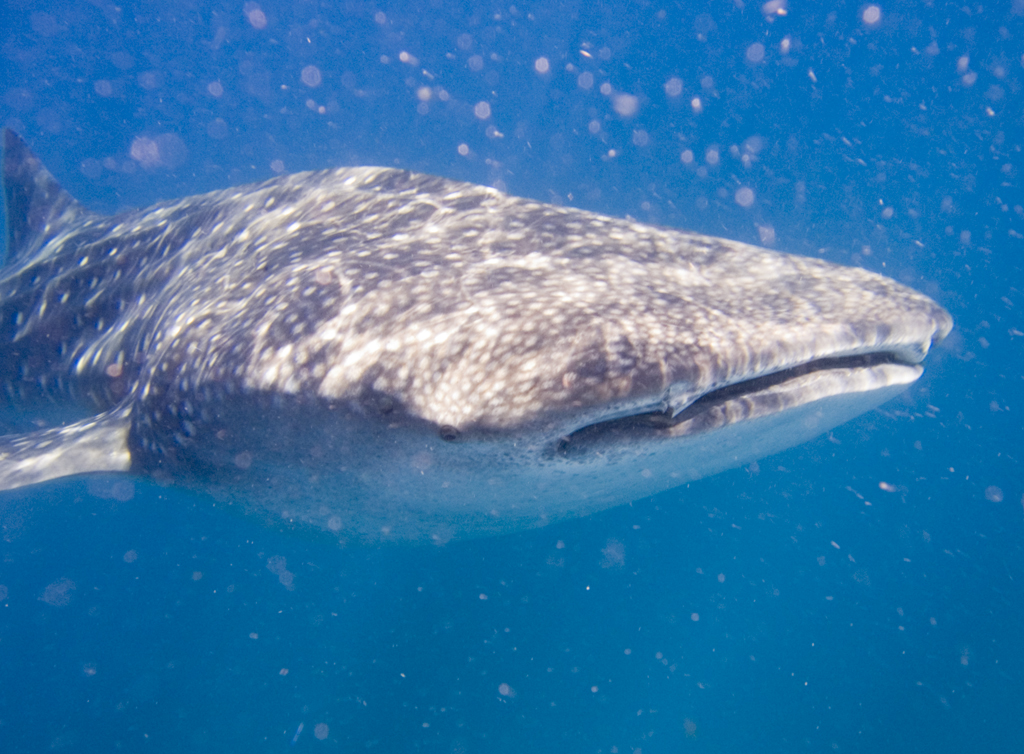
The Animals Around the World map shows every country where whale sharks aggregate, the named dive sites and their coordinates, and how good your chances are month by month. It covers 18 whale shark destinations and more than 1,900 other animals.
Best months by destination
Whale shark seasons are driven by local plankton blooms, so the calendar flips between hemispheres. The southern-summer sites peak when the northern ones are quiet. This table is the quick reference for matching a trip to a swim.
| Destination | Best months | Snorkel or dive | Why it is reliable |
|---|---|---|---|
| Isla Mujeres, Mexico | June to September | Snorkel | Largest aggregation on earth, 400+ sharks |
| South Ari Atoll, Maldives | Year-round, best May to December | Snorkel and dive | Resident population, present all year |
| Utila, Honduras | March to May, August to October | Snorkel and dive | Recorded every month of the year |
| Ningaloo Reef, Australia | March to August | Snorkel | Spotter planes, tightly regulated swims |
| Donsol, Philippines | February to April | Snorkel | Wild, no feeding, BIO-accredited boats |
| Tofo, Mozambique | October to March | Snorkel and dive | Near year-round, paired with manta rays |
| Cenderawasih Bay, Indonesia | July to October | Snorkel and dive | Resident sharks near fishing platforms |
| Gladden Spit, Belize | April to June | Dive | Snapper spawn after the full moon |
More places to find whale sharks
Beyond the headline six, whale sharks aggregate at a long list of sites that are dependable in a narrow window or pair well with other diving. These are worth building a trip around if the timing or region already suits you.
- Cenderawasih Bay, Indonesia West Papua
One of the few year-round sites, where whale sharks gather under fishing platforms to feed on baitfish. Fly to Nabire and join a liveaboard; July to October is most stable. - Gladden Spit, Belize Barrier reef
A dive site, not a snorkel one. Whale sharks arrive to feed on cubera snapper spawn in the days after the full moon from April to June, a tightly predictable window. - Daymaniyat Islands, Oman Muscat coast
Late-summer plankton blooms pull whale sharks to the reserve from August to October, an easy boat trip from Muscat and far from the crowds. - Mafia Island, Tanzania Indian Ocean
Calm-water snorkelling with feeding sharks from October to March, with September and October the peak. Quieter and cheaper than the better-known African sites. - Richelieu Rock, Thailand Andaman Sea
A dive-only encounter on liveaboard trips out of Khao Lak from February to May. Sightings are a bonus rather than a guarantee, but the diving stands on its own. See wildlife in Thailand for what else shares these waters. - Al Shaheen, Qatar Arabian Gulf
One of the world’s largest gatherings forms over tuna spawn offshore from May to September, though access depends on permitted operators. - Coiba, Panama Pacific
An isolated national park where whale sharks join hammerheads and mantas from December to April, for divers who want remote, big-animal reefs.
The ethics rules that matter
Whale sharks are listed as Endangered on the IUCN Red List, and how you swim with them counts. Do not touch a shark, never ride or grab a fin, and keep the regulated distance, commonly 3 to 4 metres from the body and further from the tail, which can injure you and stresses the animal. No flash photography, and respect the cap most sites place on swimmers per shark. The bigger issue is provisioned feeding. At Oslob in Cebu, Philippines, sharks are hand-fed daily to keep them in one bay for guaranteed photos, a practice marine biologists widely criticise for changing the animals’ natural movement and feeding behaviour and exposing them to boat strikes. Skip Oslob. Choose wild aggregations such as Donsol instead, where the sharks are found, not fed.
Snorkel or dive
You do not need a scuba certification to swim with whale sharks. They feed at or near the surface, so most of the famous encounters, including Isla Mujeres, Ningaloo and Donsol, are snorkel-only by design and by law. A mask, fins and the ability to swim are enough. Diving adds value only at the sites where sharks pass deeper structure, such as Gladden Spit in Belize or Richelieu Rock in Thailand, where the encounter is part of a wider dive.
Pick the season, not just the place
A whale shark trip lives or dies on timing. Booking Isla Mujeres in May or Ningaloo in October means an empty ocean no matter how good the operator is. Lock the month to the destination’s peak first, then build the rest of the trip around it. The two genuinely year-round options, the Maldives and Utila, are the safe choices if your dates are fixed.
The pattern across every reliable site is the same: the sharks follow food, the food follows the season, and the good operators follow rules. Match those three and a swim with the largest fish in the sea goes from a gamble to a near-certainty.
Common questions
01Where is the best place to swim with whale sharks?
Isla Mujeres in Mexico has the largest predictable gathering on earth, with 400 or more whale sharks from late June to September. For year-round reliability, South Ari Atoll in the Maldives and Utila in Honduras both have sharks present in every month. Ningaloo Reef in Australia is the most tightly regulated swim.
02When can you swim with whale sharks?
It depends on the destination, because the season follows local plankton. Mexico peaks June to September, Ningaloo March to August, Donsol February to April, and Mozambique October to March. The Maldives and Utila have whale sharks year-round, so they are the safest bet for fixed travel dates.
03Where can you find whale sharks near the United States?
The nearest reliable place for travellers in the United States is Mexico. Isla Mujeres and Holbox, a short flight to Cancun, host the world’s largest aggregation from June to September. La Paz on Mexico’s Pacific coast runs a separate season from autumn into spring.
04Is it safe to swim with whale sharks?
Yes. Whale sharks are filter feeders that eat plankton and small fish, and they have no interest in people. The rules exist to protect the shark, not you: keep about 3 to 4 metres from the body, stay clear of the powerful tail, do not touch, and avoid flash photography.
05Should you swim with whale sharks at Oslob?
Most marine biologists advise against it. At Oslob in Cebu, the sharks are hand-fed daily to keep them in one bay for guaranteed sightings, which changes their natural behaviour and raises the risk of boat strikes. Choose a wild site such as Donsol in Sorsogon instead, where the sharks are found rather than fed.
06Do you need to scuba dive to swim with whale sharks?
No. Whale sharks feed near the surface, so the major sites including Isla Mujeres, Ningaloo and Donsol are snorkel-only. You only need diving at a few sites where the sharks pass deeper reef structure, such as Gladden Spit in Belize or Richelieu Rock in Thailand.
Book a whale shark swim
Isla Mujeres swims
Cancun, Mexico
Ningaloo Reef swims
Exmouth, Australia
Donsol snorkel tours
Sorsogon, Philippines
Through the links above you support Pack Lightly, at no extra cost to you.
Image credits, all via Wikimedia Commons under Creative Commons licences: snorkeler with whale shark Jaontiveros (CC BY-SA 4.0); Isla Mujeres, Mexico MarAlliance2018 (CC BY-SA 4.0); filter feeding Simon Pierce (CC BY-SA 4.0); Ningaloo Reef, Australia NeilsPhotography (CC BY 2.0); Maldives Tchami (CC BY-SA 2.0); Donsol, Philippines Shubert Ciencia (CC BY 2.0); Tofo, Mozambique jon hanson (CC BY-SA 2.0).


