


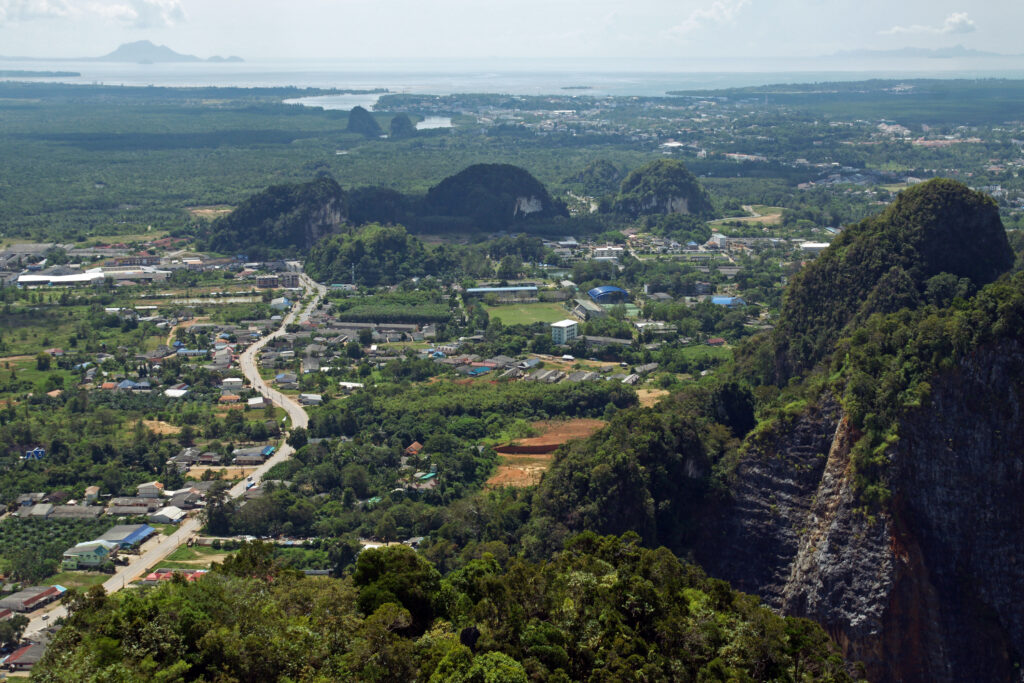
Climbing limestone cliffs in Krabi tests your strength and focus against a backdrop of sharp rock and humid air.
Rock climbing in Krabi is a physical challenge set on towering limestone cliffs that rise directly from the jungle and sea. This activity demands endurance and technique, rewarding climbers with vertical routes that vary from beginner-friendly slabs to overhanging walls requiring advanced skills. The sharp texture of the rock and the tropical heat add to the intensity, making it a full-body workout rather than a casual climb.
Most climbs take between two and four hours, fitting into a half-day schedule, with guide services charging moderate rates that include gear rental and transport. The tropical climate means early starts are crucial to avoid midday heat, and the routes are best tackled during the dry season when the rock is less slippery and holds better.
What to expect
- Feel the rough limestone texture under your fingers as you ascend vertical and overhanging routes.
- Push your endurance on climbs that demand steady technique and core strength in humid conditions.
- Catch brief views of the Andaman Sea from ledges halfway up the cliffs.
- Experience the physical strain of balancing on small footholds and sharp edges.
- Sense the humidity intensify as the sun rises, making early climbs more manageable.
Evaluating the Effort and Reward of Krabi Rock Climbing
Core activity for active climbersKrabi rock climbing is worth the effort only if you have a solid fitness base and some climbing experience. The routes demand physical strength and mental focus, especially in humid conditions that sap energy faster than cooler climates. The cost is moderate but not negligible, typically covering guides, gear, and transport, so budget accordingly. Early morning climbs avoid the heat but require a prompt start and some logistical planning. For beginners without prior climbing skills or those looking for a relaxed day, this activity can feel overwhelming and physically taxing. However, for climbers seeking a challenging outdoor workout with varied routes and a distinctive limestone setting, Krabi delivers a focused, rewarding experience.
Krabi Rock Climbing Essentials
| Typical Cost | Moderate guide fees including gear rental and transport |
| Best Season | Dry season (November to April) |
| Time Needed | 2 to 4 hours per climb session |
| Getting There | Transport included with most guide packages from Krabi town |
| Fitness Level | Moderate to high; requires endurance and climbing experience |
| Booking | Advance booking recommended for guides and gear |
Tackling Krabi’s Limestone Walls: Your Climbing Route from Start to Summit
Begin your day at Railay Beach, the main gateway to Krabi’s climbing routes. Arrive before 8 AM to avoid midday heat and crowds. Start with a warm-up on the beginner-friendly Tonsai Tower, where routes range from 5.7 to 5.10 difficulty, letting you test your grip on sharp limestone pockets. Expect to spend about 2 hours here if you’re pacing yourself and working on technique.
Next, move to the Phra Nang Cave area for more challenging climbs. The routes here demand precise footwork and core strength, especially on overhangs that push your endurance. Allocate 3 to 4 hours for this section, including breaks. Avoid the midday sun by resting in the cave’s shade or swimming in the adjacent bay. Finish your session by descending via the established rappel points; do not attempt to downclimb the steep faces, as the rock is brittle and risky. Wrap up by checking your gear thoroughly before heading back to Railay village.
Key Climbing Spots and Techniques to Master in Krabi
Tonsai Tower Warm-Up Routes
Tonsai Tower offers a range of routes that let you adjust to Krabi’s limestone texture. The rock features sharp edges and small pockets that demand finger strength and precise hand placement. These routes are less exposed, making them ideal for warming up and building confidence.
TipFocus on routes on the tower’s east face in the morning to avoid direct sun, which heats the rock and makes holds slippery from sweat.
Phra Nang Cave Overhangs
The overhangs near Phra Nang Cave test your upper body and core stability. These routes require dynamic moves and careful weight distribution to avoid swinging off the wall. The cave’s shade provides a cooler spot to rest between attempts.
TipUse chalk sparingly here; the limestone absorbs moisture quickly, so over-chalking can create dust that reduces grip.
Rappel Stations at Railay West
After topping out, the rappel stations at Railay West offer a controlled way down. These fixed anchors are maintained regularly, but the rock can be sharp on ropes, so inspect your gear carefully before descent.
TipDouble-check the rappel knots and use a backup prusik knot; the limestone’s sharp edges can damage ropes faster than expected.
Sunset Climb on Diamond Cave Wall
Diamond Cave Wall is less crowded late afternoon and offers moderate routes with solid holds. The setting sun lowers temperatures, making the rock easier to grip. This spot is perfect for a final climb before packing up.
TipStart your climb here around 4 PM to avoid the heat and finish before dusk; the cave’s entrance blocks wind, so temperatures drop quickly after sunset.
Essential Gear for Rock Climbing in Krabi
- Climbing shoes
These provide the necessary grip and support for the limestone routes at Railay Beach, where the terrain can be steep and challenging. - Chalk bag
Humidity can make your hands slippery; having chalk on hand is essential for maintaining grip while climbing. - Harness
A harness is mandatory for safety when climbing the routes at Krabi, especially on multi-pitch climbs. - Helmet
Wearing a helmet is crucial due to the risk of falling rocks in some climbing areas, particularly around the crags. - Quickdraws
These are necessary for clipping into bolts along the routes, especially on the popular climbs at Ton Sai.
Getting to Krabi’s Climbing Areas
Krabi is about 30 kilometers from Ao Nang, where most climbers start their journey.
- Songthaew
Negotiate the fare before getting in; it should cost around 50 THB to Ao Nang. - Taxi
Use a ride-hailing app to reach Ao Nang or Ao Nam Mao Beach; Railay itself has no road access and must be reached by boat. - Longtail boat
Catch a longtail boat from Ao Nang to Railay Beach; it takes about 15 minutes and costs around 100 THB.
Site-Specific Risks to Consider
- Unregulated climbing operators
Choose established companies with good reviews to ensure safety and proper equipment. - Weather dependency
Check the forecast before your trip; climbing is best from November to April when conditions are dry. - Overestimating your climbing ability
Start with easier routes to gauge your skill level; many climbers underestimate the difficulty of limestone climbing. - Crowded climbing areas
Arrive early in the morning to secure your spot on popular routes, especially during peak season.
Local Insight: Explore Beyond the Main Routes
While the popular spots are great, seek out lesser-known crags like the ones at Phra Nang for a quieter experience and unique climbs.
Rock Climbing in Krabi: FAQs
1What is the minimum age for rock climbing in Krabi?
Most climbing operators in Krabi allow children as young as 6 to participate in climbing activities, but it’s best to check with your chosen guide. If you have younger climbers, consider a family-friendly operator that offers tailored experiences.
2How physically demanding is rock climbing in Krabi?
The difficulty of climbing routes in Krabi varies widely, from beginner-friendly to advanced levels. If you are new to climbing, start with easier routes to build your skills and confidence before tackling more challenging climbs.
3What should I do if the weather turns bad while climbing?
If rain or storms threaten your climbing plans, it’s crucial to have a backup plan. Many operators will reschedule or offer alternative indoor climbing options, so confirm their policy before booking.
4Can I go rock climbing in Krabi without a guide?
While it’s possible to climb without a guide if you are experienced and familiar with the routes, hiring a guide is recommended for safety and local knowledge. If you choose to go solo, ensure you have the necessary climbing gear and skills.
5What happens if a climbing route is closed?
If a route is closed due to safety concerns or maintenance, most operators will suggest alternative routes or locations nearby. Always check with your climbing operator for the best options available on the day.
6Is rock climbing in Krabi suitable for beginners?
Yes, Krabi offers numerous beginner-friendly climbing routes, especially in areas like Railay Beach. Start with these routes to gain experience and confidence before progressing to more challenging climbs.
Post-Climb Recovery
After a day of climbing, head to a local massage parlor for a traditional Thai massage to relieve muscle tension and aid recovery. This will help you relax and prepare for your next climbing adventure.
Hero image: kallerna (CC BY-SA 3.0), via Wikimedia Commons. Other photos via Unsplash and Wikimedia Commons.
Some links on this page are affiliate links. We may earn a small commission at no extra cost to you when you book through them.