


The granite at Yosemite, the towers at Torres del Paine, the migration thundering across the Serengeti: the best national parks are not the ones with the prettiest entrance signs, they are the ones where the landscape does something you cannot see anywhere else and the timing actually matters. This is a short list of eight that earn the trip, ranked by what you get for the effort rather than by fame, with the one detail most listicles skip: when to go, and what it costs to get in.
The eight parks at a glance
Start here. The single most useful thing to know about a national park before you book is the season, because most of these have a window of a few months when they work and a long stretch when they do not. This table is the quick reference. The reasoning behind each pick sits in the spotlights below.
| Park | Country | Best months | Signature sight |
|---|---|---|---|
| Yosemite | USA | May to September | Half Dome and El Capitan |
| Torres del Paine | Chile | November to March | The granite towers |
| Banff | Canada | June to September | Moraine Lake |
| Serengeti | Tanzania | July to October | The great migration |
| Fiordland | New Zealand | December to February | Milford Sound and Mitre Peak |
| Iguazu | Argentina and Brazil | Year-round | The falls from both sides |
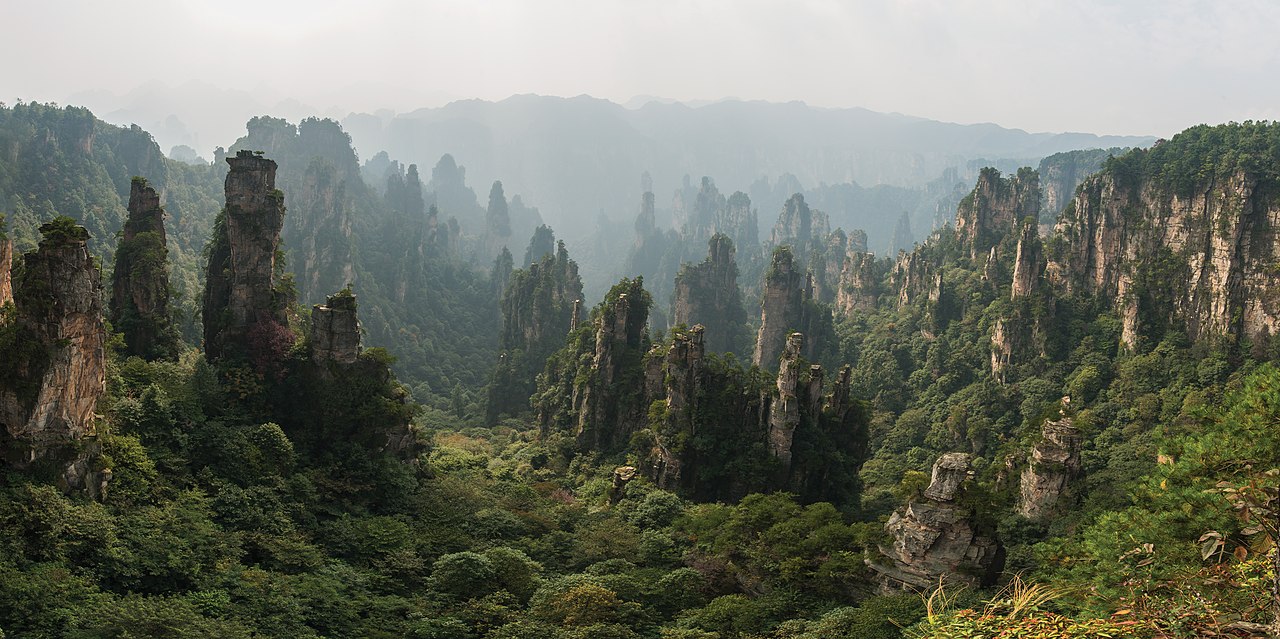
| Zhangjiajie | China | April to May, September to October | The sandstone pillars |
| Tre Cime, Dolomites | Italy | July to September | The three limestone spires |
Key takeaways
- Season beats fame. Serengeti in February and Torres del Paine in July are half the park they are in their window.
- Three of the eight cost nothing to enter (Banff aside, the parkland is free in several): the expense is usually the safari, the boat or the trek, not the gate.
- For a first big-nature trip, Banff and Yosemite give the most reward for the least logistics. For a serious trekker, Torres del Paine and the Dolomites. For wildlife, only the Serengeti.
The eight parks, and why each one
Each of these clears a simple bar: a sight you cannot get elsewhere, and a reason to time the visit. They are grouped loosely from the easiest first trip to the most committing.
Yosemite
The valley is a 1.6 km deep granite trench, and the two walls that define it, the rounded cap of Half Dome and the sheer 900 m face of El Capitan, are the most recognisable rock in the world. The waterfalls are the catch: they run on snowmelt and peak in May, then thin to a trickle by August, so an early-summer visit gets you Yosemite Falls at full roar. The classic first look is Tunnel View, where the whole valley opens at once. Best for a first big-nature trip, because the icons are a short drive apart.
Banff
Banff is the easiest way to stand in front of a genuinely surreal lake. Moraine Lake and Lake Louise turn a hard turquoise from glacial rock flour, and the Icefields Parkway that links Banff to Jasper is one of the great mountain drives, passing glaciers within sight of the road. Summer is for hiking the lakeshores and passes, winter for skiing at Lake Louise and Sunshine. The parkland itself is the draw and a day pass is modest. Best for travellers who want alpine scenery without a multi-day trek.

Iguazu
Iguazu is 275 separate falls strung across nearly 3 km of subtropical forest, and the park spans two countries. The Argentine side has the walkways that put you right over the water, including the platform at the Devil’s Throat; the Brazilian side gives the wide panorama. See both if you can. There is no bad season here, which is rare on this list, though the flow is heaviest after the summer rains. Best for travellers who want a guaranteed spectacle with no weather gamble.

Zhangjiajie
The thousands of quartz sandstone pillars rising out of the forest here are the landscape that inspired the floating mountains in Avatar, and the park leans into it. Cable cars and the world’s longest glass bridge get you among and above the spires, and the pillars often sit in cloud that drifts between them. Go in April to May or September to October to dodge both the summer crowds and the winter haze. Best for travellers chasing a genuinely otherworldly view with infrastructure to reach it.
Fiordland and Milford Sound
Milford Sound is a glacier-carved fjord where cliffs drop straight into black water and Mitre Peak rises 1,690 m almost sheer from the surface. The standard way to see it is a boat cruise from the head of the sound. Counterintuitively, rain is the asset: Milford gets among the highest rainfall of any inhabited place on earth, and after a downpour hundreds of temporary waterfalls pour off the walls. Summer is best for tramping the Milford and Routeburn tracks. Best for travellers who want the dramatic fjord without committing to a multi-day walk, since the cruise delivers the headline in a few hours.

Serengeti
This is the only park on the list where the draw moves. Around 1.5 million wildebeest and several hundred thousand zebra circle the Serengeti and the Masai Mara year-round, and the timing decides what you see. The dramatic Mara River crossings, where crossing herds run a gauntlet of crocodiles, happen roughly July to October. Calving season is January and February in the southern plains, when the predators concentrate. The big-cat density here is among the highest anywhere, so a lion or cheetah sighting is close to a given. Best for a wildlife-first trip, full stop. Match your dates to the migration with the country guide for the Serengeti and northern Tanzania before you book a camp.

Tre Cime di Lavaredo, Dolomites
The three limestone spires of Tre Cime are the most photographed rock in the Alps, and the famous day loop that circles their base is one of the best single days of hiking in Europe, roughly 10 km on a clear path with the towers in view the whole way. The Dolomites are also the home of the via ferrata, the protected climbing routes that let walkers reach exposed ground. The high trails are snow-free only from July to September. Best for hikers who want alpine drama on a day walk rather than an expedition.

Torres del Paine
The Patagonian end of the list, and the most demanding. The three granite towers that name the park rise above the steppe, and the two classic routes built around them are the W trek, four to five days, and the longer O circuit, seven to nine. The reward is sustained: glaciers, milky blue lakes and the towers themselves at sunrise. The catch is the wind, which in the austral summer can knock a person off balance. Go November to March, the only stretch the weather cooperates, and even then carry layers for all four seasons in a day. Best for serious trekkers who want a multi-day route with a payoff at every camp.

A few obvious names are missing on purpose. The point of this list is not coverage, it is reliability: each park here gives a sight you cannot fake and a clear best month to catch it. If your trip is built around water rather than rock, the sibling guide to the most beautiful waterfalls in the world covers Iguazu and the Milford falls in more depth, and the guide to the most beautiful lakes in the world goes deeper on Moraine and Louise.
See every national park and natural site mapped by country
The Country Map plots the parks, viewpoints, waterfalls and natural sites in each country, with a crowd filter so you can build a route that strings several together and dodges the busiest months.
When to go
The single thread running through every park above is timing, and it is worth pulling the windows together. Most of these are hemisphere-bound: Yosemite, Banff, the Serengeti crossings and the Dolomites peak in the northern summer, while Torres del Paine and Fiordland flip to the austral summer of December to March. Iguazu is the only one with no real off-season. Build the calendar around the park that has the tightest window, usually the Serengeti crossings or a Patagonian trek, and slot the flexible ones around it.
- Northern summer, May to September Yosemite, Banff, Dolomites
Snow-free high trails and full access. Yosemite waterfalls peak earliest, in May, so go early in this window for the water. - Migration window, July to October Serengeti
The Mara River crossings fall in this stretch. For the calving and concentrated predators instead, go January to February in the southern Serengeti. - Austral summer, November to March Torres del Paine, Fiordland
The only months the Patagonian wind and the Fiordland trails cooperate. Book refuges and Milford cruises well ahead. - Year-round Iguazu
Always running, heaviest after the summer rains. The flexible anchor for a wider South America trip.
Visit them responsibly
These parks are popular enough that how you visit changes what is left for the next person. A few habits matter more than the rest.
Do
- Book permits and refuges early
Torres del Paine refuges, Milford cruises and Skellig-style boat slots sell out months ahead in season.
- Stay on marked trails
Off-trail shortcuts erode fragile alpine and steppe ground that takes decades to recover.
- Pick operators that keep distance from wildlife
In the Serengeti a vehicle that crowds or chases a kill changes the animals’ behaviour and ruins the sighting for everyone.
Don’t
- Show up at peak hour for the icon shot
Moraine Lake and Tunnel View are packed mid-morning. First light is quieter and better lit.
- Feed or bait animals for a photo
It habituates wildlife to people and is banned in every park here.
- Underestimate the weather
Patagonian wind and Dolomite afternoon storms turn a casual day walk into a serious situation fast.
Which park for which traveller
Bottom line
Wildlife-first, the Serengeti is the only real answer: time it July to October for the crossings or January to February for calving and book a camp before the dates lock.
Book the experience inside the park
Torres del Paine W trek
Patagonia, Chile
Serengeti safari
Tanzania
Milford Sound cruise
Fiordland, New Zealand
Zhangjiajie tour
Hunan, China
Through the links above you support Pack Lightly, at no extra cost to you.
Common questions
01What is the best national park in the world?
It depends on what you want. For a first big-nature trip, Banff in Canada and Yosemite in the USA give the most reward for the least logistics. For wildlife, the Serengeti in Tanzania is unmatched. For a serious multi-day trek, Torres del Paine in Chile. There is no single winner, which is why this list ranks by what you get rather than by fame.
02When is the best time to visit the Serengeti?
For the dramatic Mara River crossings of the great migration, go July to October. For calving season and concentrated predators in the southern plains, go January to February. The Serengeti has wildlife year-round, but the timing decides what you see.
03Which national park has the best hiking?
For multi-day trekking, Torres del Paine in Chile (the W trek runs four to five days, the O circuit seven to nine) and the Milford and Routeburn tracks in Fiordland. For a single great day walk, the Tre Cime di Lavaredo loop in the Dolomites is about 10 km with the towers in view the whole way.
04Are these national parks free to enter?
Some are. The bigger cost is usually the activity rather than the gate: the Serengeti safari, the Torres del Paine trek permits and refuges, or the Milford Sound cruise. Yosemite and Banff charge a modest park or day pass. Always check current fees with the park before you travel.
05Which national park inspired the Avatar mountains?
Zhangjiajie in China. Its thousands of quartz sandstone pillars, often wrapped in drifting cloud, were the reference for the floating Hallelujah Mountains in the film. Cable cars and a glass bridge get you among and above the spires, best visited in spring or autumn.
06Should I visit Iguazu from Argentina or Brazil?
Both if you can. The Argentine side has the close walkways that put you over the water, including the Devil’s Throat platform. The Brazilian side gives the wide panorama across all 275 falls. The park runs year-round, with the heaviest flow after the summer rains.
Image credits, all via Wikimedia Commons: Half Dome, Yosemite Thomas Wolf (CC BY-SA 3.0); Moraine Lake, Banff Gorgo (Public Domain); Iguazu Falls Enaldo Valadares (CC BY-SA 3.0); Zhangjiajie chensiyuan (CC BY-SA 4.0); Milford Sound, Fiordland Maros Mraz (CC BY-SA 3.0); Serengeti Bjorn Christian Torrissen (CC BY-SA 3.0); Tre Cime, Dolomites Tiia Monto (CC BY-SA 3.0); Torres del Paine Karen Chan (CC BY 2.0).


