


A waterfall photograph flattens the one thing that actually matters on the day you stand there: how much water is moving, and whether you can hear it from a kilometre away. The falls on this list earn their place on flow, access and the experience at the rail, not on how often they show up on a desktop wallpaper. Rank by what you will feel, and the order shifts. The widest curtain on earth can be a trickle in October, and the world’s tallest drop can be a thread of mist if you arrive in the dry months.
Iguazu Falls, Argentina and Brazil
If a single waterfall site has to top this list, it is Iguazu. Not one fall but roughly 275 separate cascades strung across nearly three kilometres of river, with the Devil’s Throat at the centre swallowing the bulk of the flow. The reason it beats the taller and wider names is access: walkways run along both the Argentine and Brazilian sides, so you stand inside the spray rather than viewing from a distant overlook. Peak flow lands in the austral summer and autumn, roughly December through April, when the Iguazu River is high and the Devil’s Throat is a wall of noise.
Iguazu Falls
Around 275 cascades over a 2.7km front, with two countries of walkways letting you flank the water from both banks. The Argentine side puts you on top of the Devil’s Throat. The Brazilian side gives the panorama. Best for travellers who want to be soaked, not just to look.
Victoria Falls, Zambia and Zimbabwe

Victoria Falls is the widest single curtain of falling water on the planet, 1,708 metres across, dropping into the Batoka Gorge. The catch nobody mentions on the postcard: timing changes the entire trip. From February to May the river runs highest and the spray rises so far that you get drenched and often cannot see the falls through their own mist. From September to December the water drops, the rock face shows through, and the Devil’s Pool on the Zambian lip opens for a swim at the very edge. Two completely different experiences, same place.
Victoria Falls
A 1,708m curtain into the gorge. Come February to May for maximum thunder and heavy spray, or September to December to see the rock face and swim the Devil’s Pool. Best for travellers willing to pick a season for a specific payoff.
Angel Falls, Venezuela

Angel Falls is the tallest waterfall on earth, 979 metres off the edge of Auyan-Tepui in Canaima National Park, so high the water often atomises into mist before it reaches the bottom. The trade-off is effort and timing. It only flows convincingly in the wet season, roughly June to December, and reaching it means a light plane to Canaima then a motorised river boat upstream. Outside the wet months the drop can fade to a faint streak. This is the hardest one on the list to reach and the one most dependent on getting the calendar right.
Angel Falls
The world’s tallest at 979m, deep in Canaima. Needs the wet season to run, and needs a light plane plus a river boat to reach. Best for travellers chasing the record drop who can commit to the logistics and the rainy months.
Kaieteur Falls, Guyana
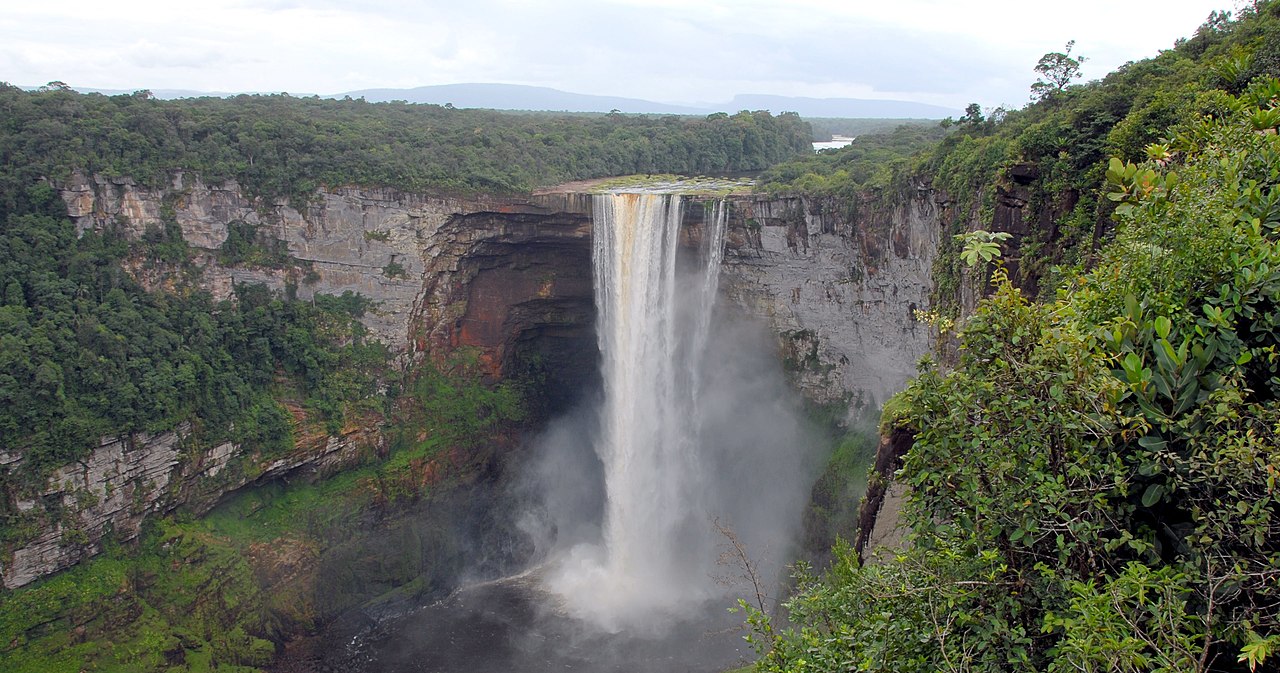
Kaieteur is the one most travellers have never heard of, and it ranks high precisely because of that. A single uninterrupted 226-metre drop into untouched rainforest, with no railings, no crowds and no town. The only practical way in is a light aircraft, which keeps visitor numbers tiny. Where Niagara feeds a city and Iguazu pulls busloads, Kaieteur gives you one of the largest single-drop waterfalls in the world more or less to yourself.
Kaieteur Falls
A single 226m plunge in rainforest, reached only by small plane, with almost nobody else there. Best for travellers who rate solitude and raw setting over easy logistics.
Niagara Falls, USA and Canada
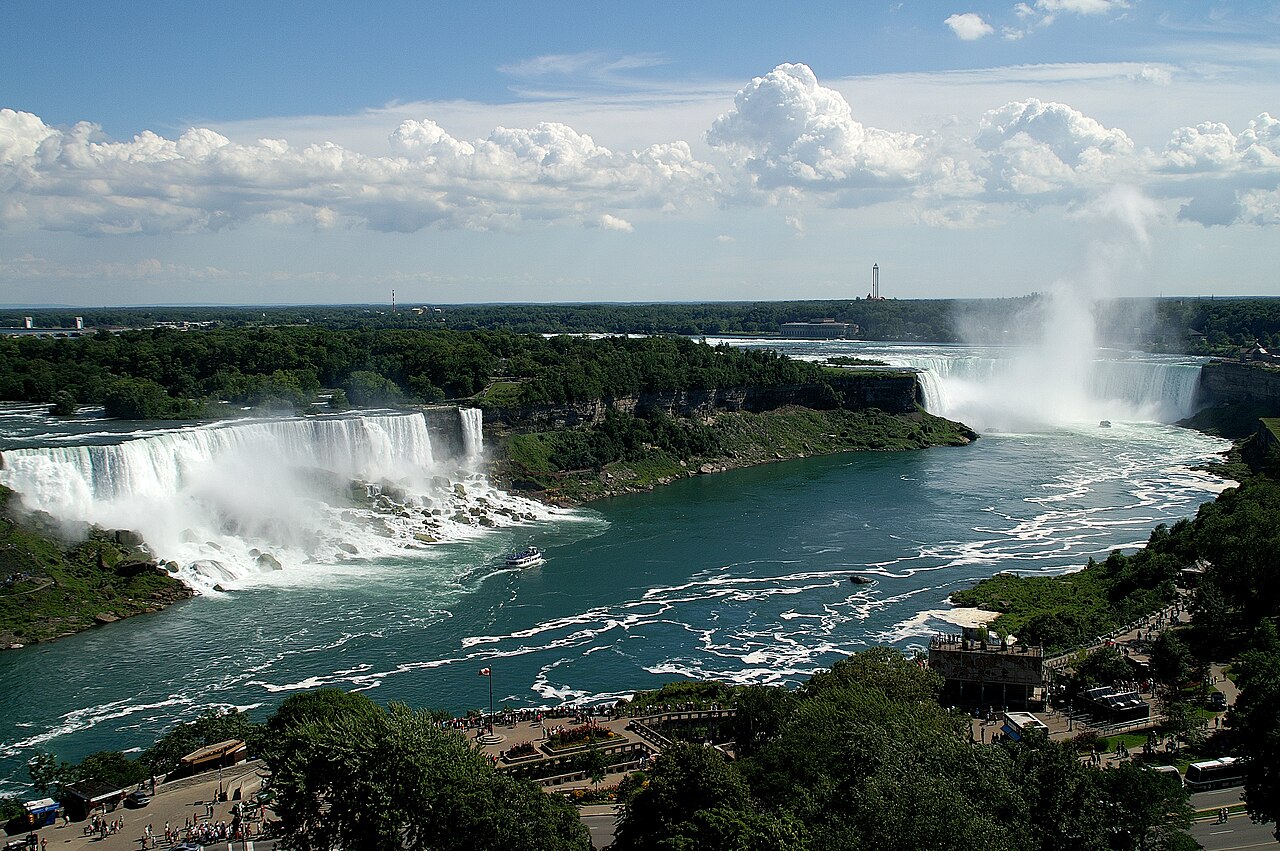
Niagara is not the tallest or the widest, but it moves more water than any other famous waterfall, and it runs hard year round. Horseshoe Falls on the Canadian side is the powerful one, a curved wall of green water you can ride a boat right up to from spring through autumn. The honest note: it is the most developed site here, ringed by hotels and towers. For accessibility, though, nothing else comes close. You can be at the rail an hour after landing.
Niagara Falls
The highest-volume of the famous falls and the easiest to reach. Horseshoe Falls is the main event, with boat tours running spring through autumn. Best for travellers who want maximum waterfall for minimum effort, crowds accepted.
Plitvice Lakes, Croatia

Plitvice is a different category: not one big drop but a chain of terraced travertine cascades linking sixteen lakes, threaded by wooden boardwalks that put you right above the water. The mineral terraces grow over time, so the shapes shift across decades. Late spring and autumn are the windows to aim for, with strong flow and manageable numbers. Midsummer the boardwalks bottleneck and the park caps entry, so an early start matters more here than anywhere else on the list.
Plitvice Lakes
Sixteen lakes linked by terraced cascades and boardwalks, growing travertine that reshapes the falls over time. Best for walkers who want a half-day among water rather than one viewpoint. Go early in summer or skip the peak.
Kuang Si Falls, Laos

Kuang Si is the swimmable one. A set of limestone tiers near Luang Prabang where the water runs a bright turquoise because of dissolved minerals, with pools open for a dip below the main drop. The colour is at its strongest in the dry season, roughly November to April, when the water clears and the blue deepens. In the wet months the falls run harder and browner. For a waterfall you actually get into rather than just photograph, this is the pick.
Kuang Si Falls
Turquoise limestone tiers near Luang Prabang, with swimmable pools and the clearest blue in the dry season. Best for travellers who want to swim under a waterfall, not just stand at a rail.
Gullfoss, Iceland

Gullfoss is the easy win on Iceland’s Golden Circle: a glacial two-tier fall that drops into a canyon, a short walk from the car park and reachable on a day loop from Reykjavik. Summer is when it shows best, with the highest meltwater flow and dry footing on the paths. In winter the spray freezes the trails and the viewing is limited. It earns its spot less on size than on how little effort separates you from a serious waterfall.
Gullfoss
A two-tiered glacial fall on the Golden Circle, minutes from the car park and easy to fold into a day trip from Reykjavik. Best for travellers short on time who still want real volume.
The eight at a glance
Season is the single biggest lever on a waterfall trip, so here are all eight side by side. Match the month to the place before you book a flight, because the same waterfall can be a roar or a trickle depending on when you turn up. Cross-check any month with the best travel time world map if you are stacking several into one route.
| Waterfall | Country | Best months | Getting there |
|---|---|---|---|
| Iguazu | Argentina, Brazil | Dec to Apr | Airport, then walkways |
| Victoria | Zambia, Zimbabwe | Feb to May, Sep to Dec | Airport, short transfer |
| Angel | Venezuela | Jun to Dec | Light plane, then boat |
| Kaieteur | Guyana | Year round | Light aircraft only |
| Niagara | USA, Canada | Year round | Drive or short flight |
| Plitvice | Croatia | Late spring, autumn | Drive, then boardwalks |
| Kuang Si | Laos | Nov to Apr | Luang Prabang, then road |
| Gullfoss | Iceland | Summer | Golden Circle drive |
See every waterfall and viewpoint mapped by country
The Country Map plots the best places, waterfalls, viewpoints and natural sites in each country, with a crowd filter so you can dodge the busiest ones.
How to pick if you only do one
The eight split cleanly by what you are actually after. A few honest rules of thumb before the planning blocks:
- For sheer scale you can stand inside: Iguazu, because the two-country walkways put you in the spray rather than at a distant overlook.
- For a record number and a wild setting: Angel Falls or Kaieteur, both of which trade easy access for height, remoteness and almost no crowds.
- For a swim under the water: Kuang Si in the dry season, or the Devil’s Pool at Victoria Falls in low water, the only two on this list you actually get into.
- For minimum effort and year-round reliability: Niagara or Gullfoss, both reachable on a day trip with serious volume waiting at the end.
Waterfalls also pair naturally with the calmer water that often sits above them. If you are building a wider nature route, the same trip logic carries over to the most beautiful lakes in the world and to the best national parks in the world, since several of these falls sit inside protected parks already.
Guided tours and boat trips
Several of these falls run on bookable boat tours and guided park entries. These search the rated options for the experiences in this guide.
Key takeaways
- Rank by experience, not fame: Iguazu and Victoria reward you more than the bigger names on a poster.
- Season decides the trip. Victoria and Angel especially swing from full thunder to a thin trickle depending on the month.
- The two you can swim are Kuang Si in the dry season and the Devil’s Pool at Victoria Falls in low water.
- Kaieteur and Angel cost effort and a light plane, and pay you back in solitude and raw setting.
When to go
There is no single best month for waterfalls as a category, because the hemispheres and the wet seasons pull in opposite directions. The pattern that matters: southern-hemisphere and tropical falls peak in their own rainy months, while the glacial and temperate ones peak with summer meltwater. Read the column for the place, not the calendar in general.
Visiting without wrecking the place
Do
- Stay on the boardwalks and marked paths at Plitvice and Kuang Si
The travertine and limestone terraces are alive and slow-growing, and footsteps off the path break them.
- Book the Devil’s Pool only with a licensed operator in the low-water window
The edge at Victoria Falls is safe for a swim only at certain water levels, which guides read daily.
- Go early or shoulder-season at the busy sites
Plitvice and Niagara cap or choke at peak, so an early entry buys you the falls without the queue.
Don’t
- Climb barriers for a closer photo at the unrailed falls
Kaieteur and parts of Angel Falls have no railings, and wet rock above a long drop is the main cause of accidents.
- Assume a dry-season visit will still show full flow
Angel and Victoria can drop to a fraction outside their wet months, so check before you commit the flight.
- Leave anything behind in the swimming pools
Sunscreen and litter foul the same water other visitors swim in an hour later.
Which waterfall for which traveller
Bottom line
Pick the season first, the access second, and the fame last. That order gets you a waterfall worth the flight.
Common questions
01What is the most beautiful waterfall in the world?
By experience rather than fame, Iguazu Falls on the Argentine-Brazilian border tops most lists: around 275 cascades over nearly three kilometres, with walkways on both sides that put you inside the spray. Victoria Falls and Angel Falls are the other top contenders, for the widest curtain and the tallest drop respectively.
02What is the tallest waterfall in the world?
Angel Falls in Venezuela, at 979 metres off Auyan-Tepui in Canaima National Park. It flows best in the wet season, roughly June to December, and is reached by light plane to Canaima followed by a river boat.
03Which waterfall has the most water?
Among the famous falls, Niagara moves the highest volume and runs hard year round, with Horseshoe Falls on the Canadian side carrying most of it. Victoria Falls is wider, but Niagara wins on sheer flow.
04Which waterfalls can you swim at?
Kuang Si Falls in Laos has swimmable pools, clearest in the dry season from November to April. At Victoria Falls, the Devil’s Pool on the Zambian edge opens for a guided swim during low water, roughly September to December. Both depend on water level, so book with a local operator.
05When is the best time to visit waterfalls?
It depends on the waterfall. Tropical and southern-hemisphere falls like Iguazu, Victoria and Angel peak in their own rainy months, while glacial falls like Gullfoss peak with summer meltwater. Always read the season for the specific place rather than a general calendar.
Image credits, in order: Iguazu Falls, Enaldo Valadares / Wikimedia Commons (CC BY-SA 3.0). Victoria Falls, Diego Delso / Wikimedia Commons (CC BY-SA 4.0). Angel Falls, Jlazovskis / Wikimedia Commons (CC BY-SA 3.0). Kaieteur Falls, Bill Cameron / Wikimedia Commons (CC BY-SA 3.0). Niagara Falls, Saffron Blaze / Wikimedia Commons (CC BY-SA 3.0). Plitvice Lakes, Minestrone / Wikimedia Commons (Public domain). Kuang Si Falls, NruasPaoYPP / Wikimedia Commons (CC BY-SA 4.0). Gullfoss, Nickspix / Wikimedia Commons (CC BY-SA 4.0).


