


For most travelers, Greece offers smoother logistics and more comfort, but Albania saves money and delivers raw scenery.
Choose Albania if budget and adventure outweigh polish; Greece suits comfort-focused travelers.
Deciding between Greece’s polished resorts and Albania’s raw coast could save you hundreds.
You’re planning a trip and debating Greece versus Albania. One offers well-developed resorts, smooth logistics, and a polished vibe. The other delivers rugged scenery, fewer tourists, and a much lower price tag. Your choice hinges on what you want from the trip, comfort or authenticity, ease or adventure. Both countries have their merits, but the decision comes down to your priorities: do you prefer a hassle-free experience or a more genuine, budget-friendly escape? This comparison cuts through the noise to give you the real deal on what each destination offers for your travel style.

Right now, Albania is gaining attention as a cheaper alternative to Greece, especially along the Albanian Riviera, which feels like Greece 30 years ago. Greece remains the more refined option, with better infrastructure and more English speakers. But Albania’s raw coast, lower costs, and fewer crowds make it a tempting choice for travelers willing to rough it a bit. Keep reading to see how these differences stack up on safety, costs, and logistics, so you can pick the country that matches your trip goals without surprises.
Insider tip: Book flights early. Albania’s limited direct routes make last-minute tickets pricier, while Greece’s major airports stay competitive.
Albania is roughly 60% cheaper overall, making it a smart pick for budget travelers willing to trade polish for savings.
Key Differences Between Greece and Albania
| Topic | Greece | Albania |
|---|---|---|
| Travel vibe | Polished resorts, well-trodden paths | Rugged coastlines, fewer tourists |
| Budget level | Moderate to high, $100-200/day | Low, $40-80/day |
| Top destinations | Athens, Santorini, Mykonos | Dhermi, Ksamil, Saranda |
| Nature & landscape | Iconic islands, historic ruins | Alpine mountains, untouched beaches |
| Food & cuisine | Refined tavernas, international options | Simple, hearty local dishes |
| Accommodation quality | High-end hotels, boutique stays | Basic guesthouses, hostels |
| Crowds in peak season | Very crowded, July-August | Sparse outside July-August |
| Transport & infrastructure | Buses, ferries, airports | Limited airports, overland routes |
| Safety | High, well-developed healthcare | Good, but fewer medical facilities |
| Planning effort | Moderate, well-marked signs | Higher, fewer English speakers |

Best for Greece
- Couples seeking polished resorts with amenities
- History buffs wanting ancient ruins in comfort
- Travelers with $150+ daily budget
Best for Albania
- Budget travelers willing to rough it for savings
- Adventure seekers exploring rugged coastlines
- Solo travelers on a tight budget
Top Takeaways
- If you want a hassle-free trip with English speakers, Greece is the safer bet.
- Choose Albania if saving money is your priority, costs can be half of Greece’s.
- Greece’s tourist infrastructure scores higher, making logistics easier.
- Albania’s scenery is raw and less developed, perfect for authentic experiences.
- Safety scores favor Greece, but Albania remains safe for most travelers.
- Plan ahead for Albania’s limited direct flights. Greece offers more options.
Pack Lightly Scores
11 categories scored from 0 (low) to 100 (high)
Still can’t decide?
Use the comparison tool to see how Greece and Albania stack up across 11 categories tailored to your travel style. Adjust the timing filter to find the best season for your trip.
Cost breakdown

For mid-range travelers, Albania is roughly $25 a day cheaper than Greece. Using the exchange rates, USD to local currency, Albania’s mid-range daily budget is about $70, while Greece’s is around $95.
Estimated daily costs for a mid-range trip
| Category | Greece (USD) | Albania (USD) |
|---|---|---|
| Backpacker daily budget | $15 – $25 | $12 – $20 |
| Mid-range daily budget | $80 – $110 | $55 – $85 |
| Luxury daily budget | $200+ | $130+ |
| Street food meal | $3 – $6 | $2 – $4 |
| Restaurant meal | $10 – $20 | $7 – $15 |
| Local transport (per day) | $2 – $5 | $1 – $3 |
| Activities/tours (average) | $20 – $50 | $15 – $40 |
Albania is the cheaper choice for a mid-range trip, saving about $25 daily. Pack Lightly budgetFriendly: Greece 65, Albania 85. Hotels GreeceHotels Albania
Pro tip: Use local buses instead of taxis to cut transport costs in both countries.
Watch out: Hidden fees like entrance tickets or tips can add up quickly, especially in Greece’s popular sites.
What You’ll Eat

Greek street food shines with souvlaki skewers for about $3 and gyros around $2.50, served hot from busy stands in Athens. Albanian street eats include byrek (savory pies) for $1.50 and fresh seafood in Dhermi for $4, offering a more laid-back vibe.
Vegetarian options are plentiful in Greece, with salads and spanakopita at every corner. Albania struggles a bit with vegetarian dishes, but tavernas often have grilled veggies. Halal and gluten-free options are limited in both, but Greece’s larger tourist spots are slightly better.
Drinks are social in both countries. Greece’s local beer, Fix, costs about $2.50 a bottle, and ouzo is a common shot for $1.50. Albania offers beer for $2 and rakia, a fruit brandy, for $1.75. Both countries have lively bar scenes, especially in tourist hubs.
Signature Dishes & Drinks
| Signature Dish | Street Food Quality | Vegetarian-Friendly | Restaurant Variety | Drink Culture |
|---|---|---|---|---|
| Signature Dish | Souvlaki – grilled meat skewers, $3 | Seafood platter, $4 | ||
| Street Food Quality | High – fresh, quick, affordable | Good but less consistent | ||
| Vegetarian-Friendly | Excellent – salads, spanakopita | Limited but available | ||
| Restaurant Variety | Wide – tavernas, modern cafes | Smaller, more traditional | ||
| Drink Culture | Ouzo, local beers, $2.50 | Rakia, local beers, $2 |
Souvlaki
Affordable, filling, and authentic Greek street food experience.
Insider tip: Try souvlaki in Monastiraki Market early evening for the best grilled meat and lively atmosphere.
Where to Sleep
Greece offers hotelQuality score of 80, with high-end options in Plaka and Psirri for $70 – $150 a night. Albania’s score is 65, with decent guesthouses in Tirana’s Blloku neighborhood for $40 – $80.
Weak spots include Greece’s overbuilt tourist resorts with inconsistent quality, and Albania’s limited luxury options outside Tirana. Budget travelers should avoid poorly reviewed hostels in Athens’ Omonia area and unverified listings in Albanian beach towns.
For hidden gems, consider staying in the old town of Gjirokastër or the quieter parts of Corfu, away from the main tourist strips. These areas often have better value and local charm.
See full lodging breakdown by budget
Accommodation Options
| Type | Country A | Country B |
|---|---|---|
| Budget hostels | Omonia, $20 – $30 | Tirana center, $15 – $25 |
| Mid-range hotels | Psirri, $70 – $150 | Blloku, $40 – $80 |
| Boutique stays | Koukaki, $100 – $180 | Old Town Gjirokastër, $50 – $90 |
| Luxury resorts | Mykonos, $200+ | Dhermi, $120 – $200 |
| Alternatives | Airbnb apartments | Guesthouses, $30 – $70 |
Booking tip: Book in advance via Booking.com for Greece’s popular neighborhoods; in Albania, check local guesthouses for last-minute deals.
What It Feels Like on the Ground
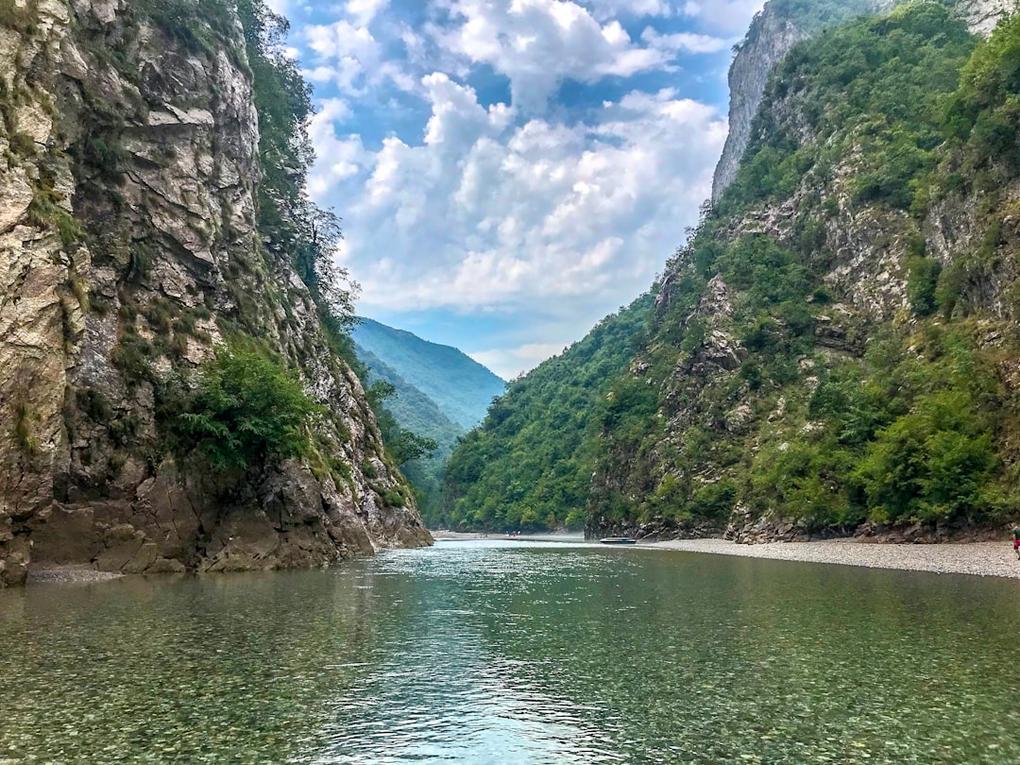
Greece greets you at dawn with the scent of fresh bread wafting from Athens’ cafes. Streets are polished, organized, and bustling with a confident rhythm.
Albania hits with a rawer edge, dusty roads, open-air markets, and a slower pace. Tirana’s colorful buildings pulse with life, but the infrastructure feels rough around the edges.
Greece demands patience with its polished service and well-trodden paths, often pushing comfort over authenticity. Albania challenges you with unpredictability, rewarding those who embrace the chaos.
A trip in Greece leans toward cultural immersion with structured tours and museums, while Albania offers rugged adventures, hiking, exploring abandoned sites, and spontaneous local encounters.
Greece highlights
- Acropolis Museum(Athens)
Modern museum with stunning views of the Acropolis ruins. - Santorini Sunset(Santorini)
Iconic sunset over white-washed buildings and blue domes. - Delphi Ruins(Central Greece)
Ancient site with panoramic mountain views. - Meteora Monasteries(Thessaly)
Cliffside monasteries with breathtaking vistas.
Albania highlights
- Berat Old Town(Berat)
Stone houses and Ottoman architecture on the Osum River. - Albanian Riviera(Southern Albania)
Secluded beaches with crystal-clear waters. - Gjirokastër Castle(Gjirokastër)
Ottoman fortress with city views. - Llogara Pass(Llogara National Park)
Scenic drive with mountain and sea vistas.
Ideal duration: Greece: 10 – 14 days, covers major sights, museums, and island hopping comfortably. · Albania: 7 – 10 days, enough for rugged coastlines, mountain hikes, and city exploration.
Do
- Greece: Tour the Acropolis and Parthenon in Athens
- Greece: Watch sunset in Santorini from Oia
- Greece: Hike Meteora’s monasteries
- Greece: Visit Delphi archaeological site
- Albania: Explore Berat’s old town and castle
- Albania: Relax on Ksamil beaches
- Albania: Hike Llogara Pass
- Albania: Visit Gjirokastër’s bazaar and fortress
Don’t
- Greece: Skip overhyped cruise tours in Santorini
- Greece: Avoid touristy tavernas with inflated prices
- Greece: Don’t rush the museums, take your time
- Albania: Avoid over-touristed beaches in Dhermi
- Albania: Skip poorly maintained roads in remote areas
- Albania: Don’t miss local markets in Tirana
Choose based on
- If you want a polished experience with structured tours, choose Greece.
- If you prefer rugged scenery and lower prices, Albania is better.
- Choose Greece if you have 10+ days; Albania fits 7 – 10 days.
- If safety is a concern, Greece scores 85, Albania 80; both are safe.
Greece offers comfort and polish but at a higher cost; Albania rewards with raw authenticity and savings.
How safe is it really
Safety overview
Greece
Albania

Greece scores 85 on safety, making it the safer choice overall. Albania scores 80, but solo female travelers should stay vigilant. Both countries are generally safe, but Greece’s infrastructure and policing are more reliable.
See detailed safety factors table
Safety Factors Comparison
| Factor | Greece | Albania | Practical Tip |
|---|---|---|---|
| Pickpocketing | Moderate risk, especially in Athens tourist areas. Use a money belt and keep valuables close. | Higher risk in crowded spots like Tirana markets. Use a crossbody bag and stay alert. | Use the WalletGuard app to monitor your valuables. |
| Tourist scams | Common in souvenir shops, overcharging or fake goods. Always agree on prices beforehand. | Taxi overcharging in Tirana. Use official taxi apps or agree on fare upfront. | Download the Beat Taxi app for reliable rides. |
| Solo female traveler safety | Generally safe, but avoid isolated areas at night. Stick to busy neighborhoods. | Safe in tourist zones, but some rural areas can be sketchy after dark. Travel with groups. | Join local women’s travel groups on Facebook for tips. |
| Health risks | Minimal health risks; tap water is safe in most cities. Carry basic meds. | Tap water not always safe outside cities. Use bottled water and pack a small first aid kit. | Download the Medisafe app for medication reminders. |
| Road safety | Better roads and driving standards. Use GPS and avoid night driving in rural areas. | Poorer road conditions, especially in mountain regions. Rent a 4WD for rural trips. | Google Maps works well in Greece; use it to avoid bad roads. |
| Natural disasters | Low risk, occasional earthquakes. Follow local alerts. | Moderate risk of earthquakes and flooding. Stay aware of weather updates. | Install the Earthquake Network app for alerts. |
Scam spotlight: Athens Monastiraki Square
How it works: Pickpockets work in groups, distracting tourists while others steal wallets or phones.
How to avoid: Keep valuables in front pockets or inside zipped bags; stay aware of your surroundings.
Watch out: The biggest mistake is falling for taxi scams, which can cost $20 – $50 extra per ride.
Insider tip: Always carry a photocopy of your passport; police may ask for ID in tourist areas.
Visa & Entry Requirements
US citizens do not need a visa for Greece or Albania for stays up to 90 and 365 days respectively. Greece requires an ETIAS visa waiver costing $22, valid for 90 days, with a 3-year validity. Albania is completely visa-free for a year, with no fees or pre-approval needed.
Full visa & entry requirements table
Visa Requirements Comparison
| Factor | Greece | Albania | Practical Note |
|---|---|---|---|
| Visa requirement | Yes, ETIAS required, $22, 90 days, apply online at travel-europe.europa.eu/etias_en | No, visa-free for 365 days, apply at embassy or consulate | ETIAS is an electronic travel authorization; apply at least 72 hours before departure. |
| Application process | Online via travel-europe.europa.eu/etias_en, quick approval | In-person at local embassy or consulate, longer process | Check current rules as they can change; always verify with official sources. |
| On-arrival option | No, pre-approval needed before travel | Yes, no visa needed on arrival | Always carry your passport and proof of onward travel. |
| Max stay & extension | 90 days within 180 days, no extension | Up to 365 days, no extension needed | Plan your trip duration accordingly to avoid overstaying. |
| Additional systems | ETIAS required, updates independently of visa process | No secondary systems, straightforward entry | Stay updated on entry rules via official government sites. |
Visa rules change frequently; always check the latest info from official sources before booking. Albania’s visa-free status can be affected by diplomatic changes, while Greece’s ETIAS system is still being implemented.
Getting around efficiently
Greece offers more developed infrastructure, with a tourist infrastructure score of 80, compared to Albania’s 60. Both countries rely heavily on buses and ferries, but Greece has more domestic flights and train options. Expect smoother travel in Greece, especially between major cities and islands.
Compare every transport option side-by-side
Transport options comparison: Greece vs Albania
| Mode | Greece | Albania | Practical Note |
|---|---|---|---|
| Domestic flights | Available between Athens, Thessaloniki, Crete, and Rhodes; prices from $50; 30-60 min | Limited, mainly Tirana to Ohrid or Podgorica; prices from $70; 1-2 hours | Greece’s flights are more frequent and reliable, saving time on island-hopping. |
| Buses | Extensive network connecting cities and islands; fares from $3; 1-8 hours | Good for main routes; fares from $4; 2-10 hours | Buses are cheap and reliable in both, but Greece’s network is broader. |
| Trains | Limited, mainly Athens-Thessaloniki; fares from $20; 4-5 hours | Very limited; mainly Tirana to Durrës; fares from $5; 1-2 hours | Train travel is more practical in Greece; Albania’s options are sparse. |
| Taxi/ride-hailing | Widely available in cities; starting at $2; short rides under 10 min | Available in Tirana and some cities; similar pricing | Both countries have decent ride-hailing options, but Greece’s coverage is wider. |
| Ferries | Frequent routes between islands; fares from $10; 30 min to 4 hours | Limited but growing; fares from $15; 1-6 hours | Ferries are essential in Greece for island access; Albania’s are fewer but improving. |
| Scooter rental | Popular on islands and in cities; $20/day | Available in Tirana and coastal towns; $15/day | Scooters are a quick way to explore local areas in both countries. |
| Bicycle rental | Widely available; $10-15/day | Available in some cities; similar prices | Biking is practical in Greece’s cities and islands, less so in Albania. |
Greece’s tourist infrastructure makes getting around easier and faster, especially with domestic flights and ferries. Albania’s options are more limited, but still workable for budget travelers. Expect smoother logistics in Greece, but Albania offers a more rugged, authentic experience if you plan carefully.
App tip: Use Google Maps for real-time transit updates and ferry schedules.
Clear English Gets You Far, But Expect Gaps
In Greece, English is widely spoken in tourist hotspots like Athens, Santorini, and Mykonos. Outside these areas, communication can get tricky, especially in rural villages or local markets. In Albania, English is less common, mainly limited to major cities like Tirana and some coastal resorts. Download Google Translate to bridge language gaps quickly and avoid misunderstandings. It’s your best tool for menus, directions, and asking locals for help.
App tip: Google Translate app, available on iOS and Android, instantly translates text and speech, making communication smoother in both countries.
Wi-Fi and Mobile Data Are Reliable, Cash Still Rules
Wi-Fi is generally solid in cafes, hotels, and airports in Greece and Albania. Mobile data works well in cities but can be spotty in remote areas. Both countries accept cards widely in tourist zones, but cash is still king in small shops and rural spots. eSIM Greece and eSIM Albania offer affordable eSIM options for seamless connectivity. Expect to pay around $10 – $20 for 5 – 10 GB of data, valid for your entire trip.
eSIM picks:
Greece: ProviderX, $12, 8GB
Albania: ProviderY, $10, 10GB
Cash is still preferred in rural areas and small shops; cards work in most tourist spots and hotels.
When to go
When to go, month by month
Greece
Albania
Greece
Albania

The best months for Greece are late spring and early fall, especially May, June, and September. Albania’s shoulder seasons in spring and fall are more forgiving, with milder weather and fewer tourists. Summer is hot in both, but Albania tends to be less crowded and more affordable during these months.
Full season-by-season climate breakdown
Seasonal Travel Windows
| Season | Greece | Albania | Best Pick | Notes |
|---|---|---|---|---|
| Winter (Dec – Feb) | Average temps 11 – 13°F / -12 – -11°C, rain and snow common, 35 – 150mm rain. Cold and wet. | Temps 7 – 10°F / -14 – -12°C, frequent rain, 235 – 205mm rain. Not ideal for travel. | depends | Avoid winter unless you prefer cold, wet conditions. |
| Spring (Mar – May) | Temps 35 – 58°F / 2 – 14°C, low rain, 19 – 59mm. Mild and pleasant. | Temps 45 – 75°F / 7 – 24°C, moderate rain, 47 – 157mm. Cooler early, warmer later. | Greece | May offers warm weather with less rain, ideal for sightseeing. |
| Summer (Jun – Aug) | Temps 70 – 86°F / 21 – 30°C, dry, 3 – 69mm rain. Hot and sunny. | Temps 75 – 86°F / 24 – 30°C, dry, 11 – 200mm rain. Hot, but Albania is less crowded. | depends | June and September are cooler and less crowded than July-August. |
| Fall (Sep – Nov) | Temps 58 – 75°F / 14 – 24°C, low rain, 5 – 152mm. Still warm early, cooler later. | Temps 45 – 75°F / 7 – 24°C, moderate rain, 94 – 200mm. Rain increases, but still good early fall. | Greece | September is warm and dry, perfect for avoiding summer crowds. |
Climate tip: Visit Greece in May or September for warm weather and fewer tourists. Albania is best in spring or fall.

The call
Greece is the better choice for travelers seeking polished infrastructure, reliable weather, and cultural depth. Albania offers a rougher, more adventurous experience at a lower cost, ideal for flexible, budget-conscious travelers. If you want comfort and variety, Greece wins; if you prefer raw scenery and savings, Albania is your pick.
Comparison Highlights
| Topic | Winner | Reason |
|---|---|---|
| Budget | Albania | Approximately 60% cheaper overall. |
| Nature | Albania | More rugged, less developed, stunning coastlines. |
| Culture | Greece | Rich history, well-preserved sites, extensive museums. |
| Cities | Greece | More vibrant urban centers with better amenities. |
| Food & drinks | Greece | More diverse cuisine, better dining infrastructure. |
| Accommodation | Greece | Higher quality options and more international brands. |
| Transport | Greece | More developed airports and internal flights. |
| Safety | tie | Both are safe for travelers. |
| Crowds | Greece | More popular, busier tourist spots. |
| Digital infrastructure | Greece | Better internet and mobile coverage. |
The bottom line
Greece is the smarter pick for comfort and ease; Albania wins on raw scenery and savings.
A traveler seeking comfort, cultural richness, and reliable logistics should choose Greece. Albania suits those craving raw scenery and a tighter budget. Both are viable, but Greece is the safer, more convenient option for most.
Weighing other Mediterranean and Balkan options too? See how Greece stacks up against Turkey, how Italy compares to Greece, or how Albania compares to Croatia for a rugged coastal escape.
Book your trip
Using these links supports Pack Lightly at no extra cost to you.
Your questions, answered
01Which country is cheaper in 2026?
Albania is significantly cheaper, with costs roughly 60% lower than Greece. Expect budget-friendly meals, accommodations, and activities. Greece’s higher prices reflect its polished infrastructure and tourist demand.
02Best time to visit, month-by-month comparison
Visit Greece from late April to early October for warm weather and clear seas. Albania is best from May to September, avoiding the shoulder seasons when infrastructure is less reliable.
03Safety comparison for solo travelers
Both countries are safe, but Greece scores slightly higher on safety. Greece’s well-developed tourism infrastructure makes solo travel easier. Albania is safe but requires more vigilance in rural areas.
04Visa requirements and process for US citizens
US citizens need an ETIAS visa for Greece, costing $22, valid for 90 days. Albania is visa-free for a year, with no fee or complex process. Albania’s visa policy is more straightforward for longer stays.
05Which country for first-time visitors to this region?
Greece is the better first stop: more developed infrastructure, English speakers, and iconic sights. Albania offers a rougher, authentic experience but requires more planning.
06Which has better street food and local cuisine?
Greece wins with its renowned Mediterranean dishes, fresh seafood, and vibrant markets. Albania’s cuisine is good but less diverse and polished.
07Which country is better for beaches and island hopping?
Greece’s islands are legendary, with more options and infrastructure. Albania’s Riviera is stunning but less developed, offering a more rugged, less crowded experience.
08Which has richer cultural experiences and historical sites?
Greece’s ancient ruins and museums are world-famous, making it the top choice for history buffs. Albania’s sites are fewer but less visited, offering rawer cultural encounters.
Insider tip: Travel in late spring or early fall to enjoy fewer crowds and better prices in both countries.


