


The best kitesurfing spots in the world combine steady trade winds with flat shallow water. Tarifa in Spain and Cabarete in the Dominican Republic give you the most reliable wind in easy reach. Dakhla in Morocco, Le Morne in Mauritius and Cumbuco in Brazil have the best flat-water lagoons for learning. For warm side-onshore wind almost every day, Boracay, Zanzibar, Sal and Maui round out the list.
A great kite spot is not the prettiest beach. It is the one where the wind blows the same direction at the same strength almost every afternoon, over water shallow enough to stand up in when it goes wrong. That combination is rarer than the brochures suggest, which is why the same ten names come up again and again. This guide ranks them by how dependable the wind is, what water you are riding over, and which level of kiter each one actually suits.
Key takeaways
- Best flat-water lagoons for beginners: Dakhla, Le Morne and Cumbuco, where you can stand up and the water stays smooth.
- Most reliable wind: Tarifa, which blows around 300 days a year, and Cabarete, with its dependable afternoon thermal.
- Best season by hemisphere: April to October for the northern spots (Tarifa, Cabarete, Maui), November to March for the southern lagoons (Le Morne, Cumbuco, Boracay).
What makes a great kite spot
Wind is only half of it. The places that produce confident riders all share the same handful of traits, and the ones missing two or three of them are where people quit the sport. Before you book a flight, check a spot against this list.
- Steady, predictable wind
A spot that blows 15 to 25 knots most afternoons in season beats one with bigger but flakier wind. Consistency is what lets you book a week and actually ride every day. - Flat, shallow water
Standing-depth flat water is the single biggest factor for learning. You can walk back upwind, practise without getting smashed by waves, and self-rescue easily. - Space and a safe launch
A wide beach with a clean side-onshore wind direction means you can land and launch without being blown into rocks, buildings or other riders. - Real kite schools
A cluster of established schools keeps prices honest, rental gear available and rescue boats on the water when the wind picks up. - Warm water (a bonus, not a must)
Warm water lets you ride in boardshorts and stay out for hours. Tarifa needs a wetsuit, but its wind reliability earns it a pass.
The best kitesurfing spots in the world
Ranked by how dependable the package is: wind you can count on, water that suits the level, and an established kite scene around it. The top three are where most people should book their first kite trip.
Tarifa Andalusia, Spain
The kitesurfing capital of Europe, and it earns the title on wind alone. Sitting where the Atlantic funnels into the Mediterranean, Tarifa blows around 300 days a year, alternating between the strong easterly Levante and the smoother westerly Poniente. The long sandy beaches at Valdevaqueros and Los Lances give beginners space, while experienced riders chase the Levante. Water is cool, so pack a wetsuit, and watch the gusty days when the Levante tops 30 knots. Best from April to October.

Cabarete Dominican Republic
The Caribbean’s kite headquarters, built around a daily thermal wind that switches on like clockwork through the afternoon. Kite Beach in Cabarete has a shallow reef-protected inside section for learning and an outer reef with waves for the advanced. Warm water year round means boardshorts, and the town’s density of schools keeps lessons affordable. The morning is calm enough for breakfast on the beach, then the wind fills in around midday. Best from June to September for the strongest thermal.

Dakhla Morocco
A flat-water lagoon on a desert spit, and one of the best places on the planet to learn. The wind blows almost every day from spring through autumn, the lagoon is waist-deep and mirror-flat, and there is no swell to fight. Camps line the shore so you ride straight off your doorstep. It is remote, reached by a long drive or a flight to the south of Morocco, but that isolation is exactly why the conditions stay so clean. Best from April to September.

Cumbuco Ceara, Brazil
The heart of Brazil’s kite coast, where the trade winds blow strong and steady through the dry season. Cumbuco pairs a windy beach with the Cauipe Lagoon a short buggy ride inland, a flat-water playground that fills with riders every afternoon. The wind is so reliable here that downwinders along the coast are a standard week-long trip. Reach it from Fortaleza on the northeast Brazilian coast. Best from August to December.
Jericoacoara Ceara, Brazil
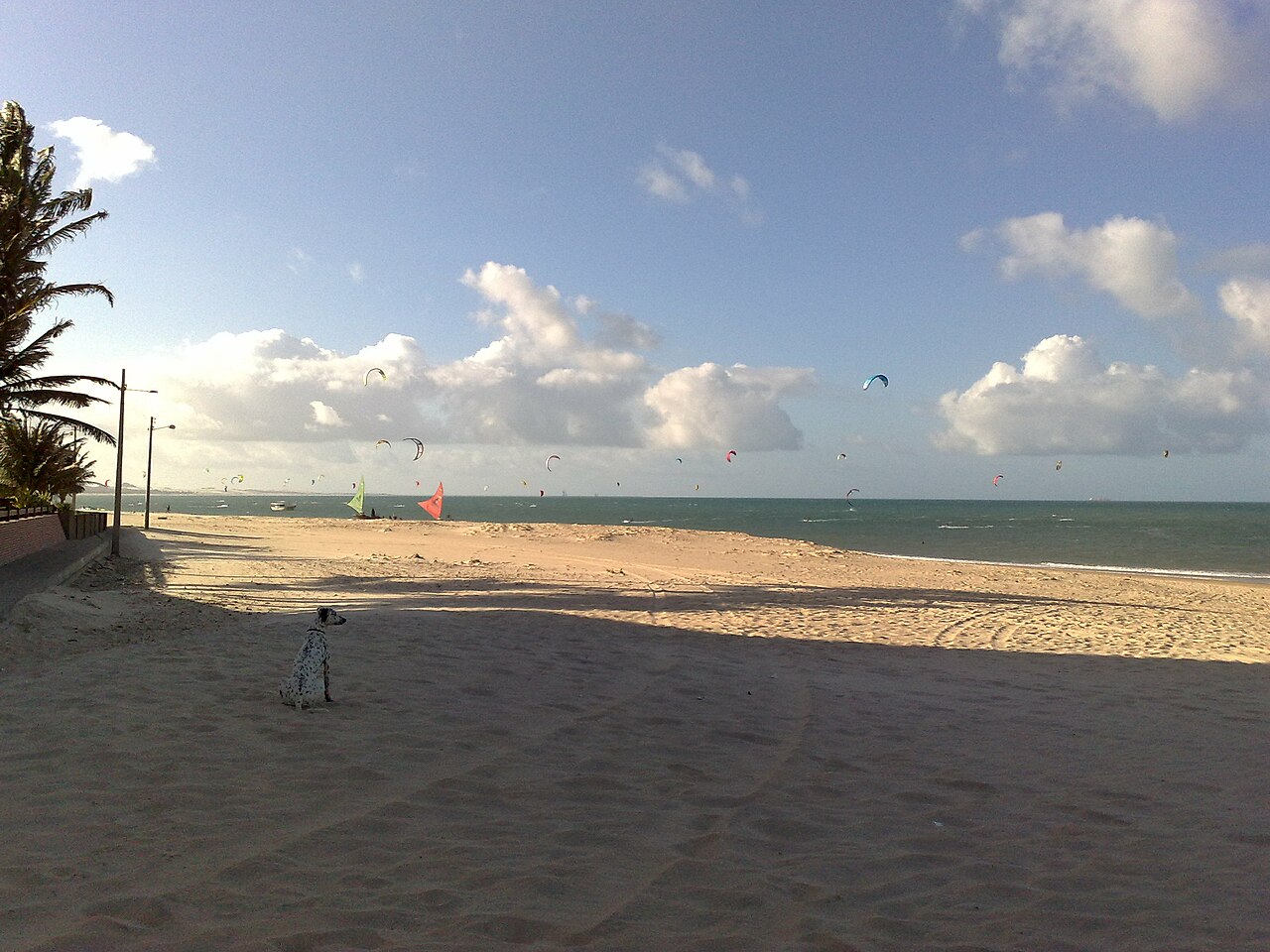
Up the coast from Cumbuco, Jericoacoara is the more scenic half of the Brazilian kite story: a sand-street village inside a national park, ringed by dunes and lagoons. The same trade winds power flat-water riding at the nearby Guriu and Prea lagoons, while the main beach offers small waves. It takes effort to reach, a 4×4 transfer over the dunes, which keeps it less developed than Cumbuco. Start from Jericoacoara village. Best from July to January.
Boracay Philippines
While the famous White Beach gets the tourists, kitesurfers cross the island to Bulabog Beach on the windward side. During the Amihan, the northeast monsoon, Bulabog turns into a busy flat-water lagoon protected by an offshore reef, with warm water and steady side-onshore wind. The school scene is large and cheap, and the nightlife is a short walk away. Get there via the ferry routes to Boracay. Best from November to April.

Le Morne Mauritius
A turquoise lagoon under a sheer basalt mountain, and the spot every kiter pictures when they think of Mauritius. The inside lagoon at Le Morne is flat and shallow for learning, while the reef pass known as One Eye serves up a famous wave for the experienced. The southeast trade winds are dependable through the southern winter, and the water is warm. Combine the kiting with the rest of Mauritius. Best from May to October.

Paje Zanzibar, Tanzania
The kite village of East Africa, on Zanzibar’s southeast coast. The reef holds back the swell, so the lagoon at Paje is flat and shoulder-deep at high tide, and the Kaskazi and Kusi monsoons deliver months of steady wind. Low tide exposes a huge sand flat that pulls riders far out, so check the tide tables before you launch. The school strip is relaxed and affordable. Explore the rest of Zanzibar between sessions. Best from December to February and June to September.
Sal Cape Verde
An Atlantic island that catches the same trade winds as the Canaries but stays warm in winter, which makes it a December-to-March favourite for Europeans escaping the cold. The bays around Santa Maria offer both flat water and wave riding, the wind is reliable through the season, and the island is small enough to learn the spots in a day. The downside is the wind can blow strong, so it suits riders past the very first lessons. Plan a trip to Sal. Best from November to May.

Kite Beach, Maui Hawaii, USA
Kanaha Beach Park, known to riders as Kite Beach, is where the sport’s modern form was refined in the 1990s, and it is still the USA’s headline spot. Steady afternoon trade winds funnel along Maui’s north shore, with a reef-protected inside for flatter water and an outer reef with waves. It is more advanced and more crowded than the lagoon spots, and the launch needs respect, but the wind reliability is high. Best from April to October.

One more for the list: Essaouira on Morocco’s Atlantic coast is a strong-wind, wave-leaning spot that rounds out the trip if you are already in the country for Dakhla. The afternoon trade wind there is famous for its strength.

Check the best month to ride any country
Kite seasons turn on trade winds and monsoons that flip with the hemisphere. The Best Travel Time map shows the ideal months for every country at a glance, so you can line up a kite trip with the wind window instead of guessing.
Wind season and conditions, by spot
The quick reference for planning. Match the spot to your level and the season, because the wrong month means standing on the beach watching a flat sea.
| Spot | Country | Wind season | Level | Water type |
|---|---|---|---|---|
| Tarifa | Spain | April to October | All levels | Open beach, some chop |
| Cabarete | Dominican Republic | June to September | All levels | Reef lagoon and waves |
| Dakhla | Morocco | April to September | Beginner friendly | Flat lagoon |
| Cumbuco | Brazil | August to December | All levels | Flat lagoon and beach |
| Jericoacoara | Brazil | July to January | All levels | Flat lagoons, small waves |
| Boracay (Bulabog) | Philippines | November to April | Beginner friendly | Reef lagoon |
| Le Morne | Mauritius | May to October | All levels | Flat lagoon and reef wave |
| Paje | Tanzania | Dec to Feb, Jun to Sep | Beginner friendly | Tidal reef lagoon |
| Sal | Cape Verde | November to May | Intermediate | Bays, flat and waves |
| Kite Beach, Maui | USA | April to October | Intermediate to advanced | Reef inside, outer waves |
Read the wind season, not the weather forecast
Kite wind is seasonal, not daily luck. The northern-hemisphere spots (Tarifa, Cabarete, Maui) deliver from roughly April to October. The southern lagoons (Le Morne, Cumbuco, Boracay) and the Atlantic winter spots (Sal, Dakhla shoulder) run the opposite calendar, from around November to March. Book inside the season and you ride almost every day. Book the shoulder and you gamble.
Book a kitesurf lesson or camp
Tarifa kitesurf lessons
Andalusia, Spain
Cabarete kitesurf lessons
Dominican Republic
Dakhla kitesurf camp
Morocco
Le Morne kitesurf lessons
Mauritius
Through the links above you support Pack Lightly, at no extra cost to you.
When to go, by hemisphere
The single rule that saves a wasted trip: kite seasons flip with the hemisphere, so there is good wind somewhere all year. From April to October the action is in the north, with Tarifa’s Levante, Cabarete’s summer thermal and Maui’s trade winds all firing. From November to March the southern lagoons take over, with Le Morne, Cumbuco and Boracay in their windy season, while Sal and the Caribbean shoulder offer warm-water winter riding for Europeans.
For a first kite trip, the verdict is simple: pick a flat-water lagoon in its peak season. Dakhla, Cumbuco, Le Morne and Bulabog on Boracay all let you stand up, ride smooth water and progress fast, which is exactly what the wave spots like Maui and Sal punish you for skipping. Save those for once you can stay upwind and self-rescue without thinking.
Common questions
01Where is the best kitesurfing in the world?
For the most reliable wind, Tarifa in Spain and Cabarete in the Dominican Republic are the top picks, both with a kite scene built around dependable seasonal wind. For flat-water learning, Dakhla in Morocco, Le Morne in Mauritius and Cumbuco in Brazil have the best shallow lagoons. The right answer depends on your level and the time of year.
02Where is the best place to learn to kitesurf?
A flat, shallow lagoon with steady wind is ideal, which points to Dakhla in Morocco, the Cauipe Lagoon at Cumbuco in Brazil, Le Morne in Mauritius, or Bulabog Beach on Boracay. In all four you can stand up, the water stays smooth, and there are clusters of schools with rescue boats. Avoid wave spots like Maui until you can ride upwind.
03When is the kitesurfing season in each spot?
Northern-hemisphere spots run roughly April to October: Tarifa, Cabarete, Dakhla and Maui. Southern and Atlantic-winter spots run the opposite way, around November to March: Le Morne, Cumbuco, Jericoacoara, Boracay and Sal. There is good kite wind somewhere in the world in every month of the year.
04Which kite spot has the most reliable wind?
Tarifa is famous for blowing around 300 days a year thanks to the wind funnel at the Strait of Gibraltar. Cumbuco and Jericoacoara in Brazil are close behind during the trade-wind season, and Cabarete’s afternoon thermal is dependable enough to plan a week around. Reliability is what separates these from prettier but flakier beaches.
05Do you need a wetsuit to kitesurf?
It depends on the spot. Tarifa, Sal and Essaouira have cooler Atlantic water that calls for a wetsuit, especially in the shoulder months. The tropical lagoons, including Cabarete, Le Morne, Boracay and Zanzibar, are warm enough to ride in boardshorts year round, which is part of why they are easier places to spend long days learning.
06Is kitesurfing hard to learn?
Most people get riding short distances after about six to twelve hours of lessons, then take a few more sessions to ride upwind reliably. The biggest factor is the spot: a flat shallow lagoon with steady wind cuts the learning curve dramatically, while waves and gusty wind make it much harder. Take a course with a certified school rather than teaching yourself.
Image credits, all via Wikimedia Commons under Creative Commons licences: Jericoacoara kite Casa de Caco; Tarifa Punta Paloma Mariordo; Cabarete Kite Beach Robinson22lto; Dakhla lagoon Bigsus; Cumbuco Eric Salomon; Bulabog Beach panoramio upload; Le Morne Jean-Marc Astesana; Sal Santa Maria Bruno Barbato; Maui Kite Beach Kirt Edblom; Essaouira Wikimedia Commons contributor.


