
Europe has a $70 gap between its cheapest and priciest countries on the exact same day: hostel bed, one casual meal, one local transport ride. That gap is not evenly spread across the map. It clusters hard in the Balkans, thins out through Eastern and Central Europe, and closes almost entirely once you cross into the euro-and-Alps belt. Knowing where that line falls decides whether a month in Europe costs $450 or $2,400.
North Macedonia and Albania are the cheapest countries to visit in Europe, with backpacker days (hostel bed, casual meal, local transport) running $15 to $16. The Balkans and Eastern Europe (Bosnia, Serbia, Bulgaria, Romania, Montenegro, Hungary, Poland) stay under $22 a day, while Czechia, Portugal, and Greece sit closer to $25 to $32. Switzerland, Norway, and Iceland are the priciest, at $76 to $83 a day for the same baseline.
The 12 cheapest countries in Europe, ranked
The ranking below uses one formula for every country: hostel dorm bed, one casual sit-down meal, and one local transport ride (bus or tram), added into a single backpacker day. It is deliberately narrow. Flights, big attractions, and alcohol swing the total more than the country does, so this strips those out and isolates what the destination itself costs once you land.
| Rank | Country | Hostel dorm | Casual meal | Local transport | Backpacker day |
|---|---|---|---|---|---|
| 1 | North Macedonia | $10 | $3 | $2 | $15 |
| 2 | Albania | $10 | $3 | $3 | $16 |
| 3 | Bosnia and Herzegovina | $12 | $3 | $2 | $17 |
| 3 | Serbia | $11 | $3 | $3 | $17 |
| 5 | Bulgaria | $12 | $3 | $3 | $18 |
| 6 | Romania | $13 | $3.50 | $3 | $19.50 |
| 7 | Montenegro | $14 | $4 | $3 | $21 |
| 7 | Hungary | $13 | $4 | $4 | $21 |
| 9 | Poland | $14 | $4 | $4 | $22 |
| 10 | Czechia | $15 | $5 | $5 | $25 |
| 11 | Portugal | $22 | $5 | $5 | $32 |
| 11 | Greece | $22 | $5 | $5 | $32 |
Key takeaways
- North Macedonia is the cheapest country in Europe on a straight backpacker-day basis, at $15, roughly half of Portugal or Greece.
- Every country ranked 1 through 9 sits under $22 a day. That block is almost entirely the Balkans plus Romania, Hungary, and Poland.
- The jump from Czechia ($25) to Portugal and Greece ($32) is the real cutoff between budget Europe and mid-range Europe.
- The formula tracks daily ground costs only. Flights into Skopje or Tirana still cost more than flights into Lisbon or Athens, so factor that into a full trip budget with the budget calculator.
North Macedonia and Albania: Europe’s $15-a-day countries
North Macedonia takes the top spot on $15 a day, and Ohrid is the reason the number holds up in practice, not just on paper. A lakeside hostel bed in the old town runs $10, a full grilled-meat plate at a local restaurant is $3, and the bus network between Ohrid, Skopje, and Bitola charges a couple of dollars a route. Skopje itself is odd, oversized statues and a rebuilt riverside center, but the prices are consistent with the rest of the country: a $10 dorm bed and $3 meals hold in the capital as well as the lake towns.
Albania comes in one dollar higher at $16, and the gap is almost entirely transport. Buses and furgons (shared minivans) between towns cost $1 to $2 more per ride than North Macedonia’s, since routes are less standardized and prices get negotiated on the spot. Tirana’s hostel scene undercuts most of Western Europe at $10 a bed, and Berat’s Ottoman old town, a UNESCO site of stacked white houses, charges tourist-town prices that are still lower than a mid-size North Macedonian town. Both currencies (the Macedonian denar and the Albanian lek) float independently of the euro, which is the main reason costs stay this low: neither economy is priced to match Western European wages or the euro’s purchasing power.
The Balkans under $20 a day
Bosnia and Herzegovina ties Serbia at $17 a day, and Sarajevo is the clearest case for why: a city that still shows its 1990s siege history in bullet-scarred buildings now runs $12 hostel beds and $3 cevapi plates a few streets over from the old Ottoman bazaar. Bosnia’s convertible mark is formally pegged to the euro, which keeps prices stable but does not push them up, since local wages have not caught the peg.
Serbia’s $17 leans on Belgrade and Novi Sad both staying cheap despite being the country’s biggest draws: a $11 dorm bed and $3 transport ride hold in the capital, which is unusual. Most countries see their capital run 20 to 30 percent above the national average.
- Bulgaria, $18/day: Sofia and the Black Sea coast both undercut $20, and Bulgaria’s lev is pegged to the euro at a fixed rate, giving it price stability without a euro-zone cost jump.
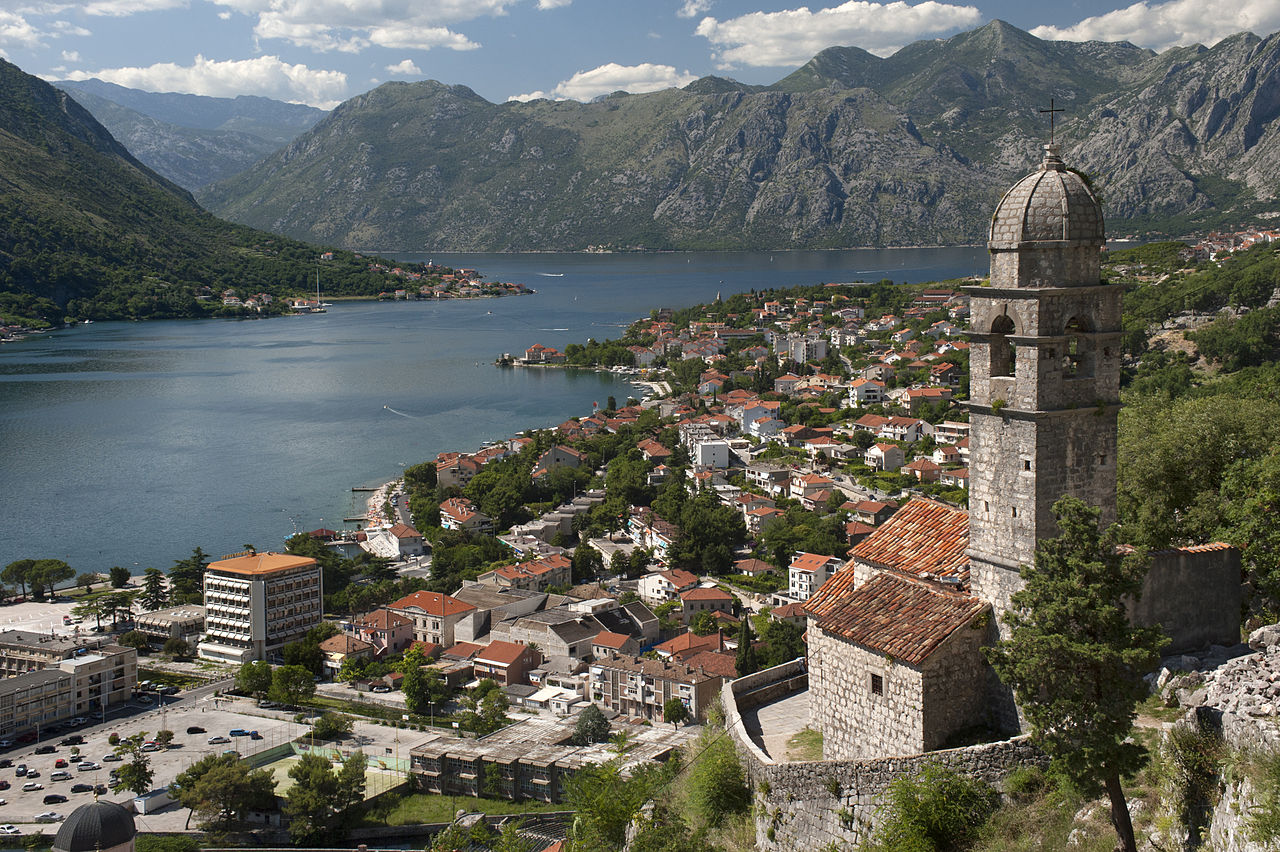
- Montenegro, $21/day: the outlier. Montenegro uses the euro unilaterally (it is not in the EU or the euro zone), which pushes prices above its Balkan neighbors even though wages have not caught up. Kotor and Budva charge closer to Croatian coastal prices in July and August.
- Romania, $19.50/day: Bucharest and Transylvania both stay under $20, with the leu keeping costs independent of euro-zone pricing.
The pattern across all four: none of these currencies are the euro (Montenegro is the exception that proves it), and that separation from euro-zone pricing is doing most of the work.
Eastern and Central Europe: cheap with EU convenience
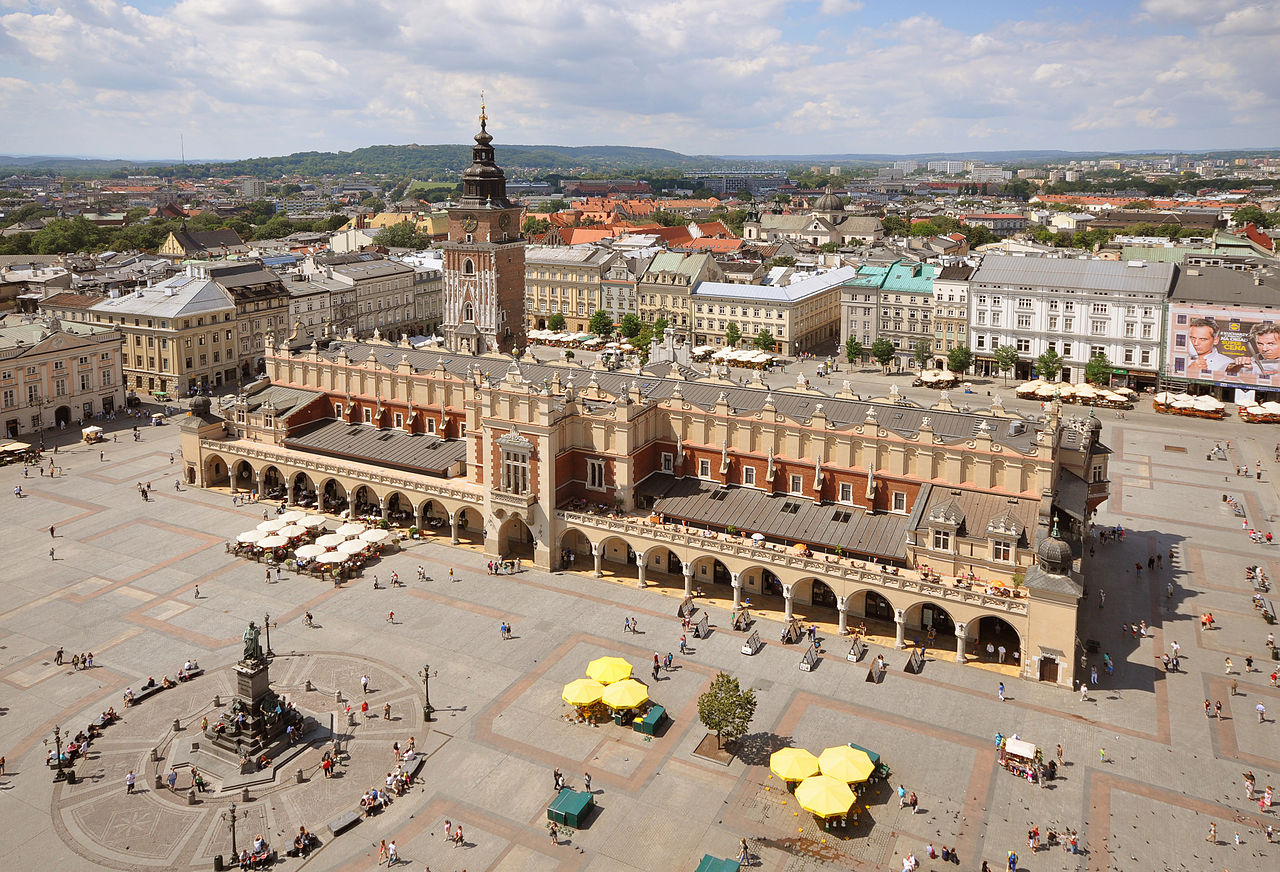
Hungary and Poland both land at $21 to $22 a day, and both offer something the Balkans do not: full EU membership without the euro. That combination matters more than the price gap suggests. Both countries keep their own currency (forint, zloty), so prices stay decoupled from euro-zone inflation, while Schengen-area border crossings, EU consumer protections, and better-connected rail networks remove the friction that comes with non-EU Balkan travel.
Budapest’s thermal baths and ruin bars sit inside a $13 hostel-bed, $4-meal city, a combination that would cost double in most Western European capitals its size. See the full breakdown on the Hungary budget page. Krakow does the same trick for Poland: a UNESCO old town and easy day trips to the Wieliczka Salt Mine and Auschwitz-Birkenau, all inside a $14-bed, $4-meal city, detailed on the Poland budget page. Romania sits in the same bracket by cost (see above) but stays outside this EU-convenience tier on rail and border logistics.
Where cheap Europe starts getting pricier
Czechia is the hinge point at $25 a day, still meaningfully cheaper than Western Europe but a clear step above the $15 to $22 block. Prague’s old town charges tourist-center prices ($15 beds, $5 meals) that a decade ago would have looked like Budapest’s. The koruna has held its own currency, but Prague’s tourism volume, one of the most-visited cities in Europe per capita, has pushed pricing toward what demand will bear rather than what the local economy dictates.
Portugal and Greece both land at $32, and both make the case that euro-zone membership does not automatically mean expensive. Porto and Lisbon run $22 hostel beds, well under Western European capitals, because Portugal has structurally lower wages than the euro-zone average despite sharing its currency. The full numbers are on the Portugal budget page. Greece follows the same logic outside its islands: Athens and the mainland hold $22 beds and $5 meals, though Santorini and Mykonos in July run closer to Swiss prices for the same bed. See the Greece budget page for the island-versus-mainland split before booking.
Build the real number for your own route
Twelve countries, one formula. Your actual trip mixes countries, seasons, and travel styles, run your route through the calculator to get a full daily and weekly number.
The other end: Switzerland, Norway, and Iceland

The same three-line formula that puts North Macedonia at $15 puts Iceland at $83, more than five times higher for the identical bed, meal, and ride. That is the range worth holding in your head before booking a “quick European trip”: the difference between the cheapest and priciest countries on the continent is not a 20 or 30 percent swing, it is a multiple.
| Country | Hostel dorm | Casual meal | Local transport | Backpacker day |
|---|---|---|---|---|
| Denmark | $40 | $12 | $10 | $62 |
| Norway | $50 | $13 | $13 | $76 |
| Switzerland | $50 | $14 | $15 | $79 |
| Iceland | $55 | $14 | $14 | $83 |
All four share the same driver: high domestic wages set the floor for every service price, from a dorm bed to a bus ticket, regardless of currency (Switzerland uses its own franc, Norway and Iceland their own krona, Denmark its own krone, none of them the euro). Lauterbrunnen’s waterfalls and Reine’s fjord views are not more expensive to look at than Ohrid’s lake. The people cleaning the hostel and driving the bus simply cost five times more to employ.
What actually makes a country cheap
Three things move the number more than anything else: local wages (the real driver, not the tourist-facing prices), currency independence from the euro, and season. A Balkan country in shoulder season and a Greek island in August can flip places on real cost, even though the table above ranks Greece higher on the annual average.
Do
- Travel the Balkans and Eastern Europe in shoulder season (April-May, September-October)
Same $15-22 daily range, fewer crowds, and hostel prices that do not spike the way coastal Greece or Croatia do in July.
- Check the currency before assuming a country is cheap
Non-euro currencies (denar, lek, dinar, lev, leu, forint, zloty, koruna) are the single strongest predictor of a sub-$25 day on this list.
- Compare a full week, not one day
A single expensive city (Dubrovnik, Santorini) can sit inside an otherwise cheap country and skew a one-day snapshot; run the whole route through the budget calculator.
Don’t
- Assume euro-zone means expensive
Portugal at $32/day is a euro country with structurally lower wages than Germany or Switzerland; currency alone does not set the price.
- Book Greek islands or Swiss Alps in peak July-August expecting shoulder-season rates
Santorini in August can outprice Iceland’s annual average for the same hostel bed.
- Skip currency conversion checks before budgeting a multi-country route
Crossing from Serbia (dinar) to Montenegro (euro) to Bosnia (convertible mark) in one trip means three different price levels; check each leg with the currency converter.
For a wider comparison outside Europe entirely, Southeast Asia runs a similar bracket to the Balkans on the same formula, see the Thailand budget page for a direct reference point, and the full methodology behind every country total sits on the how much travel actually costs pillar page.
Frequently asked questions
01What is the cheapest country to visit in Europe?
North Macedonia, at roughly $15 a day for a hostel bed, a casual meal, and local transport. Albania follows closely at $16.
02Is Albania cheaper than Bosnia?
Albania runs about $1 a day cheaper than Bosnia and Herzegovina ($16 versus $17), mostly because Bosnia’s hostel beds average $2 more. Both stay well under $20.
03Which European countries use the euro but are still cheap?
Portugal and Greece both use the euro and still land around $32 a day, cheaper than most of Western Europe, because local wages sit below the euro-zone average even though prices are quoted in the same currency.
04What is the most expensive country in Europe to visit?
Iceland, at roughly $83 a day on the same hostel-meal-transport formula, just ahead of Switzerland at $79 and Norway at $76.
05Do I need a visa to visit these budget European countries?
Most US, UK, EU, Canadian, and Australian passport holders enter North Macedonia, Albania, Bosnia, Serbia, Montenegro, and Bulgaria visa-free for short stays. Hungary, Poland, Czechia, Portugal, and Greece are Schengen-area, covered by the same 90-day visa-free rule for those passports. Always confirm against current entry rules before booking.
06How much does a week in the Balkans cost?
Using the $15-21 daily range across North Macedonia, Albania, Bosnia, Serbia, Bulgaria, and Montenegro, a week of ground costs (bed, food, local transport) runs roughly $115 to $150, before flights and paid activities.
Image credits: Ohrid by Xiquinho Silva / Wikimedia Commons (CC BY 2.0). Kotor Bay by Ggia / Wikimedia Commons (CC BY-SA 3.0). Krakow Main Market Square by Jorge Lascar / Wikimedia Commons (CC BY 2.0). Lauterbrunnen valley by Chensiyuan / Wikimedia Commons (CC BY-SA 4.0).
Photo credits: Photo: xiquinhosilva / Wikimedia Commons, CC BY 2.0 (header image) · Photo: xiquinhosilva / Wikimedia Commons, CC BY 2.0 · Photo: User:Ggia / Wikimedia Commons, CC BY-SA 3.0 · Photo: Jorge Lascar / Wikimedia Commons, CC BY 2.0 · Photo: Chensiyuan / Wikimedia Commons, CC BY-SA 4.0