


Fruit picking work runs somewhere year-round if you move between hemispheres. Australia and New Zealand pay AUD/NZD 20 to 25 an hour on the Harvest Trail and RSE-linked farms, Canada pays CAD 16 to 22, and Europe’s harvest jobs (France, Germany, Spain) sit at EUR 7 to 16 an hour or piece rate. Peak months: Nov to Apr in Australia/NZ, May to Oct in Europe and Canada.
Fruit picking is one of the few jobs where a backpacker can chase eternal summer, move across hemispheres every six months, and actually earn above survival wage. The catch is brutal honesty: the pay is real only if you move fast, pick volume, and understand the two payment models that govern this work. Piece rate can triple your hourly income if you are practiced, or leave you below minimum wage for your first week. Hourly guarantees a floor but caps your upside. The countries that pay best (Australia, New Zealand, Canada) structure the work into formal schemes with built-in labor protections; Europe’s harvest runs looser and cheaper but also more seasonal. The arithmetic is simpler than it sounds: Nov-Apr in the Southern Hemisphere, then fly north for May-Oct harvests and repeat.
How fruit picking work pays: hourly vs piece rate
The two payment structures exist side by side and dramatically change your take-home. Hourly pay guarantees a minimum (often pinned to the national or regional minimum wage) regardless of output: you show up, work your shift, and clock out with a floor. Piece rate pays per unit harvested: per bin of berries, per kilo of grapes, per box of cherries, and rewards speed and experience. A fast picker pulling consistent volume can double or triple hourly rates. A beginner on piece rate can earn less than the equivalent hourly minimum during their learning curve, which can last a week or three weeks depending on the crop and your hand speed.
| Country/Region | Crop Archetypes | Pay Model | Rate Range |
|---|---|---|---|
| Australia | Stone fruit, berries, grapes | Hourly (guaranteed) | AUD 20-25/hr |
| New Zealand | Kiwifruit, apples, berries | Hourly (guaranteed) | NZD 20-25/hr |
| Canada | Apples, berries, stone fruit | Hourly (guaranteed) | CAD 16-22/hr |
| France | Cherries, peaches, grapes | Piece rate (common) | EUR 7-16/hr (varies by speed) |
| Germany | Apples, berries, asparagus | Hourly (minimum wage floor) | EUR 7-16/hr |
| Spain | Oranges, strawberries, grapes | Piece rate (common) | EUR 7-16/hr (varies by speed) |
Tree fruit (cherries, peaches, stone fruit) and grapes are the crops most likely to run on piece rate because the harvest is time-critical and the yield varies wildly by picker speed. Yield per hour varies sharply between an experienced picker and a beginner on the same tree. Piece rate incentivizes the speed needed to pull the harvest before it rots. Berries, vegetables, and packhouse work (washing, grading, boxing for export) tend toward hourly pay because the work is more assembly-line and less dependent on individual picker velocity.
- Piece rate wins financially only if you reach speed. The first week or two run well below an experienced picker’s output, and earnings climb steadily as technique improves. Once you hit full speed, piece rate beats the hourly floor.
- Hourly is the safer floor. You cannot fall below minimum wage, but you cap your earnings at that wage regardless of speed. Australian and New Zealand farms must guarantee minimum wage even under a piece rate contract, which is why both countries rank highest for reliable picker income.
- Europe’s piece rate is cheaper overall. A Spanish or French piece rate that yields EUR 10/hr at full speed is simply lower per unit than a New Zealand piece rate that can reach NZD 25/hr at full speed. The crops have different margins and the labor market is looser in Southern Europe.
Australia: the Harvest Trail, state by state
Australia’s Harvest Trail is a government-vetted portal listing registered farms and their picking seasons state by state. The pay is guaranteed hourly, the work is legal, and 88 days of regional farm work counts toward the second-year visa extension for Working Holiday visa holders. This is why Australia is the default first stop for most backpackers planning multi-country picking circuits.

| State | Primary Crops | Peak Months | Hourly Pay (AUD) |
|---|---|---|---|
| New South Wales | Stone fruit, berries, grapes | Nov-Apr (Feb busiest) | 20-25 |
| Victoria | Stone fruit, citrus, grapes | Nov-Mar | 20-24 |
| Tasmania | Berries, apples, stone fruit | Dec-May | 21-25 |
| Queensland | Bananas, tropical fruit, veg | Year-round (May-Sep lighter) | 19-23 |
| Northern Territory | Mangoes, citrus | Sep-Dec (mango rush) | 19-22 |
New South Wales and Victoria run the heaviest picking seasons and attract the most backpackers, especially February when stone fruit and berries peak. Tasmania’s season runs slightly later (Dec-May) and the work is less competitive, which can mean steadier hours without fighting for shifts. Queensland has year-round work because of its subtropical climate and fruit diversity, which makes it useful as a bridge season if you arrive off-peak or need work between the main harvests. The Harvest Trail site lets you filter by location and dates and see which farms are actively recruiting; registration is free and the portal vets farms against labor standards.
New Zealand: Pick NZ and the RSE scheme
New Zealand’s kiwifruit and apple harvest concentrates in Bay of Plenty and Hawke’s Bay, the two major horticultural regions. The season is Mar-Jun, tighter than Australia’s. Pay is comparable to Australia (NZD 20-25/hr) and the work is equally formal: Pick NZ is the government’s matching platform, similar to Australia’s Harvest Trail.

New Zealand’s Recognised Seasonal Employer (RSE) scheme opens visas specifically for seasonal farm work (nominally for Pacific nationals, but backpackers can access it via some pathways). The term runs for a chunk of the harvest window, with housing often provided by the employer. Working Holiday visa holders can also pick fruit and count it toward visa milestones, though the RSE scheme itself is separate from the Working Holiday route. The pick season is tight, so if you miss the Mar-Jun window or arrive after Feb, you will be waiting months for the next harvest or pivoting to Australia instead.
Canada and Europe: the other harvest windows
Canada’s agricultural work visa stream (often called SAWP or the agricultural worker program) covers fruit harvest primarily in Ontario and British Columbia. Pay runs CAD 16-22/hr and the structure is similar to Australia’s: it is formal, regulated, and free accommodation is common (sometimes on-farm housing, sometimes employer-provided accommodation nearby). Peak season runs roughly May to October; applying through a licensed labour provider is the standard route since most Canadian farms do not recruit directly on public portals.
Europe’s harvest is the trickiest region because it is less regulated, lower-paying, and more hit-or-miss on legitimacy. Southern France, the Rhone Valley, and Provence run cherry harvests Jun-Jul, peach and nectarine Aug-Sep, and grape vendange (harvest) Sep-Oct. Spain and Portugal have strawberry and orange seasons. Germany’s agricultural work is covered under its seasonal worker permit, with a minimum-wage floor that sits higher than the rates common in Southern Europe. The trade-off in Europe is that piece rate is more common, farms vary in professionalism, and accommodation is less often included: you are expected to find your own lodging and work might be day-labor arrangements rather than a fixed contract. Word-of-mouth and Facebook groups are how most pickers find European work, which means you are relying on other travelers’ vetting, not a government portal.
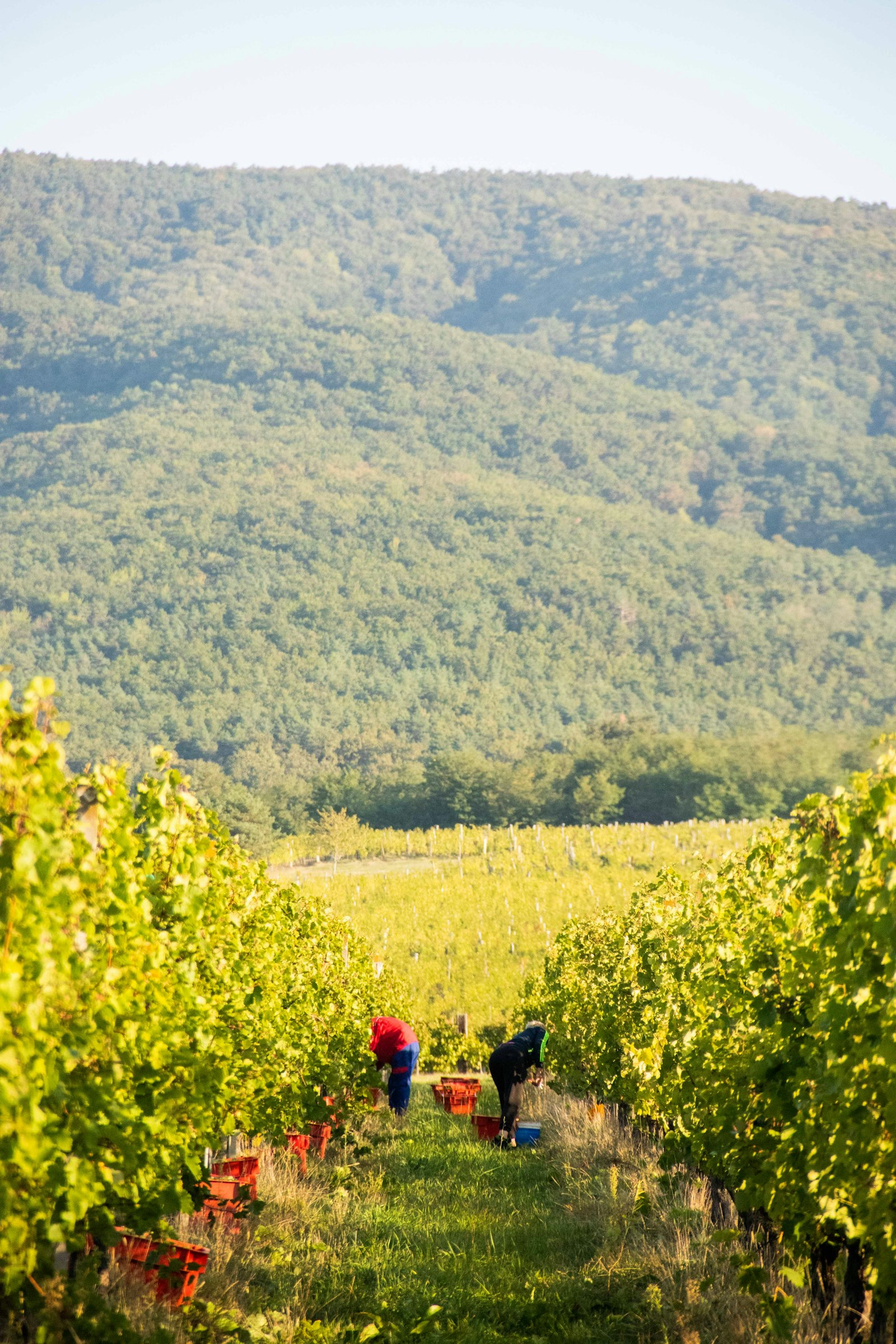
Chaining a season: how backpackers follow the harvest across hemispheres
The circuit that works mathematically is: Australia/NZ Nov-Apr (5-6 months), fly to Europe or Canada May-Oct (5-6 months), repeat. This gives you two solid earning windows a year if you are organized and the visas align. The visa angle is where it gets complicated. A Working Holiday visa to Australia covers 1-3 years depending on nationality, and the second-year extension hinges on 88 days of regional farm work (which fruit picking qualifies for). A Working Holiday visa to New Zealand is 1 year and does not have the same agricultural extension loop. Canada’s agricultural stream is a separate application and typically tied to a specific employer or labor provider. Europe’s seasonal visas vary wildly by country; France has bilateral seasonal worker schemes but they require early application (Feb-Mar for a Jun-Oct season).
The cheapest logistics path is: lock into Australia’s second-year visa (pay for the visa upfront, do 88 days of picking Nov-Mar, which is trivial during peak season), then fly to Europe or Canada May-Oct under whatever permit that country allows, then return to Australia in Nov for another northern summer. That is one full-year circuit. The trade-off against staying in one country for a single 5-6 month season is straightforward: two hemispheres means two flights and two sets of visa admin, set against two earning windows instead of one.
What the work is actually like: hours, physical demand, accommodation
The reality behind the pay
- 6am starts are standard in hot climates; finish by 2-3pm to avoid peak heat and prevent fruit bruising.
- On-farm caravan or dorm accommodation is typical in Australia and NZ; you split rent with 4-8 other pickers.
- Tree fruit (ladder work, reaching overhead repeatedly) hits shoulders and wrists; berry picking (stooped or crouched for hours) hits lower back and knees.
- Sunburn and dehydration are real occupational hazards; farms usually provide water but not always shade or proper breaks in hotter climates.
- You work 5-6 days a week during peak season; a single day off is standard, not negotiable under Australian/NZ law but looser in Europe.
The physical toll depends on the crop. Tree fruit requires a ladder, reaching overhead, and sustained arm extension; experienced pickers develop shoulder and wrist problems after a season or two. Berry picking is low-level (you are crouching or on your knees) and the repetitive hand motion can cause finger fatigue and inflammation. Vegetable picking is similar: low-level, hand-intensive, and relentless if you are on piece rate. Australian and New Zealand farms have safety standards and usually enforce breaks; European farms vary wildly. Accommodation is where Australia and NZ shine: you get a place to sleep included in most contracts, even if it is spartan. Europe’s accommodation is often your problem; many farmers assume you have camping equipment or can find a hostel yourself, which eats into your earnings.
The social reality: fruit picking brings together travelers, backpackers, and people seeking steady seasonal income globally. The camaraderie is real, but so is the transience. You build friendships over a 2-3 month season, then one of you flies to the next country. Pick farms can be isolated; Queensland banana farms or remote Tasmania berry operations might have limited internet or cell coverage. Australia’s farms tend toward larger operations with 20-100 pickers on-site at any time; you are never alone. European farms can be 3-5 person crews, which is more intimate but also means less backup if you get injured or conflict arises.
How to find legitimate fruit picking work
- Australia: Harvest Trail (harvesttrail.gov.au) is the vetted portal. Search by state and crop, filter by accommodation, apply directly to listed farms. All registered farms meet labor standards.
- New Zealand: Pick NZ (picknz.co.nz) is the equivalent. Bay of Plenty and Hawke’s Bay have the most listings. Register your CV, farms contact you directly during Feb-Mar for Mar-Jun seasons.
- Canada: Contact licensed agricultural labor providers (not farmers directly). Your country’s government agriculture ministry often has a list of approved SAWP recruiters. Expect a formal application process and background check.
- Europe: Start with national agricultural job boards (e.g., agri-jobs.eu for EU-wide listings), then cross-check Facebook groups (Harvest Jobs Europe, Picking Fruit in France, etc.). When you find a lead, verify the farm name, check if other pickers have recent reports, and insist on a written agreement specifying pay rate (hourly or piece rate), housing, and start/end dates.
- Walk-on arrivals: Showing up at a known picking region (Antibes for French cherries, Central Otago for NZ wine harvest) in peak season and asking farms directly still works, especially if you are flexible on start dates and can commit to the full season. Bring a resume and a work visa copy.
The red flags are straightforward. Farms demanding upfront fees for accommodation or visa help, claiming piece rate but not disclosing the rate per unit, guaranteeing “up to” an hourly rate without a floor, and any farm that requires you to live off-site but won’t disclose the accommodation cost until after you arrive. Legitimate farms post on government portals or have established reputation in backpacker networks; they cost nothing to contact and apply for. If a Facebook group post about a farm is entirely positive with no caveats, it is probably a recruiter’s own post, not a picker’s review. Authentic reviews mention both pay and downsides (bad accommodation, strict bosses, rain delays, low piece rate on specific crops). European Facebook groups are noisy but also honest about which farms are known to be tough or underpaying.
FAQ
01How much do fruit pickers actually get paid?
In Australia and New Zealand, expect AUD/NZD 20 to 25 an hour on Harvest Trail or Pick NZ listed farms, sometimes topped up with piece rate for fast pickers. Canada runs CAD 16 to 22 an hour. In Europe, farm and harvest pay clusters around EUR 7 to 16 an hour depending on country and whether it is hourly or piece rate, with Germany’s agricultural minimum wage setting a higher floor than Southern Europe.
02Is fruit picking piece rate or hourly?
Both exist and the split depends on the crop and country. Tree fruit and grapes are more often piece rate (paid per bin or per kilo), which rewards speed and experience but can pay below minimum wage for a slow first week. Vegetable and packhouse work is more commonly hourly. Many Australian farms are required to guarantee at least the hourly minimum even under a piece rate structure.
03What is the best month to start fruit picking in Australia?
November through April is peak season nationally, with February the busiest single month for stone fruit, berries and grapes in NSW and Victoria. Tasmania’s berry and apple season runs slightly later, December to May. Queensland has some form of picking work year-round because of its subtropical growing calendar.
04Do you need a visa to pick fruit abroad?
Yes in almost every country covered here. Australia requires a Working Holiday visa (subclass 417 or 462) for most nationalities, and farm work in regional areas can count toward the 88-day requirement for a second-year extension. New Zealand uses its own Working Holiday scheme plus the RSE program for Pacific nationals. Canada and EU countries have separate seasonal agricultural worker permits, usually arranged through the farm or a licensed labour provider.
05Can you chain fruit picking seasons across different countries?
Yes, and it is a common route: pick Australia or New Zealand’s Nov-Apr season, then fly to Europe or Canada for their May-Oct harvest, effectively working two seasons a year. The trade-off is flight cost and the admin of holding two separate work visas, so it only pays off if you are already planning a longer working-holiday trip rather than a single farm stint.
Image credits: apple orchard, Batlow, NSW by Mattinbgn via Wikimedia Commons (CC BY-SA 3.0). Kiwifruit orchard view by Pseudopanax via Wikimedia Commons (public domain). Vineyard harvest by Vinarija Perak on Unsplash.


