


The rustle of leaves signals something big nearby, and then you spot it: a brown bear in Bayerischer Wald National Park.
Germany‘s diverse landscapes host a variety of wildlife, from the majestic brown bear to the elusive Eurasian lynx. Explore national parks where guided tours enhance your chances of spotting these incredible animals. Whether you’re hiking through dense forests or paddling serene lakes, the thrill of wildlife encounters awaits.
Quick answer
Wildlife in Germany means guided tours in national parks: best from April to October.
Key takeaways
- Book a guided tour in Bayerischer Wald for brown bear sightings.
- Visit Rothaargebirge to see Europe’s only free-ranging bison.
- Join snow-tracking workshops in Bavarian Forest for lynx tracking.
- Plan for September – October to witness red deer rutting.
- Explore Spreewald for active otters along canoe trails.
What makes Germany worth the trip for wildlife
Bayerischer Wald National Park is home to the iconic brown bear, making it a prime destination for wildlife enthusiasts. Germany’s national parks offer structured access to diverse species and habitats.
- Bayerischer Wald features a well-organized network of trails and guided tours for optimal wildlife viewing.
- Rothaargebirge is known for its successful reintroduction of European bison, providing unique observation opportunities.
- Active conservation programs in Germany enhance wildlife populations and visitor experiences.
Book this if: Book if you want guided tours in Bayerischer Wald for brown bear sightings or snow-tracking workshops for lynx.
Skip if: Skip this if you want guaranteed big-cat sightings without the need for permits and guided access.

Animals Around the World
Explore which animals you can spot in every country with our interactive map: search by species, region, or park.
Wildlife Map. Germany
Parks and reserves featured in this guide, plotted on the map below.
Which animals can you actually see in Germany
Bayerischer Wald National Park anchors Germany’s wildlife circuit with its brown bears in enclosures and Eurasian lynx roaming wild. Rothaargebirge offers Europe’s only free-ranging European bison west of Poland, making it a key stop for serious wildlife tracking.
| Animal | Spot chance | Best months | Where | Access |
|---|---|---|---|---|
| Brown bear | Good odds in season | April, May, June, July, August | Bayerischer Wald National Park | DIY (free access) |
| European bison | Almost guaranteed in season | May, June, July, August, September, October | Rothaargebirge, Wisent Welt Wittgenstein | Guided tour required |
| Eurasian lynx | Almost guaranteed in season | November, December, January, February, March | Bavarian Forest National Park, Harz National Park | Guided tour required |
| Red deer | High probability in peak months | September, October | Bavarian Forest National Park, Berchtesgaden National Park | Guided tour required |
| Grey wolf | High probability in peak months | January, February, March, November, December | Lusatian Heath | Guided tour required |
| Common crane | Almost guaranteed in season | September, October, November | Rügen-Bock Lagoon Area, Diepholzer Moorniederung | DIY (free access) |
| Fire salamander | Good odds in season | March, April, May, September, October | Black Forest, Bavarian Forest National Park | DIY (free access) |
| European stag beetle | Almost guaranteed in season | May, June, July | Black Forest, Rhine valley | DIY (free access) |
| Wild boar | Almost guaranteed in season | September, October, November, December, January, February | Schorfheide-Chorin, Elbe valley forests | DIY (free access) |
| Eurasian otter | Almost guaranteed in season | October, November, December, January, February, March | Mecklenburg Lake District, Spreewald Biosphere Reserve | Boat/walk combo |
| White-tailed eagle | Almost guaranteed in season | January, February, March, April, May, June, July, August, September, October, November, December | Müritz National Park, Jasmund National Park | DIY (free access) |
| Red kite | Almost guaranteed in season | March, April, May, June, July, August, September | Saale-Unstrut region, Harz foothills | DIY (free access) |
| Black stork | Good odds in season | April, May, June, July, August | Harz National Park, Spreewald Biosphere Reserve | DIY (free access) |
Brown bear Good odds in season
Bayerischer Wald National Park holds wild bears only in a large wildlife enclosure, where you can get close-range views without the risk of a true wild encounter. The setting mimics natural forest habitat, making the experience feel real despite the controlled environment. This is the only reliable way to see brown bears in Germany, as wild populations are functionally absent.
European bison Almost guaranteed in season
A small herd of European bison roams freely in the Rothaargebirge mountains, Europe’s only free-ranging bison population west of Poland. Tracking them involves hides and guided observation, with the landscape of mixed forest and hills providing a rugged backdrop. The Wisent Welt Wittgenstein reserve nearby supports reintroduction efforts and offers observation hides for patient watchers.
Conservation: Near threatened: habitat loss and fragmentation pressure populations
Eurasian lynx Almost guaranteed in season
The Bavarian Forest National Park hosts the Czech-German lynx population, where snow-tracking workshops in winter teach you how to find fresh tracks and signs. Walking quietly through snow-covered forest at dawn, you learn to read the landscape for this elusive predator. The Harz National Park also holds lynx, but Bavarian Forest offers the best access with guided tracking.
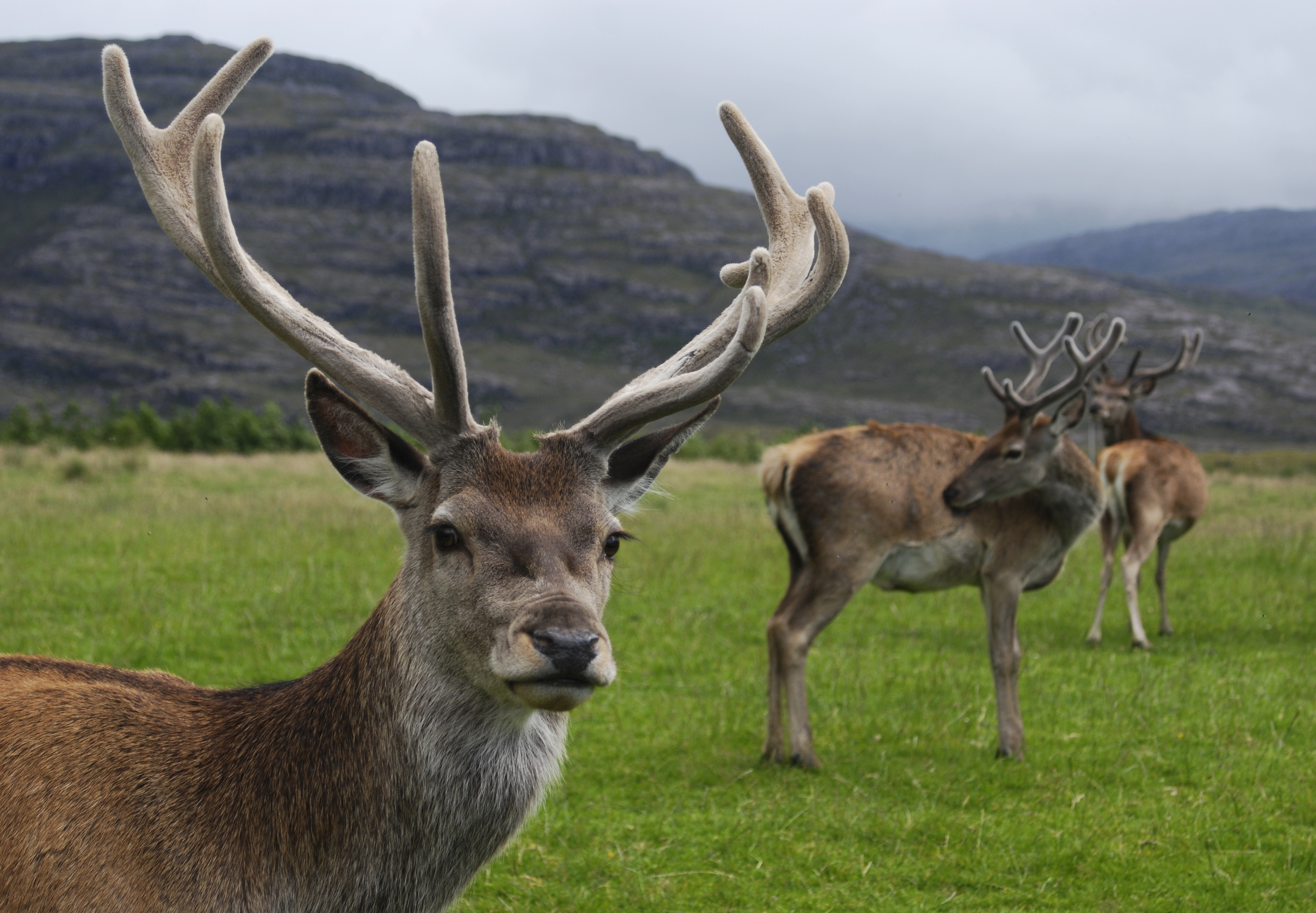
Red deer High probability in peak months
At dawn during September and October, the Bavarian Forest and Berchtesgaden National Parks fill with the roaring calls of rutting red deer stags. Guided rut walks take you close to these impressive animals as they compete for mates, a spectacle that requires booking months ahead. The misty forest edges and open glades create a dramatic stage for this seasonal display.
Grey wolf High probability in peak months
In the Lusatian Heath, dawn tours in January let you track vocal wolf packs moving through snowy forests. Licensed guides lead you on foot to follow fresh tracks and listen for howls, turning the quiet winter landscape into a live tracking classroom. This is the best chance to see wolves in Germany outside of rare road sightings.
Conservation: Caution advised around packs
Common crane Almost guaranteed in season
At dusk in October, the Rügen-Bock Lagoon Area fills with the sound and sight of up to 60,000 common cranes roosting on the lagoons. From viewpoints along the B105, you can watch their large flocks perform synchronized flights against the fading light. This spectacle draws birdwatchers who come prepared for chilly autumn evenings.
Fire salamander Good odds in season
On warm, damp nights in spring and autumn, wet beech woodland roads in the Black Forest and Bavarian Forest come alive with fire salamanders crossing the tarmac. Their bright yellow and black patterns stand out in the dark, making these amphibians surprisingly easy to spot if you time your walk right. This is a quiet, low-effort way to connect with Germany’s amphibian life.
European stag beetle Almost guaranteed in season
Warm June and July evenings in the oak woodlands of the Rhine valley and Black Forest bring out the European stag beetle males. These large insects fly low and noisily at dusk, their antler-like jaws visible in the fading light. Walking forest edges at twilight gives you a chance to see Germany’s largest beetle in action.
Conservation: Near threatened: habitat loss affects populations
Wild boar Almost guaranteed in season
Evening drives through Brandenburg or Mecklenburg forests regularly reveal groups of wild boar rooting along forest edges. These adaptable mammals are Germany’s most common large mammal and often active at dusk. Quiet observation from a vehicle or hide increases your chances of seeing them without disturbance.
Eurasian otter Almost guaranteed in season
Paddling the Spreewald Biosphere Reserve’s reed-fringed canoe trails at first light in November offers a chance to spot Eurasian otters. These elusive mammals are active along the quiet channels, and early morning stillness improves your odds. The Mecklenburg Lake District also supports otters, but Spreewald’s waterways are more accessible for paddlers.
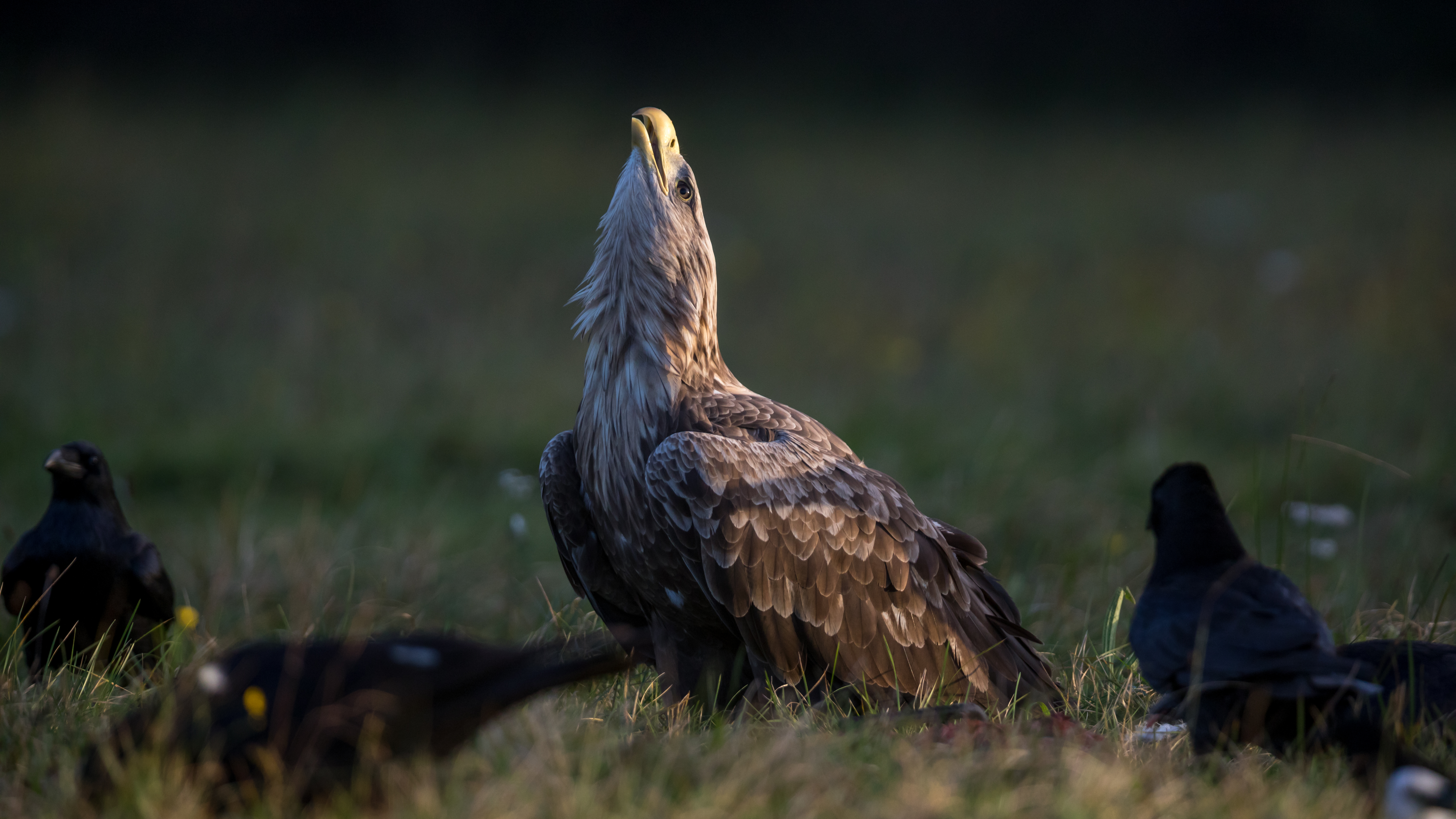
White-tailed eagle Almost guaranteed in season
Germany’s Mecklenburg lake district holds Europe’s densest population of white-tailed eagles. At dawn, scanning large trees along lake shores often reveals these massive raptors perched silently. The Müritz and Jasmund National Parks provide accessible vantage points for eagle watchers prepared for early starts.
Red kite Almost guaranteed in season
Saxony-Anhalt is the global stronghold for red kites, where roadside sightings in April are practically guaranteed. These graceful birds soar above the Harz foothills and Saale-Unstrut region, often visible from quiet country roads. Spring months offer the best chance to see their distinctive forked tails and agile flight.
Black stork Good odds in season
In May, walking the beech forest rivers of Harz National Park reveals black storks nesting in old-growth stands. These shy birds fish the clear, shallow streams, often seen gliding silently overhead or perched in tall trees. The Spreewald Biosphere Reserve and Bayerischer Wald National Park also host black storks during the breeding season.
The animals that define Germany’s safari circuit
Germany’s wildlife scene demands patience and precision. From dense forests to lake districts, each reserve offers a distinct encounter shaped by terrain and species behavior. This deep dive reveals where to focus your effort for the best sightings and what makes these locations stand out.
Brown bear
At Bayerischer Wald National Park, the wildlife enclosure offers a rare chance to see brown bears (Ursus arctos) up close without the usual German wild scarcity. The enclosure mimics dense forest terrain, and as you approach quietly, the bears move with deliberate power. The moment you spot one feeding or resting near a stream feels controlled yet authentic, a glimpse into what wild encounters would be if bears roamed freely here.
Why this reserve: Bayerischer Wald’s enclosure is the only reliable site in Germany for brown bear viewing, combining naturalistic habitat with expert wildlife management. It outperforms other parks by offering consistent sightings and safe, close-range observation infrastructure.
What most visitors miss: Visitors often overlook the bears’ seasonal behavior shifts inside the enclosure, such as their increased activity during early morning and late afternoon, which aligns with natural wild patterns.
| How to see | Visit with a guided half-day tour to understand bear behavior and park ecology; book weeks in advance during spring and summer Book this tour. |
| Ethical note | Maintain distance and never attempt to feed or provoke bears, even in enclosures. |
| Cost | ~$80 – $120 including guide and park entry |
European bison
In the Rothaargebirge mountains, the European bison (Bison bonasus) roam freely across mixed forest and meadow landscapes. Trekking quietly through observation hides, you catch glimpses of these large herbivores grazing or moving in small groups. The terrain’s rolling hills and water sources concentrate the herd, making the experience feel like a genuine wilderness encounter despite the species’ reintroduction history.
Why this reserve: Rothaargebirge hosts Europe’s only free-ranging bison west of Poland, with a small but stable herd. Its combination of accessible hides and natural terrain offers better viewing odds than other reintroduction sites.
What most visitors miss: The bison’s role in shaping forest edges often goes unnoticed; their grazing creates habitats for rare plants and insects, adding layers to the ecosystem beyond the bison themselves.
Conservation: Classified as Near Threatened by IUCN, European bison populations recovered from near extinction through breeding and reintroduction programs, but habitat fragmentation and genetic bottlenecks remain challenges.
| How to see | Book a guided hide-based observation tour lasting half to full day; reserve spots several weeks ahead Book this tour. |
| Ethical note | Stay inside hides and avoid sudden movements to prevent disturbing the herd. |
| Cost | ~$90 – $130 including guide and access fees |
Grey wolf
At dawn in Lusatia’s Lusatian Heath, the cold air sharpens your senses as you join a licensed tracking tour. The snow-covered trails reveal fresh paw prints, and the wolves’ distant howls echo through the pines. The pack’s vocal activity and visible tracks make this one of the few places in Germany where you can follow wild wolves on foot, feeling the landscape’s rawness and the predator’s presence.
Why this reserve: Lusatia offers the best wolf tracking infrastructure and expert guides in Germany, with a stable pack population and reliable winter conditions that expose tracks and vocalizations.
What most visitors miss: Wolves here often hunt at night and rest during the day, so dawn tracking maximizes encounter chances; the area also hosts red deer and wild boar, which are key prey species.
| How to see | Join a licensed dawn tracking tour in winter months; booking several weeks ahead is essential Book this tour. |
| Ethical note | Keep noise to a minimum and follow guide instructions to avoid disrupting wolf behavior. |
| Cost | ~$100 – $140 including guide and permit |
Eurasian lynx
In Bavarian Forest National Park, the Eurasian lynx (Lynx lynx) slips silently through dense spruce and beech stands. Winter snow reveals its tracks, and during snow-tracking workshops, you learn to read these signs. The lynx’s elusive nature means sightings are rare, but the anticipation builds as you follow fresh prints and listen for movement in the underbrush.
Why this reserve: Bavarian Forest holds the core of the Czech-German lynx population, with protected corridors and expert guides offering snow-tracking workshops that increase your chances beyond casual visits.
What most visitors miss: Lynx often hunt at dusk and dawn, and their territorial marking behavior leaves scent posts along trails, a detail most miss without a guide.
| How to see | Book winter snow-tracking workshops lasting half to full day; reserve months ahead Book this tour. |
| Ethical note | Avoid approaching or attempting to photograph lynx directly; respect their space and natural behavior. |
| Cost | ~$90 – $130 including guide and park fees |
Red deer
September and October mornings in Bavarian Forest National Park fill with the deep roars of rutting red deer (Cervus elaphus). Guided walks take you to hidden vantage points where stags clash antlers and compete for mates. The crisp dawn air carries their calls, and the forest’s quiet amplifies every sound, making the experience immersive and intense.
Why this reserve: Bavarian Forest NP’s established rutting walk routes and experienced guides secure the best viewing spots, with bookings required months in advance due to high demand.
What most visitors miss: The stags’ post-rut behavior includes quieter feeding phases in dense thickets, where you might spot females and calves overlooked by most visitors.
| How to see | Join guided dawn rut walks in September – October; book at least two months ahead Book this tour. |
| Ethical note | Keep noise low and stay on designated paths to avoid disrupting the rut. |
| Cost | ~$70 – $110 including guide and park entry |
Common crane
October evenings at Rügen-Bock Lagoon Area bring the spectacle of up to 60,000 common cranes (Grus grus) gathering to roost. From B105 viewpoints, you watch as the sky fills with flocks wheeling and calling, settling into reed beds. The sheer volume and synchronized flight patterns create a dynamic scene that feels both vast and intimate.
Why this reserve: Rügen’s lagoons concentrate Europe’s largest crane roosts, with accessible observation hides and viewpoints unmatched elsewhere in Germany.
What most visitors miss: Cranes perform elaborate pre-roosting dances and calls that peak just before dusk, a behavior often missed by late arrivals.
| How to see | Visit observation hides in October evenings; no guide needed but local info centers provide best vantage points. |
| Ethical note | Use designated hides and avoid flash photography to prevent disturbing the birds. |
| Cost | ~$20 – $40 for access and parking |
Fire salamander
Warm, damp nights in spring or autumn in the Black Forest reveal fire salamanders (Salamandra salamandra) crossing wet beech woodland roads. Their striking yellow-and-black patterns flash under torchlight as they move slowly across the tarmac. The quiet forest and moist air heighten the sense of discovery on these nocturnal walks.
Why this reserve: Black Forest’s extensive beech and mixed forests provide ideal salamander habitat, with accessible roads and trails for night observation unmatched in other German reserves.
What most visitors miss: Salamanders often migrate to breeding pools during rain, a behavior that concentrates them on roads and is easily missed without timing knowledge.
| How to see | Walk forest roads on warm, damp nights in spring or autumn; self-guided but local ranger info improves timing. |
| Ethical note | Avoid handling salamanders and keep to the road to protect their habitat. |
| Cost | ~$0 – $20 for park access |
European stag beetle
On warm June and July evenings in the Rhine valley, male European stag beetles (Lucanus cervus) fly low and noisily along oak woodland edges. Their large, antler-like mandibles catch the fading light as they search for mates. The sound of their buzzing wings and the sight of these impressive insects create a rare insect encounter.
Why this reserve: The Rhine valley’s oak forests support one of Germany’s largest stag beetle populations, with accessible trails and predictable flight times.
What most visitors miss: Males engage in aerial battles over territory, a dramatic behavior often missed by casual observers focused on ground sightings.
Conservation: Near Threatened status due to habitat loss; conservation focuses on preserving deadwood and old trees essential for larvae development.
| How to see | Walk oak woodland edges at dusk in June and July; self-guided with local nature center tips. |
| Ethical note | Do not disturb or collect beetles; observe quietly to avoid disrupting mating flights. |
| Cost | ~$0 – $15 for park access |
Wild boar
Evening drives through Brandenburg’s forests reveal groups of wild boar (Sus scrofa) rooting at forest edges. Their grunts and rustling underbrush signal their presence before you see them. The dense mixed forests and open edges create ideal feeding grounds, and the boar’s wary but curious nature makes these encounters dynamic.
Why this reserve: Brandenburg’s extensive forest cover and low human disturbance support high wild boar densities, with accessible roads for evening drives.
What most visitors miss: Boar often forage in family groups with piglets, a social behavior that adds depth to sightings beyond solitary adults.
| How to see | Take guided or self-driven evening forest tours in Brandenburg; no special permits required. |
| Ethical note | Keep distance and avoid sudden lights or noises to prevent startling the animals. |
| Cost | ~$30 – $60 for guided drives or park fees |
Eurasian otter
Paddling the Spreewald Biosphere Reserve’s reed-lined canoe trails at first light in November, you spot Eurasian otters (Lutra lutra) slipping silently through the water. Their sleek bodies and quick dives contrast with the stillness of the channels. The quiet paddle and misty morning amplify the sense of being in a fragile aquatic world.
Why this reserve: Spreewald’s extensive waterways and reed beds provide prime otter habitat, with canoe access allowing close but non-intrusive observation.
What most visitors miss: Otters are most active at dawn and dusk, and their playful behavior includes sliding and chasing, which casual visitors often miss without early starts.
| How to see | Rent a canoe and paddle early November mornings; self-guided but local guides enhance spotting chances. |
| Ethical note | Keep noise low and avoid approaching otters directly to prevent disturbance. |
| Cost | ~$40 – $70 for canoe rental and park fees |
White-tailed eagle
At dawn along Mecklenburg’s lake shores, white-tailed eagles (Haliaeetus albicilla) perch silently in tall trees. Their massive wingspan and sharp gaze dominate the landscape. Watching them scan the water for fish while the sun rises creates a powerful wildlife moment framed by still waters and mist.
Why this reserve: Mecklenburg’s lake district holds Europe’s densest white-tailed eagle population, with accessible shoreline vantage points and minimal disturbance.
What most visitors miss: Eagles often soar low over water to catch fish, a behavior best seen from quiet lakeside hides early in the morning.
| How to see | Visit dawn vantage points along lakes in Mecklenburg; no guide needed but local info centers help find best spots. |
| Ethical note | Use hides and avoid sudden movements to keep eagles undisturbed. |
| Cost | ~$15 – $30 for access and parking |
Red kite
Driving through Saxony-Anhalt in April, red kites (Milvus milvus) wheel overhead almost constantly. Their forked tails and graceful glides dominate the sky. The region’s open fields and woodlands create ideal hunting grounds, and roadside stops reveal multiple birds circling thermals or perched on fence posts.
Why this reserve: Saxony-Anhalt is the global stronghold for red kites, with the highest densities and easy roadside viewing unmatched elsewhere.
What most visitors miss: Red kites often scavenge alongside buzzards and ravens, a mixed-species dynamic that adds complexity to their feeding behavior.
| How to see | Drive or bike through Saxony-Anhalt in spring; no guide needed but local birding groups provide hotspot info. |
| Ethical note | Observe from a distance to avoid disturbing feeding or nesting birds. |
| Cost | ~$0 – $20 for local transport and parking |
Black stork
Walking the beech forest rivers of Harz National Park in May, black storks (Ciconia nigra) nest in old-growth stands. Their silent fishing in clear shallow streams contrasts with the noisy white stork. Spotting one standing motionless in the water or gliding low over the canopy feels like a rare privilege.
Why this reserve: Harz NP’s mature beech forests and clean streams provide ideal nesting and feeding habitat, with well-maintained trails for quiet observation.
What most visitors miss: Black storks’ preference for secluded nesting sites means many visitors miss their presence unless guided or informed by local rangers.
| How to see | Hike designated trails in May; self-guided with ranger advice recommended. |
| Ethical note | Keep distance from nests and avoid loud noises to protect breeding birds. |
| Cost | ~$10 – $25 for park entry |
Book wildlife tours in Germany
Compare guided safaris, nature walks, and reserve tours from local operators.
Which reserves to visit in Germany
Germany offers diverse reserves for wildlife enthusiasts, with opportunities to see iconic species in their natural habitats.
Bayerischer Wald National Park
This park is the best choice for spotting brown bears and red deer during the rutting season.
How to reach: Nearest hub is Munich, about a 2-hour drive.
Park fee: $10 per vehicle
Rothaargebirge
Home to Europe’s only free-ranging European bison, making it a prime location for sightings.
How to reach: Nearest hub is Siegen, approximately a 1.5-hour drive.
Park fee: varies
Spreewald Biosphere Reserve
Ideal for observing Eurasian otters and enjoying canoe trails.
How to reach: Nearest hub is Lübbenau, about a 1-hour drive.
Park fee: varies
When to visit Germany for wildlife
Visit from May to October for the best wildlife sightings, especially for European bison and common cranes.
Peak window: May to October, when many species are active and visible.
Avoid: January to March due to low animal activity and harsh weather conditions.
Animal behavior varies seasonally, with many species more active in warmer months. Vegetation is lush in summer, providing better cover for wildlife.
European bison are roaming freely in the Rothaar mountains.
European bison are at peak visibility in Rothaargebirge.
Red deer are roaring during the rutting season in Bavarian Forest National Park.
Common cranes are peaking in numbers at Rügen-Bock Lagoon Area.

What a wildlife trip in Germany costs
Daily estimate: $150 – $250/day
| Cost component | What to expect |
|---|---|
| Guide fee | $100 for a certified guide per day |
| Park entry | $10 for park entry fees |
| Accommodation | $60 – $90/night at eco-lodges See lodges |
| Transport | $30 for fuel and parking |
Money saver: Book guided tours in advance to secure lower rates and combine multiple activities to save on transport costs.
Book wildlife tours
Compare guided tours, safaris, and nature experiences in Germany.
Wildlife ethics in Germany: what to know before you book
Ethics matter in wildlife tourism to ensure sustainable practices and animal welfare.
Do
- Book certified guides for all wildlife tours.
- Choose operators with a no-captive-animal policy.
- Ask about the operator’s wildlife conservation efforts.
Don’t
- Never support operators that offer captive animal experiences.
- Avoid any tours that promote petting or selfies with wildlife.
- Don’t engage in activities that disturb natural habitats.
Operator checklist
Verify that the operator holds current permits from wildlife authorities. Ensure guides are certified by recognized naturalist bodies. Check that vehicle numbers are limited per sighting to reduce disturbance.

Safety and preparation for wildlife in Germany
Safety: Be aware of the presence of wild boars, which can be dangerous if approached. No significant health risks are noted, but stay alert in forested areas.
Gear to bring
- Wear neutral clothing colors to blend into the environment.
- Bring sturdy boots for walking options in national parks.
- Pack binoculars (8×42 minimum) for better wildlife viewing.
- Use dust bags for cameras to protect against dirt and moisture.
Health: Consult a travel health clinic: recommendations change.
Frequently asked questions about wildlife in Germany
1Are European bison sightings actually common at Rothaargebirge?
Yes, sightings of European bison are common in Rothaargebirge, especially in the summer months.
2Is 1 day at Bayerischer Wald National Park enough to see brown bears, or do I need 2+ days?
One day is sufficient for Bayerischer Wald National Park, but multiple days increase your chances for diverse wildlife.
3Do I need a licensed guide to enter Harz National Park to see Eurasian lynx, or can I drive in alone?
You can enter Harz National Park without a guide, but a licensed guide enhances your chances of spotting Eurasian lynx.
4Is Schorfheide-Chorin or Elbe valley forests better for wild boar sightings on a one-day trip?
Both reserves offer good chances for wild boar sightings, but Schorfheide-Chorin has more frequent encounters.
5Is it okay for some operators to offer close encounters with wild animals?
No, close encounters with wild animals are not ethical and should be avoided.
6Is $100 realistic for a guided tour in Bayerischer Wald National Park?
Yes, $100 is a realistic price for a guided tour in Bayerischer Wald National Park.
7Are grey wolf sightings actually common at Lusatian Heath?
Yes, grey wolf sightings are common in Lusatian Heath, especially during winter tracking tours.
8Can I see red deer during the rutting season in Berchtesgaden National Park?
Yes, the rutting season in September and October is the best time to see red deer in Berchtesgaden National Park.