


Morning mist clings to the cloud forest canopy as a quetzal flashes emerald and red through the trees.
Guatemala’s wildlife surprises with more than just one star. The cloud forest above Tikal offers quiet moments with resplendent quetzals, while the Petén rainforest hides jaguars and howler monkeys. You’ll find wetlands, dry scrub, and dense jungle all within reach for diverse encounters.
Quick answer
Wildlife in Guatemala means slow trekking and guided hides in cloud forests and wetlands: best from March through June.
Key takeaways
- Book guided dawn walks near Tikal for jaguar and spider monkey sightings
- Visit Biotopo del Quetzal for cloud forest quetzal observation
- Explore Petén wetlands with hides for spotting jabiru storks
- Plan multi-day stays in Petén Reserve or Sierra del Lacandón for tapirs
- Use ethical local guides who know microhabitats and animal calls
What makes Guatemala worth the trip for wildlife
Tikal National Park defines Guatemala’s wildlife with jaguars prowling near ancient temples and spider monkeys calling from the canopy. The Biotopo del Quetzal protects cloud forest habitat for the national bird, while Petén’s Maya Biosphere Reserve shelters tapirs and jabiru storks.
- Mosaic richness: Spot jaguars, quetzals, howler monkeys, and scarlet macaws in one region.
- Multi-ecosystem access: Cloud forest, lowland rainforest, and wetlands lie within day-trip distance from base towns.
- Low entry barrier: Operators near Tikal and Cobán offer guided tours without multi-day commitments.
Book this if: Book if you want guided trekking near Tikal for jaguars and spider monkeys or cloud forest birding at Biotopo del Quetzal.
Skip if: Skip if you want big-cat sightings without early-morning guided walks and forest permits required at Tikal.
Animals Around the World
Explore which animals you can spot in every country with our interactive map: search by species, region, or park.
Wildlife Map. Guatemala
Parks and reserves featured in this guide, plotted on the map below.
Which animals can you actually see in Guatemala
Guatemala’s cloud forests, wetlands, and lowland jungles host iconic species like the Resplendent quetzal and Baird’s tapir. The Petén Reserve and Biotopo del Quetzal protect crucial habitats where patient travelers can observe wildlife in quiet, slow settings.
| Animal | Spot chance | Best months | Where | Access |
|---|---|---|---|---|
| Resplendent quetzal | Almost guaranteed in season | March, April, May, June | Biotopo del Quetzal | DIY (free access) |
| Jaguar | Almost guaranteed in season | December, January, February, March, April | Tikal National Park | Guided tour required |
| Baird’s tapir | Almost guaranteed in season | November, December, January, February, September, October | Petén Reserve, Sierra del Lacandón | Lodge-based safari |
| Scarlet macaw | Almost guaranteed in season | November, December, January, February, September, October | Tikal National Park, Petén | DIY (free access) |
| Jabiru | Almost guaranteed in season | November, December, January, February, March, September, October | Petén wetlands, Tikal area | Guided tour required |
| Yucatán spider monkey | Almost guaranteed in season | January, February, March, April, May, June, July, August, September, October, November, December | Tikal National Park, Yaxhá | DIY (free access) |
| White-nosed coati | Almost guaranteed in season | November, December, January, February, March, September, October | Petén Reserve | DIY (free access) |
| Blue morpho butterfly | Almost guaranteed in season | May, June, July, August, September, October | Tikal National Park, Biotopo del Quetzal | DIY (free access) |
| Pacific tree frog | Almost guaranteed in season | July, August, September, October | Tikal National Park, Sierra de las Minas | Night tour with guide |
Resplendent quetzal Almost guaranteed in season
Mornings in the Biotopo del Quetzal near Cobán open with the soft calls of the Resplendent quetzal in the cloud forest canopy. You’ll find these birds perched near aguacatillo trees that feed them, their iridescent green and red feathers flashing through the mist. The quiet trails here demand patience but reward with close, deliberate sightings.
Conservation: Near threatened: habitat loss from deforestation pressures cloud forest populations.
Jaguar Almost guaranteed in season
Dawn breaks over Tikal National Park’s jungle ruins, where jaguars slip silently near Temple IV before tourist crowds arrive. The thick foliage and ancient stone create a prime stalking ground. Spotting one requires early starts and a guide who knows the animal’s calls and favored paths.
Conservation: Near threatened: habitat fragmentation and poaching reduce populations.
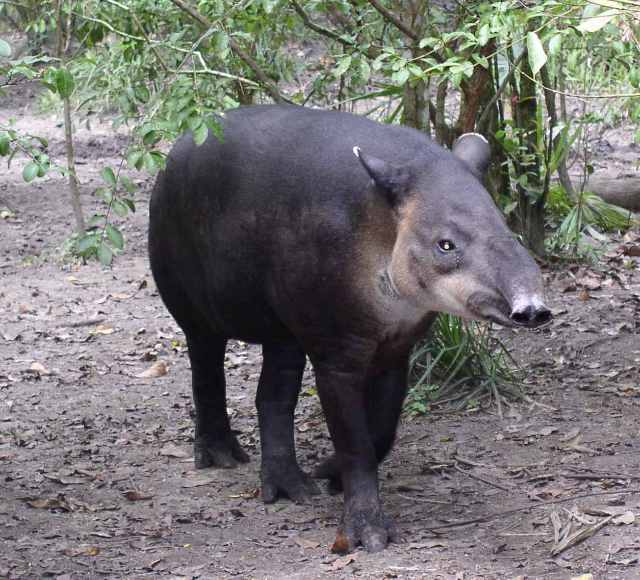
Baird’s tapir Almost guaranteed in season
The Petén Reserve’s lowland forests come alive at dawn with the slow, deliberate movements of Baird’s tapir. Along forest roads in Laguna del Tigre and Sierra del Lacandón, tapirs return from nocturnal feeding at streams. These shy mammals require quiet drives and early starts to catch glimpses.
Conservation: Endangered: habitat loss and hunting pressure threaten remaining populations.
Scarlet macaw Almost guaranteed in season
Before the sun rises over Tikal’s ancient temples, scarlet macaws fly overhead or perch in cavity trees above the ruins. Their bright red, yellow, and blue feathers stand out against the green forest. The Petén’s continuous forest corridor supports Guatemala’s largest macaw populations, best seen on early visits before crowds.
Jabiru Almost guaranteed in season
Soaring high over the Petén wetlands near Tikal, the massive white jabiru stork with its red neck commands attention. Nesting trees in the Aguas Turbias area attract specialist birding tours, while the wetlands provide a quiet backdrop for spotting these giants in flight or at their nests.
Yucatán spider monkey Almost guaranteed in season
The canopy walkways of Tikal National Park offer an immersive experience with Yucatán spider monkeys. Their dawn calls echo above temple plazas as troops swing through the treetops. Quiet observation from these elevated trails makes near-certain sightings possible for patient travelers.
Conservation: Endangered: hunting and habitat loss have reduced numbers.
White-nosed coati Almost guaranteed in season
White-nosed coatis forage in groups of up to 30 around Tikal’s pyramid areas and picnic grounds. Their flexible noses root through leaf litter in full daylight, completely ignoring tourists. These social mammals provide lively, approachable encounters along forest edges and ruins.
Blue morpho butterfly Almost guaranteed in season
Blue morpho butterflies flash through shaded forest corridors at Tikal National Park and Biotopo del Quetzal. Their electric blue wings catch the eye at eye level along trails, especially from May through October. Quiet walks in these areas offer steady chances to spot these large, colorful insects.
Pacific tree frog Almost guaranteed in season
Night walks in Tikal during the wet season reveal Pacific tree frogs clinging to broad leaves near ponds and roadside ditches. Their pale green bodies blend with vegetation, while calling choruses fill the air around forest lodges. These frogs are a subtle but constant presence in lowland forests.
What you’ll find across Guatemala’s wildlife habitats
Guatemala offers a diverse range of wildlife encounters spanning cloud forests, lowland jungles, and wetlands. Each habitat presents a distinct cast of species, making multi-day stays essential to absorb the full variety. This section guides you beyond the usual snapshots into the rhythms and secrets of these wild places.
Jaguar
At dawn near Temple IV in Tikal National Park, the dense jungle hums with life as the first light filters through the canopy. You move quietly along the trail with a skilled guide who knows the jaguar’s calls and patrol routes. The air is thick with anticipation. Suddenly, the silhouette of a Panthera onca appears, poised on a fallen log, eyes scanning before slipping silently back into shadow. The ruins provide a surreal backdrop to this apex predator’s domain.
Why this reserve: Tikal’s combination of ancient ruins and extensive jungle creates a unique jaguar habitat rarely matched elsewhere. The park’s protected corridors and expert local guides increase the chances of sightings, especially near Temple IV at dawn, making it the top choice for this species in Guatemala.
What most visitors miss: Many miss how jaguars use the ruins not just as territory markers but as vantage points for hunting small prey active at dawn. Secondary species like ocelots and tayras also share this microhabitat, visible only to patient observers.
Conservation: The jaguar is Near Threatened due to habitat loss and fragmentation. Tikal serves as a crucial stronghold linking populations across Central America. Conservation efforts focus on anti-poaching patrols and maintaining forest connectivity to support genetic diversity.
| How to see | Book a dawn trekking tour with an experienced guide familiar with jaguar activity patterns; multi-day stays increase chances. Book this tour |
| Ethical note | Maintain distance and silence; do not attempt to approach or feed jaguars to avoid disrupting their natural behavior. |
| Cost | ~$120 – $160 including guide and park entry for a half-day dawn trek. |
Yucatán spider monkey
High in the canopy above Tikal, the dawn chorus bursts with the loud, distinctive calls of Ateles geoffroyi yucatanensis. As you walk the canopy trails, troops swing effortlessly between branches, their long limbs and prehensile tails propelling them across the sky. The dense foliage filters sunlight into mottled patterns, and the monkeys’ social chatter echoes across the temple plazas below, blending jungle and ancient stone into one scene.
Why this reserve: Tikal’s well-maintained canopy walkways and extensive forest cover offer near-certain sightings of spider monkey troops. The park’s protection of large, contiguous forest patches supports a healthy population, unlike more fragmented areas.
What most visitors miss: Spider monkeys show complex social behavior rarely observed by casual visitors, including grooming rituals and territorial displays at dawn when the forest is quiet.
Conservation: The species is Endangered due to habitat destruction and hunting. Tikal’s protected status and ongoing habitat restoration are vital for maintaining these primates’ numbers.
| How to see | Join early-morning canopy walks with a guide who knows troop locations; a full-day visit improves observation quality. Book this tour |
| Ethical note | Avoid loud noises and sudden movements to prevent stress; do not feed or touch them. |
| Cost | ~$80 – $130 for guide and park entry, including canopy access. |
Baird’s tapir
In the quiet pre-dawn hours along Petén’s forest roads, the heavy, deliberate steps of Tapirus bairdii break the silence. Emerging from thick undergrowth toward a stream, a mother and calf move slowly, their dark bodies contrasting with the mist rising off the water. The tapirs’ shy but steady presence in this vast lowland forest feels like a glimpse into a primeval world, where time moves with the rhythm of the forest.
Why this reserve: The Petén’s Maya Biosphere Reserve, including Laguna del Tigre and Sierra del Lacandón, holds Guatemala’s best Baird’s tapir populations. Its expansive, undisturbed lowland forests and well-managed forest roads allow for dawn drives that maximize tapir encounters.
What most visitors miss: Tapirs often return from nocturnal feeding at streams, a behavior most visitors miss by arriving midday. The same habitat supports jaguars and ocelots, creating a layered predator-prey dynamic.
Conservation: Endangered due to deforestation and hunting, Baird’s tapir populations rely on protected reserves like Petén. Active conservation includes anti-poaching patrols and habitat connectivity initiatives.
| How to see | Arrange dawn forest drives with operators experienced in tapir behavior; multi-day bookings improve success. Book this tour |
| Ethical note | Keep a respectful distance and avoid flash photography to prevent disturbing these nocturnal feeders. |
| Cost | ~$100 – $150 including guide and reserve access fees. |
Resplendent quetzal
In the cloud forest near Cobán, the vibrant green and red plumage of the Pharomachrus mocinno flashes through misty branches. The quetzal perches quietly among aguacatillo trees, feeding slowly as you listen to its soft whistles. The cool, humid air carries the scent of moss and damp earth, and the forest feels alive with subtle movement, every leaf and twig part of this delicate highland ecosystem.
Why this reserve: Biotopo del Quetzal protects prime cloud forest with abundant aguacatillo trees, creating an ideal feeding and nesting habitat. Its proximity to Cobán allows easier access while maintaining pristine conditions.
What most visitors miss: Quetzals shift elevation seasonally following fruiting cycles, a migration detail many miss by visiting only once. The forest also hosts rare hummingbirds and toucans.
Conservation: Near Threatened due to habitat loss, ongoing reforestation and community-based conservation projects in the Biotopo aim to secure nesting sites and food trees.
| How to see | Book guided trekking tours focusing on early morning feeding spots; half-day tours suffice. Book this tour |
| Ethical note | Do not disturb nesting sites or attempt to attract quetzals with calls or food. |
| Cost | ~$60 – $90 including guide and entrance fees. |
Scarlet macaw
At dawn, the skies above Tikal’s temples fill with flashes of red, blue, and yellow as Scarlet macaws take flight. Ara macao pairs perch atop cavity trees near ancient ruins, their raucous calls echoing through the Petén forest corridor. Watching these large, colorful birds wheel and dive against the backdrop of Mayan stonework combines wildlife spectacle with cultural history in one unforgettable moment.
Why this reserve: Tikal and the Petén’s continuous forest corridors support Guatemala’s largest Scarlet macaw populations. The nesting cavity trees above temples provide secure breeding sites hard to find elsewhere.
What most visitors miss: Macaws engage in social bonding and pair maintenance behaviors at dawn, including synchronized calling and mutual preening, often overlooked by casual visitors.
| How to see | Visit early morning before tourist crowds with a guide skilled in bird behavior; half-day tours are effective. Book this tour |
| Ethical note | Observe without noise or flash to avoid disturbing nesting pairs. |
| Cost | ~$70 – $110 including guide and park entry. |
Jabiru
The largest flying bird in the Americas, Jabiru mycteria, soars high over Petén wetlands near Tikal. Their massive white bodies and bright red necks stand out against green canopy and blue sky. At nesting sites in the Aguas Turbias area, you can watch adult jabirus feeding chicks, a slow, deliberate process that contrasts with their aerial grace. The wetlands’ quiet stillness enhances the impact of these enormous birds in flight.
Why this reserve: The Petén wetlands provide ideal breeding grounds with abundant fish and safe nesting trees. Specialist birding tours access active nests rarely disturbed by general visitors.
What most visitors miss: Jabirus use thermal air currents for effortless soaring, a behavior best observed mid-morning when thermals are strongest.
| How to see | Join specialist birding tours focusing on Aguas Turbias nests; half-day or full-day trips recommended. Book this tour |
| Ethical note | Maintain distance from nesting trees and avoid loud noises to prevent nest abandonment. |
| Cost | ~$90 – $140 including guide and wetland access. |
White-nosed coati
In Tikal’s pyramid areas and picnic grounds, bands of up to 30 Nasua narica forage openly. Their flexible noses root through leaf litter while they chatter and scamper in broad daylight, unconcerned by human presence. The group dynamics add lively movement against the ancient stone backdrop, offering a chance to observe social foraging behavior up close.
Why this reserve: Tikal’s combination of forest edges and open ruins creates prime habitat for coatis. The steady flow of visitors provides food scraps that encourage their presence but does not replace natural foraging.
What most visitors miss: Coatis communicate with a range of vocalizations and body language, especially during group foraging, a behavior easy to overlook.
| How to see | Explore Tikal’s ruins independently or with a guide; sightings are common throughout the day. |
| Ethical note | Do not feed coatis to avoid dependency and aggressive behavior. |
| Cost | ~$40 – $70 for park entry and optional guide. |
Pacific tree frog
During wet season night walks in Tikal, pale green Smilisca phaeota cling to broad leaves near pond edges and roadside ditches. Their calls form a chorus that fills the humid air as they remain motionless, blending into the vegetation. The experience is a quiet immersion in the lowland forest’s nocturnal world, where small amphibians dominate the soundscape.
Why this reserve: Tikal’s wetlands and forest pools provide ideal breeding and calling sites. Night walks organized by local lodges allow close observation without disturbing the frogs’ natural behavior.
What most visitors miss: The frogs’ seasonal choruses peak during wet months, a phenomenon many miss outside May to October.
| How to see | Join guided night walks during the wet season; half-night tours are standard. |
| Ethical note | Avoid handling frogs and keep lights dim to minimize disturbance. |
| Cost | ~$30 – $50 including guide and access. |
Blue morpho butterfly
In Tikal’s shaded forest corridors, brilliant blue wings of Morpho peleides flash at eye level as they flutter between trees. Their iridescent color contrasts with the dark understory as they feed and glide slowly through the humid air. The cloud forest of Biotopo del Quetzal offers a similar spectacle, where these butterflies share space with resplendent quetzals, creating a layered visual tapestry.
Why this reserve: Tikal and Biotopo del Quetzal provide ideal habitats with dense forest cover and abundant host plants. The combination of lowland and cloud forest allows extended seasonal sightings.
What most visitors miss: Blue morphos spend mornings basking with wings open to regulate temperature, a behavior not often seen by visitors arriving later.
| How to see | Walk forest trails with a naturalist guide during the day; sightings common May through October. |
| Ethical note | Do not capture or handle butterflies; observe without interfering. |
| Cost | ~$50 – $80 including guide and park entry. |
Book wildlife tours in Guatemala
Compare guided safaris, nature walks, and reserve tours from local operators.
Which reserves to visit in Guatemala
Guatemala’s reserves range from ancient jungle ruins to cloud forests and wetlands, offering diverse wildlife viewing opportunities across ecosystems.
Tikal National Park
Jaguar sightings near Temple IV and near-certain Yucatán spider monkey troops in the canopy make Tikal a wildlife and culture hotspot.
How to reach: Reach from Flores by shuttle or taxi, about a 1.5-hour drive through Petén rainforest.
Park fee: $20 – $30 park entry
Petén Reserve (Maya Biosphere Reserve)
Largest lowland forest with Baird’s tapirs, scarlet macaws, and Jabiru storks in wetlands; ideal for dawn forest road drives and wetland hides.
How to reach: Base in Flores or San Benito; rent a 4WD or join guided tours; 1 – 3 hours to key sites.
Park fee: varies by zone, typically $10 – $25
Biotopo del Quetzal
Cloud forest sanctuary for resplendent quetzal with reliable sightings around feeding aguacatillo trees near Cobán.
How to reach: Drive 1 hour from Cobán by local bus or taxi to cloud forest trails.
Park fee: $10 – $15
When to visit Guatemala for wildlife
December through February offers peak wildlife sightings and dry conditions for easier access to reserves.
Peak window: December to February delivers the best combination of dry weather and peak activity for jaguars, scarlet macaws, and Baird’s tapirs.
Avoid: May to October sees heavy rains causing road closures and fewer animal sightings due to breeding and dense vegetation.
Dry season lowers water levels, concentrating animals near water sources and improving trail access. Wet season floods some forest roads and triggers breeding cycles that reduce visibility. Vegetation shifts from lush green to drier tones, affecting animal movement patterns.
Jaguar sightings peak near Tikal’s Temple IV at dawn before crowds arrive.
Scarlet macaws perform dawn flyovers above Tikal’s temples with Guatemala’s largest population active.
Resplendent quetzal activity peaks in cloud forests near Biotopo del Quetzal.
Yucatán spider monkeys call loudly at dawn along Tikal’s canopy trails.
Baird’s tapirs are highly visible during dawn drives in the Petén Reserve.
Jabiru storks nest actively in Petén wetlands, visible soaring over forest.
White-nosed coatis forage boldly in daylight around Tikal’s ruins.
What a wildlife trip in Guatemala costs
Daily estimate: $90 – $140 per day covers guide, park fees, accommodation, and transport.
| Cost component | What to expect |
|---|---|
| Guide fee | Private wildlife guide from $40 per day, essential for calls and microhabitat knowledge. |
| Park entry | Tikal and other parks charge $20 – $30 per day per person. |
| Accommodation | Eco-lodges near reserves run $50 – $70/night with basic comfort See lodges. |
| Transport | Shuttle or private taxi rides cost $20 – $40 per trip between hubs and reserves. |
Money saver: Book multi-day tours with one local guide in Petén to reduce daily guide fees and avoid expensive last-minute transport.



Book wildlife tours
Compare guided tours, safaris, and nature experiences in Guatemala.
Wildlife ethics in Guatemala: what to know before you book
Guatemala’s diverse ecosystems demand responsible wildlife tourism to protect fragile habitats and endangered species. Ethical choices support conservation and local communities.
Do
- Book guides certified by local conservation organizations with deep habitat knowledge.
- Choose operators limiting group sizes to minimize wildlife disturbance.
- Ask about no-captive-animal policies before booking any wildlife experience.
Don’t
- Avoid any tours offering captive selfie opportunities or cub petting.
- Never support tiger temples, elephant rides, or similar exploitative attractions.
- Do not use playback calls or baiting that stress animals or disrupt natural behavior.
Operator checklist
Vet operators for local community guides in each ecosystem zone. Confirm group size limits per visit. Verify partnerships with NGOs or conservation bodies. Ensure no captive or baited wildlife interactions are involved.
Safety and preparation for wildlife in Guatemala
Safety: Jaguars in Tikal are dangerous; maintain distance and follow guide instructions. Malaria risk exists in lowland forests, especially Petén. Leech encounters can happen in wet cloud forests, so prepare accordingly.
Gear to bring
- Carry a waterproof layer for cloud forest humidity and sudden rain.
- Use sun protection for arid zones to avoid sunburn during dry hikes.
- Wear good traction boots to handle slippery or uneven wetland boardwalks.
- Bring insect repellent to reduce bites in wetland and forest areas.
Health: Get recommended vaccines and malaria prophylactics before travel. Consult a travel health clinic: recommendations change.
Guatemala wildlife travel FAQ
1Are Jaguar sightings actually common at Tikal National Park? What’s the real probability?
Jaguar sightings at Tikal are rare but possible, mostly near Temple IV at dawn. Expect low odds even in peak months; patience and a skilled guide improve chances.
2Is 1 day at Petén Reserve enough to see Baird’s tapir, or do I need 2+ days?
One day in Petén Reserve is usually not enough to reliably see Baird’s tapir. Multi-day stays increase your chances, especially with dawn drives along forest roads.
3How do I vet a multi-ecosystem operator in Guatemala to ensure ethical wildlife tours?
Confirm the operator employs local guides from each habitat zone, limits group sizes per ecosystem, and partners with conservation NGOs. Ask for written no-captive-animal policies.
4Is baiting animals for photos offered by some operators actually OK in Guatemala?
Baiting wildlife is unethical and disrupts natural behavior. Ethical operators in Guatemala strictly prohibit baiting or feeding animals for photos.
5Are Resplendent quetzal sightings common in Biotopo del Quetzal during peak months?
Yes, Resplendent quetzal sightings are frequent in Biotopo del Quetzal from March through June, especially near aguacatillo feeding trees at dawn.
6Is Tikal National Park or Sierra del Lacandón better for spotting Baird’s tapir on a multi-day trip?
Sierra del Lacandón offers better tapir sightings due to larger intact lowland forests, but Tikal’s Maya Biosphere Reserve also holds tapirs. Multi-day trips improve odds in both.
7Is $150 realistic for a full-day guided birding tour to see Jabiru storks in Petén wetlands?
$150 is a realistic price for a specialist birding tour to Petén wetlands, including transport and guide fees, especially during peak Jabiru breeding season.
8Can I combine cloud forest and dry scrub wildlife observation in one trip around Cobán?
Yes, operators offering multi-ecosystem tours near Cobán combine cloud forest and dry scrub visits with local guides, but expect to limit group size and bring waterproof gear.