


Iceland‘s beauty is defined by its dramatic landscapes, where glaciers meet volcanic terrain and the northern lights dance across the sky. The interplay of light and shadow creates a constantly changing canvas, making every visit visually striking. Unlike its neighbors, Iceland offers a raw, untamed beauty that captivates the senses and invites exploration.
From the black sand beaches of Vík í Mýrdal to the vibrant colors of Húsavík‘s harbor, the selected 13 places showcase a range of textures and moods. Each location, like the serene fjords of Ísafjörður, offers a unique perspective on Iceland’s natural wonders. If you’re seeking a cookie-cutter vacation, stop reading; this guide is for those craving adventure and beauty.
Key takeaways
- Visit Vík í Mýrdal at sunrise for the best light on its black sand beaches.
- Explore Húsavík in summer for whale watching; it’s the peak season for sightings.
- Plan a trip to Ísafjörður in October when the fall colors transform the landscape.
- Combine Reykjavík and Vík í Mýrdal for a diverse experience of urban and coastal beauty.
- Hike to the viewpoint above Stykkishólmur for a panoramic view of the Snæfellsnes Peninsula.
- Don’t miss the midnight sun in June for extended daylight hours in Akureyri.
Overview
| Place | Vibe | Beauty signature | Peak moment | Verdict |
|---|---|---|---|---|
| Reykjavík | Colorful urban landscape | Vibrant buildings with striking street art | Summer during the midnight sun | A lively city that suits urban explorers and culture enthusiasts. |
| Akureyri | Charming northern town | Flower-filled gardens against a mountain backdrop | Late spring when flowers bloom | Ideal for those seeking a quaint, picturesque town experience. |
| Ísafjörður | Remote fjord village | Dramatic cliffs rising from deep blue waters | Autumn for stunning fall foliage | Perfect for adventurers and nature lovers; skip if short on time. |
| Húsavík | Whale-watching hub | Colorful harbor with boats and mountains | Summer for optimal whale sightings | A must for wildlife enthusiasts; less appealing in winter. |
| Vík í Mýrdal | Coastal black sand beach | Basalt columns and dramatic sea stacks | Sunrise for magical light conditions | A stunning coastal spot; visit early to avoid crowds. |
| Stykkishólmur | Scenic coastal town | Picturesque harbor with colorful houses | Summer for clear skies and vibrant colors | Great for a relaxed visit; skip if you’re in a rush. |
| Höfn | Glacier-viewing town | Views of Vatnajökull glacier and surrounding mountains | Late spring for melting ice and clear views | Essential for glacier enthusiasts; not much else nearby. |
| Seyðisfjörður | Picturesque fjord village | Colorful wooden houses with a backdrop of mountains | Summer for vibrant colors and festivals | Ideal for photographers; less accessible in winter. |
| Borgarnes | Historical coastal town | Views of the surrounding mountains and fjords | Autumn for stunning landscapes | A good stop for history buffs; not a destination on its own. |
| Kirkjubæjarklaustur | Rural village with history | Unique rock formations and lush landscapes | Summer for the best hiking conditions | Great for nature lovers; skip if you prefer urban settings. |
| Eyjafjörður | Scenic fjord region | Stunning views of mountains and sea | Summer for clear skies and wildlife | Perfect for outdoor activities; not ideal in winter. |
| Egilsstaðir | Gateway to East Iceland | Lush valleys and nearby lakes | Summer for vibrant landscapes | A good base for exploring; not a highlight itself. |
| Grindavík | Geothermal coastal town | Surreal landscapes with geothermal activity | Year-round for unique geological features | Interesting for geothermal enthusiasts; limited attractions otherwise. |
Where to find them
The most beautiful places
Reykjavík – Compact Harbor Views and Urban Design

Reykjavík’s colorful tin houses cluster tightly around a small harbor bay, framed by distant hills and the North Atlantic. The city’s walkable core fits iconic landmarks like Hallgrímskirkja church and the glassy Harpa concert hall into roughly one square kilometer. Expect sharp contrasts between modern architecture and old harbor charm, with the Sun Voyager sculpture catching late-afternoon light on the waterfront promenade.
Two nights cover Reykjavík’s visual highlights without rushing. Skip the Blue Lagoon day trip here – save it for the airport stopover to avoid losing half a day. The Hallgrímskirkja tower offers the cheapest aerial city view and a faster queue than Perlan. Explore the old harbor at dusk for the best light and fewer crowds.Find a tour →
- Peak moment: Midsummer evenings when the sun barely sets
- Stay: 2 days
- Best for: Pick Reykjavík if you want compact urban design and harbor views; skip if you prefer natural landscapes or long outdoor hikes.
- ▸ Colorful tin houses tightly packed around Faxaflói Bay
- ▸ Hallgrímskirkja’s soaring tower piercing the skyline
- ▸ Harpa concert hall’s angular glass facade reflecting sunset hues
Best vantage: From Hallgrímskirkja tower at sunset, looking down over the harbor and city rooftops
Photo moments (4)
- – Photograph the Sun Voyager sculpture glowing on the waterfront at golden hour
- – Capture the geometric reflections on Harpa’s glass facade at dusk
- – View the city’s colorful rooftops from Hallgrímskirkja’s observation deck
- – Scan the harbor area for fishing boats and old warehouses bathed in soft light
Two nights are enough to see Reykjavík’s visual highlights; avoid the Blue Lagoon day trip from town – it wastes valuable sightseeing time.
Skip whale and puffin tasting menus and the Phallological Museum unless you want gimmicks; Blue Lagoon is better saved for the airport stopover.
Akureyri – Fjord-Side Charm with Arctic Botanical Colors

Akureyri perches on the head of Eyjafjörður fjord, its compact town climbing from harbor to hilltop church. The Arctic botanical garden bursts with unexpected greenery near the Arctic Circle, while the town’s heart-shaped traffic lights add a quirky local touch. The fjord’s calm waters reflect the surrounding hills, creating a peaceful visual contrast to the vibrant town center.
Sleep in Akureyri, not Mývatn, for a real food and bar scene and easier access to northern sights. Start early to beat tour buses to Dimmuborgir’s lava formations. The botanical garden and hilltop church offer quiet, photogenic spots away from crowds.Find a tour →
- Peak moment: Early summer mornings before tour buses arrive
- Stay: 1 – 2 nights
- Best for: Pick Akureyri if you want a compact northern hub with culture and fjord views; skip if you prefer remote wilderness stays.
- ▸ Arctic botanical garden’s lush greenery against fjord backdrop
- ▸ Akureyrarkirkja church’s white facade crowning the hillside
- ▸ Calm Eyjafjörður waters reflecting surrounding hills and town
Best vantage: From the hill near Akureyrarkirkja, looking down over the harbor and fjord at midday
Photo moments (4)
- – Frame the hilltop church with flowering plants in the botanical garden foreground
- – Catch reflections of colorful houses on the calm fjord surface
- – Spot the heart-shaped red traffic lights glowing at dusk
- – View the town climbing the hillside with fjord and mountains beyond
Akureyri is the best northern base for Ring Road drivers, offering real nightlife and food; skip Mývatn lodging to avoid missing these perks.
Skip sleeping at Mývatn; base in Akureyri for better dining and early access to northern natural sights.
Ísafjörður – Fjord-Walled Timber Town at the Edge

Ísafjörður sits on a narrow sand spit inside a steep fjord, surrounded by sheer mountain walls plunging into the sea. The oldest cluster of 18th-century timber houses in Iceland lines Aðalstræti street, contrasting sharply with the dramatic natural setting. The town’s compact harbor area feels tucked into a vertical amphitheater of rock and water.
The mountain pass drive into Ísafjörður is half the experience; in summer, take the Westfjords Way for reliable road conditions. Spend at least one night here to soak in the fjord’s visual drama and explore the timber houses. Avoid winter driving as mountain passes close without warning.Find a tour →
- Peak moment: High summer afternoons with clear skies and open mountain passes
- Stay: 1 – 2 nights
- Best for: Pick Ísafjörður if you want remote fjord scenery and historic timber houses; skip if you dislike mountain driving or winter weather risks.
- ▸ Cluster of 18th-century timber houses on narrow Aðalstræti street
- ▸ Vertical fjord walls rising sharply on both sides of the harbor
- ▸ Sand spit setting with calm water reflecting mountain cliffs
Best vantage: From the harbor pier looking inland to the timber houses framed by steep cliffs
Photo moments (4)
- – Photograph the oldest timber houses with fjord cliffs behind
- – Capture reflections of mountains and houses on calm harbor water
- – View the narrow sand spit from a hilltop for full fjord enclosure
- – Spot fishing boats moored against the dramatic fjord backdrop
Ísafjörður’s fjord setting and timber architecture reward at least one night; avoid winter driving and fly in off-season.
Skip winter drives over mountain passes; fly from Reykjavík when roads close unexpectedly.
Húsavík – Whale Bay with Wooden Church Views

Húsavík is a small wooden harbor town on Skjálfandi Bay, framed by open water and distant hills. The 1907 wooden church overlooks the harbor, adding a quaint silhouette against the sky. The bay’s calm surface often hosts whales, making the water the town’s dominant visual feature, with boats dotting the scene and the Whale Museum anchoring the waterfront.
Book carbon-neutral sail-boat whale tours with North Sailing for quieter trips and better sightings; avoid diesel RIBs that disturb the water. A full day covers the town’s harbor views and whale watching. The GeoSea geothermal sea baths offer a unique visual and relaxing spot overlooking the bay.Find a tour →
- Peak moment: Summer mornings with clear skies and calm seas
- Stay: Full day
- Best for: Pick Húsavík if whale watching with high success rates matters; skip if you prefer urban or mountain landscapes.
- ▸ Calm Skjálfandi Bay waters dotted with whale-watching boats
- ▸ 1907 wooden church’s simple silhouette against harbor skies
- ▸ Whale Museum’s harbor-front location with maritime views
Best vantage: From the harbor promenade near the Whale Museum, looking across the bay toward open water
Photo moments (4)
- – Frame the wooden church with fishing boats in the foreground
- – Catch whale spouts and breaches against the bay’s horizon
- – Photograph the Whale Museum with boats moored nearby
- – View the bay from GeoSea baths with steam rising over water
Choose carbon-neutral sailboat whale tours for better encounters and less noise; skip diesel RIBs that disrupt the experience.
Skip diesel RIB tours; opt for quieter sail-boat trips with no engine wake.
Vík í Mýrdal – Black Sand and Red-Roofed Church

Vík í Mýrdal is a small village under the shadow of Mýrdalsjökull glacier and Katla volcano. Its red-roofed hilltop church overlooks the black-sand Reynisfjara beach, where basalt columns rise sharply and Reynisdrangar sea stacks jut from the ocean. The village sits at the edge of a vast black-sand desert, creating a stark contrast between volcanic earth and icy glacier peaks.
Sleep in Vík to reach Reynisfjara before 9 AM tour buses flood the beach. Skip the crowded Black Beach Restaurant and eat at Suður-Vík or Skool Beans coffee instead. One night is enough to cover the village and beach, with early mornings offering the clearest views and fewer people.Find a tour →
- Peak moment: Early morning before 9 AM tour buses arrive
- Stay: 1 night
- Best for: Pick Vík for south-coast black-sand beach views and glacier backdrops; skip if you dislike crowds or want quieter beaches.
- ▸ Red-roofed Reyniskirkja church perched on a grassy hill
- ▸ Black-sand Reynisfjara beach with towering basalt columns
- ▸ Reynisdrangar sea stacks rising sharply from the ocean
Best vantage: From the hill near Reyniskirkja, looking down over Reynisfjara beach at sunrise
Photo moments (4)
- – Photograph basalt columns framing the black sand at Reynisfjara
- – Capture Reynisdrangar sea stacks silhouetted against morning light
- – View the red-roofed church with glacier peaks behind
- – Spot waves crashing on the black-sand shore with sea stacks
Sleep in Vík, not Hella, to beat crowds at Reynisfjara; avoid Black Beach Restaurant for better local food options.
Skip the Black Beach Restaurant due to poor food and crowds; reach Reynisfjara early to avoid tour buses.
Stykkishólmur – Pastel Harbor and Island Views

Stykkishólmur is a small harbor town on the north Snæfellsnes peninsula, with pastel-painted Norwegian-style timber houses clustered around a natural harbor. The modern Stykkishólmskirkja church crowns a hill above town, while the Library of Water art installation overlooks the fjord scattered with islands. The town’s calm harbor and colorful buildings create a serene coastal scene.
Use Stykkishólmur as a base for the full Snæfellsnes peninsula loop. Avoid rushing the peninsula in one afternoon; spend a night here to enjoy the town’s harbor views and island panoramas. Ferry connections to the Westfjords add to the town’s visual appeal.Find a tour →
- Peak moment: Late afternoon with soft light on pastel facades
- Stay: 1 night
- Best for: Pick Stykkishólmur if you want pastel coastal charm and island views; skip if you prefer inland or urban destinations.
- ▸ Pastel-painted timber houses lining the natural harbor
- ▸ Modern Stykkishólmskirkja church perched on a hill
- ▸ Library of Water installation overlooking island-dotted fjord
Best vantage: From the hill near Stykkishólmskirkja, looking down over the harbor and Breiðafjörður islands
Photo moments (4)
- – Frame colorful timber houses with calm harbor waters
- – Capture the church’s angular silhouette against sky
- – View the fjord’s scattered islands from the waterfront
- – Photograph the Library of Water installation with sea backdrop
Sleep in Stykkishólmur to fully explore Snæfellsnes peninsula; don’t rush the peninsula loop in a single afternoon.
Skip rushing Snæfellsnes in one day; stay overnight in Stykkishólmur for better light and less driving stress.
Höfn – Glacier Tongues and Langoustine Harbor

Höfn is a small harbor town on Hornafjörður lagoon, with the vast Vatnajökull glacier and its ice tongues looming on the northern and western skyline. The town’s waterfront features langoustine restaurants and fishing boats, while the nearby Vestrahorn mountain at Stokksnes adds dramatic peaks to the horizon. The lagoon’s calm waters reflect glacier ice and mountain shadows.
One night in Höfn covers the town and a langoustine dinner. Skip midday visits to Stokksnes and aim for sunset to capture the mountain’s best light. Pakkhús restaurant offers better setting and shorter queues than Humarhöfnin. Höfn is a key stop on the Ring Road’s long southeast stretch.Find a tour →
- Peak moment: Sunset for soft light on mountain and water
- Stay: 1 night
- Best for: Pick Höfn if you want glacier views and seafood focus on the southeast Ring Road; skip if you dislike small towns or seafood.
- ▸ Vatnajökull glacier tongues visible behind town skyline
- ▸ Langoustine boats and restaurants lining the lagoon waterfront
- ▸ Vestrahorn mountain’s jagged peaks at nearby Stokksnes
Best vantage: From Stokksnes beach at sunset, looking toward Vestrahorn mountain with lagoon reflections
Photo moments (4)
- – Photograph Vestrahorn’s peaks mirrored on lagoon waters
- – Capture langoustine boats moored along the harbor strip
- – View Vatnajökull glacier tongues from town outskirts
- – Frame langoustine restaurants with mountain backdrop at dusk
Choose Pakkhús for langoustine with better setting and shorter lines; visit Stokksnes at sunset, not midday.
Skip midday visits to Stokksnes; go for sunset light and avoid long restaurant queues by choosing Pakkhús.
Seyðisfjörður’s Rainbow Street and Fjord Walls

Seyðisfjörður sits at the head of a 10.5-mile (17 km) fjord flanked by steep cliffs. The village’s rainbow-painted main street leads directly to a striking blue wooden church, framed by towering fjord walls. This vivid color contrast punctuates the quiet harbor scene.
Drive in over the Fjardarheidi pass timed for golden hour to catch the fjord’s descent in warm light. The road closes in heavy snow, so check road.is November to April before committing. One night here lets you soak in the village’s unique visual signature and ferry arrivals.Find a tour →
- Peak moment: Golden hour descent over Fjardarheidi pass
- Stay: 1 night
- Best for: Pick this for an Eastfjords detour or ferry arrival experience; skip if you’re not driving the fjord or arriving by ferry.
- ▸ Rainbow-painted street leading to the blue 1922 wooden church
- ▸ 17 km fjord with sheer cliffs rising on both sides
- ▸ Harbor views framed by steep mountains and colorful houses
Best vantage: Stand at the foot of the rainbow street facing the blue church with fjord cliffs rising behind for the classic shot.
Photo moments (4)
- – Frame the blue wooden church at the end of the rainbow street
- – Capture the fjord cliffs from the harbor edge looking inland
- – Watch the Norrona ferry arrive with the fjord cliffs as backdrop
- – Shoot the colorful houses lining the steep fjord walls
Seyðisfjörður’s descent over Fjardarheidi pass is a postcard moment best timed for late afternoon light; avoid winter closures by checking conditions in advance.
Skip the Fjardarheidi pass drive in heavy snow without confirming road status; the route closes often November to April.
Borgarnes’ Saga Museum and Peninsula Views

Borgarnes stretches along a peninsula in Borgarfjörður inlet, surrounded by low hills and water. The town’s small size contrasts with its cultural weight, anchored by the Settlement Centre museum focused on Norse settlement and Egil’s Saga. The waterside setting adds quiet charm.
Use Borgarnes as a practical Ring Road stop north of Reykjavík. The Settlement Centre offers the country’s best saga primer, and its restaurant serves well-rated lamb soup. Skip lingering in town beyond the museum and meal; keep moving toward Snæfellsnes or the Westfjords.
- Peak moment: Late morning for museum visits and light on the water
- Stay: Half day or short overnight
- Best for: Pick this as your first Ring Road overnight out of Reykjavík; skip if you want to avoid practical stops and focus only on nature.
- ▸ Peninsula setting with views across Borgarfjörður inlet
- ▸ Settlement Centre’s modern architecture blending with coastal landscape
- ▸ Museum exhibits connecting landscape with Norse saga history
Best vantage: Walk the waterfront near the Settlement Centre for views across the inlet and peninsula contours.
Photo moments (4)
- – View the peninsula’s shape from the harbor edge
- – Photograph the Settlement Centre’s building against fjord water
- – Frame the inlet’s calm waters with low hills behind
- – Capture the town’s modest harbor with fishing boats
Borgarnes works best as a functional stop for fuel and food; the Settlement Centre is the only sightseeing highlight worth your time.
Skip Borgarnes as a sightseeing destination; focus on the Settlement Centre and its lamb soup, then move on.
Kirkjubæjarklaustur’s Lava Fields and Basalt Floor

Kirkjubæjarklaustur is a small green village surrounded by the vast 1783 Laki lava field and glacier rivers. Above it, the Systrafoss waterfall tumbles, while nearby Kirkjugólf reveals natural basalt columns weathered flat like a church floor. This mix of green and black textures defines the area.
This village is essential for Ring Road drivers needing fuel between Vík and Höfn. Fill up here without exception; prices are stable and the next station is far. Spend half a day exploring the lava fields and basalt formations with short walks around town.
- Peak moment: Afternoon light highlighting lava textures and waterfall spray
- Stay: Half day
- Best for: Pick this if driving the south coast needing fuel and short walks; skip if you don’t want to break your route for supplies.
- ▸ Expansive 1783 Laki lava fields with rugged black rock textures
- ▸ Systrafoss waterfall cascading above the village greenery
- ▸ Kirkjugólf’s flat basalt columns resembling a paved church floor
Best vantage: View Kirkjugólf basalt floor from the marked viewpoint just outside the village for its full geometric pattern.
Photo moments (4)
- – Frame the Systrafoss waterfall from the village edge
- – Capture the contrast of green village against black lava fields
- – Shoot Kirkjugólf basalt columns from above for pattern detail
- – View the vastness of the Laki lava field from nearby hills
Kirkjubæjarklaustur is a practical stop with unique geology; don’t risk running low on fuel, as the next pump is far away.
Skip waiting for cheaper fuel here; fill up immediately to avoid running out on the long stretch ahead.
Eyjafjörður’s Quiet East Shore and Fjord Scale
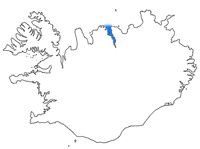
Eyjafjörður is Iceland’s longest fjord, stretching 37 miles (60 km) from the Greenland Sea to Akureyri. The fjord is ringed by thousand-foot mountains with dairy farms below and glaciers above. The east side offers a quieter farmland drive, contrasting with the busier west side near Dalvík.
Drive the east side via Grenivík to avoid cruise-bus crowds and still enjoy the fjord’s scale. This half-day loop delivers mountain-framed views and peaceful farmland scenes. Whale-watching tours depart from the west side, but the east side’s drive is more scenic and less congested.Find a tour →
- Peak moment: Midday for clear light on mountains and farmland
- Stay: Half-day loop drive
- Best for: Pick this for a slow, scenic drive around Iceland’s longest fjord; skip if you want whale watching or cruise activity.
- ▸ Long fjord flanked by steep, thousand-foot mountains
- ▸ Patchwork of dairy farms nestled below glacier-capped peaks
- ▸ Quiet farmland roads with open views of fjord walls
Best vantage: Drive the east shore road near Grenivík for uninterrupted fjord wall views with minimal traffic.
Photo moments (4)
- – View towering fjord walls from the east shore road
- – Frame dairy farms with glacier peaks in the background
- – Capture the fjord’s length from elevated roadside pull-offs
- – Spot whale-watching boats departing from the western shore
Eyjafjörður’s east side drive offers the best fjord scale without cruise-bus crowds; avoid the west side for a more peaceful experience.
Skip the busier west side near Dalví; it’s crowded with cruise buses and less scenic than the east shore.
Egilsstaðir’s Lakefront Hub and Floating Baths

Egilsstaðir is the largest town in east Iceland, sitting on the shore of Lagarfljót, a 15.5-mile (25 km) glacial lake fed by Vatnajökull meltwater. The town is functional, with supermarkets and a regional airport, but its standout feature is the Vök Baths, floating geothermal pools on the lake’s edge.
Use Egilsstaðir as your eastern base and launchpad for exploring the region. Skip touristy lagoons; the Vök Baths offer better prices and far fewer crowds. One night here balances practical needs with access to the lake’s calm waters and geothermal pools.
- Peak moment: Early evening for warm light on the lake and pools
- Stay: 1 night
- Best for: Pick this as your eastern Iceland base and gateway to Seyðisfjörður; skip if you want a purely scenic town.
- ▸ Calm glacial lake stretching 15.5 miles / 25 km with mountain reflections
- ▸ Floating geothermal pools blending into the lake environment
- ▸ Surrounding forested hills framing the lake’s shoreline
Best vantage: View Lagarfljót lake and Vök Baths from the lakeside promenade near town for water and pool perspectives.
Photo moments (4)
- – Frame the floating Vök Baths against the glacial lake
- – Capture reflections of surrounding hills on calm water
- – View the lake’s length from lakeside walking paths
- – Photograph steam rising from geothermal pools at dusk
Egilsstaðir is a practical hub with the Vök Baths as its main draw; skip busier tourist lagoons in favor of this quieter, cheaper option.
Skip the busier tourist lagoons elsewhere; Vök Baths offer better value and fewer crowds.
Grindavík’s Volcanic Edge and Lava Views

Grindavík is a south-coast fishing town on the Reykjanes peninsula, sitting near the Blue Lagoon. The area is shaped by ongoing Sundhnúkur volcanic eruptions since late 2023, with lava flows reshaping the landscape. The Kvika Geopark visitor center explains this active volcanic context.
Check safetravel.is before visiting due to changing access from eruptions. When open, the lava-flow viewpoints near Hagafell offer the closest legal views of fresh lava in Iceland. Half a day here delivers a sobering look at volcanic forces reshaping the peninsula.Find a tour →
- Peak moment: Clear days when eruption access is open and visibility is good
- Stay: Half day
- Best for: Pick this for Reykjanes day trips focused on volcanic landscapes; skip if eruptions limit access or you want stable terrain.
- ▸ Fresh lava flows visible from Hagafell viewpoints
- ▸ Volcanic landscape reshaped by recent Sundhnúkur eruptions
- ▸ Coastal fishing town with rugged volcanic backdrop
Best vantage: View fresh lava flows legally from Hagafell lava-flow viewpoints when eruption access allows.
Photo moments (4)
- – Frame fresh lava flows from Hagafell viewpoint platforms
- – Capture the contrast of black volcanic rock against ocean
- – View the Kvika Geopark center with volcanic displays
- – Photograph fishing boats with volcanic hills behind
Grindavík’s volcanic landscape is dynamic and compelling but requires careful planning; check safety updates before visiting.
Skip visiting without checking safetravel.is; parts of town and roads close during eruptions.
How to combine these places
Most travelers chain Reykjavík to Vík, missing the stunning fjords and coastal beauty of the north. Here is the better order.
Fjord and Coastal Wonders · 10 days
This route emphasizes Iceland’s dramatic coastal landscapes and fjords, starting from the vibrant capital and moving through breathtaking natural scenery. You’ll experience the contrast between urban culture and the serene beauty of the north. Perfect for those who want a mix of city life and nature.
Reykjavík (2 nights)
Reykjavík offers a vibrant urban start with cultural highlights before heading into nature.
Skip/swap: Skip if under 2 days; swap with Borgarnes for a quicker start.
Borgarnes (1 nights)
Borgarnes serves as a scenic stop with historical significance, setting the tone for the journey ahead.
Skip/swap: Skip if under 10 days; swap with Kirkjubæjarklaustur for more time in the south.
Stykkishólmur (1 nights)
Stykkishólmur’s colorful harbor and access to the Snæfellsnes peninsula enhance the coastal experience.
Skip/swap: Skip if pressed for time; swap with Vík for a more direct route.
Ísafjörður (2 nights)
Ísafjörður’s dramatic fjord setting and historical architecture provide a stunning contrast to previous stops.
Skip/swap: Skip if under 10 days; swap with Akureyri for a quicker route.
Húsavík (1 nights)
Húsavík is renowned for whale watching, adding a unique marine experience to the journey.
Skip/swap: Skip if under 10 days; swap with Akureyri for more time in the north.
Akureyri (2 nights)
Akureyri’s vibrant culture and botanical gardens provide a refreshing urban contrast before heading south.
Skip/swap: Skip if under 10 days; swap with Vík for a more direct route.
Vík í Mýrdal (1 nights)
Vík’s black sand beaches and dramatic sea stacks create a stunning finale to the coastal journey.
Skip/swap: Skip if under 10 days; swap with Höfn for more time in the southeast.
Höfn (1 nights)
Höfn’s proximity to Vatnajökull glacier and langoustine cuisine rounds out the scenic experience.
Skip/swap: Skip if under 10 days; swap with Seyðisfjörður for a different coastal experience.
Best for: Choose this route for a balanced mix of culture and stunning coastal scenery.
Southern Adventure Loop · 7 days
This route focuses on the iconic southern coast, maximizing time at key natural attractions while minimizing travel time. It’s ideal for those who want to experience Iceland’s most famous landscapes in a shorter timeframe.
Reykjavík (2 nights)
Reykjavík serves as a vibrant cultural hub before venturing into nature.
Skip/swap: Skip if under 2 days; swap with Borgarnes for a quicker start.
Vík í Mýrdal (2 nights)
Vík’s dramatic black sand beaches and sea stacks are a highlight of the southern coast.
Skip/swap: Skip if under 5 days; swap with Kirkjubæjarklaustur for a more direct route.
Kirkjubæjarklaustur (1 nights)
Kirkjubæjarklaustur offers unique geological features and is a practical stop along the Ring Road.
Skip/swap: Skip if under 5 days; swap with Höfn for more time in the southeast.
Höfn (2 nights)
Höfn’s stunning views of Vatnajökull and local seafood make it a perfect end to the southern adventure.
Skip/swap: Skip if under 5 days; swap with Seyðisfjörður for a different coastal experience.
Best for: This route is perfect for travelers focused on iconic southern landscapes and shorter travel times.
Which route fits you
For those with limited time, the Southern Adventure Loop offers a quicker route through iconic landscapes, ideal for a week-long trip. If you have more days, the Fjord and Coastal Wonders route provides a deeper exploration of both the north and south, maximizing scenic diversity. If you prefer a mix of culture and nature, choose route 1; if you want a fast-paced adventure, choose route 2.
Insider tip
The 6 AM Rule
Start your day early to experience Iceland’s beauty without the crowds. For example, visit Reynisfjara beach in Vík í Mýrdal before 9 AM to enjoy the stunning basalt columns and sea stacks without tour buses. Similarly, arrive at Hallgrímskirkja in Reykjavík right at opening for a peaceful view of the city. This strategy works best in the summer months when daylight lasts long.
Frequently asked questions
1Is Vík í Mýrdal or Höfn more beautiful in summer?
Vík í Mýrdal wins for summer beauty with its dramatic black-sand beaches and iconic Reynisfjara. The contrast of the white glacier against the black sand creates stunning visuals. Höfn, while picturesque with its glacier views, doesn’t match the unique coastal scenery of Vík. Pick Vík í Mýrdal for that quintessential Icelandic coastal experience.
2If I only have 5 days, which places are non-negotiable?
Prioritize Reykjavík, Vík í Mýrdal, and Akureyri for a well-rounded experience. Reykjavík offers culture and food, while Vík provides stunning coastal views. Akureyri serves as a base for exploring the north and is a charming town itself. This trio covers urban, coastal, and northern landscapes effectively.
3Can I see Reykjavík and Akureyri in the same trip without rushing?
Yes, you can see Reykjavík and Akureyri in the same trip without rushing. Drive the Ring Road from Reykjavík to Akureyri, which takes about 4.5 hours (around 250 miles / 400 km). Plan for at least two nights in Akureyri to explore the surrounding attractions like Mývatn and Húsavík. This route allows you to enjoy both urban and natural beauty.
4Which locked place is most worth a pre-dawn visit?
Vík í Mýrdal is most worth a pre-dawn visit for its stunning sunrise views over Reynisfjara beach. The soft morning light enhances the beauty of the basalt columns and sea stacks, creating a magical atmosphere. Arriving early also helps you avoid the crowds that flock to this popular spot later in the day.
5Which of these places is overrated for a first-time trip?
Skip the Blue Lagoon if you’re a first-time visitor; it’s often considered overrated due to its high prices and tourist crowds. Instead, opt for local geothermal pools like Sundhöllin in Reykjavík, which offer a more authentic experience. Prioritize places like Vík í Mýrdal and Akureyri for unique Icelandic beauty.
6Which place demands a specific vantage for the iconic shot?
Ísafjörður demands a specific vantage point for the best shots of its dramatic fjord setting. The view from the surrounding hills captures the essence of the town against the steep fjord walls. Visit during golden hour for the most stunning light, enhancing the natural beauty of the landscape.
7Is Akureyri or Húsavík better for whale watching?
Húsavík is better for whale watching, boasting the highest sighting rates in Iceland. Tours from Húsavík frequently encounter humpback and minke whales, making it a top choice for enthusiasts. While Akureyri offers access to whale-watching tours, Húsavík’s reputation and success rates make it the clear winner.
8Which place is more accessible for solo female travelers?
Reykjavík is more accessible for solo female travelers, with a vibrant atmosphere, walkable streets, and a strong local community. The city is safe and offers various accommodations and dining options. While Akureyri is also safe, Reykjavík provides more social opportunities and activities for solo travelers.
Some links on this page are affiliate links. We may earn a small commission at no extra cost to you when you book through them.