


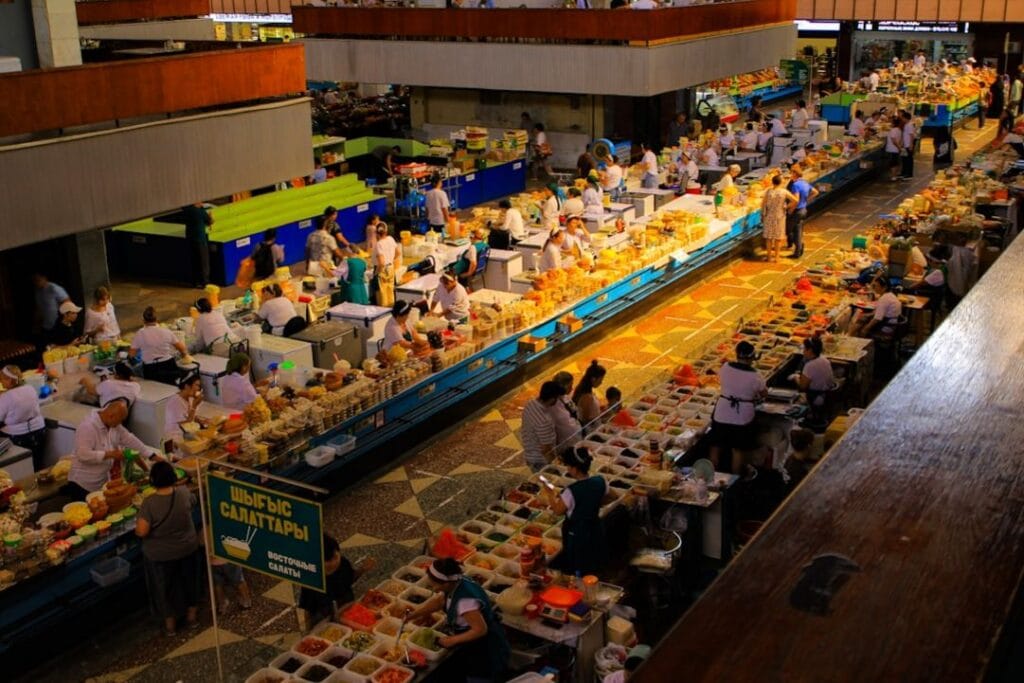
The aroma of freshly baked bread fills the air as you gather around a family table for breakfast.
Kazakhstan‘s food culture thrives on communal meals and hearty dishes, with family gatherings at the center. Beshbarmak, a dish of meat and noodles, is a staple, often enjoyed during special occasions. The hand-eating tradition adds intimacy to meals, making every bite a shared experience. Expect to savor kumys, a fermented mare’s milk drink, that complements the rich flavors of the cuisine. Dive into this culinary landscape for a taste of genuine hospitality and warmth.
Quick answer
Eat beshbarmak for a hearty meal, try kumys for a unique drink, enjoy plov for lunch, and sample baursaks for breakfast.
Key takeaways
- Dine at family-run guesthouses for authentic meals, starting at ~$20/day, 2026.
- Order beshbarmak for dinner to experience the national dish’s full flavor.
- Try kumys at local markets for a refreshing drink with your meal.
- Enjoy plov at lunch in Almaty’s central market for a filling option.
- Sample baursaks during breakfast at guesthouses for a sweet start.
- Avoid tourist traps by skipping chain restaurants in favor of local eateries.
- Plan to book family meals in advance for larger groups, especially during holidays.
Local Food & Drinks tool
Open the interactive Kazakhstan food map – every dish and drink in this guide, plotted on a map with what to order, where to find it, and what it costs.
Why Kazakhstan eats the way it does
Kazakhstan’s food culture is deeply rooted in its pastoral traditions, shaped by the vast steppes and nomadic lifestyle. The importance of hospitality is paramount, where feeding a guest is a cherished ritual. This culture emphasizes hearty, meat-forward dishes, reflecting the region’s climate and agricultural practices. The historical Silk Road also influenced local cuisine, introducing diverse flavors and cooking techniques.
- Beshbarmak, the national dish, is traditionally eaten with hands, emphasizing communal dining.
- Kazakh meals often feature a variety of meats, particularly horse and mutton, which are less common in neighboring cuisines.
- Hospitality rituals dictate that guests are served first, showcasing the importance of sharing food.
- Contrary to popular belief, Kazakh cuisine is not solely meat-based; dairy products play a significant role.
Best for: Food enthusiasts will thrive in Kazakhstan, especially those seeking intimate culinary experiences like cooking classes in family-run guesthouses. Prioritize learning about local dishes and their preparation methods.
Must-try dishes in Kazakhstan
Beshbarmak (Бешбармақ)

Beshbarmak combines boiled horse, mutton, or beef with wide, flat noodles soaked in rich broth. The dish is traditionally eaten with hands, emphasizing the communal spirit of Kazakh dining. Locals serve it first to guests, honoring hospitality and connection through shared plates.
Where to find it: Find Beshbarmak in family homes and guesthouses where meals are served communally, especially in Almaty and Astana.
Best for: ideal for a main meal with a local family or group
Kazy (Қазы)
Kazy is a horsemeat sausage, seasoned and smoked, prized for its rich, fatty texture and smoky depth. It appears as a cold appetizer or alongside Beshbarmak, adding a distinct flavor that locals savor. The curing process varies by region, but the smoky aroma is always a signature.
Where to find it: Best enjoyed in family-run paladars or at home during special meals.
Best for: pairs well with communal feasts and celebratory occasions
Shuzhuk (Шұжық)
Shuzhuk is a dried, cured horsemeat sausage with a firm texture and concentrated flavor. It’s a traditional snack that carries the smoky, salty notes prized in Kazakh charcuterie. Locals slice it thin and serve it with bread or as part of a shared platter.
Where to find it: Commonly found in family kitchens and at communal gatherings.
Best for: great for tasting Kazakh cured meats in a home setting
Kurt (Құрт)
Kurt are hard, dried balls of salty fermented cheese made from cow or mare’s milk. They offer a sharp, tangy bite and are a staple snack for Kazakhs, especially in rural areas. The dense texture means they last long, making them a practical and flavorful travel companion.
Where to find it: Typically served in family homes or brought along on long trips.
Best for: snacking between meals or with tea in rural settings
Baursak (Бауырсақ)
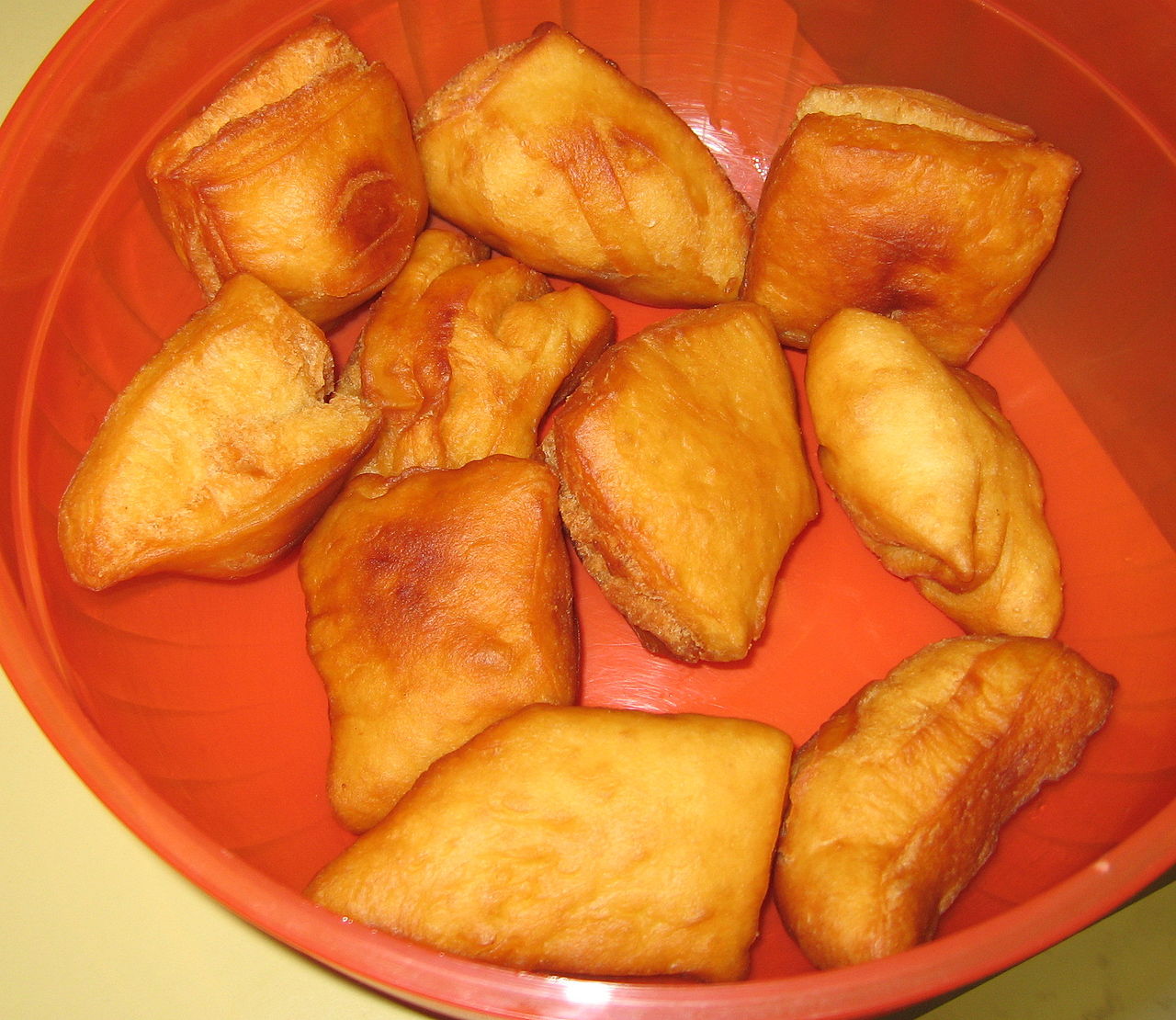
Baursak are deep-fried dough balls, light and fluffy with a slightly sweet flavor. They often accompany tea or meals and are a staple in Kazakh hospitality rituals. Locals serve them fresh and warm, sometimes dusted with powdered sugar or alongside savory dishes.
Where to find it: Found in family kitchens and guesthouses where breakfast or tea is served.
Best for: perfect for breakfast or afternoon tea with hosts
Kumis (Қымыз)
Kumis is fermented mare’s milk with a slightly sour, fizzy taste and low alcohol content. It’s a traditional drink that complements meat-heavy meals and is believed to aid digestion. The flavor can be sharp for newcomers but is a core part of Kazakh hospitality.
Where to find it: Served in family homes and rural guesthouses, especially during communal meals.
Best for: try during a family meal to experience local hospitality
Zhaya (Жая)
Zhaya is salted, dried horsemeat, thinly sliced and served cold. It has a chewy texture and intense flavor, often appearing as an appetizer or snack during gatherings. The drying process preserves the meat’s richness and is a traditional way to store protein for long periods.
Where to find it: Found in family homes and during communal feasts in rural areas.
Best for: snacking with tea or as part of a shared appetizer plate
Manti (Манты)

Manti are steamed dumplings filled with minced lamb or beef, often seasoned with onion and black pepper. They offer a tender, juicy bite and are a common dish in Kazakh homes and guesthouses. Locals serve them with sour cream or a light broth, enhancing their richness.
Where to find it: Best found in family-run guesthouses or home kitchens in Almaty and Karaganda.
Best for: a filling lunch or dinner shared with hosts
Shubat (Шұбат)

Shubat is fermented camel’s milk with a thick texture and tangy flavor. It’s less common than Kumis but valued in southern Kazakhstan for its health benefits. The sourness can be strong, so it’s best sampled in small amounts alongside food.
Where to find it: Served in rural family homes and traditional guesthouses in southern regions.
Best for: sampling local dairy traditions in rural settings
Kuyrdak (Қуырдақ)

Kuyrdak is a hearty stir-fry of organ meats like liver and heart, cooked with onions and spices. It delivers a rich, intense flavor and is a traditional dish that reflects Kazakh nose-to-tail cooking. Locals serve it hot, often with bread to soak up the juices.
Where to find it: Found in family kitchens and paladars where traditional meals are prepared.
Best for: those comfortable with offal seeking authentic flavors
Book a food tour or cooking class in Kazakhstan
Cooking classes, market tours, and street-food walks led by local hosts in Kazakhstan – skip the tourist menus and eat what locals actually eat.
Local drinks in Kazakhstan

Kumis (Құмық)
Kumis is a fermented mare’s milk drink, slightly alcoholic and tangy. It embodies the nomadic spirit of Kazakhstan, often enjoyed during gatherings. Locals appreciate its refreshing qualities, especially in summer, and it pairs well with meat dishes like Beshbarmak.
When to drink it: Enjoy Kumis during festive occasions or family gatherings.
Where to find it: Look for Kumis at local markets or family-run guesthouses, where it’s often made fresh.
Shubat (Шұбат)
Shubat is a fermented camel’s milk drink, known for its creamy texture and unique flavor. It’s rich in nutrients and often consumed for its health benefits. Locals enjoy it with traditional dishes, enhancing the meal’s hearty flavors.
When to drink it: Best enjoyed with meals, particularly those featuring mutton or horse meat.
Where to find it: Shubat can be found at specialty dairy shops or during cultural festivals.
Vodka (Водка)
Vodka is a popular spirit in Kazakhstan, often served during celebrations and gatherings. It has a neutral flavor, making it a versatile choice for toasting and pairing with various dishes. Locals typically enjoy it chilled, and it’s common to take small sips during meals.
When to drink it: Drink vodka during festive occasions or family celebrations, especially with hearty meals.
Where to find it: Available at restaurants, bars, and local markets throughout Kazakhstan.
Tea (Шай)
Tea is a staple in Kazakh culture, often served to guests as a sign of hospitality. It can be black or green, typically enjoyed with sugar or milk. The ritual of tea drinking emphasizes community and connection, making it an essential part of daily life.
When to drink it: Enjoy tea throughout the day, especially during meals or social gatherings.
Where to find it: Find tea served at homes, cafes, and restaurants across Kazakhstan.
Where to Eat in Kazakhstan
Kazakhstan’s dining scene thrives on communal meals and family-run establishments, where the warmth of hospitality enhances every bite. Expect hearty dishes served in intimate settings, often with a focus on traditional hand-eating customs. The emphasis on home-style cooking makes it easy to connect with the local culture through food.
Primary setting: Dastarkhan
Dastarkhan refers to a communal dining setting where meals are shared among family and friends, often laid out on a large table. Expect a variety of dishes, including Beshbarmak and Baursak, served in a relaxed atmosphere that encourages conversation and connection. This setting typically costs around $10 per person and is a staple during gatherings and celebrations.
Family-run guesthouses
These guesthouses offer home-cooked meals that showcase local flavors, often featuring dishes like Shuzhuk and Kurt. Prices are usually around $15 per meal, providing an authentic taste of Kazakh hospitality in a cozy environment.
Kafe
Kafe are casual eateries where you can enjoy quick meals and snacks, often frequented by locals. Expect to pay around $5 for a meal, making it a budget-friendly option for trying dishes like Zhaya and Shubat.
| Type | Price range (2026) |
|---|---|
| Budget eats | Street stalls and market vendors: $2 – 6 per meal, 2026. |
| Mid-range | Family-run guesthouses: $10 – 20 per person, 2026. |
| Splurge | Specialty dining experiences in upscale restaurants: $50 – 100+, 2026. |
Eat like a local in Kazakhstan
Meals in Kazakhstan often revolve around the communal dining experience, especially during family gatherings. Expect to spend a few hours at the table, particularly during Sunday lunches or special occasions. The host-guest dynamic is crucial, with meals served in a relaxed manner, allowing for conversation and connection.
- Use your right hand for eating and passing food – the left hand is considered unclean in this context.
- Pour for your neighbor before your own glass; leaving your glass empty is not considered rude.
- When sharing Beshbarmak, take a piece of meat and a noodle with your hand, and avoid using utensils.
- Wait for the host to start the meal before you begin eating; this shows respect.
- Always accept food offered to you; refusing can be seen as disrespectful.
Frequently asked questions about food and drinks in Kazakhstan
1Is Beshbarmak worth trying or is it overhyped?
Yes, Beshbarmak is definitely worth trying. It’s the national dish and offers a hearty mix of meat and noodles, best enjoyed with hands.
2What does a day of eating in Kazakhstan cost?
Roughly $20 to $30 per day in 2026. Expect to pay around $4 for street food and $10 for a meal at a family-run guesthouse.
3Is Kazakhstan good for vegetarians?
No, vegetarian options are limited. Most meals are meat-heavy, but you can find Manti filled with vegetables and Baursak as a snack.
4Where can I find Kumys?
You can find Kumys at local markets like Almaty Central Market, where it’s served fresh and is a popular drink among locals.
5What should I drink with Beshbarmak?
Pair Beshbarmak with Shubat for a refreshing contrast. This fermented camel milk drink complements the richness of the dish.
6What is Baursak exactly?
Baursak is a type of fried bread, often served as a snack or breakfast item. It’s fluffy and slightly sweet, perfect for dipping.
7Can I eat safely at street stalls?
Yes, you can eat safely at street stalls if you choose busy vendors. Look for stalls with high turnover to ensure freshness.
8What foods should I avoid in Kazakhstan?
Avoid overly adventurous dishes like Shuzhuk, which is a sausage made from horse meat, if you’re unsure about trying horse meat.