


Feel the anticipation as the guide signals silence, the forest alive with whispers before the Iberian wolf appears.
Portugal‘s diverse landscapes host a variety of wildlife, from the Iberian wolf to the Spanish imperial eagle. Explore national parks and reserves that protect these species while offering thrilling encounters. Whether trekking through rugged terrain or observing from hides, the experience immerses you in nature’s wonders.
Quick answer
Wildlife in Portugal means guided tours in reserves: best from October to February.
Key takeaways
- Visit Peneda-Gerês for Iberian wolves and European wildcats.
- Book guided dawn drives in Guadiana Valley for Iberian lynx.
- Explore Guadiana Valley for Spanish imperial eagle sightings.
- Scan the skies at Faia Brava for griffon vultures.
- Night walks in Peneda-Gerês increase chances of spotting genets.
What makes Portugal worth the trip for wildlife
Peneda-Gerês National Park is home to Portugal’s iconic Iberian wolf, a species that defines the country’s wildlife identity. This park, along with others, showcases the rich biodiversity of the region.
- Iberian wolves thrive in Peneda-Gerês, with ethical viewing options available.
- Guadiana Valley offers reliable sightings of the critically endangered Spanish imperial eagle.
- Guided tours in various parks ensure structured access to wildlife hotspots.
Book this if: Book if you want guided tours to see Iberian wolves in Peneda-Gerês or Iberian lynx in Guadiana Valley.
Skip if: Skip this if you seek easy access to big-game safaris; Portugal’s wildlife experience requires some trekking.


Animals Around the World
Explore which animals you can spot in every country with our interactive map: search by species, region, or park.
Wildlife Map: Portugal
Parks and reserves featured in this guide, plotted on the map below.
Which animals can you actually see in Portugal
Peneda-Gerês National Park and Guadiana Valley National Park anchor Portugal’s wildlife circuit, with the Iberian wolf and Iberian lynx as top targets. These reserves offer real chances to track elusive mammals and soaring raptors on foot or guided drives.
| Animal | Spot chance | Best months | Where | Access |
|---|---|---|---|---|
| Iberian wolf | Almost guaranteed in season | November, December, January, February, October | Peneda-Gerês National Park | DIY (free access) |
| Spanish imperial eagle | High probability in peak months | March, April, May, October, November | Guadiana Valley Natural Park, Castro Verde Special Protection Area | DIY (free access) |
| Iberian lynx | Almost guaranteed in season | January, February, March, April, May, October, November, December | Guadiana Valley NP, Vale do Guadiana NP | Guided tour required |
| Bonelli’s eagle | Almost guaranteed in season | January, February, March, April, May, June, July, August, September, October, November, December | Tejo Internacional Natural Park | DIY (free access) |
| European wildcat | High probability in peak months | March, April, May, September, October, November | Peneda-Gerês NP, Faia Brava Reserve | Night tour with guide |
| Common genet | High probability in peak months | March, April, May, September, October, November | Peneda-Gerês National Park, Montesinho Natural Park | Night tour with guide |
| Griffon vulture | Almost guaranteed in season | May, June, July, August, September, October | Tejo Internacional NP, Faia Brava Reserve | DIY (free access) |
| White stork | High probability in peak months | April, May, June, July, August | Castro Verde Special Protection Area, Tagus Estuary Nature Reserve | DIY (free access) |
| European Green Lizard | High probability in peak months | May, June, July, August, September | Peneda-Gerês National Park | DIY (free access) |
Iberian wolf Almost guaranteed in season
Dense forests and rugged hills of Peneda-Gerês National Park hold Portugal’s small population of Iberian wolves. Tracking these shy mammals requires patience and often hides for observation. Near Mafra, the CRLI conservation center offers ethical viewing of rescued wolves, giving a rare close-up without disturbing wild packs.
Conservation: Near threatened: habitat loss and human conflict pressure populations.
Spanish imperial eagle High probability in peak months
The cork oak savanna of Guadiana Valley Natural Park bursts to life in March and April with the presence of the Spanish imperial eagle. This critically rare raptor patrols the skies, best spotted soaring over open woodlands. Visit Castro Verde Special Protection Area for reliable sightings during spring months.
Conservation: Vulnerable: populations declining outside major protected areas
Action: Active protection includes habitat management and monitoring in key breeding areas.
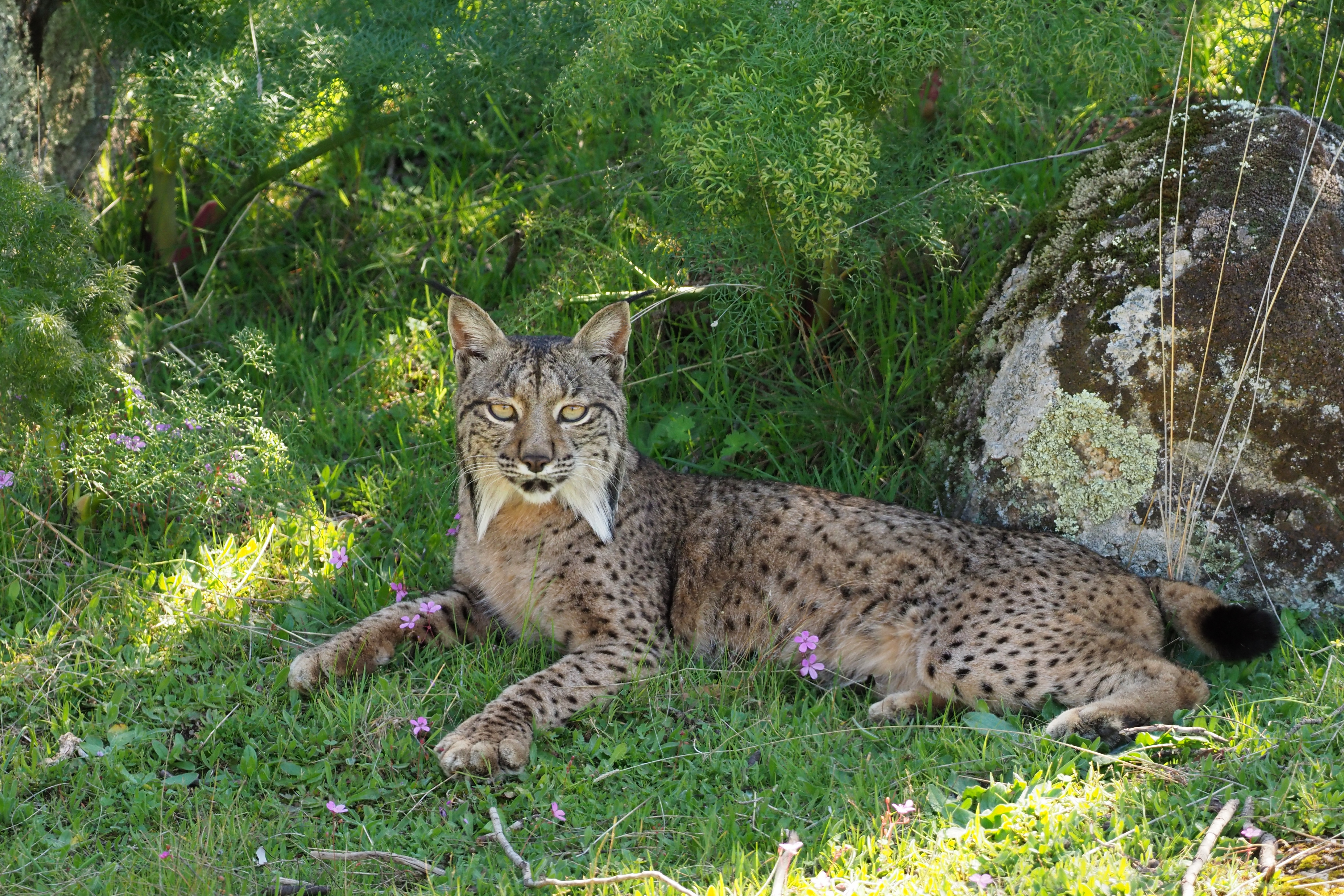
Iberian lynx Almost guaranteed in season
At dawn in Guadiana Valley National Park, guided drives increase your odds of spotting the elusive Iberian lynx. This small wild cat moves silently through scrub and woodland, especially in winter months when activity peaks. The reintroduction program here has turned this area into one of the few places with real sighting chances.
Action: Reintroduction and guided dawn drives support monitoring and public awareness.
Bonelli’s eagle Almost guaranteed in season
Tejo Internacional Natural Park’s steep gorges near Castelo Branco provide clifftop hides perfect for watching Bonelli’s eagle. This eagle patrols year-round, often seen gliding on thermals above rocky cliffs. The reliable visibility from hides makes it a top birding target in Portugal.
European wildcat High probability in peak months
Night drives on forest roads in Peneda-Gerês National Park offer the only realistic chance to glimpse the shy European wildcat. These cats avoid daylight and human contact, making nocturnal outings essential. Camera trap studies confirm their presence, but sightings remain rare and require a guide familiar with local routes.
Common genet High probability in peak months
In Peneda-Gerês National Park, night walks with a red-filter torch in April and October reveal the elusive common genet. This small carnivore moves quietly through underbrush, its spotted coat blending into shadows. Trekking after dark with a guide maximizes your chance to spot this nocturnal mammal.
Griffon vulture Almost guaranteed in season
Scan the morning thermals above Faia Brava Reserve near the Tagus valley to spot griffon vultures circling high. These large scavengers dominate the skies from late winter through fall. The Tagus gorges offer reliable vantage points for watching their soaring flight patterns.
White stork High probability in peak months
The Alentejo plains around Castro Verde host Europe’s largest white stork breeding concentration. From April to August, rooftop nests cluster in villages, and the storks’ clattering calls fill the air. Walking or cycling through the plains during this period offers close encounters with these iconic birds.
European Green Lizard High probability in peak months
In warm months, European Green Lizards perch on rocks and low vegetation in Peneda-Gerês National Park. Their bright green color stands out against woodland and scrub. Spotting them requires slow walking through sunny clearings where they bask and dart quickly among bushes.
The animals that define Portugal’s safari circuit
Portugal’s wildlife safaris combine rugged landscapes with rare species encounters that reward early risers and patient trekkers. Each reserve offers a distinct setting where you can track elusive mammals or scan soaring raptors, far from crowded tourist routes.
Iberian wolf
In Peneda-Gerês National Park, the morning mist clings to dense oak and chestnut forests as you settle into a concealed observation hide. The silence breaks with distant howls, and a pack of Iberian wolves (Canis lupus signatus) emerges cautiously from the underbrush. Their sharp eyes scan the terrain, muscles tense, moving with quiet purpose. The cool air carries their scent, and the moment stretches as you watch these rare predators in their natural domain.
Why this reserve: Peneda-Gerês holds Portugal’s largest and most stable population of Iberian wolves, around 300 individuals. Its rugged terrain and well-maintained observation hides offer better access and higher sighting chances than other regions. Local guides specialize in wolf tracking, increasing your odds without disturbing the animals.
What most visitors miss: Wolves here often hunt at dawn and dusk, so timing your visit is crucial. Visitors rarely notice the subtle pack dynamics and communication through body language during these quiet hours.
| How to see | Book a guided early-morning tour with a certified tracker; half-day trips are standard. Reserve spots weeks in advance during peak months. Book this tour. |
| Ethical note | Maintain distance from observation hides and never attempt to lure or feed wolves to avoid disrupting natural behavior. |
| Cost | ~$120 – $180 including guide and park entry |
Spanish imperial eagle
At dawn in Guadiana Valley Natural Park, the cork oak savanna glows golden under soft light. You scan the sky, spotting the broad wingspan of the Spanish imperial eagle (Aquila adalberti) as it soars silently above. The eagle circles slowly, riding thermals, its sharp gaze fixed on the ground. The stillness of the landscape contrasts with the eagle’s powerful presence, a rare sight that demands patience and a keen eye.
Why this reserve: Guadiana Valley’s extensive cork oak savanna supports one of the highest densities of Spanish imperial eagles in Portugal. The park’s open terrain and accessible observation points make it the most reliable location for sightings compared to scattered territories elsewhere.
What most visitors miss: The eagle’s hunting often coincides with early morning thermal activity, a detail missed by those arriving late. Other raptors and scavengers share the skies here, offering a layered birdwatching experience.
Conservation: The Spanish imperial eagle is vulnerable due to habitat loss and poisoning. Conservation programs focus on habitat protection and reducing human-wildlife conflict, stabilizing populations in Guadiana Valley.
| How to see | Join a guided morning birdwatching tour during late winter to spring. Half-day trips with expert ornithologists maximize sighting chances. Book this tour. |
| Ethical note | Use binoculars from designated observation points; avoid disturbing nesting sites during breeding season. |
| Cost | ~$90 – $140 including guide and park fees |
Iberian lynx
Before sunrise in Guadiana Valley, the landscape shifts from scrubland to patches of dense brush. On a guided dawn drive, the Iberian lynx (Lynx pardinus) appears briefly, its spotted coat blending with dry vegetation. The cat moves with deliberate stealth, pausing to scan for prey. The quiet hum of the vehicle and the crisp morning air heighten your focus as you track this elusive feline, a rare predator reclaiming its territory.
Why this reserve: Guadiana Valley’s reintroduction efforts have created a stable Iberian lynx population, with accessible guided drives that offer real sighting chances. The reserve’s mix of scrub and open areas supports the lynx’s prey base better than other fragmented habitats.
What most visitors miss: Lynx are crepuscular, so dawn and dusk are prime times. Visitors often overlook the lynx’s role in controlling rabbit populations, which fluctuates seasonally and affects lynx movement patterns.
Conservation: Classified as vulnerable, the Iberian lynx has rebounded from near extinction thanks to captive breeding and habitat restoration. Guadiana Valley is a flagship site for these efforts, with ongoing monitoring and community engagement.
| How to see | Book a guided dawn drive with a certified naturalist; early booking is essential due to limited group sizes. Book this tour. |
| Ethical note | Stay inside vehicles during drives and avoid flash photography to prevent stress. |
| Cost | ~$130 – $190 including guide and park entry |
Bonelli’s eagle
Perched on a clifftop hide overlooking the Tejo Internacional Natural Park’s deep gorges, you watch Bonelli’s eagle (Aquila fasciata) glide effortlessly along the rocky ridges. The eagle’s powerful wings beat steadily as it hunts for prey among the cliffs. The rugged terrain echoes with the call of this apex predator, and the stillness of the hide lets you absorb the raw energy of the landscape and its masterful flyer.
Why this reserve: Tejo Internacional’s steep gorges provide ideal nesting and hunting grounds, with reliable eagle populations. The park’s clifftop hides are well-positioned for unobtrusive observation, unmatched by other Iberian sites.
What most visitors miss: Bonelli’s eagle often hunts in pairs, coordinating aerial maneuvers that visitors rarely witness. The park also hosts other raptors, creating dynamic predator interactions.
| How to see | Use clifftop hides with a local guide; full-day tours offer the best chance to catch hunting behavior. Book at least two weeks ahead. Book this tour. |
| Ethical note | Avoid approaching nests or using drones; maintain quiet to prevent disturbance. |
| Cost | ~$100 – $150 including guide and park access |
European wildcat
Night falls over Peneda-Gerês National Park’s dense forests as you join a guided night drive along forest roads. The European wildcat (Felis silvestris) remains elusive, but suddenly a pair of glowing eyes reflects your torchlight. The wildcat moves swiftly and silently through undergrowth, its striped fur blending with shadows. The thrill of spotting this shy carnivore in near darkness sharpens your senses and rewards patient tracking.
Why this reserve: Peneda-Gerês offers the only realistic chance to see European wildcats in Portugal due to its extensive forest cover and low human disturbance. Night drives led by experienced guides maximize sightings compared to daytime attempts.
What most visitors miss: Wildcats are strictly nocturnal and solitary, so daytime visitors miss their secretive hunting and territorial marking behaviors.
| How to see | Join guided night drives on forest roads; small groups and quiet vehicles improve success. Book several weeks in advance. |
| Ethical note | Use red-filter torches to minimize disturbance and avoid spotlighting animals directly. |
| Cost | ~$80 – $120 including guide and park entry |
Common genet
On a night walk through Peneda-Gerês National Park’s mixed woodland, the beam of a red-filter torch catches the reflective eyes of a common genet (Genetta genetta). The slender, spotted mammal moves with cat-like grace among rocks and shrubs, pausing to sniff the air. The quiet forest alive with nocturnal sounds enhances the encounter, revealing a species often overlooked during daylight hours.
Why this reserve: Peneda-Gerês’ diverse habitats and low light pollution create ideal conditions for spotting genets. Local guides know the best trails and timing, making this reserve the top choice for nocturnal mammal watching.
What most visitors miss: Genets often hunt small rodents and insects, and their vocalizations at night are rarely heard by casual visitors.
| How to see | Take guided night walks with a red-filter torch in spring and fall for best results. Small groups preferred. |
| Ethical note | Keep noise to a minimum and avoid shining bright lights directly at animals. |
| Cost | ~$70 – $110 including guide fees |
Griffon vulture
Early morning at Faia Brava Reserve near the Tagus valley, thermals rise as griffon vultures (Gyps fulvus) wheel overhead. From a vantage point, you watch dozens of these large scavengers soar effortlessly, their broad wings catching warm air currents. The quiet landscape punctuated by their calls and the sight of vultures descending to rocky cliffs creates a scene of raw ecological function.
Why this reserve: Faia Brava hosts a key griffon vulture colony, with reliable morning thermal activity that concentrates birds for observation. The reserve’s proximity to the Spanish border and protected cliffs provide ideal nesting sites.
What most visitors miss: Vultures often follow seasonal carcass availability, shifting their flight patterns. Visitors miss the complex social behavior during communal roosting.
| How to see | Visit early mornings with a local guide; walking trails and observation points are accessible year-round. |
| Ethical note | Observe from designated paths to avoid disturbing nesting colonies. |
| Cost | ~$50 – $90 including guide and reserve entry |
European Green Lizard
In the warm months, Peneda-Gerês National Park’s rocky outcrops and woodland edges come alive with the bright green flash of the European Green Lizard (Lacerta bilineata). You spot one perched on a sunlit rock, its vivid coloration contrasting with the muted forest floor. The lizard darts quickly between vegetation, alert and agile, a common but striking reptile in this habitat.
Why this reserve: Peneda-Gerês’ mix of woodland, scrub, and rocky terrain supports a healthy population of European Green Lizards. The park’s accessibility and varied microhabitats make it the best place to observe this species in Portugal.
What most visitors miss: These lizards are most active during warm midday hours, a detail often missed by early morning hikers.
| How to see | Spot during daytime hikes in spring and summer; no guide required but local knowledge speeds locating them. |
| Ethical note | Avoid handling or disturbing basking lizards to prevent stress. |
| Cost | ~$20 – $40 for park entry only |
White stork
On the Alentejo plains around Castro Verde, rooftops and tall trees host large white stork (Ciconia ciconia) nests. In spring and summer, you watch adults tending chicks, their calls filling the air. The storks’ slow wingbeats and graceful landings create a calm rhythm against the open sky, while the surrounding farmland supports a rich insect and amphibian diet.
Why this reserve: Castro Verde hosts Europe’s largest white stork breeding concentration, with accessible viewing points near villages. The open plains and traditional agriculture maintain ideal nesting and feeding habitats.
What most visitors miss: Storks perform elaborate courtship displays and communal roosting at dusk, behaviors often missed by daytime visitors.
| How to see | Visit from April to August; self-guided or with local birdwatching groups. No special permits needed. |
| Ethical note | Keep distance from nests and avoid loud noises to prevent disturbance. |
| Cost | Free or minimal local access fees |
Book wildlife tours in Portugal
Compare guided safaris, nature walks, and reserve tours from local operators.
Which reserves to visit in Portugal
Portugal’s reserves offer diverse habitats for wildlife enthusiasts, especially for those seeking iconic species.
Peneda-Gerês National Park
Home to Iberian wolves and European wildcats, this park provides excellent wildlife viewing opportunities.
How to reach: Nearest hub: Braga, accessible by car in about 1 hour.
Park fee: $5
Guadiana Valley Natural Park
Known for its Iberian lynx population, guided dawn drives enhance sighting chances.
How to reach: Nearest hub: Beja, approximately 1.5 hours by car.
Park fee: $4
When to visit Portugal for wildlife
Visit from October to February for the best chances to see Iberian wolves and lynxes.
Peak window: October and November are peak months for Iberian wolves, while January offers high chances for Iberian lynx sightings.
Avoid: Avoid June to September due to high temperatures and reduced animal activity.
Animal behavior shifts with the seasons; wolves are more active in colder months, while vegetation is lush in spring, attracting more wildlife.
Iberian wolves are highly active, making them easier to spot.
Iberian wolves remain at peak activity levels.
Iberian lynx sightings are more likely during guided dawn drives.
Iberian lynx activity continues to be high.
What a wildlife trip in Portugal costs
Daily estimate: $150 – $250
| Cost component | What to expect |
|---|---|
| Guide fee | $50 – $100 for a certified guide |
| Park entry | $5 – $10 per park |
| Accommodation | $60 – $90/night at eco-lodges (browse options). |
| Transport | $30 – $50 for car rental or transport |
Money saver: Book multi-day stays at eco-lodges to reduce transport costs and maximize wildlife viewing.
Book wildlife tours
Compare guided tours, safaris, and nature experiences in Portugal.
Wildlife ethics in Portugal: what to know before you book
Ethics matter in wildlife tourism to ensure conservation and animal welfare.
Do
- Book certified guides for all wildlife tours.
- Choose operators with a no-captive-animal policy.
- Ask about the operator’s conservation efforts.
Don’t
- Never support operators that promote captive animal selfies.
- Avoid tours that involve animal performances.
- Don’t engage in activities that disturb wildlife habitats.
Operator checklist
Verify that the operator holds current permits from wildlife authorities. Ensure guides are certified naturalists. Check if they limit vehicle numbers per sighting to reduce disturbance.
Safety and preparation for wildlife in Portugal
Safety: Portugal has minimal dangerous wildlife, but be cautious of ticks in forested areas. No significant health risks like malaria are present.
Gear to bring
- Wear neutral clothing colors to blend into the environment.
- Bring sturdy boots for walking in rugged terrain.
- Use binoculars (8×42 minimum) for better wildlife viewing.
- Pack a dust bag for your camera to keep it clean.
Health: Consult a travel health clinic: recommendations change.
Frequently asked questions about wildlife in Portugal
1Are Iberian lynx sightings actually common at Guadiana Valley NP? What’s the real probability?
Yes, guided dawn drives in Guadiana Valley offer real chances to see Iberian lynx, especially in winter.
2Is 1 day at Peneda-Gerês National Park enough to see European wildcats, or do I need 2+ days?
One day is often insufficient; consider 2+ days for better chances of spotting European wildcats.
3Are Spanish imperial eagle sightings actually common at Guadiana Valley Natural Park?
Yes, March and April are peak months for spotting Spanish imperial eagles in Guadiana Valley.
4Is Tejo Internacional NP or Faia Brava Reserve better for griffon vulture sightings?
Tejo Internacional NP offers reliable views of griffon vultures from clifftop hides.
5Is it okay for some operators to offer captive animal experiences?
No, avoid any operator that promotes captive animal experiences as it harms wildlife welfare.
6Is $100 realistic for a guided tour to see Iberian wolves at CRLI?
Yes, $100 is a reasonable estimate for a guided tour at CRLI to see Iberian wolves.