


India holds roughly 70% of the world’s wild tigers, so the honest answer to where you go to see one in the wild is central India: Bandhavgarh, Kanha, Tadoba, Ranthambore and Pench, on a jeep safari in the hot dry months. Tigers exist across thirteen countries, from the Russian snow to the Sumatran rainforest, but most of those populations are tiny, scattered and almost impossible to actually see. If a wild sighting is the goal rather than a tick on a range map, the central Indian reserves are not just the best option, they are in a different league from everywhere else.
What actually decides a tiger sighting
Tigers are endangered, and a wild sighting is never guaranteed. Around 5,500 remain in the wild, spread thinly across Asia, and a single adult can range over dozens of square kilometres of forest. What separates the trips that succeed from the ones that come home with photos of deer is rarely luck. It is three decisions made before you arrive.
The first is park choice. A reserve with a dense tiger population and open terrain gives you a chance every drive; a vast jungle with a handful of cats gives you almost none, however beautiful it is. The second is season. In the hot dry months the forest thins out and tigers come to water, which is when they are visible from a track. The third is simply how many safari drives you book. One drive is a lottery. Three or four mornings in a high-density park turns the odds in your favour.
What makes or breaks the trip
Three things decide a wild tiger sighting, in order: pick a high-density reserve (central India, not a remote stronghold with a token population); go in the hot dry season, roughly March to May, when tigers come to water; and book at least three or four jeep drives rather than one. Get those right and the odds shift from a long shot to likely. Get them wrong and even the best park disappoints.
Central India: the only real bet
The states of Madhya Pradesh, Maharashtra and Rajasthan hold the densest, most reliable tiger reserves on earth. These are dry deciduous forests with grassy meadows and open sal woodland, terrain where a tiger crossing a track or lying at a waterhole is genuinely visible. Drives run as open jeeps with a guide and a park-issued route, morning and afternoon, in fixed zones. On an early drive in Bandhavgarh, the alarm calls of langurs and spotted deer are the real signal: the forest tells you a tiger is moving long before you see it.

Bandhavgarh in Madhya Pradesh is the strongest single recommendation. It packs one of the highest tiger densities anywhere into a compact area, so sightings are frequent and often at close range. Kanha, the sal-forest park said to have inspired Kipling’s Jungle Book, is larger and quieter, with meadows that make for clean sightlines. Tadoba in Maharashtra has built a reputation in recent years for confident, visible tigers and is easier to reach from Nagpur. Pench, straddling the same two states, is a calmer alternative with good numbers. Ranthambore in Rajasthan is the most famous and the most accessible from Delhi or Jaipur, set around lakes and a ruined fort, though it is also the busiest.

Season matters more here than at most wildlife destinations. The parks open around October, but the prime window is March to May, the hot dry pre-monsoon months. By then the undergrowth has died back, the small waterholes have dried up, and tigers concentrate around the few remaining pools. April and May are uncomfortable, with afternoons well over 40C, but they are also when central India delivers its best sightings. The forest closes for the monsoon from around July to September.
See every country a tiger lives in, with the best months
The Animals Around the World map shows which species you can spot in each country, where the reserves are, and how good your odds are month by month. Tigers are one of more than 1,900 animals in it, broken down by subspecies and park.
Jeep safaris are booked through the park system or a lodge, and good zones sell out weeks ahead in peak season. It is worth lining up a guided Ranthambore tiger safari before you travel so a permit and a competent naturalist are locked in rather than left to the gate. For the full picture of India’s wildlife beyond tigers, the wildlife in India guide covers rhinos, elephants and leopards in the same reserves.
Nepal: Bardia and Chitwan
Nepal is the strongest alternative to India and a genuine success story: its wild tiger population has roughly tripled this century. The Bengal tigers here live in the lowland Terai, the same grassland and riverine forest that runs across the border. Two parks matter.

Bardia in the far west is the better bet for sightings, with high tiger numbers and a fraction of the visitors. It offers both jeep drives and walking safaris, and the open riverbanks give clear sightlines from October to April. Chitwan, closer to Kathmandu, is the famous one and easier to combine with a wider trip through Nepal, but it is busier and tiger sightings are less reliable than at Bardia. Either way the dry winter and spring months are best, with the leafless March to April window the strongest. Nepal’s wider wildlife, including the one-horned rhino that shares these parks, is covered in the wildlife in Nepal guide.
The other subspecies and where they live
Tigers are one species split into surviving subspecies, and the non-Indian ones are mostly a lesson in how hard this animal is to see. They matter for understanding the species, but be honest with yourself: a wild sighting in any of these is a serious expedition with low odds, not a holiday.

The Sumatran tiger in Indonesia is critically endangered, with the largest population in Kerinci Seblat National Park. Multi-day guided treks through dense rainforest give the best theoretical odds, but sightings are rare and most visitors leave with tracks and camera-trap stories rather than a live cat. The same parks hold orangutans and other rainforest wildlife, gathered in the wildlife in Indonesia guide.
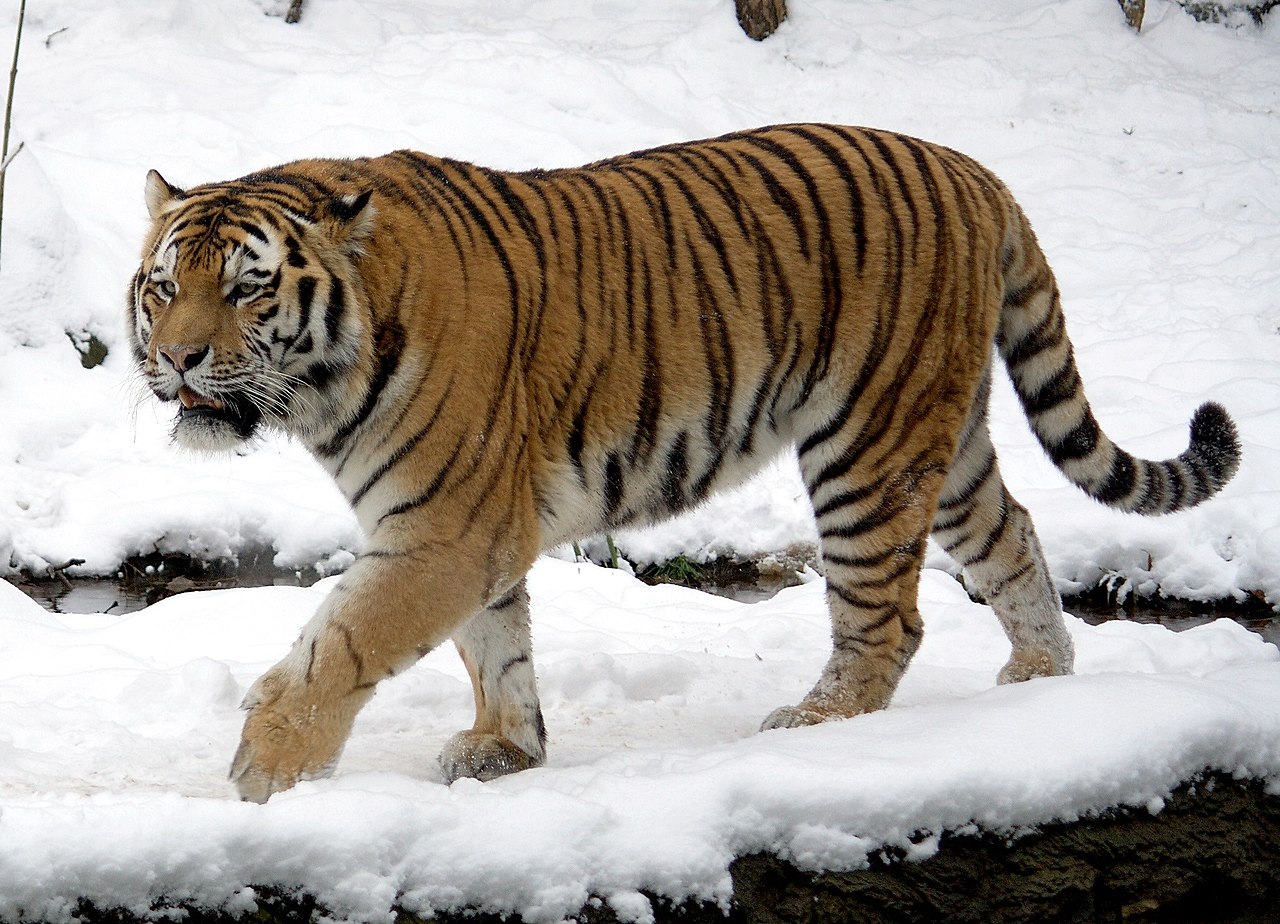
The Amur tiger, also called the Siberian tiger, ranges through the snowbound forests of the Russian Far East, where around 600 survive across an enormous area. It is the largest tiger of all and one of the hardest wild animals on earth to see: most encounters are tracks in snow and camera-trap images, not a tiger in the open. A tiny, recovering population also reaches across the border into northeast China. The Bengal tiger of the Sundarbans, the tangled mangrove delta shared by Bangladesh and India, is the only tiger population that swims by habit and hunts in saltwater. Boat safaris run into the protected core, but the mangrove is dense and the tigers are wary, so this is more about the eerie habitat than a likely sighting.

The Indochinese tiger hangs on in mainland Southeast Asia, with the strongest population in Thailand’s Huai Kha Kaeng and Thung Yai Naresuan sanctuaries, plus remnant groups in Myanmar and Laos. The Malayan tiger in peninsular Malaysia is critically endangered with fewer than 150 left, so a wild sighting is effectively off the table. Across all of these, presence is confirmed by camera traps and surveys rather than by tourists actually seeing the animal.
Best reserves and times at a glance
This table is the quick reference for matching a reserve to a realistic sighting. The top rows are where a tiger is genuinely seeable on a normal trip; the lower rows are range, not recommendation.
| Reserve | Country | Best months | Subspecies | Why |
|---|---|---|---|---|
| Bandhavgarh | India | March to May | Bengal | Highest density, frequent close sightings |
| Kanha | India | March to May | Bengal | Open meadows, clean sightlines, quieter |
| Tadoba | India | March to May | Bengal | Confident tigers, easy from Nagpur |
| Ranthambore | India | March to May | Bengal | Most accessible, lakeside fort setting, busiest |
| Bardia | Nepal | October to April | Bengal | High numbers, few visitors, walking safaris |
| Chitwan | Nepal | October to April | Bengal | Easy access, busier, less reliable |
| Kerinci Seblat | Indonesia | April to September | Sumatran | Largest Sumatran population, treks only, rare |
| Russian Far East | Russia | December to March | Amur | Largest tiger, sightings near impossible |
| Huai Kha Kaeng | Thailand | November to March | Indochinese | Main stronghold, camera-trap surveys, very rare |
| Sundarbans | Bangladesh | November to March | Bengal | Mangrove boat safaris, swimming tigers, elusive |
The realistic verdict
If you want to actually see a wild tiger, go to central India, pick a high-density reserve such as Bandhavgarh or Kanha, travel in the hot dry months of March to May, and book three or four jeep drives. That combination is the only one that turns a wild tiger sighting from a long shot into a likely outcome. Nepal’s Bardia is the strong second choice for anyone who wants fewer crowds and the option to walk. Everywhere else on the tiger map is real and worth understanding, but it is range rather than realistic viewing.
And keep the context in view. This is an endangered animal with around 5,500 left in the wild, recovering in some countries and clinging on in others. Choose parks and operators that run on conservation revenue and stick to permitted zones and distances. The sighting is better earned that way, and on an early drive in central India, when the langurs start calling and the forest goes quiet, you understand exactly why people travel across the world for it.
Common questions
01Where is the best place to see tigers in the wild?
Central India. The reserves of Bandhavgarh, Kanha, Tadoba, Ranthambore and Pench hold the densest and most reliable wild tiger populations on earth, and India has around 70% of all wild tigers. A jeep safari in the hot dry months of March to May gives the best odds anywhere.
02What is the best time of year to see tigers?
The hot dry pre-monsoon months, roughly March to May in central India. The undergrowth dies back and the small waterholes dry up, so tigers concentrate around the few remaining pools and are far easier to see. April and May are very hot but deliver the best sightings.
03Can you guarantee seeing a tiger on safari?
No. Tigers are endangered and range over large areas, so no sighting is guaranteed. You improve your odds dramatically by choosing a high-density park like Bandhavgarh, going in the dry season, and booking three or four drives rather than one. A single drive is a lottery.
04Where can you see Siberian tigers in the wild?
Amur, or Siberian, tigers live in the forests of the Russian Far East, with around 600 across a vast area, plus a small recovering population in northeast China. They are among the hardest wild animals on earth to see: most encounters are tracks in snow and camera-trap images rather than a live sighting.
05Are there tigers outside of India?
Yes, across about thirteen countries. Nepal has strong Bengal tiger populations in Bardia and Chitwan, Indonesia has the Sumatran tiger, Russia and China have the Amur tiger, the Sundarbans of Bangladesh and India hold swimming tigers, and the Indochinese tiger survives in Thailand, Myanmar and Laos. Most of those populations are very hard to see in the wild.
06How many wild tigers are left?
Around 5,500 in the wild, listed as endangered by the IUCN. Numbers are recovering in India and Nepal thanks to protected reserves, but several subspecies, including the Sumatran and Malayan tiger, remain critically endangered with very small populations.
Image credits, all via Wikimedia Commons under Creative Commons licences: hero, Sanjay Dubri Tiger Reserve, Tisha Mukherjee; Bandhavgarh tigress, Wikimedia Commons contributor; Kanha tiger, Davidvraju; Bardia grassland, Prabina Karki; Sumatran tiger, Captain Herbert; Amur tiger, Appaloosa; Indochinese tiger, H. Zell.


