


Hear the gentle splash of paddles near Ti Top Island’s rocky shore as limestone karsts rise sharply from the emerald water.
Halong Bay is a UNESCO-listed bay known for thousands of limestone karst islands scattered across its emerald waters. Visitors come mainly for overnight cruises that combine kayaking, cave exploration, and visits to floating fishing villages. The bay’s main access points include Bai Chay Harbor and Tuan Chau Island, where most tours depart. While the bay offers unmatched karst scenery and water-based adventure, it lacks the nightlife and urban comforts found in nearby Hanoi, 100 miles / 160 km inland. The best time for wildlife sightings and clearer skies is from October to April, when the humidity drops. Solo travelers focused on nature should book lodges inside the buffer zone to maximize early-morning wildlife walks and avoid tourist crowds. Expect a rhythm of dawn guided hikes, midday rest, and late afternoon boat trips to catch the bay’s shifting light and animal activity.
Halong Bay’s top activities include kayaking around limestone islands for close-up adventure, exploring Sung Sot Cave for dramatic formations, visiting floating fishing villages to see local life, hiking Cat Ba Island’s trails for wildlife, and taking early-morning guided walks inside the buffer zone for rare animal sightings.
Key takeaways
- Book overnight cruises from Tuan Chau Island for best access to karst islands and kayaking routes.
- Stay inside the buffer zone near Cat Ba Island for early guided wildlife walks and quieter mornings.
- Plan visits between October and April to avoid heavy rain and improve wildlife visibility.
- Reserve certified naturalist guides in advance to enhance spotting chances on dawn and dusk walks.
- Avoid Bai Chay Harbor daytime crowds by scheduling afternoon or overnight tours.
- Expect daily budgets around $60-$120 for eco-lodges and guided activities, 2026.
- Use local boats for transfers between floating villages to support community-based tourism.
- Carry waterproof gear for kayaking and cave tours; weather can shift quickly even in dry season.
Map of Halong Bay
107 handpicked places. Filter by category or traveller type, tap a pin or a list item for the full write-up, and save the map to your phone.
All 107 places
- TransportThe main international cruise harbor on Tuan Chau Island, where most overnight junks and many day boats depart. A big, busy marina with a long walk from car park to pier. Good for: Backpackers, Couples, Families, Older travelers
- TransportThe vehicle-and-passenger ferry terminal on Cat Hai used by the bus-boat-bus route between Hanoi and Cat Ba. Frequent crossings, but queues build in summer weekends. Good for: Backpackers, Couples, Families, Older travelers
- TransportThe Cat Ba-side ferry landing at the northwest of the island where the Got crossing arrives, then a bus runs the green road down to Cat Ba Town. Good for: Backpackers, Couples, Families, Older travelers
- TransportThe main long-distance coach station for Ha Long City, west of Bai Chay, with frequent buses and limousine vans to Hanoi, Haiphong, Ninh Binh and Cat Ba transfers. Good for: Backpackers, Families
- PracticalThe main provincial hospital in Hon Gai, Ha Long City, the best-equipped medical facility in the bay area for anything serious. Keep the location noted if you are cruising, as island clinics are basic. Good for: Backpackers, Couples, Families, Older travelers, Digital nomads
- PracticalThe small island hospital in Cat Ba Town handling basic medical needs and first aid, the only proper facility on the island. Fine for minor issues and stabilization. Good for: Backpackers, Couples, Families, Older travelers, Digital nomads
- Transport Good for: Backpackers, Couples, Families, Older travelers
- Transport Good for: Backpackers, Couples, Families, Older travelers
- Transport Good for: Backpackers, Couples, Families, Older travelers
- SightsA grand hillside temple complex in Cam Pha honoring a Tran-dynasty general, with sweeping views over the coal coast and a big spring festival. The most significant religious site near the bay. Good for: Couples, Families, Older travelers
- SightsA striking black glass museum in Hon Gai covering Quang Ninh’s coal-mining history, bay ecology and local culture, designed by a Spanish architect. Good for: Couples, Families, Older travelers
- AreasThe mainland tourist hub and the launch point for most day cruises. Bai Chay is the touristy west bank, packed with hotels, the night market and the Sun World complex. Good for: Backpackers, Couples, Families, Older travelers, Digital nomads
- AreasThe working east-bank half of Ha Long City across Bai Chay Bridge, with the local fish market, the coal port and far fewer tourists. Good for: Backpackers, Couples, Families, Older travelers, Digital nomads
- AreasA reclaimed resort island southwest of Bai Chay, linked by causeway, holding the main international cruise marina. Most overnight junks depart from Tuan Chau, not the city wharf. Good for: Backpackers, Couples, Families, Older travelers, Digital nomads
- AreasThe backpacker and independent-traveler base for the bay, on the south coast of Cat Ba Island. Cheaper, livelier and better for kayaking Lan Ha Bay than a Ha Long cruise. Good for: Backpackers, Couples, Families, Older travelers, Digital nomads
- AreasThe southern bay off Cat Ba, quieter and arguably prettier than Ha Long proper, with clearer water and fewer big cruise boats. This is where Cat Ba-based kayak and day trips go. Good for: Backpackers, Couples, Families, Older travelers, Digital nomads
- AreasThe northeastern extension of the same limestone seascape, far less visited because cruises need a longer permit and run fewer routes. Good for: Backpackers, Couples, Families, Older travelers, Digital nomads
- SightsThe bay’s largest and most visited cavern, on Bo Hon Island about 14 km from Bai Chay wharf. Two huge chambers of lit stalactites, reached by a stepped path. Good for: Backpackers, Couples, Families, Older travelers
- SightsA dramatic dry cave near Dau Go Island in the southwest of the bay, closer to the wharf so it suits short day trips. Densely packed formations under colored lighting. Good for: Backpackers, Couples, Families, Older travelers
- SightsA vast, less-decorated cave beside Thien Cung, named for the wooden stakes Tran Hung Dao supposedly hid here before defeating the Mongol fleet. Good for: Backpackers, Couples, Families, Older travelers
- SightsA small, narrow cave on Lo Ngong Island with archaeological shell middens and a hidden inner lagoon. Far less touristed than Sung Sot because big boats cannot easily moor here. Good for: Backpackers, Couples, Families, Older travelers
- SightsA three-storey bombproof cave hospital built into Cat Ba’s limestone between 1963 and 1965, used during the American War. Seventeen rooms including an operating theatre and a cavern cinema. Good for: Backpackers, Couples, Families, Older travelers
- SightsA legend-soaked cave on Bo Hon Island paired with the facing Trong (Drum) Cave, tied to a tragic fisherman folk tale. Good for: Backpackers, Couples, Families, Older travelers
- SightsA tiny island with a crescent beach and a 450-step climb to a summit viewpoint over a fan of karst islets, the single most photographed panorama in the bay. Good for: Backpackers, Couples
- NatureThe lookout at the top of Ti Top’s stairway, a steep ten-minute climb that rewards you with the postcard view of scattered limestone towers. Good for: Backpackers, Couples
- NatureA 200 m limestone peak rising straight out of Hon Gai with a free, sweeping view over the city and bay. The scramble up runs through back alleys and is rough and unmarked, officially restricted on and off. Good for: Backpackers, Couples
- NatureA 1940s hilltop gun fort above Cat Ba Town with arguably the best land view of Lan Ha Bay’s islands. Restored bunkers and two big cannons sit beside the lookout. Good for: Backpackers, Couples
- SightsA record-holding two-cabin cable car running parallel to Bai Chay Bridge, each cabin carrying up to 230 people. Good for: Backpackers, Couples
- SightsA giant Ferris wheel on Ba Deo hill at the upper cable-car station, 215 m above the sea, with sixty-four cabins and a slow twenty-minute turn. Good for: Backpackers, Couples
- NatureThe small crescent of sand at the foot of Ti Top Island, the main swimming stop on Ha Long overnight cruises. The water is calm and shallow, good for a quick dip between the summit climb and the boat. Good for: Backpackers, Couples, Families, Older travelers
- NatureA long man-made beach along the Bai Chay tourist strip in Ha Long City, handy if you want sand without leaving town. Good for: Backpackers, Couples, Families, Older travelers
- NatureThe largest of Cat Ba’s three town beaches, a short walk or cliff path southeast of Cat Ba Town. Soft sand, gentle water and a few loungers and snack stalls. Good for: Backpackers, Couples, Families, Older travelers
- NatureThe quietest and prettiest of the three Cat Co beaches, reached by a cliffside boardwalk from Cat Co 1. More natural feel, backed by forested limestone. Good for: Backpackers, Couples, Families, Older travelers
- NatureThe smallest Cat Co beach, dominated by a resort but still accessible, at the far end of the cliff walk. Calm, sheltered water good for families. Good for: Backpackers, Couples, Families, Older travelers
- NatureThe park is the reason to skip a Ha Long cruise and base on Cat Ba instead. Climb Ngu Lam at sunrise. three hours, no crowds, full bay panorama. Good for: Couples, Families, Older travelers
- ActivitiesThe popular short trail in Cat Ba National Park, climbing through Kim Giao hardwood forest to a watchtower viewpoint over the karst canopy. Roughly an hour up and steep in places. Good for: Backpackers, Couples
- ActivitiesA steep stairway-and-scramble climb inside Cat Ba National Park to a viewpoint tower over rolling jungle hills. Short in distance but a real cardio workout in the heat. Good for: Backpackers, Couples
- ActivitiesThe classic paddle from a Lan Ha day boat through hidden lagoons and karst tunnels off Cat Ba, the highlight of any Cat Ba-based trip. Calmer and clearer water than Ha Long proper. Good for: Backpackers, Couples
- Food & drinkA long-running Western-and-Vietnamese restaurant on the Cat Ba waterfront with harbor views, doing burgers, fish and chips, lamb shank and fresh seafood. Good for: Backpackers, Couples, Families, Older travelers
- Food & drinkA consistently well-reviewed Vietnamese and Asian spot in Cat Ba Town, strong on seafood at fair prices. The kind of place independent travelers return to over a few nights. Good for: Backpackers, Couples, Families, Older travelers
- Food & drinkA vegetarian and vegan kitchen in Cat Ba Town, a rare find on a seafood-heavy island, with traditional Vietnamese plates and lighter Western options. Good for: Backpackers, Couples, Families, Older travelers
- Food & drinkA no-frills local seafood house where you pick from tanks and pay by weight, the most authentic way to eat on Cat Ba. Clams, mantis shrimp, grouper, all cooked simply. Good for: Backpackers, Couples, Families, Older travelers
- Food & drinkA large seafood restaurant near the Bai Chay strip aimed at tour groups, with bay views and a wide menu. Convenient and consistent rather than special, good for a group dinner on a city night. Good for: Backpackers, Couples, Families, Older travelers
- Food & drinkA popular mid-range seafood restaurant in Bai Chay drawing both locals and tourists, with a long menu of fish, crab and hotpot. Busy and a bit chaotic, which is a good sign. Good for: Backpackers, Couples, Families, Older travelers
- Food & drinkA budget-friendly local eatery in Ha Long City known for fresh seafood without the tour-group markup, a short walk back from the main strip. Good for: Backpackers, Couples, Families, Older travelers
- Food & drinkThe long-standing backpacker bar on the Cat Ba waterfront, pool tables, cheap beer and a balcony over the harbor. The default first-night meeting point for solo travelers and tour groups. Good for: Backpackers, Couples
- Food & drinkA lively late-night bar on the Cat Ba strip with a party crowd, drink deals and a small dance floor. Where the hostel groups end up after dinner. Not for a quiet drink. Good for: Backpackers, Couples
- Food & drinkA small specialty coffee spot in Cat Ba Town doing proper Vietnamese ca phe and Western espresso drinks, a calm break from the seafood-and-beer strip. Good for: Backpackers, Couples, Digital nomads
- Food & drinkThe Ha Long branch of the popular retro-communist-themed Vietnamese coffee chain near the Bai Chay strip, reliable air-con and the famous coconut coffee. Good for: Backpackers, Couples, Digital nomads
- ShoppingAn evening market along the Bai Chay strip selling pearls, dried seafood, souvenirs and street food. Touristy and aimed at cruise passengers, so haggle hard on the pearls and dried squid. Good for: Backpackers, Couples, Families
- ShoppingA genuine local wet market in Bai Chay where residents buy fish, produce and household goods, a refreshing dose of real life away from the tourist strip. Good for: Backpackers, Couples, Families
- ShoppingThe compact daily market a block back from the Cat Ba waterfront, selling the day’s catch, fruit and snacks to islanders. The fastest way to see where your seafood dinner came from. Good for: Backpackers, Couples, Families
- SleepA five-star resort on its own small island off Ha Long City, with white-sand beach, pools and several restaurants. The most polished mainland-side stay, good as a pre or post-cruise night if you want comfort over character. Good for: Couples, Families, Older travelers
- SleepA high-rise four-star hotel on the Bai Chay strip with rooms overlooking the bay, the Sun Wheel and Bai Chay Bridge. Central, reliable and well-priced for the view. Good for: Couples, Families, Older travelers
- SleepA reliable international four-star on the Bai Chay seafront with direct beach access and a short walk to the Sun World complex. Predictable comfort and a good breakfast, popular with families. Good for: Couples, Families, Older travelers
- SleepA boutique cluster of waterside bungalows on Lan Ha Bay near Cat Ba, away from the town strip, with a small beach and kayaks. Good for: Couples, Families, Older travelers
- SleepA well-known party-and-tours hostel in the heart of Cat Ba Town, dorms, a bar and cheap Lan Ha Bay day trips off the front desk. The default social base for solo travelers. Good for: Backpackers
- SleepA budget dorm-and-private hostel near the Cat Ba waterfront, quieter than the party hostels but still social, with helpful tour booking. Good value for independent travelers who want sleep as well as a kayak trip. Good for: Backpackers
- Hidden gemsThe bay’s largest and most photographed floating fishing community, between Ha Long and Lan Ha bays, recognized as one of the world’s most beautiful villages. Good for: Backpackers, Couples
- Hidden gemsA quieter floating fishing village in Bai Tu Long Bay, about 20 minutes by boat beyond Cua Van and far less visited. Rowed tours through the karst-ringed harbor and a small pearl-farm stop. Good for: Backpackers, Couples
- Hidden gemsA small floating village near Dau Go and Thien Cung caves in the southwest of the bay, close enough to feature on short day trips. Rowboat tours through three low caves give it its name. Good for: Backpackers, Couples
- Hidden gemsA working pearl farm near Sung Sot where you can see oysters seeded and harvested, a common cruise stop between caves. Genuinely interesting on the farming process, though the gift shop is the real point. Good for: Backpackers, Couples
- SightsTwo leaning limestone rocks resembling fighting roosters, the emblem of Ha Long Bay printed on tourist brochures and the old banknote. A standard photo slow-down near Dinh Huong on most routes. Good for: Backpackers, Couples
- SightsA slender, top-heavy rock resembling an incense burner, famous enough to have appeared on Vietnamese currency. A passing photo stop in the southwestern bay near the Fighting Cocks. Good for: Backpackers, Couples
- SightsA low arched sea tunnel near Bo Hon that opens into an enclosed emerald lagoon ringed by sheer cliffs, entered only by kayak or bamboo boat at the right tide. Good for: Backpackers, Couples, Families, Older travelers
- SightsA protected zone in northern Cat Ba for the critically endangered golden-headed Cat Ba langur, one of the rarest primates on earth with only a few dozen left. Good for: Backpackers, Couples, Families, Older travelers
- SightsA small floating museum at Cua Van village documenting the fishing community’s traditions, songs and daily life before many families were resettled ashore. Good for: Couples, Families, Older travelers
- SightsA sea cave on Bo Hon Island facing Trinh Nu, named for the drum-like boom of wind and waves inside, tied to the same folk legend. A kayak or tender stop rather than a walk-in show cave. Good for: Backpackers, Couples, Families, Older travelers
- SightsThe large central island holding Sung Sot Cave, Luon Cave and several lagoons, effectively the busy heart of the cruise circuit. Almost every Ha Long itinerary lands or paddles here. Good for: Backpackers, Couples, Families, Older travelers
- NatureA roadside pass on the green road crossing Cat Ba Island between the ferry and town, with a sweeping view over forested karst and paddy. Good for: Backpackers, Couples
- ActivitiesThe scenic ride looping Cat Ba’s interior past the national park, Hospital Cave and quiet inland villages, the best way to see the island independently. Good for: Backpackers, Couples
- NatureA wide, less-crowded beach on the west side of Cat Ba near the ferry road, popular with locals and a calmer alternative to the Cat Co beaches. Good for: Backpackers, Couples, Families, Older travelers
- ActivitiesThe snorkeling and intro-dive area off Cat Ba in Lan Ha Bay, the main place to get in the water in the region. Visibility is modest and the reef is recovering, so manage expectations against tropical-island diving. Good for: Backpackers, Couples
- SightsA small forested island near Ti Top with a quiet beach and a short jungle trail, sometimes offered as a calmer alternative to the Ti Top crowds. Sim-berry bushes give it its name. Good for: Backpackers, Couples, Families, Older travelers
- SightsAn archaeological cave in the Lan Ha area near Cat Ba with prehistoric shell-midden deposits showing thousands of years of human use. A lesser-known stop on some Lan Ha boat tours. Good for: Backpackers, Couples, Families, Older travelers
- Food & drinkA relaxed waterfront cafe-restaurant on the Cat Ba strip mixing Vietnamese plates, Western breakfasts and decent coffee, popular for an unhurried meal between boat trips. Good for: Backpackers, Couples, Families, Older travelers
- Food & drinkA long-running expat-run bar on the Cat Ba waterfront with craft-ish drinks, board games and a mellower crowd than the party hostels. The pick for a proper conversation over a beer. Good for: Backpackers, Couples
- SleepA mid-range resort on a private Lan Ha cove near Cat Ba, away from the town strip, with a beach, pool and kayaks. The comfortable middle ground between hostel and luxury. Good for: Couples, Families, Older travelers
- SleepA budget hostel near the Bai Chay strip aimed at travelers doing day cruises from Ha Long City rather than Cat Ba, dorms and tour booking at the desk. Good for: Backpackers
- ActivitiesThe spring-roll and Vietnamese cooking demonstration run on most overnight junks at the bay anchorage, a relaxed sunset activity between kayaking and dinner. Good for: Couples, Families, Older travelers
- ActivitiesSmall-group Vietnamese cooking classes run from a few Cat Ba restaurants and homestays, often including a market visit for the seafood and herbs. A better, longer version of the onboard demo. Good for: Couples, Families, Older travelers
- AreasA working coal-mining city northeast of Ha Long, the jumping-off point for some Bai Tu Long cruises and the Cua Ong Temple. Not a tourist town, but useful on the way to the quieter bay or Van Don. Good for: Backpackers, Couples, Families, Older travelers, Digital nomads
- SightsA handsome Catholic church on the Hon Gai side of Ha Long City, a quiet bit of local life away from the cruise strip. A short stop while exploring the east bank or climbing toward Bai Tho Mountain. Good for: Couples, Families, Older travelers
- NatureThe cable-stayed bridge linking Bai Chay and Hon Gai over the Cua Luc strait, lit up at night and a landmark in its own right. Good for: Backpackers, Couples
- AreasA large island northeast of the bay with the regional airport, quiet beaches and a new resort zone, the gateway to Bai Tu Long and the Co To archipelago beyond. Good for: Backpackers, Couples, Families, Older travelers, Digital nomads
- SightsA pretty, lesser-visited cave in Bai Tu Long Bay with a small beach below, a highlight of the quieter eastern cruise routes. Far emptier than Sung Sot and often paired with a kayak stop. Good for: Backpackers, Couples, Families, Older travelers
- NatureA hillside sunset spot near Ben Beo with a bar terrace looking west over Lan Ha Bay’s islands, an easy alternative now that Cannon Fort access is unreliable. Good for: Backpackers, Couples
- SightsA working pearl farm in Lan Ha Bay near Cat Ba, a common stop on day boats showing oyster seeding and harvesting over the water. Good for: Backpackers, Couples, Families, Older travelers
- Food & drinkThe Cat Ba outpost of the retro Vietnamese coffee chain on the waterfront, dependable air-con, strong wifi and the famous coconut coffee. Good for: Backpackers, Couples, Digital nomads
- AreasHa Long’s quieter neighbor. Lan Ha Bay is nearly as stunning but with fewer boats. Less commercial, more authentic. Good for: Backpackers, Couples, Families, Older travelers, Digital nomads
- AreasSkip the day cruise and the cheap operators. both ruin Ha Long. Pay up for a small overnight boat that detours into Bai Tu Long instead. Good for: Backpackers, Couples, Families, Older travelers, Digital nomads
- AreasThe Bãi Cháy Bridge is a cable-stayed bridge on Highway 18, connecting Hồng Gai with Bãi Cháy over the Cửa Lục straits, separating Cửa Lục Bay with Hạ Long Bay, on the territory of Hạ Long city, Quảng Ninh province, Vietnam. Good for: Backpackers, Couples, Families, Older travelers, Digital nomads
- ActivitiesCat Ba region dive site. Part of the quieter alternative to Ha Long Bay. Less crowded than Nha Trang. Good for: Backpackers, Couples
- SightsVịnh Hạ Long là một vịnh nhỏ thuộc phần bờ tây vịnh Bắc Bộ tại khu vực biển Đông Bắc Việt Nam, bao gồm vùng biển đảo của thành phố Hạ Long cũ thuộc tỉnh Quảng Ninh. Good for: Backpackers, Couples, Families, Older travelers
- SightsПамятник Герману Титову во Вьетнаме установлен в 2015 году, открытие было приурочено к 80-летию со дня рождения Германа Титова. Good for: Backpackers, Couples, Families, Older travelers
- ActivitiesLess crowded with pristine reefs and diverse marine species in stunning limestone karst surroundings. Good for: Backpackers, Couples
- ActivitiesBook a guide for the through-hike. solo hikers get lost on the unsigned forks and the rangers no longer love finding them. Good for: Backpackers, Couples
- AreasTuần Châu is a schist island on the southwest side of Quảng Ninh in Vietnam. Good for: Backpackers, Couples, Families, Older travelers, Digital nomads
- AreasMunicipality in Vietnam Good for: Backpackers, Couples, Families, Older travelers, Digital nomads
- SightsChurch in Hạ Long, Vietnam Good for: Backpackers, Couples, Families, Older travelers
- Hidden gemsThe signature Lan Ha kayak experience. You paddle through a low, pitch-black sea tunnel that opens into a hidden lagoon ringed by sheer cliffs, then through a second brighter arch.
- Hidden gemsThe main walk-through show cave inside Cat Ba National Park, a 300 m tunnel of stalactites on the green road about 15 km from town. Re-lit with new LED staging in 2025.
- Hidden gemsOne of Vietnam’s oldest floating fishing communities, in a sheltered cove just east of Cat Ba Town near Ben Beo pier. Rowed-boat tours pass the raft houses and fish pens with the karst as backdrop.
- NatureA bow-shaped strip of white sand wrapped around three peach-shaped limestone islets in southern Lan Ha Bay, far from the cruise lanes. Calm, shallow, swimmable water and tide-dependent access.
- AreasA remote farming and fishing hamlet tucked deep in Cat Ba National Park, reached by boat to a small pier then a 20-minute bike ride through rice fields and karst.
Watch: Halong Bay in motion


Why visit Halong Bay
Halong Bay stands apart from Ha Long City, Cat Ba Island, and Bai Tu Long Bay with its vast UNESCO-listed seascape of thousands of limestone karst islands. Unlike the busier Ha Long City harbor, the bay’s remote floating villages and hidden caves offer direct access to nature’s raw formations. The bay’s iconic landmarks like Sung Sot Cave and Ti Top Island provide rugged terrain for kayaking and climbing, unlike the more commercialized coastal spots nearby. The early morning mist over limestone towers creates a challenging but rewarding environment for wildlife spotting and adventure trekking. This is not a place for passive sightseeing but for active exploration of a unique karst ecosystem shaped by millions of years of geological forces.
- Explore thousands of limestone karst islands rising sharply from emerald waters, unmatched in Southeast Asia.
- Book certified naturalist-guided walks inside the bay’s buffer zones to see wildlife in open habitats.
- Kayak through remote caves like Sung Sot Cave, avoiding crowded tourist routes around Ha Long City.
- Stay at eco-lodges inside the bay’s buffer zone for direct access to wildlife and early morning walks.
- Visit floating fishing villages where traditional livelihoods persist, unlike the tourist-heavy Cat Ba marinas.
- Insider tip: Avoid day cruises from Bai Chay harbor; overnight cruises from Tuan Chau Island offer better wildlife encounters.
Best for
Solo travelers focused on wildlife and nature will thrive here, especially those who book eco-lodges inside the bay’s buffer zone. Adventure seekers who want active days with guided walks, kayaking, and boat trips will find the bay’s karst islands a natural playground.
Skip if
Skip Halong Bay if you want urban nightlife or beach resorts; head to Da Nang for beaches or Hanoi for city culture instead.

Top things to do in Halong Bay
Halong Bay’s defining adventure is exploring its thousands of limestone karst islands by kayak and guided trek. The bay’s UNESCO-listed seascape demands active days navigating caves, climbing rugged islands, and spotting wildlife in open habitats. Start with a certified naturalist-led trek on Ti Top Island to connect directly with the bay’s raw karst ecosystem.

1. Guided Trek on Ti Top Island ·
Climb Ti Top Island’s steep trail with a certified naturalist guide to spot rare wildlife and panoramic karst views away from crowds.
Start your trek from the small beach area on Ti Top Island, where licensed naturalist guides lead you up the steep trail to the summit. Along the way, watch for rare bird species and small reptiles native to the karst environment. The summit offers a wide panorama of the bay’s limestone islands, a vantage point less crowded early in the morning. The trail is well-marked but steep, so sturdy shoes are essential. Return to the beach for a swim or relax before heading back to the main harbor. Book on GetYourGuide.
This trek beats the usual crowded viewpoints on Ti Top by focusing on wildlife spotting with a naturalist guide, unlike the typical self-guided visits that focus only on views.
- When: Start early between 6:00 AM and 9:00 AM to avoid crowds and midday heat, best from October to April when weather is dry and clear.
- Cost: ~$25, 2026
- Duration: 2-3 hours
- How to reach: Take a boat from Tuan Chau Harbor or Bai Chay Pier to Ti Top Island, roughly 30 minutes by boat from Halong city center.
Insider tip: If closed
If the trail is closed due to weather, opt for a kayak trip around the island’s quieter coves instead.
2. Kayaking through Sung Sot Cave ·
Paddle into Sung Sot Cave’s remote chambers early morning to avoid tourist crowds and see limestone formations up close.
Launch your kayak from a small dock near the main cruise routes and paddle into the less accessible chambers of Sung Sot Cave. The cave’s limestone formations rise dramatically above and around you, with stalactites and stalagmites visible from the water. Early morning trips avoid the crowds that arrive later with large tour groups. Guides from licensed kayak operators provide safety gear and briefings before setting off. The calm waters inside the cave make for a smooth paddle, with chances to spot bats and swiftlets roosting in the darker recesses. Book on GetYourGuide.
Kayaking inside Sung Sot Cave offers a more intimate and active experience than the standard walking tour, which is often crowded and limited to the main chamber.
- When: Book trips between 6:00 AM and 9:00 AM, especially from October through April when water levels are stable and weather is cooler.
- Cost: ~$30, 2026
- Duration: 2 hours
- How to reach: Reach Sung Sot Cave by boat from Tuan Chau Island or Bai Chay Pier, then transfer to kayak at the cave entrance dock.
Insider tip: If closed
If kayaking is unavailable, take a guided walking tour inside Sung Sot Cave’s main chamber instead.
3. Overnight Eco-Lodge Stay in the Bay’s Buffer Zone ·
Book an eco-lodge inside the bay’s protected buffer zone for direct access to wildlife-rich trails and early morning guided walks.
Stay at an eco-lodge located within the buffer zone surrounding Halong Bay’s core UNESCO area, where access to wildlife trails is immediate. These lodges operate with certified naturalist guides who lead dawn and dusk walks to spot langurs, rare birds, and endemic plants in the open karst terrain. The lodges emphasize sustainable practices, minimizing impact on the environment while offering comfortable accommodations. Meals often feature local ingredients sourced responsibly from nearby villages. The remote location means limited nightlife and no large crowds, ideal for focused wildlife observation.
Choosing an eco-lodge inside the buffer zone puts you closer to wildlife than any cruise or town hotel, avoiding tourist-heavy areas like Tuan Chau Island.
- When: Book stays from October to April for dry weather and better wildlife visibility; early morning walks start around 5:00 AM.
- Cost: ~$120 per night, 2026
- Duration: Overnight
- How to reach: Access lodges by private boat from Halong city’s Bai Chay Pier or Tuan Chau Harbor, typically 45 minutes to 1 hour travel time.
Insider tip: If closed
If lodges are fully booked or closed, consider a two-day overnight cruise with a wildlife focus departing from Tuan Chau Island.
Solo female travel: Book lodges with naturalist guides who provide group walks; solo female travelers benefit from the structured schedule and small group sizes for safety.
4. Wildlife Spotting on Cat Ba Island’s Buffer Zone ·
Join a naturalist-led trek on Cat Ba’s less touristy buffer zone to see langurs, rare birds, and endemic plants in open karst terrain.
Start from the Cat Ba National Park visitor center or nearby buffer zone lodges, where certified naturalist guides lead you on trails away from the main tourist routes. The trek covers open karst hillsides and forest patches, with chances to spot the endangered Cat Ba langur, hornbills, and orchids unique to this microclimate. The guides share detailed knowledge about the ecosystem and conservation efforts. Trails vary from moderate to challenging, with uneven terrain and steep sections. The area remains less crowded than the park’s core, offering a more focused wildlife experience. Book on GetYourGuide.
This trek offers better wildlife viewing than the crowded Cat Ba core park trails, which focus more on general hiking and less on endemic species.
- When: Plan treks in the morning from 6:00 AM to 10:00 AM during the dry season, October to April, for cooler temperatures and clearer skies.
- Cost: ~$40 including guide fee, 2026
- Duration: Half day
- How to reach: Reach Cat Ba Island by ferry from Hai Phong, then take a taxi or motorbike to the buffer zone trailheads near the national park entrance on Highway 18.
Insider tip: If closed
If trails are closed due to weather, visit the nearby Viet Hai village by boat for cultural insight and short walks.

5. Kayak Tour of Floating Fishing Villages ·
Explore traditional floating villages by kayak, observing daily fishing life without the crowds of tourist marinas.
Launch from a small harbor near Tuan Chau Island or Bai Chay Pier and paddle through narrow channels between floating fishing villages. Licensed guides explain the local fishing techniques, aquaculture, and village life while you quietly navigate the calm waters. The villages consist of stilt houses, floating platforms, and nets, with fishermen working alongside their families. This kayak tour avoids the busy tourist marinas, focusing on less-visited villages where daily life continues with minimal disruption. The experience combines active paddling with cultural observation in a fragile ecosystem. Book on GetYourGuide.
This tour offers a more authentic and less crowded view of floating village life compared to large boat tours that only pass by the main marinas.
- When: Morning tours starting between 7:00 AM and 9:00 AM are best to catch fishermen at work and avoid afternoon winds, ideal October to April.
- Cost: ~$35, 2026
- Duration: 2-3 hours
- How to reach: Reach launch points by taxi or motorbike from Halong city center to Tuan Chau Island or Bai Chay Pier, then transfer to kayak.
Insider tip: If closed
If kayaking is canceled, take a small boat tour of the floating villages with a naturalist guide instead.
Solo female travel: Choose operators who provide life jackets and group tours; solo female travelers report good experiences with licensed guides who prioritize safety.
6. Boat Cruise from Tuan Chau Island with Wildlife Focus ·
Choose an overnight cruise departing Tuan Chau Island that emphasizes wildlife encounters and naturalist-guided activities over sightseeing.
Board an overnight boat at Tuan Chau Island harbor that prioritizes wildlife observation over the usual sightseeing stops. These cruises feature certified naturalist guides who lead early morning and late afternoon excursions to spot langurs, sea eagles, and other native species. The itinerary avoids crowded tourist caves and focuses on quieter areas of the bay’s buffer zone. Cabins are modest but comfortable, designed to minimize environmental impact. Meals highlight local, sustainable ingredients, and the small group size keeps the experience intimate and focused on nature. Book on GetYourGuide.
This cruise stands out from typical Halong Bay tours by centering on wildlife and naturalist guidance rather than the standard cave and island sightseeing.
- When: Book cruises from October to April for dry weather and better wildlife activity; cruises usually depart mid-afternoon and return the next day around noon.
- Cost: ~$150 per night, 2026
- Duration: Overnight
- How to reach: Reach Tuan Chau Island harbor by taxi or shuttle from Halong city center, about 15 minutes by road.
Insider tip: If closed
If overnight cruises are unavailable, book a full-day wildlife-focused boat tour departing from Bai Chay Pier.
Solo female travel: Opt for cruises with naturalist guides and small groups; solo female travelers benefit from the structured schedule and onboard staff support.
7. Climb to the Summit of Soi Sim Island ·
Hike Soi Sim Island’s rugged karst summit for challenging terrain and sweeping views of Halong Bay’s limestone towers.
The hike up Soi Sim Island follows a steep, rocky trail through dense tropical vegetation, demanding solid footwear and steady footing. Licensed guides from local operators lead the trek, pointing out native flora and fauna along the way. At the summit, the panoramic view reveals the vast spread of limestone karsts rising sharply from the emerald waters, a rare vantage point away from the cruise crowds. The descent requires caution, especially in wet conditions, so plan accordingly. Book on GetYourGuide.
This climb offers a more physically demanding alternative to the usual boat tours, rewarding effort with less crowded views compared to the popular Ti Top Island hike nearby.
- When: Start early between 6:00 AM and 9:00 AM to avoid midday heat and afternoon rain, best from October to April when rainfall is lower.
- Cost: ~$25-$35, 2026
- Duration: Half day
- How to reach: Take a boat from Tuan Chau Harbor or Bai Chay Pier, about 30 minutes to Soi Sim Island; local operators arrange transfers as part of guided hikes.
Insider tip: If closed
If weather or tides prevent the hike, opt for a kayak tour around Lan Ha Bay’s quieter islands instead.
8. Kayaking in Lan Ha Bay ·
Paddle through Lan Ha Bay’s quieter karst islands and hidden lagoons, a less crowded alternative with similar rugged beauty.
Kayaking in Lan Ha Bay takes you through narrow channels between limestone karsts, past floating fishing villages and secluded lagoons. Licensed guides from eco-conscious operators lead small groups, ensuring you avoid crowded spots and respect local wildlife. The water is calm, but the paddling can be physically demanding over several hours, so bring water and sun protection. This area is less trafficked than Halong Bay proper, offering a more intimate connection with the landscape.
Lan Ha Bay’s kayaking routes avoid the heavy tourist traffic of Halong Bay, making it the better choice for active travelers seeking solitude and wildlife sightings.
- When: Morning departures between 7:00 AM and 10:00 AM are best for calm water and cooler temperatures, especially from November through April.
- Cost: ~$30-$50, 2026
- Duration: Half day to full day
- How to reach: Reach Lan Ha Bay by boat from Cat Ba Island’s Ben Beo Harbor; Cat Ba is accessible via shuttle or taxi from Halong City’s Bai Chay area.
Insider tip: If closed
Switch to a guided trek to Viet Hai Village on Cat Ba Island if kayaking is canceled due to weather.
Solo female travel: Join small-group tours with licensed guides who prioritize safety and avoid isolated routes, especially if kayaking solo.

9. Guided Trek to Viet Hai Village on Cat Ba Island ·
Trek with a naturalist guide through jungle and karst to Viet Hai Village, experiencing local life and untouched nature.
The trek to Viet Hai Village starts from Cat Ba National Park’s buffer zone, winding through dense jungle and limestone formations. Certified naturalist guides explain the ecology and point out endemic species along the Viet Hai Trail. The village itself is a small, traditional fishing community with no road access, preserving its rural character. After the trek, you can rest at a local homestay or return by boat, depending on your schedule. Book on GetYourGuide.
This trek combines physical challenge with cultural insight, unlike the more touristy boat tours around the bay’s islands.
- When: Plan for morning departures between 6:00 AM and 9:00 AM to avoid afternoon heat and rain, best from October to April.
- Cost: ~$40-$60, 2026
- Duration: Full day
- How to reach: From Cat Ba town center, take a short taxi or motorbike ride to the park entrance near Viet Hai Trailhead; Cat Ba is reachable by ferry from Halong City.
Insider tip: If closed
If trekking is not possible, kayak tours in Lan Ha Bay provide a similarly active outdoor experience.
Solo female travel: Stick with certified guides who know the trail well; the route is remote and less trafficked, so solo travelers should avoid going unaccompanied.
10. Explore Dark and Bright Caves by Kayak ·
Navigate the bay’s karst caves like Dark and Bright by kayak, combining physical effort with geological exploration.
This activity involves paddling through narrow cave entrances and inside limestone caverns, where sunlight filters through openings creating dramatic contrasts. Guides from licensed operators provide helmets and headlamps for safety and explain the geological formation of these caves. The kayak trip requires steady paddling and some maneuvering skill to navigate tight spaces. The caves lie within the main Halong Bay area, accessible by boat from Bai Chay or Tuan Chau piers. Book on GetYourGuide.
Kayaking through Dark and Bright Caves offers a hands-on way to explore karst geology, unlike the passive sightseeing on larger cruise boats.
- When: Morning tours starting between 7:00 AM and 9:00 AM avoid afternoon winds and maximize light inside the caves, best from November to April.
- Cost: ~$35-$55, 2026
- Duration: Half day
- How to reach: Operators pick up from Halong City’s Bai Chay or Tuan Chau piers; the caves are a short boat ride from these points.
Insider tip: If closed
If cave kayaking is closed due to tides or weather, switch to the Soi Sim Island summit hike for a land-based adventure.
11. Early Morning Birdwatching Walks in Buffer Zones ·
Join dawn walks led by certified naturalists in the bay’s buffer zones to spot endemic birds active before tourist boats arrive.
These guided walks start before sunrise in the protected buffer zones around Halong Bay, where bird activity peaks and crowds are absent. Certified naturalist guides identify species like the white-headed langur and rare endemic birds, explaining their habitat and conservation status. The terrain is a mix of forest paths and limestone outcrops, requiring moderate fitness. The walks end by 9:00 AM, allowing time to return to your lodge before the heat and boat traffic increase.
This activity offers a wildlife-focused alternative to the typical boat tours, emphasizing conservation and early-morning quiet when animals are most visible.
- When: Start between 5:00 AM and 6:30 AM, best from November through March when migratory birds are present and rainfall is lower.
- Cost: ~$20-$30, 2026
- Duration: 2-3 hours
- How to reach: Most eco-lodges inside the buffer zone arrange pick-up by foot or short boat ride from their property; from Halong City, a boat transfer to the buffer zone is required.
Insider tip: If closed
If early morning walks are canceled due to weather, schedule a midday rest and join a late afternoon boat tour to spot wildlife from the water.
Solo female travel: Choose lodges with certified naturalist guides who lead small groups; solo female travelers benefit from the structured group format and local knowledge.
12. Visit Floating Pearl Farms ·
Tour floating pearl farms to see traditional aquaculture methods that sustain local livelihoods within the bay’s ecosystem.
This tour takes you to floating pearl farms where you observe how oysters are cultivated and pearls harvested in the bay’s unique marine environment. You’ll see the delicate process of pearl farming on wooden platforms anchored among karst islands. The visit highlights the balance between local livelihoods and the bay’s ecosystem, offering insight into a lesser-known economic activity. The experience is quieter and less crowded than typical cruise stops. Book on GetYourGuide.
Choose this if you want to understand local aquaculture practices and see a working pearl farm away from tourist crowds.
- When: Morning tours work best to avoid midday heat and catch farm activity; available year-round but calmer seas from November to April improve access.
- Cost: ~$25-$35, 2026
- Duration: 2-3 hours
- How to reach: Reachable by boat from Halong Bay’s main harbor; most tours include pickup from central docks and a short cruise to the farms.
Insider tip: If closed
Visit a floating fishing village like Cua Van to observe local water-based livelihoods instead.

13. Explore Cua Van Floating Village ·
Visit Cua Van, one of the largest floating fishing villages, to observe authentic daily life on the water away from tourist crowds.
Cua Van is a sprawling floating village where families live and work on the water, maintaining fishing boats, nets, and floating homes. Walking along narrow wooden walkways, you’ll see daily routines like fish sorting, boat repairs, and local markets on water. The village feels remote compared to tourist hubs, offering a grounded look at life sustained by the bay’s resources. It’s a low-key experience focused on observation rather than entertainment.
Ideal for travelers interested in local culture and traditional fishing communities beyond the usual cruise stops.
- When: Late morning or early afternoon visits avoid early fog and give clear views of village activity; best in dry season November to April.
- Cost: ~$15-$25, 2026
- Duration: 2 hours
- How to reach: Accessible by small boat from Halong Bay’s main harbor; expect a 30-45 minute ride through karst islands to reach the village.
Insider tip: If closed
Explore other floating villages near the bay or take a kayak tour around karst formations for a water-based experience.
14. Visit Luon Cave by Small Boat ·
Take a small boat through Luon Cave’s narrow karst passage for a quiet, less commercialized cave experience.
Luon Cave offers a narrow, water-filled karst tunnel that you navigate by small rowboat or kayak, passing through limestone walls covered in moss and ferns. The cave is less crowded than the main tourist caves, providing a peaceful, immersive passage through the bay’s geological formations. The ride is slow and contemplative, with natural light filtering in from openings above. It’s a physical but gentle adventure suited to those wanting a break from larger tour groups. Book on GetYourGuide.
Pick this for a hands-on, active exploration of the bay’s karst caves without the crowds of larger cruise operators.
- When: Afternoon visits offer better light inside the cave; avoid rainy season May to October when water levels rise and access is limited.
- Cost: ~$20-$30, 2026
- Duration: 1.5-2 hours
- How to reach: Reachable by boat from Halong Bay’s main harbor or as part of a small-group tour; the cave lies near the bay’s central cluster of islands.
Insider tip: If closed
Visit Sung Sot Cave, a larger but more commercial cave nearby, for a different karst cave experience.
15. Explore the Bay’s Limestone Karst Islands by Stand-Up Paddleboard ·
Use a stand-up paddleboard to quietly explore shallow lagoons and karst formations, adding a physical challenge to your adventure.
Paddleboarding around Halong Bay’s limestone karsts lets you navigate narrow channels and shallow lagoons inaccessible to larger boats. The activity demands balance and stamina, rewarding you with close-up views of cliffs, hidden beaches, and calm waters. It’s a low-impact way to explore the bay’s geography while getting a workout. Most paddleboard tours include safety gear and a guide to point out interesting formations and wildlife. Book on GetYourGuide.
Choose this if you want an active, physical way to explore the bay’s karst islands beyond typical boat tours.
- When: Early morning or late afternoon sessions avoid midday heat and wind; best in dry season November to April for calm water.
- Cost: ~$30-$45, 2026
- Duration: 2-3 hours
- How to reach: Depart from Halong Bay’s main harbor or eco-lodges near the bay; guides provide paddleboards and safety briefings before heading out.
Insider tip: If closed
Rent a kayak for a similar but less physically demanding water adventure around karst islands.
16. Visit Bai Chay Harbor for Local Markets and Street Food ·
Spend an evening at Bai Chay Harbor sampling local street food and browsing markets, a practical stop but not a wildlife focus.
Bai Chay Harbor is a bustling area where locals gather in the evening to shop at street markets and eat from food stalls. The market offers a variety of seafood snacks, grilled meats, and fresh fruit, reflecting the bay’s coastal flavors. While not focused on nature or wildlife, it’s a practical spot to experience everyday local life and grab affordable meals. The harbor area also has shops selling souvenirs and local crafts.
Pick this for a casual evening outing to experience local food culture and markets without leaving the city center.
- When: Evenings after 6:00 PM are best when markets and food stalls are active; year-round but avoid heavy rain in summer months.
- Cost: ~$5-$15 for food, 2026
- Duration: 1-2 hours
- How to reach: Located in Halong City, easily reachable by taxi or motorbike from central accommodations within 10-15 minutes.
Insider tip: If closed
Visit the night market in Bai Chay’s nearby shopping district for a similar food and market experience.
More in Halong Bay
72 hours in Halong Bay
This 72-hour plan focuses on active wildlife and nature exploration in Halong Bay’s UNESCO karst seascape, tailored for travelers staying in eco-lodges inside the bay’s buffer zone. Each day balances high-effort outdoor activities with strategic rest and local insights to maximize wildlife encounters and minimize tourist crowds.
Day 1
Morning
Start before dawn with an early guided trek on Cat Ba Island’s buffer zone. The morning light hits the open karst terrain perfectly for spotting langurs and endemic birds before the heat and tourist boats arrive. Bring lightweight hiking shoes and insect repellent, and ask your naturalist guide about the best vantage points for panoramic views.
Afternoon
Return to your eco-lodge for a midday rest and lunch featuring fresh local seafood prepared with minimal seasoning to preserve natural flavors. Afterward, take a kayak tour of floating fishing villages nearby, where you can quietly observe traditional fishing life without the tourist crowds. Paddle close but respect the villagers’ space; the best time is late afternoon when fishermen return with their catch.
Evening
Head to a quiet spot on the lodge’s deck or a nearby limestone islet for sunset views over the bay’s karst towers. Dinner should focus on grilled fish and steamed vegetables at a family-run restaurant near Tuan Chau Island, avoiding the busy Bai Chay Harbor. The evening atmosphere is calm, with fewer boats and a chance to hear the bay’s natural sounds.

Day 2
Morning
Wake up early for the Guided Trek on Ti Top Island. Climb the steep trail with your certified naturalist guide to catch the morning light on the limestone cliffs and spot rare wildlife that retreats later in the day. Avoid the midday crowds by starting before 8:00 AM and bring plenty of water for the climb.
Afternoon
After descending, join a boat cruise departing from Tuan Chau Island that focuses on wildlife encounters rather than sightseeing. The cruise includes naturalist-led activities and stops at less-visited karst islands. Lunch is served onboard with local specialties, allowing you to rest while still immersed in the bay’s environment. Use this time to scan the water for dolphins or sea birds.
Evening
Disembark early evening and dine at a seafood restaurant near the harbor’s quieter edge, specializing in grilled squid and clams. Skip Bai Chay’s main strip to avoid tourist crowds and opt for a place where locals gather. Finish with a slow walk along the waterfront promenade to digest and enjoy the bay’s night reflections.
Day 3
Morning
Shift gears with a visit to Cua Van Floating Village by mid-morning, when daily fishing activities are in full swing but before tourist boats flood the area. Explore the village by small boat or kayak, focusing on observing authentic life on the water. This slower pace contrasts with the previous days’ hikes and offers insight into the bay’s human ecosystem.
Afternoon
After lunch at a floating village eatery serving freshly caught fish and rice dishes, take a small boat trip through Luon Cave. The narrow karst passage is best experienced in the afternoon light when the water’s color changes and crowds thin out. This activity adds a physical element without the exertion of a trek, balancing your energy for the day.
Evening
Spend your final evening at Bai Chay Harbor exploring local markets and street food stalls. Focus on sampling regional specialties like banh cuon (steamed rice rolls) and fresh spring rolls from vendors favored by locals. The market’s lively but manageable atmosphere offers a practical end to your trip, with easy access back to your lodge or transport.
If you have a fourth day
Use a fourth day to explore Lan Ha Bay by kayak, a quieter alternative to Halong Bay with similar karst formations and hidden lagoons. This adds a fresh terrain and water-based challenge without repeating earlier activities, deepening your connection to the bay’s natural environment.
Best time to visit Halong Bay
Quick answer
Aim for Apr, Nov: comfortable temperatures and more manageable rain, and lighter crowds than the peak weeks. Skip Jun-Sep unless you can handle the heaviest rain.
| Months to go | Oct-Apr |
|---|---|
| Months to avoid | Jun-Sep |
Halong Bay has distinct seasons. Summer (Jun-Aug) is the hot time, averaging around 84F, and its wettest stretch. Winter (Dec-Feb) is mild, near 64F and frequently rainy.
Spring (Mar-May, around 76F) and autumn (Sep-Nov, around 78F) are the comfortable shoulders and the easiest time to explore on foot. The toughest stretch is Jun-Sep, worth pushing through only for the heaviest rain.
Average temperature (°F)
Monthly weather
Comfortable and pleasant
Comfortable and pleasant
Comfortable and pleasant
Comfortable and pleasant
Hot and humid
Hot and humid
Hot and humid
Hot and humid
Hot and humid
Mild with passing showers
Comfortable and pleasant
Comfortable and pleasant
Time it around
Crowds and prices climb in Dec-Mar. For similar conditions with fewer people, aim for Apr, Nov.

How to get to Halong Bay
Nearest airport
Cat Bi International Airport (HPH), 35 miles / 56 km, about 1.5 hours by road
From the airport
Take a metered taxi or pre-booked private transfer from Cat Bi International Airport to Halong Bay. The taxi ride costs around ~$40-$50, 2026, and is the fastest, most direct option. Public airport buses connect to Haiphong city center, but from there you still need a taxi or shuttle to Halong Bay, adding complexity and time.
Other ways to arrive
- Hanoi to Halong Bay by shuttle bus, 3.5-4 hours, ~$15-$20, 2026, book online or at Hanoi bus stations
- Hanoi to Halong Bay by private car or taxi, 3-3.5 hours, ~$90-$120, 2026, arrange through hotels or ride-hailing apps
- Hanoi to Halong Bay by train to Haiphong, then taxi or shuttle to Halong Bay, total 4-5 hours, ~$20-$30, 2026
- Hai Phong city to Halong Bay by taxi or shuttle, 1.5-2 hours, ~$25-$35, 2026
Getting around Halong Bay
Boat travel dominates Halong Bay logistics, with most movement by day or overnight cruises. For land-based travel on Cat Ba Island or buffer zones, motorbikes and taxis serve best. Solo travelers focused on wildlife and nature should prioritize guided boat tours and private transfers for safety and efficiency.
- Boat tours and cruises - primary way to explore islands and caves, prices vary from ~$40 to $150+ per day depending on type, 2026
- Motorbike rental - best for exploring Cat Ba Island and buffer zones independently, ~$10-$15 per day, 2026
- Metered taxis - use for airport transfers or short trips on Cat Ba Island, ~$5-$15 per ride depending on distance, 2026
- Shuttle buses - connect Halong city to nearby towns and ferry piers, ~$5-$10 per trip, 2026
- Bicycle rental - limited but available on Cat Ba Island for short distances, ~$5 per day, 2026
- Kayak rentals - for short excursions around islands, typically included in tours or ~$15-$25 per half day, 2026
Avoid
Avoid unlicensed motorbike rentals and informal boat operators without safety equipment or permits.
Day trips from Halong Bay
These day trips extend your adventure beyond the UNESCO bay’s core, offering distinct landscapes and cultural insights. Each requires a half- to full-day commitment and complements the active wildlife and nature focus of your stay.
Bai Tu Long Bay
Explore a quieter cluster of limestone karsts with fewer tourists and excellent kayaking and wildlife spotting.
Why: Bai Tu Long Bay offers similar dramatic karst scenery as Halong Bay but with less crowding and more opportunities for solo kayak trips and birdwatching. The area’s buffer zones host rare primates and waterbirds, ideal for nature-focused travelers.
Skip if: You have limited time and prefer to focus on the main Halong Bay area.
Tuan Chau Island
Access the main cruise departure point and explore the island’s coastal trails and local fishing villages.
Why: Tuan Chau Island is the gateway to Halong Bay cruises but also offers hiking and wildlife viewing in its buffer zones. It’s a practical spot to combine a short trek with a boat tour launch, saving transit time.
Skip if: You plan to stay on a boat or eco-lodge inside the bay buffer zones exclusively.
Quang Ninh Museum and Cultural Center, Ha Long City
Discover the region’s geological history, local culture, and the bay’s formation through interactive exhibits.
Why: This modern museum provides context to the bay’s UNESCO status and karst geology, enriching your understanding of the landscape you explore. It’s a solid cultural complement to active outdoor days.
Skip if: You prefer to spend all daylight hours outdoors in nature.
Co To Island
Visit a remote island with rugged coastline, sandy beaches, and forest trails away from the main tourist routes.
Why: Co To Island offers a different coastal environment with fewer visitors and good hiking options. It’s a solid choice for solo travelers wanting a day of physical activity and nature beyond the karst formations.
Skip if: You want to maximize time in Halong Bay itself or avoid long ferry rides.
Combine Halong Bay with
Extend your Vietnam adventure by linking Halong Bay with nearby destinations that offer complementary landscapes and cultural depth. These multi-night routes balance active nature exploration with regional highlights.
Hanoi - Halong Bay - Ninh Binh Hanoi, Halong Bay, Ninh Binh
Start in Hanoi for urban culture, then spend 2-3 nights in Halong Bay for karst island adventure, followed by 2 nights in Ninh Binh to explore inland limestone formations and rural landscapes by bike and boat.
Halong Bay - Cat Ba Island - Hai Phong Halong Bay, Cat Ba Island, Hai Phong
After Halong Bay’s boat tours, move to Cat Ba Island for trekking and wildlife spotting in buffer zones, then finish in Hai Phong for city markets and transport connections.
Hanoi - Halong Bay - Mai Chau Hanoi, Halong Bay, Mai Chau
Combine the bay’s marine karst adventure with Mai Chau’s mountainous valleys and ethnic minority villages for a varied active itinerary across northern Vietnam.

Getting from Halong Bay
Where to stay in Halong Bay
Compare prices across booking sites on the map below and see which neighbourhood fits your plans.
Halong Bay’s accommodation clusters around several key zones that suit different traveler priorities. The Bai Chay area offers easy access to the main harbor and lively nightlife, making it a hub for mid-range visitors. Tuan Chau Island hosts many upscale resorts and is the gateway for luxury cruises. The Old Quarter near Halong City center provides budget guesthouses and walkable streets with local markets. The Hon Gai district, quieter and more residential, appeals to travelers seeking calm and local life. For eco-lodge stays close to nature and the bay’s buffer zones, the outskirts near Yen Duc village offer a more authentic, wildlife-focused base. The Bai Tho Mountain area provides hillside boutique hotels with panoramic views but limited nightlife. These zones split by access, atmosphere, and price, guiding your choice based on how much time you spend on the water versus in town.

Old Quarter
Budget stays in Halong Bay mostly consist of family-run guesthouses and simple hostels in the Old Quarter and Hon Gai district. These properties offer basic rooms with shared or private bathrooms, often without air conditioning. You get walkable access to local markets and street food but limited amenities like elevators or reliable Wi-Fi. Budget options lack waterfront views and tend to be noisy due to street traffic. They suit solo travelers or friends who prioritize location and price over comfort.
Insider tip: Request a room on the upper floors facing away from the main street to avoid noise and get better airflow in the Old Quarter.
Bai Chay
Mid-range hotels and boutique guesthouses cluster in Bai Chay, offering river or bay views with modern amenities like air conditioning, breakfast, and Wi-Fi. These properties balance comfort and price, often including small pools or rooftop terraces. You get quick access to the harbor for day cruises and nightlife spots. Mid-range lodgings here tend to be newer builds with clean, functional rooms but lack the exclusivity of island resorts. This tier suits travelers who want convenience and some comfort without splurging.
Insider tip: Book a room facing the bay in Bai Chay to catch sunset views and avoid street noise, especially during weekends.
Local institution: Halong Plaza Hotel - a long-standing mid-range hotel known for its central location and reliable service.
Tuan Chau Island
Splurge accommodations are mostly on Tuan Chau Island, where large resorts and luxury cruise operators dominate. These properties offer full-service amenities including pools, spas, private beach access, and upscale dining. Rooms have panoramic bay views, modern design, and concierge services. Staying here means easy boarding for overnight cruises and a resort-style experience away from the city bustle. The price premium buys exclusivity and comfort but limits immersion in local town life.
Insider tip: Book early for off-season discounts on Tuan Chau Island resorts; avoid rooms facing the marina to skip boat engine noise.
Local institution: Vinpearl Resort & Spa Halong - flagship luxury resort with extensive facilities and direct cruise access.
Where not to stay
Avoid the highway strip between Bai Chay and Hon Gai at night; cruise crowds and traffic noise peak after 11 PM, disrupting sleep.
Solo female travelers
Choose mid-range hotels in Bai Chay for well-lit streets, 24-hour security, and easy access to taxis after dark.
Booking through these links supports Pack Lightly at no extra cost to you.
Neighborhoods in Halong Bay
Halong Bay's neighborhoods are distinct yet interconnected, shaped by their proximity to the bay and the bustling harbor. Each area offers a unique atmosphere, from lively nightlife to serene residential streets, catering to various traveler needs.

Old Quarter
The Old Quarter features narrow streets lined with traditional Vietnamese architecture and a vibrant mix of local shops and markets. This area buzzes with energy, especially during the day when vendors sell fresh produce and street food.
Bai Chay
Bai Chay is a bustling area known for its modern hotels and vibrant nightlife, featuring a mix of high-rise buildings and beachside promenades. The area attracts both tourists and locals, creating a lively social scene.
Tuan Chau Island
Tuan Chau Island is home to upscale resorts and a more relaxed atmosphere, featuring beautiful beaches and landscaped gardens. The area is designed for leisure, attracting visitors looking for a luxurious escape.
Hon Gai
Hon Gai is a quieter, more residential area characterized by local markets and traditional homes. This neighborhood offers a glimpse into everyday life in Halong Bay, away from the tourist crowds.
Where to eat and drink in Halong Bay
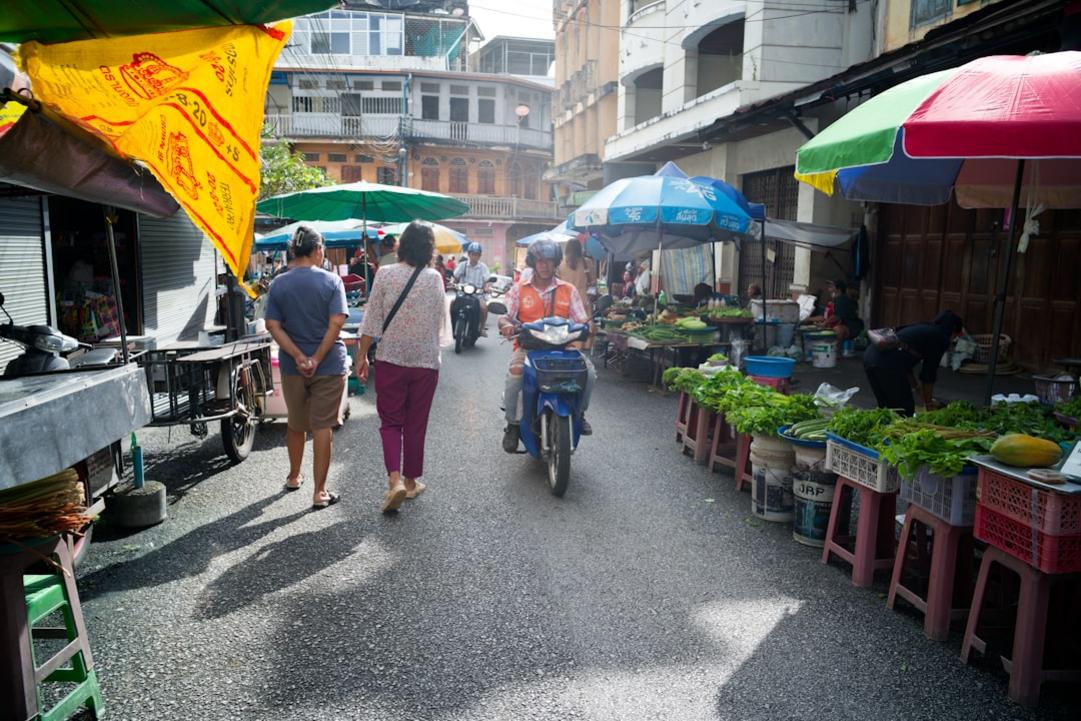
Halong Bay's culinary scene is heavily influenced by its coastal location and the abundance of fresh seafood. The region is known for its unique preparation of local fish and shellfish, often grilled or steamed with aromatic herbs. The fishing port of Hon Gai provides a direct link to the freshest catches, while the local fishing communities contribute to the vibrant food culture. Expect to find dishes that highlight the flavors of the sea, complemented by local herbs and spices that set Halong Bay apart from the rest of Vietnam.
Must-try dishes
Bánh Đúc Nóng (Hot Rice Cake)
A savory rice cake topped with minced pork and herbs.
This dish is a local specialty often found in Halong Bay, showcasing the region's fresh ingredients and traditional cooking methods.
Insider tip: Look for stalls with a line of locals; that's a good sign of quality.
Chả Mực (Squid Cake)
A deep-fried cake made from minced squid, often served with dipping sauce.
Halong Bay is famous for its squid, and Chả Mực is a dish that highlights this local catch, making it a must-try.
Insider tip: Pair it with a local beer for the perfect meal.
Ngọc Trai (Pearl Oyster)
Fresh oysters served raw or grilled, often topped with herbs and spices.
Halong Bay is known for its pearl farming, and the oysters here are exceptionally fresh and flavorful.
Insider tip: Ask for them grilled with garlic for a delicious twist.
Bánh Xèo (Vietnamese Pancake)
A crispy pancake filled with shrimp, pork, and bean sprouts, served with fresh herbs.
This dish reflects the local culinary style, combining fresh seafood with traditional Vietnamese flavors.
Insider tip: Enjoy it with a side of fish sauce for an authentic taste.
Trà Mạn (Green Tea)
A locally produced green tea known for its smooth flavor.
Insider tip: Opt for loose-leaf tea for the best experience.
Local drinks
- Bia Hơi (Fresh Beer)Enjoy it at local beer gardens in Bai Chay, where it’s a popular choice among locals.
A light, refreshing beer brewed daily and served fresh.

Where to eat - by neighborhood
Old Quarter
This area is bustling with street food stalls and local eateries, offering a variety of traditional dishes.
Insider tip: Order from the stalls that have the most locals eating there; it guarantees freshness and authenticity.
Bai Chay
Known for its seafood restaurants and vibrant nightlife, Bai Chay is a great place to enjoy fresh catches by the water.
Insider tip: Try to visit during the evening when the seafood stalls come alive with locals enjoying dinner.
Hon Gai
This quieter district features local markets and family-run restaurants, perfect for a more authentic dining experience.
Insider tip: Look for places that display their fresh seafood catch of the day; it’s a sign of quality.
Tuan Chau Island
Home to upscale dining options and seafood shacks, this area caters to both tourists and locals.
Insider tip: Ask for the daily specials, which often feature the freshest ingredients available.
Restaurants worth knowing
Nha Hang Hong Hanh
Nha Hang 1958
Nha Hang Phuc Quang
Local markets
| Hon Gai Market | Daily, 6 AM - 6 PM - Fresh seafood and local produce, perfect for sampling local flavors. |
|---|---|
| Bai Chay Night Market | Friday to Sunday, 5 PM - 10 PM - Street food and local snacks, ideal for an evening stroll and tasting various dishes. |
Dietary note
Vegetarians may find limited options, but many seafood restaurants offer vegetable dishes and rice.
Daily budget for Halong Bay
Halong Bay's costs can be higher than other parts of Vietnam due to its popularity as a tourist destination. Expect to pay a premium for activities like cruises and guided tours that showcase the stunning limestone karsts.
Shoestring
- lodging - dormitory in a hostel or budget hotel
- food - street food and local eateries
- transport - local buses or shared taxis
- activities - self-guided exploration or budget tours
- buffer - small expenses and snacks
Trade-offs: Staying on a shoestring budget may limit your access to premium experiences like overnight cruises.
Comfort
- lodging - mid-range hotel or private room in a hostel
- food - mix of local restaurants and cafes
- transport - taxis or private transfers
- activities - guided tours or day cruises
- buffer - miscellaneous expenses
Trade-offs: Opting for comfort allows for better lodging and more organized activities, but costs can add up quickly.
Splurge
- lodging - upscale hotel or luxury cruise
- food - fine dining experiences
- transport - private car or premium transfers
- activities - exclusive tours and excursions
- buffer - extra costs for souvenirs or tips
Trade-offs: While splurging offers a luxurious experience, it significantly increases daily expenses.
Money-saver tip
Book a day cruise instead of an overnight one to save on accommodation costs while still enjoying the bay.
Splurge that's worth it
Invest in a premium overnight cruise for an immersive experience with stunning views and top-notch service.
Skip to save
Avoid the overpriced tourist shops near the harbor that sell souvenirs at inflated prices.

Practical tips for Halong Bay
Money
Cash or card. Halong Bay operates on a mix of cash and card payments. While most restaurants and hotels accept cards, smaller shops and local markets often prefer cash.
ATMs. ATMs are widely available, especially in Bai Chay and the Old Quarter. Expect foreign transaction fees, and Vietcombank ATMs generally work best with foreign cards.
Tipping. Tipping is appreciated but not mandatory; rounding up the bill or leaving around $1-2 for good service is common.
Safety
Halong Bay is generally safe for travelers, but it's wise to stay alert in crowded areas. Petty theft can occur, particularly in tourist hotspots.
Where to walk at night. Bai Chay and the Old Quarter are safe for evening strolls, with plenty of people around. Avoid the less populated areas of Hon Gai after dark, as they can feel deserted.
Common scams:
- Overcharging for boat tours or services.
- Fake tour operators selling non-existent trips.
- Taxi drivers refusing to use the meter.
Local warnings:
- Be cautious of strong currents when swimming.
- Watch for slippery surfaces on boats and docks.
- Dengue fever is a risk during the rainy season.
Connectivity
Mobile data. Mobile data coverage is robust throughout Halong Bay. Viettel offers good SIM options, with prices around $5 for a month of data.
Wi-Fi. Most hotels and cafes provide free Wi-Fi, particularly in Bai Chay. The Old Quarter has several cafes where you can reliably connect.
Late-night transit. Public transit options are limited after dark. Taxis and rideshare services are your best bet for late-night returns, especially from Bai Chay.
Language
Main language: Vietnamese. English level: English is commonly spoken in tourist areas, but proficiency drops in local neighborhoods. Expect basic communication in hotels and restaurants.
Cultural notes
- Dress modestly when visiting temples or local homes.
- Always ask before taking photos of people.
- Greet locals with a smile and a nod; it's appreciated.
Solo female travel
Halong Bay is generally welcoming to solo female travelers. The atmosphere is relaxed, with many cafes and restaurants where you can feel comfortable dining alone.
- Neighborhood: Stick to Bai Chay and the Old Quarter for evening activities, as they are lively and well-lit.
- Transport: Use rideshare apps for late-night transport to ensure safety and convenience.
- Meeting people: Consider staying in hostels or eco-lodges that offer group activities, making it easier to meet fellow travelers.
Frequently asked questions about Halong Bay
1Is kayaking through Sung Sot Cave worth it?
Yes, kayaking through Sung Sot Cave offers stunning views of the limestone formations and a unique perspective of the bay. Expect to spend around 2-3 hours exploring, which is well worth the time.
2Tuan Chau Island or Bai Chay - where should I stay?
Choose Tuan Chau Island for a quieter experience with direct access to cruises and nature. Bai Chay is busier and better for nightlife but can feel crowded.
3Should I skip the visit to Cua Van Floating Village for a kayaking tour?
Skip it. While Cua Van is culturally interesting, the kayaking tour offers a more immersive experience with the bay's natural beauty and is a highlight of any trip.
4What is the best time to visit Halong Bay?
The best time to visit is from October to April when the weather is cooler and drier, making it ideal for outdoor activities and wildlife spotting.
5Is Halong Bay safe for solo female travelers?
Yes, Halong Bay is generally safe for solo female travelers. Stick to well-populated areas and consider joining group tours for added security.
6Can you swim in Halong Bay?
Yes, swimming is possible in designated areas, especially around beaches like Ti Top Island. However, always check local conditions before diving in.
7What does a day cost in Halong Bay?
Expect to spend around $60-$120 per day, including accommodation in eco-lodges, meals, and guided activities like kayaking or trekking.
8What should I try to eat in Halong Bay?
Try Chả Mực (squid cake) and Bánh Xèo (Vietnamese pancake) for a taste of local cuisine. These dishes are popular and reflect the region's seafood heritage.