


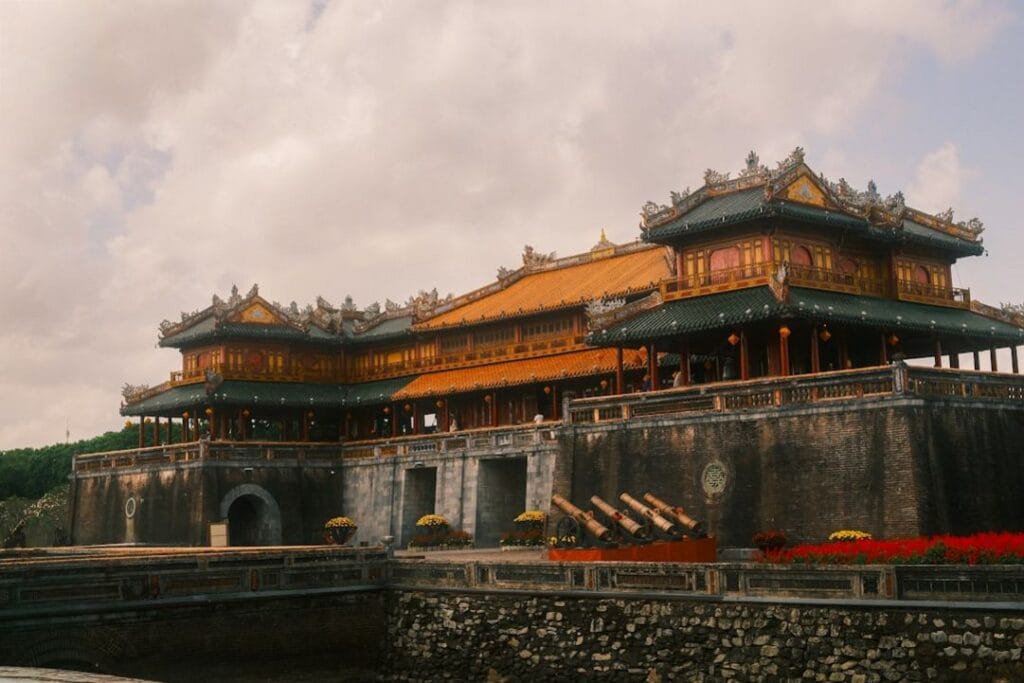
At Thien Mu Pagoda on the Perfume River, dawn monks begin their alms procession, a ritual unique to Vietnam’s living Buddhist tradition.
Mỹ Sơn’s Cham Hindu ruins, Thien Mu Pagoda’s riverside presence, and the Cao Dai Holy See’s syncretic mass anchor Vietnam’s layered religious landscape. These sites reveal how Buddhist, Catholic, and Cao Dai traditions coexist and shape the country’s spiritual identity.
This guide clarifies which sites still host active worship, when to visit for ceremonies, dress codes, and photography rules. Expect some closures during prayer times and heavy crowds at peak pilgrim festivals like Vesak and Tet.
Key facts for visiting Vietnam’s religious landmarks
- Wear modest clothing covering shoulders and knees at all temples and churches.
- Visit Cao Dai Holy See around noon for the syncretic midday mass ceremony.
- Avoid Perfume Pagoda from January to March to skip large pilgrim crowds.
- Plan temple visits early morning for dawn alms and puja ceremonies.
- Notre-Dame Basilica interior often closed due to ongoing restoration.
- Bai Dinh Pagoda is modern and crowded; best for architecture, not worship.
- Ham Long Church hosts active services; suitable for respectful visitors.
- Temple of Literature prohibits incense; focus on its Confucian scholarship legacy.
Which of these landmarks are actually worth your time
Focus on Mỹ Sơn for Hindu heritage, Thien Mu and Tran Quoc Pagodas for active Buddhist worship, and the Cao Dai Holy See for a unique syncretic experience. Skip Bai Dinh Pagoda unless interested in modern scale over spiritual atmosphere. The Perfume Pagoda is rewarding outside peak pilgrimage months but avoid January to March crowds. Catholic sites like Tan Dinh Church and Notre-Dame Basilica offer architecture but limited access inside; Ham Long Church is better for active parish life. One Pillar Pagoda is a quick stop paired with nearby sites.

Vietnam Religious Landmarks Overview
This table compares each site by tradition, crowd level, and a brief verdict to guide your itinerary choices.
| Site | Tradition | Crowds | Verdict |
|---|---|---|---|
| Mỹ Sơn | Hindu (Shaivism) / Cham Kingdom | Crowded | Anchor your trip here |
| Thien Mu Pagoda | Buddhism | Moderate | Anchor your trip here |
| Tran Quoc Pagoda | Buddhism | Moderate | Anchor your trip here |
| Tan Dinh Church | Catholicism | Moderate | Worth a detour |
| Ham Long Church | Catholicism | Moderate | Anchor your trip here |
| Temple of Literature | Confucianism | Crowded | Only for history buffs |
| Bai Dinh Pagoda | Mahayana Buddhism | Crowded | Skip unless architecture buff |
| Cao Dai Holy See | Caodaism | Moderate | Anchor your trip here |
| One Pillar Pagoda | Mahayana Buddhism | Crowded | Quick stop only |
| Perfume Pagoda (Chua Huong) | Mahayana Buddhism | Crowded | Worth a detour off season |
| Linh Ung Pagoda (Son Tra) | Mahayana Buddhism | Moderate | Worth a detour |
| Notre-Dame Cathedral Basilica of Saigon | Catholicism | Crowded | Skip interior access |
| Long Son Pagoda | Mahayana Buddhism | Moderate | Worth a detour |

Where these religious landmarks are
Every religious landmark worth your time in Vietnam
Explore Vietnam’s diverse religious landscape, where each landmark offers a unique glimpse into the country’s spiritual heritage. Every site listed below has been evaluated for its authenticity and active use, ensuring that your visit aligns with genuine practices rather than commercialized experiences. From ancient Hindu temples to vibrant Buddhist pagodas and active Catholic churches, each location is assessed for its significance and visitor experience.
Mỹ Sơn,
Visit Mỹ Sơn for a deep dive into Cham Hindu heritage, especially if interested in ancient architecture and history. Skip midday visits to avoid crowds and heat.
Tradition: Hindu (Shaivism) / Cham Kingdom, showcasing the architectural legacy of the Cham civilization.
Mỹ Sơn is a UNESCO-listed cluster of Cham Hindu temples built between the 4th and 13th centuries. The site is dedicated to Shiva worship, featuring unique brick and stone structures that blend architectural styles. Surrounded by jungle, it offers a mystique that enhances its historical significance.
To reach Mỹ Sơn, travel approximately 40 km from Hoi An, making it easy to combine with visits to the Old Town. Arrive early, ideally before 8 AM, to experience cooler temperatures and fewer tourists. Midday visits (10 AM – 4 PM) should be avoided due to peak crowds and heat. An insider tip: explore the furthest temples first to enjoy them in relative solitude. About 90 minutes is enough to appreciate the site.
- Tradition: Hindu (Shaivism) / Cham Kingdom
- Era: 10th century
- Best time: Early morning visits before 8 AM
- Crowds: crowded
What to look for: Cham Kingdom temples – unique Hindu architecture · Brick and stone structures blending styles
Why it earns the detour:
- UNESCO World Heritage site, ensuring preservation
- Atmospheric jungle surroundings enhance the experience
- Proximity to Hoi An allows for easy cultural exploration

Thien Mu Pagoda,
Thien Mu Pagoda is essential for experiencing active Buddhist worship in a picturesque setting. Avoid the midday heat by visiting early.
Tradition: Buddhism, with a functioning Buddhist nunnery on-site.
Thien Mu Pagoda stands as Hue‘s iconic Buddhist temple, distinguished by its seven-tier Phuong Pagoda tower. Located on a bend of the Perfume River, it offers a scenic backdrop that enhances its spiritual ambiance. The presence of a nunnery adds to its authenticity as a living place of worship.
Access the pagoda by boat from Hue town for a scenic journey. Early morning visits (before 8 AM) are recommended for fewer crowds and softer light. The site can be combined with a Perfume River evening cruise for a romantic experience. Avoid midday visits to escape the heat. An insider move is to explore the nunnery area for a glimpse of daily monastic life. Plan for about an hour to fully appreciate the site.
- Tradition: Buddhism
- Era: 1601
- Best time: Early morning before 8 AM
- Crowds: moderate
What to look for: Seven-tier Phuong Pagoda tower – iconic symbol · Buddhist nunnery – active spiritual center
Why it earns the detour:
- Riverside location enhances the scenic beauty
- Real spiritual center with active worship
- Combine with a boat ride for a unique experience

Tran Quoc Pagoda,
Tran Quoc Pagoda is a must-visit for those seeking a serene atmosphere and a glimpse of Hanoi‘s spiritual life. Visit early to avoid crowds.
Tradition: Buddhism, central to Hanoi’s spiritual life.
Tran Quoc Pagoda, Hanoi’s oldest temple, dates back over 1,400 years and is located on an island in Hoan Kiem Lake. This sacred site is essential for understanding the city’s spiritual heritage. Early mornings reveal monks meditating, offering a tranquil experience away from the city’s hustle.
To enjoy the site fully, visit before 7 AM to witness the peaceful meditation of monks and avoid tourist crowds. The entrance fee is minimal, making it accessible for all. The pagoda’s island setting provides a quiet refuge. An insider tip: take a moment to walk around the lake for a complete experience. Plan for about an hour to soak in the atmosphere.
- Tradition: Buddhism
- Era: 6th century
- Best time: Early morning before 7 AM
- Crowds: moderate
What to look for: Island location in Hoan Kiem Lake · Active Buddhist nunnery
Why it earns the detour:
- Early morning meditation adds to the experience
- Central to Hanoi spirituality, reflecting local beliefs
- Minimal entrance fee enhances accessibility

Tan Dinh Church, - Tradition: Catholicism
- Era: 1910
- Best time: Weekday mornings for quiet visits
- Crowds: moderate

Tan Dinh Church is worth a visit for its striking architecture and active parish life. For a quieter experience, avoid Sunday masses.
Tradition: Catholicism, active Catholic parish since 1910.
Tan Dinh Church is Ho Chi Minh City‘s largest cathedral, known for its distinctive pink neo-Gothic architecture. Built in 1910, the church features an ornate interior that reflects colonial craftsmanship. As an active parish, it draws crowds, especially during Sunday masses.
For a peaceful visit, opt for weekday mornings when the church is quieter. The ornate interior is best appreciated without the weekend rush. An insider tip: take time to admire the details of the architecture and the high ceilings. Expect to spend about 30 minutes here to explore the church and its surroundings.
- Tradition: Catholicism
- Era: 1910
- Best time: Weekday mornings for quiet visits
- Crowds: moderate
What to look for: Pink neo-Gothic facade – iconic HCMC landmark · Colonial-era ornate interior
Why it earns the detour:
- Active parish life enhances community engagement
- Historic religious center with significant architecture
- Weekday visits provide a quieter experience
Ham Long Church, - Tradition: Catholicism
- Era: 1884
- Best time: Weekday mornings for quiet visits
- Crowds: moderate

Ham Long Church offers a historic glimpse into Hanoi’s Catholic community. Visit on weekdays for a quieter experience.
Tradition: Catholicism, active parish since 1884.
Ham Long Church, built in 1884, features a striking red facade that stands out in Hanoi’s Old Quarter. This historic church is a landmark and an active parish, making it a significant site for local Catholics. Its colonial-era architecture provides a glimpse into the past.
To enjoy a peaceful visit, choose weekday mornings when the church is less crowded. The red brick facade is particularly photogenic in the soft morning light. An insider tip: explore the surrounding area for nearby attractions. Plan for about 30 minutes to appreciate the church and its context.
- Tradition: Catholicism
- Era: 1884
- Best time: Weekday mornings for quiet visits
- Crowds: moderate
What to look for: Red brick facade – iconic in Old Quarter · Historic colonial-era church
Why it earns the detour:
- Active parish life offers a sense of community
- Close proximity to other tourist attractions
- Weekday visits ensure a quieter experience
Temple of Literature, - Tradition: Confucianism
- Era: 11th century
- Best time: Early mornings before tourist crowds
- Crowds: crowded
The Temple of Literature is essential for understanding Vietnam’s educational and cultural history. Allocate time to explore its courtyards.
Tradition: Confucianism, Vietnam’s oldest Confucian temple and first national university.
The Temple of Literature, founded in 1070, serves as Vietnam’s oldest Confucian temple and was the country’s first national university. Its five linked courtyards lead visitors through a historical narrative dedicated to Confucius and the scholar-officials of Vietnam. The site is devoid of incense, emphasizing its scholarly focus.
Expect crowds, especially during weekends and holidays. Allocate sufficient time to explore all five courtyards, particularly the Khue Van Pavilion, which is featured on the 100,000 dong note. An insider tip: visit early to enjoy the tranquility before the crowds arrive. Plan for about 90 minutes to fully appreciate the site.
- Tradition: Confucianism
- Era: 11th century
- Best time: Early mornings before tourist crowds
- Crowds: crowded
What to look for: Five walled courtyards leading through the site · Khue Van Pavilion – featured on currency
Why it earns the detour:
- Significant historical and educational site
- No incense policy enhances the scholarly atmosphere
- A must-visit for those interested in Confucian teachings
Bai Dinh Pagoda, - Tradition: Mahayana Buddhism
- Era: 2003
- Best time: Weekdays outside peak pilgrimage months
- Crowds: crowded

Bai Dinh Pagoda offers a modern take on Vietnamese Buddhism but may feel commercialized. Visit if interested in large-scale structures; otherwise, skip it.
Tradition: Mahayana Buddhism, featuring Southeast Asia’s largest pagoda complex.
Bai Dinh Pagoda is a vast modern Buddhist complex, built between 2003 and 2010, that claims to be Southeast Asia’s largest. While it features impressive structures, including a massive bronze Buddha, the scale can overshadow the spiritual experience. The complex is adjacent to an older 11th-century shrine.
Located 18 km from Ninh Binh, Bai Dinh is easily accessible, but expect crowds, especially during weekends and holidays. Electric buggies shuttle visitors between the various areas of the complex, which can detract from the experience. An insider tip: focus on the smaller, older shrine for a more authentic experience. Plan for at least an hour to navigate the complex.
- Tradition: Mahayana Buddhism
- Era: 2003
- Best time: Weekdays outside peak pilgrimage months
- Crowds: crowded
What to look for: Southeast Asia’s largest bronze Buddha · Tallest pagoda in the region
Why it earns the detour:
- Modern structures contrast with traditional Vietnamese Buddhism
- Conveniently located near Ninh Binh for easy access
- The older shrine offers a more genuine experience

Cao Dai Holy See, Tay Ninh- Tradition: Caodaism
- Era: 1933
- Best time: Midday mass on Sundays or during festivals for a lively experience.
- Crowds: moderate
Essential for those seeking a unique spiritual experience; attend the midday mass to witness the vibrant syncretism of Caodaism. Skip if uninterested in modern religious practices.
Tradition: Caodaism, a syncretic religion blending Buddhism, Catholicism, Confucianism, and more, founded in the early 20th century.
Cao Dai Holy See serves as the spiritual center of Caodaism, a 1920s Vietnamese fusion religion. The cathedral’s pastel facade and striking Divine Eye iconography make it visually distinctive. Observing the noon ceremony from the upstairs galleries offers a unique insight into this vibrant faith.
Located about 90 minutes from Ho Chi Minh City, the Holy See is accessible via bus or taxi. It can get moderately crowded during the midday mass, so arrive early to secure a good viewing spot. Dress modestly, as this is an active place of worship. The best move is to head to the upper galleries for an unobstructed view of the ceremony. Allocate at least an hour for your visit to soak in the atmosphere and explore the grounds.
- Tradition: Caodaism
- Era: 1933
- Best time: Midday mass on Sundays or during festivals for a lively experience.
- Crowds: moderate
What to look for: Divine Eye iconography · Pastel facade
Why it earns the detour:
- The noon ceremony features colorful robes and chanting, showcasing the religion’s unique blend of traditions.
- Cao Dai Holy See’s architecture reflects a mix of influences, making it a visual feast for visitors.
- The site offers a chance to engage with local practitioners and learn about their beliefs.
One Pillar Pagoda, Hanoi- Tradition: Mahayana Buddhism
- Era: 11th century
- Best time: Weekday mornings before 10am to avoid crowds.
- Crowds: crowded

Worth a quick stop for its unique architecture; ideal for those with limited time. Skip if looking for a deeper Buddhist experience.
Tradition: Mahayana Buddhism, exemplified by the iconic design resembling a lotus flower.
The One Pillar Pagoda, built in 1049 by Emperor Ly Thai Tong, is a remarkable Buddhist structure balanced on a single stone column. It was designed to symbolize a lotus rising from the water, embodying purity and enlightenment. The current structure is a faithful replica of the original, destroyed in 1954.
Situated within the Ho Chi Minh Mausoleum complex, this pagoda can get crowded, especially during weekends. Entry is free, and the site is accessible via public transport. Dress modestly when visiting. A quick insider tip: pair your visit with the nearby Ho Chi Minh Mausoleum for a more enriching experience. Allocate about 10 minutes to fully appreciate the pagoda’s beauty and take photos.
- Tradition: Mahayana Buddhism
- Era: 11th century
- Best time: Weekday mornings before 10am to avoid crowds.
- Crowds: crowded
What to look for: Single stone pillar design · Lotus flower symbolism
Why it earns the detour:
- The pagoda’s unique design makes it one of Hanoi’s most photographed landmarks.
- It’s a significant symbol of Vietnamese Buddhism and culture, representing resilience.
- The site is a peaceful contrast to the bustling city, perfect for a brief reflection.
Perfume Pagoda (Chua Huong), Hanoi- Tradition: Mahayana Buddhism
- Era: 14th century
- Best time: Visit in April or May for fewer crowds and pleasant weather.
- Crowds: crowded

A rewarding experience for those who enjoy nature and spiritual journeys; avoid during peak pilgrimage months in January to March. Skip if seeking a quick visit.
Tradition: Mahayana Buddhism, with a focus on pilgrimage and nature worship.
Perfume Pagoda is a complex of Buddhist temples and shrines nestled in the Huong Tich grotto, dating back to 1400. The journey involves a scenic two-hour rowboat ride through lush karst paddies, followed by a hike or cable car ride to the main cave temple. This pilgrimage site draws hundreds of thousands during the annual festival.
Located about 60 km southwest of Hanoi, the pagoda is best accessed by boat from Yen Stream. It becomes extremely crowded during the January to March pilgrimage season, so plan your visit outside these months. Dress appropriately for hiking if you choose the trail. An insider tip: take the cable car for stunning views and skip the crowded temple interior for a more serene experience in the surrounding nature. Plan for at least half a day to fully enjoy the journey and the site.
- Tradition: Mahayana Buddhism
- Era: 14th century
- Best time: Visit in April or May for fewer crowds and pleasant weather.
- Crowds: crowded
What to look for: Cave temple within Huong Tich grotto · Scenic boat ride access
Why it earns the detour:
- The annual Huong Pagoda Festival is one of Vietnam’s largest pilgrimages, showcasing local traditions.
- The natural beauty surrounding the pagoda enhances the spiritual experience.
- The site offers various trails for hiking enthusiasts, providing a mix of adventure and spirituality.
Linh Ung Pagoda (Son Tra), Da Nang- Tradition: Mahayana Buddhism
- Era: 2004
- Best time: Visit at sunset for fewer crowds and stunning views.
- Crowds: moderate
A must-visit for those appreciating modern Buddhist architecture and stunning views; ideal at sunset. Skip if uninterested in contemporary sites.
Tradition: Mahayana Buddhism, highlighted by its towering statue of Quan Am.
Linh Ung Pagoda, founded in 2004, features a striking 67-metre statue of Quan Am (Lady Buddha) overlooking Da Nang Bay. This modern temple is situated on Son Tra Peninsula, providing breathtaking views of the coastline and city. The site is free to enter and offers a peaceful retreat from the bustling city.
Easily reachable by taxi or scooter from Da Nang, the pagoda is moderately crowded, particularly during weekends. Visit at sunset for a quieter experience as the temple grounds clear and the city lights up. Dress modestly, as this is a place of worship. An insider tip: explore the surrounding gardens and paths for additional viewpoints. Allocate about an hour to enjoy the site and take in the views.
- Tradition: Mahayana Buddhism
- Era: 2004
- Best time: Visit at sunset for fewer crowds and stunning views.
- Crowds: moderate
What to look for: 67-metre Lady Buddha statue · Hillside temple grounds
Why it earns the detour:
- The pagoda’s modern design contrasts beautifully with traditional Vietnamese architecture.
- The panoramic views from the temple grounds are among the best in Da Nang.
- The site is a popular spot for both tourists and locals, enhancing its vibrant atmosphere.

Notre-Dame Cathedral Basilica of Saigon, Ho Chi Minh City- Tradition: Catholicism
- Era: 1880
- Best time: Weekday mornings for fewer crowds.
- Crowds: crowded

Ideal for architecture enthusiasts; visit for the exterior as the interior is often closed. Skip if seeking an active religious experience.
Tradition: Catholicism, represented by its neo-Romanesque architectural style.
The Notre-Dame Cathedral Basilica of Saigon is a striking example of neo-Romanesque architecture, constructed between 1863 and 1880 using imported materials from France. Its twin spires and red brick facade make it a prominent landmark in the city. However, the interior has been closed for restoration since 2017, limiting access for visitors.
Located in the heart of Ho Chi Minh City, the cathedral is easily accessible and often crowded, particularly during weekends. While the interior is off-limits, the exterior is worth admiring and photographing. Dress respectfully as it is an active church. An insider tip: visit early in the morning or late afternoon for the best light and fewer people. Spend about 30 minutes to appreciate the architecture and take photos.
- Tradition: Catholicism
- Era: 1880
- Best time: Weekday mornings for fewer crowds.
- Crowds: crowded
What to look for: Twin spires · Red brick facade
Why it earns the detour:
- The cathedral’s design reflects the influence of French colonial architecture in Vietnam.
- It serves as a central gathering point for the local Catholic community.
- The surrounding area offers additional attractions, including the Saigon Central Post Office.
Long Son Pagoda, Nha Trang- Tradition: Mahayana Buddhism
- Era: 1886
- Best time: Weekday mornings for a quieter experience.
- Crowds: moderate
A rewarding visit for those interested in Buddhist culture and coastal views; less crowded than other spots. Allocate time for the climb.
Tradition: Mahayana Buddhism, exemplified by its prominent seated Buddha.
Long Son Pagoda, founded in 1886, is Nha Trang’s leading Buddhist temple, featuring a 24-metre white seated Buddha on a lotus throne. The pagoda is situated on the slope of Trai Thuy Hill, reached by climbing 152 stone steps lined with bonsai trees. It offers a serene atmosphere and stunning views of the city.
Easily accessible from Nha Trang city center, the pagoda is moderately crowded, especially during weekends. Entry is free, but donations are welcomed. Dress modestly when visiting. An insider tip: take your time on the steps to enjoy the bonsai and views. Plan for about an hour to explore the pagoda and enjoy the vistas.
- Tradition: Mahayana Buddhism
- Era: 1886
- Best time: Weekday mornings for a quieter experience.
- Crowds: moderate
What to look for: 24-metre white seated Buddha · Stone steps lined with bonsai
Why it earns the detour:
- The pagoda’s elevation provides one of the best viewpoints in Nha Trang.
- It reflects the resilience of the local Buddhist community through its history.
- The site is a peaceful escape from the coastal city’s hustle and bustle.

When to visit, and which festivals reshape the experience
Timing is crucial when visiting Vietnam’s religious landmarks, as both the weather and the religious calendar significantly influence the experience. The interplay between seasonal conditions and key religious events can enhance or hinder access and enjoyment at these sites.
The dry season, and why the major sites are at their fullest
October to April
This season offers the most comfortable weather for exploring Vietnam’s religious sites, with lower humidity and less rainfall. However, it also attracts larger crowds, especially during major festivals. Plan visits early in the morning or later in the afternoon to avoid peak crowds and heat, particularly at outdoor sites. Be aware that some pilgrimages and ceremonies may coincide with this period, creating additional foot traffic.
The pilgrimage season, and how to navigate the crowds
January to March
This period sees significant pilgrimages at various Buddhist sites, particularly around the Lunar New Year. Expect larger crowds and potential disruptions at popular destinations. If visiting during this time, prioritize early morning visits and consider less-trafficked sites to fully appreciate the spiritual atmosphere without overwhelming crowds.
- Vesak – April/May full moon
Vesak celebrates the birth, enlightenment, and death of the Buddha, drawing large crowds to Buddhist sites for ceremonies and rituals. Sites: Thien Mu Pagoda, Tran Quoc Pagoda, Bai Dinh Pagoda - Lunar New Year – approximately January/February
The Lunar New Year is a major celebration in Vietnam, leading to increased visitors at religious sites for prayers and offerings. Sites: Perfume Pagoda (Chua Huong), One Pillar Pagoda
Timing your visits to avoid crowds
To avoid the busiest times, visit sites early in the morning or late in the afternoon. Be mindful of local religious services, particularly on Sundays at Christian sites and during Friday prayers at mosques. Additionally, local holidays can attract large crowds, so check the calendar for any significant events that may coincide with your visit.
Dress Code Essentials
Carry a lightweight long scarf to cover shoulders when entering religious sites. This versatile item also works as a head covering if needed, ensuring respectful attire across all traditions.
Traveler Type Recommendations
Use this table to find the best site for your travel style. Each recommendation is tailored to specific interests and needs.
| Traveler type | Best site for them | Why |
|---|---|---|
| Religious-architecture buff | Mỹ Sơn | Explore unique Cham Hindu temple ruins with significant architectural history. |
| Family with young children | Tran Quoc Pagoda | A moderate site with a serene environment, suitable for kids. |
| Spiritual-practice traveler | Thien Mu Pagoda | Participate in active Buddhist worship in a peaceful riverside setting. |
| First-time religious-tourism visitor | Cao Dai Holy See | Experience a vibrant syncretic mass that showcases Vietnam’s diverse beliefs. |
| Comfort-first or luxury traveler | Tan Dinh Church | Enjoy the stunning neo-Gothic architecture in a comfortable urban setting. |
| Budget or slow traveler | Long Son Pagoda | A free site with a beautiful view and less crowding, perfect for reflection. |
Your Step-by-Step Plan
Follow these steps to ensure a smooth visit to Vietnam’s religious sites. Preparation is key to a respectful and enriching experience.
Decide which sites to visit based on your interests and the recommendations provided.
Check the opening hours for each site; some may close on specific weekdays.
Plan your visit around key ceremonies or mass times for a more immersive experience.
Pack a lightweight long-sleeve top and knee-length bottoms to adhere to dress codes.
Include a scarf for covering shoulders or heads when required at certain sites.
Bring cash for offerings and merit-making, as some sites encourage this practice.
Avoid visiting during prayer times to ensure access; check local schedules for salat times.
Consider purchasing a combined ticket if available for multiple sites to save on entry fees.
On the day, arrive early to avoid crowds, especially at popular sites like Cao Dai Holy See.
Frequently Asked Questions
1What is the dress code at Thien Mu Pagoda?
Visitors should wear long sleeves and knee-length bottoms to respect the site’s traditions.
2Can I take photos at Tran Quoc Pagoda?
Yes, photography is allowed, but be respectful of worshippers and avoid using flash.
3What are the opening hours for the Cao Dai Holy See?
The Cao Dai Holy See is open daily, but check for specific mass times to plan your visit.
4Are there any gender-segregated areas at Tan Dinh Church?
No, Tan Dinh Church does not have gender-segregated seating; all are welcome to sit together.
5Is there a combined ticket for multiple sites?
Currently, there are no combined tickets for all sites; check individual sites for any available packages.
6What should I know about making offerings at Buddhist sites?
At Buddhist sites, offerings are typically made as part of merit-making; bring small amounts of cash for this purpose.
7What time should I avoid visiting One Pillar Pagoda?
Avoid visiting during the noon prayer time (Dhuhr) to ensure access and a quieter experience.
8What is the best time of year to visit Long Son Pagoda?
The best months to visit Long Son Pagoda are from February to August when the weather is pleasant.
Some links on this page are affiliate links. We may earn a small commission at no extra cost to you when you book through them.