


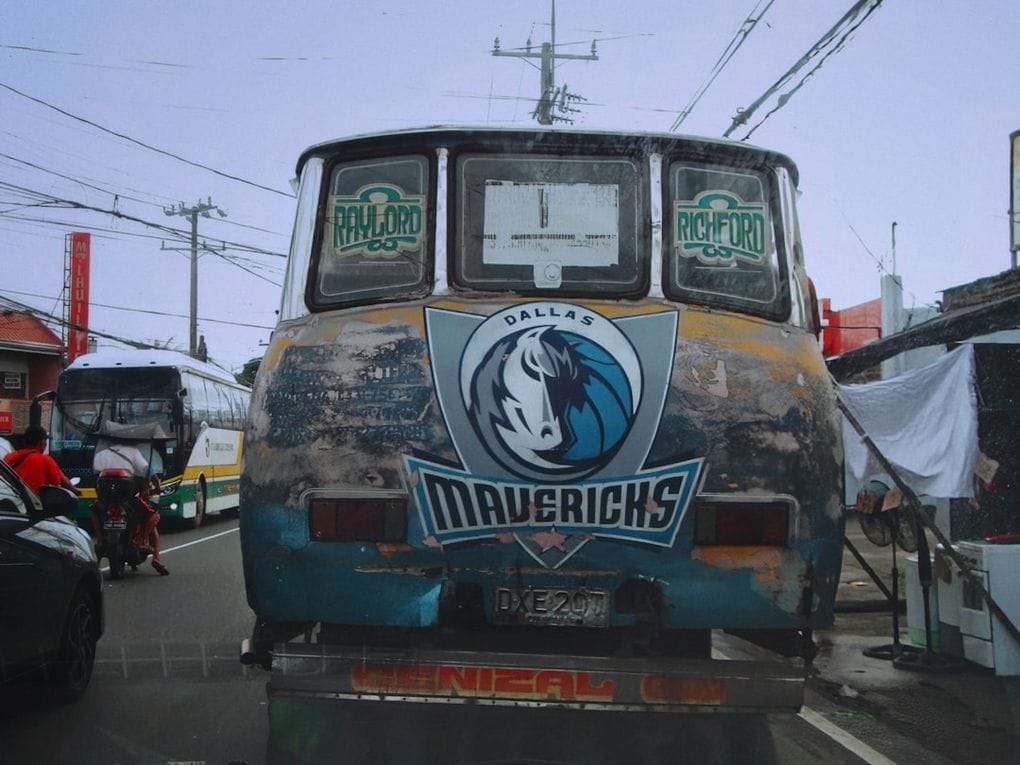
Philippines is a place where most visitors are better off not taking the wheel. With a high traffic difficulty rating and 12 road deaths per 100k, the chaos on the roads can lead to serious accidents. Expect aggressive driving norms, limited lane discipline, and motorcycles weaving between vehicles. This means planning your transportation around alternatives is essential for a safer experience.
This page provides a clear verdict on whether to self-drive, confirms that an International Driving Permit is required under the 1949 Geneva Convention, and explores alternatives for getting around. Drivers must keep in mind that the country drives on the right. For solo female travellers, using local transport options is often the safest choice.
The verdict
Most travelers should skip the rental in Philippines. The road-death figure of 12 per 100k highlights the risks involved, making alternatives like Grab, taxis, and jeepneys the smart default. Confident drivers with local experience may still manage, but caution is advised.
Essential tips
- Carry your permit. An International Driving Permit is required, following the 1949 Geneva Convention.
- Drive on the right. In the Philippines, all vehicles drive on the right side of the road.
- Expect high traffic difficulty. The traffic difficulty is rated high, making driving challenging for most visitors.
- Use local transport options. Consider using Grab, taxis, or jeepneys instead of self-driving for safer travel.
- Beware of aggressive drivers. Expect aggressive driving norms, especially in urban areas like Manila and Cebu.
- Avoid driving at night. Night driving can be particularly hazardous due to poor visibility and road conditions.
- Stay alert for seasonal hazards. Be cautious of typhoons from June to November, which can affect road safety.
How the traffic flows
Driving in the Philippines presents a high-difficulty challenge, especially in urban areas like Manila and Cebu, where congestion and aggressive driving norms dominate. The unwritten rules of the road often contradict the official traffic laws, creating a chaotic environment for foreign drivers. Expect to encounter motorcycles weaving through traffic and larger vehicles pushing their way forward without regard for lane discipline. This chaotic culture means that understanding the local driving psychology is crucial for survival on the roads. The reality of the driving experience here reveals that the written rules are only a fraction of what you need to know to navigate safely and efficiently.
RIGHT OF WAY
In the Philippines, the larger or faster vehicle typically takes priority, regardless of traffic signs. Expect motorcycles to cut in and out of lanes, often disregarding the right-of-way rules that may exist on paper. As a foreign driver, be prepared to yield to these nimble scooters and larger vehicles, as they dominate the road. This means that you must stay alert and be willing to give way to maintain safety and avoid collisions.
SIGNALS AND THE HORN
The horn in the Philippines serves as a vital communication tool, often used as a way to announce your presence rather than to signal an intention to turn or stop. High beams may be used to assert dominance during overtaking maneuvers, while indicators can be ignored altogether. Expect drivers to rely more on their horns than on turn signals, so be prepared for sudden lane changes and unexpected maneuvers.
LANE DISCIPLINE AND FLOW
Lane markings in the Philippines are often treated as mere suggestions rather than strict guidelines. Vehicles frequently merge and weave through traffic, with little regard for designated lanes. As a foreign driver, it is essential to hold your line while allowing the flow of traffic to move around you. This means being patient and cautious, especially in congested areas where vehicles may unexpectedly cut in front of you.
ANTICIPATING THE ROAD
Stay vigilant for pedestrians stepping out unexpectedly, scooters cutting in, and the possibility of livestock on rural roads. The calm mindset is crucial for navigating the unpredictable nature of traffic. During the typhoon season, be particularly cautious of sudden stops and flooding that can occur, impacting road conditions and visibility.
Do
- Honk to announce
Use your horn to alert other drivers of your presence, especially when overtaking.
- Stay alert for motorcycles
Watch for motorcycles weaving through traffic and be prepared to yield to them.
- Maintain a steady pace
Drive calmly and steadily to navigate the chaotic traffic without panic.
- Yield to larger vehicles
Give way to larger vehicles that may not adhere to right-of-way rules.
- Use headlights wisely
Use high beams to signal your presence when overtaking, but switch to low beams when facing oncoming traffic.
Do not
- Do not speed in towns
Avoid speeding in urban areas where congestion and pedestrians are common.
- Do not drink and drive
Adhere to the zero-tolerance policy for drinking and driving, as enforcement is strict.
- Do not ignore pedestrians
Be cautious and do not assume pedestrians have the right of way, especially in busy areas.
- Do not engage with solicitors
Avoid interacting with anyone soliciting bribes or roadside assistance.
Road Conditions in the Philippines
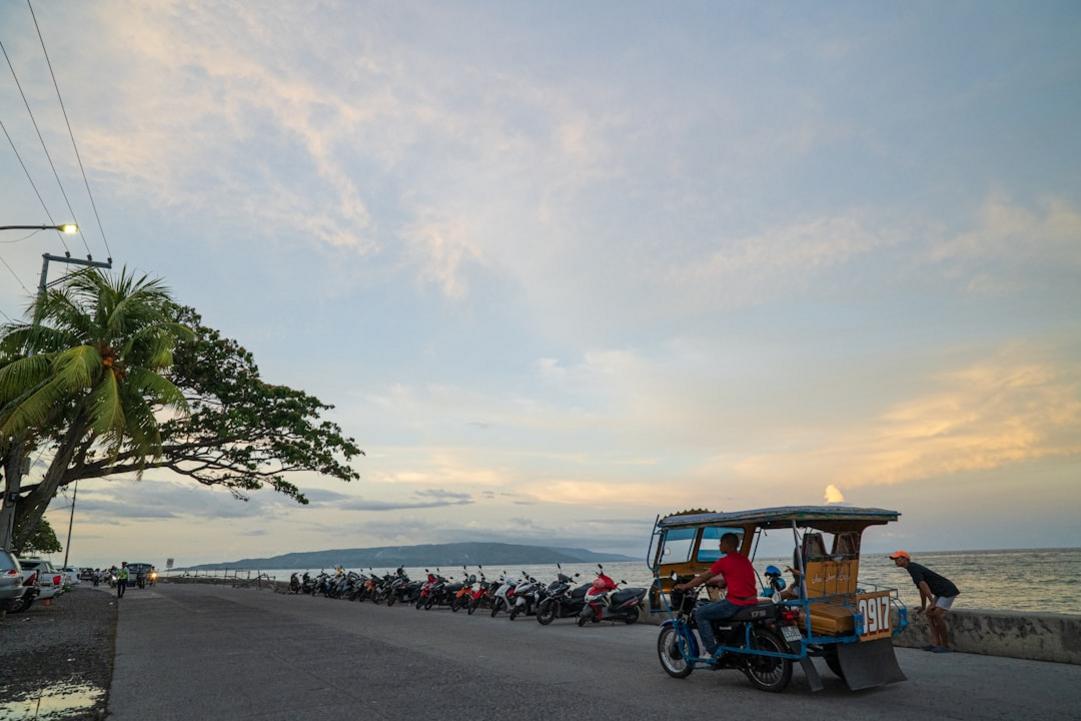
Road surfaces vary significantly across the Philippines. Urban areas like Manila and Cebu face severe congestion and limited lane discipline, while rural roads can be poorly maintained with potholes and inadequate lighting. Heavy rains during the typhoon season (June-November) can exacerbate these issues, leading to flooding and further road damage. Expect construction delays in major cities, which can add to travel times. Overall, the high traffic difficulty rating reflects these challenges.
Traffic congestion peaks during weekday rush hours, particularly from 7 AM to 9 AM and 5 PM to 8 PM in major cities. Outside these hours, congestion eases but remains unpredictable. Driving at night on rural roads poses risks due to poor lighting and potential wildlife crossings. Plan travel during off-peak hours to avoid the worst traffic and ensure a safer journey.
Key Traffic Facts
Here are essential traffic facts for navigating the Philippines.
| Metric | Value | What it means for you |
|---|---|---|
| Driving side | Right | Drive on the right side of the road, as in the US. |
| Traffic intensity | High | Expect challenging driving conditions due to high traffic. |
| Road deaths per 100k | 12 per 100k | The road death rate is below the global average. |
| Self-drive verdict | Not recommended | Self-driving is not advisable in urban areas. |
| Seasonal road hazard | Typhoon (June-November) | Typhoons can cause severe flooding and road damage. |
Traffic Rules and Limits
Traffic rules are enforced to varying degrees, and it is essential to verify current limits locally. Expect some variability in adherence to these rules.
Drink-driving
The legal blood-alcohol limit is typically around 0.05%. Random checks are common, and strict penalties apply for violations. It is safest to avoid drinking and driving altogether.
International Driving Permit Requirements
An International Driving Permit is required to drive legally in Philippines. This permit must be obtained under the 1949 Geneva Convention and should accompany your home country driver’s license.
Carry your original home driver’s license, the IDP, passport, and any rental or insurance documents. The IDP is issued in your home country, typically by the national automobile association, for a small fee in the USD range, and is valid for about a year.
Be aware that a mismatch in conventions can lead to issues, and some local authorities may require additional permits. Even with the IDP, consider whether driving is the best option for your trip.
Before you go
- Obtain the IDP before traveling to the Philippines
- Carry your original home driver’s license with the IDP
- Bring your passport for identification purposes
- Keep rental and insurance papers handy
- Verify local driving regulations upon arrival
Transport options compared
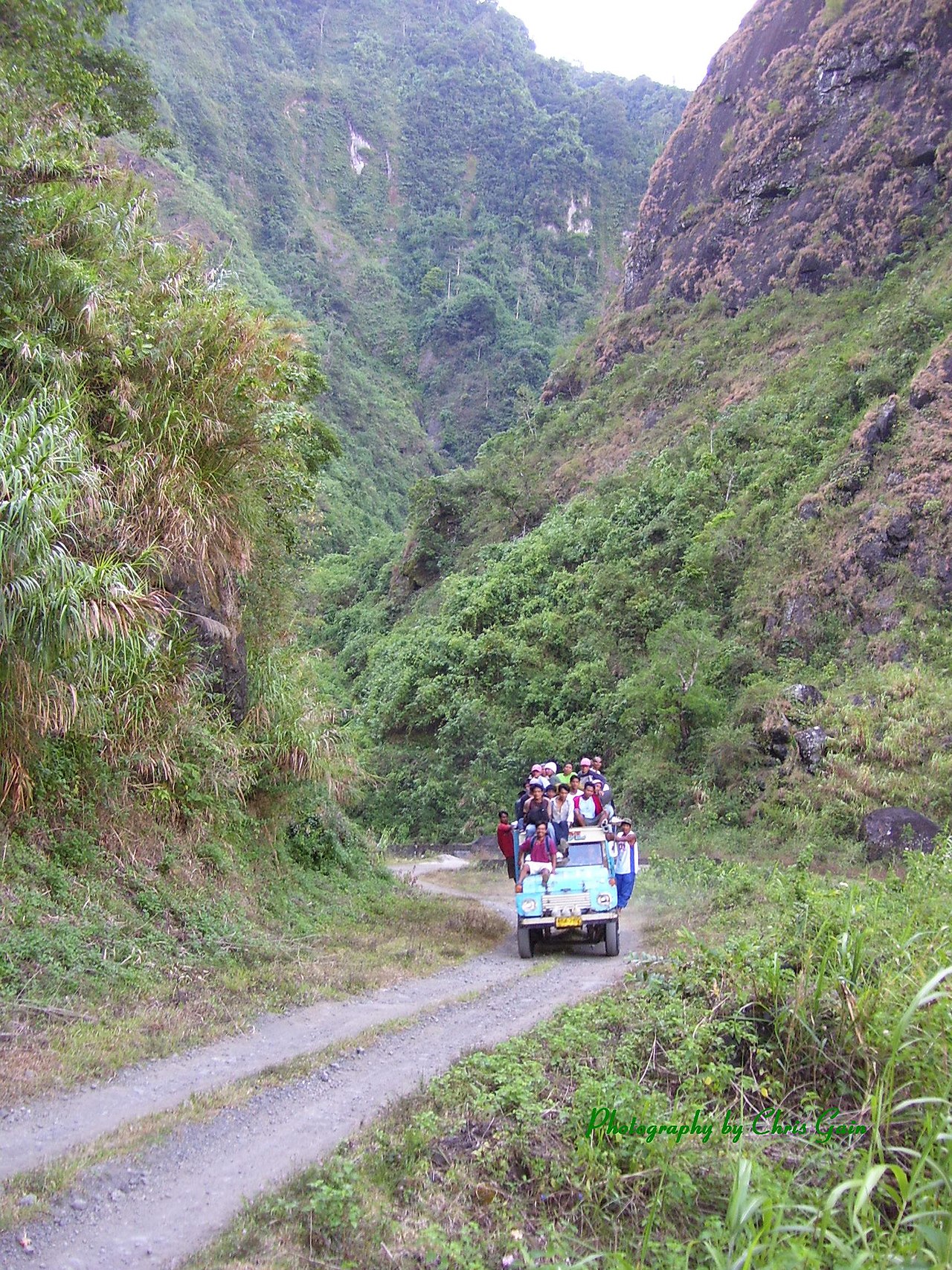
For most visitors, these are the smart default options to navigate the Philippines. Ride-hailing apps and taxis cover the most ground, while jeepneys offer a local experience. Consider ferries for island hopping and private drivers for comfort. Public transport is reliable for short trips.
| Mode | Flexibility | Cost | Safety | Tip |
|---|---|---|---|---|
| Ride-hailing app | High – reaches many areas quickly | Budget, typically 5-15 per ride | Moderate – safer than self-driving | Use a reliable app like Grab. |
| Metered taxi | Moderate – good for city travel | Budget, roughly 5-10 for short rides | Moderate – safer than self-driving | Ensure the meter is running. |
| Jeepney | Low – fixed routes, limited stops | Very low, around 0.20-0.50 per ride | Moderate – crowded and chaotic | Know your route before boarding. |
| Private driver | High – tailored to your schedule | Mid-range, typically 30-60 per day | Moderate – safer than self-driving | Negotiate rates in advance. |
| Ferry | Moderate – connects islands effectively | Budget, roughly 10-30 per trip | Moderate – check weather conditions | Book tickets ahead during peak seasons. |
Tolls and parking
Many major roads in the Philippines are tolled, with payment typically made in cash or via prepaid tags. Parking in cities can be challenging; look for secure garages rather than street parking. Always lock your vehicle and avoid leaving valuables visible.
Fuel options
Fuel stations primarily offer petrol and diesel, with availability varying in rural areas. Pay with cash or card at most stations. Always fill up when possible, as stations can be sparse outside urban centres. Prices typically range from 1-1.50 per litre.
Travelling with children
Do
- Always use a child seat in cars.
- Ensure helmets are worn on scooters.
- Keep children off the traffic side.
Do not
- Do not exceed scooter passenger limits.
- Avoid front-seat travel for young kids.
Book transport the easy way
Compare and book buses, trains and transfers in one place, often cheaper than at the counter.
What to do in a road incident
Make the scene safe first by moving to a secure location if possible. Call the emergency services using the numbers shown here and provide them with accurate details of the incident. If you are in a rental vehicle, contact the rental company to report the situation. Photograph the scene and exchange details with any other parties involved, ensuring you have all necessary information for your insurance claim. Finally, notify your travel insurer about the incident to ensure you are covered for any potential costs.
Pro tip
Get a local SIM or eSIM for access to live maps and ride-hailing apps. Download offline maps before you arrive to navigate without data. This is especially useful in areas with limited connectivity.
Driving FAQs for Philippines
1Do I need an International Driving Permit for Philippines?
Yes, an International Driving Permit is required for driving in the Philippines under the 1949 Geneva Convention. This permit must be carried alongside your home country driving license to legally operate a vehicle.
2Which side of the road do they drive on in Philippines?
In the Philippines, vehicles drive on the right side of the road. This is important to remember when navigating intersections and roundabouts to avoid confusion.
3Is it safe to drive or rent a scooter here in Philippines?
Driving or renting a scooter in the Philippines is not considered safe due to the high traffic difficulty and a road death rate of 12 per 100,000 people. It is recommended to use alternative transportation methods instead.
4Can I use ride-hailing apps in Philippines?
Yes, ride-hailing apps like Grab are widely used in the Philippines. These services provide a safer and more convenient alternative to self-driving, especially in congested urban areas.
5Is it cheaper or smarter to hire a driver in Philippines?
Hiring a driver is often smarter than self-driving in the Philippines. It avoids the stress of navigating chaotic traffic and allows you to relax while someone else handles the driving.
6Can I drive on my home licence in Philippines?
You cannot drive on just your home license in the Philippines; an International Driving Permit is required. Ensure you have both documents to avoid legal issues while driving.
7What is the speed limit in Philippines?
Speed limits in the Philippines typically vary; urban areas often have limits around 40 km/h, while rural roads may allow speeds of 80 km/h or more. Always verify local limits as rules can change.
Speed limits, alcohol limits and fuel prices are typical figures and change over time. Confirm the current rules and local signage before you drive.
Some links on this page are affiliate links. We may earn a small commission at no extra cost to you when you use them.