


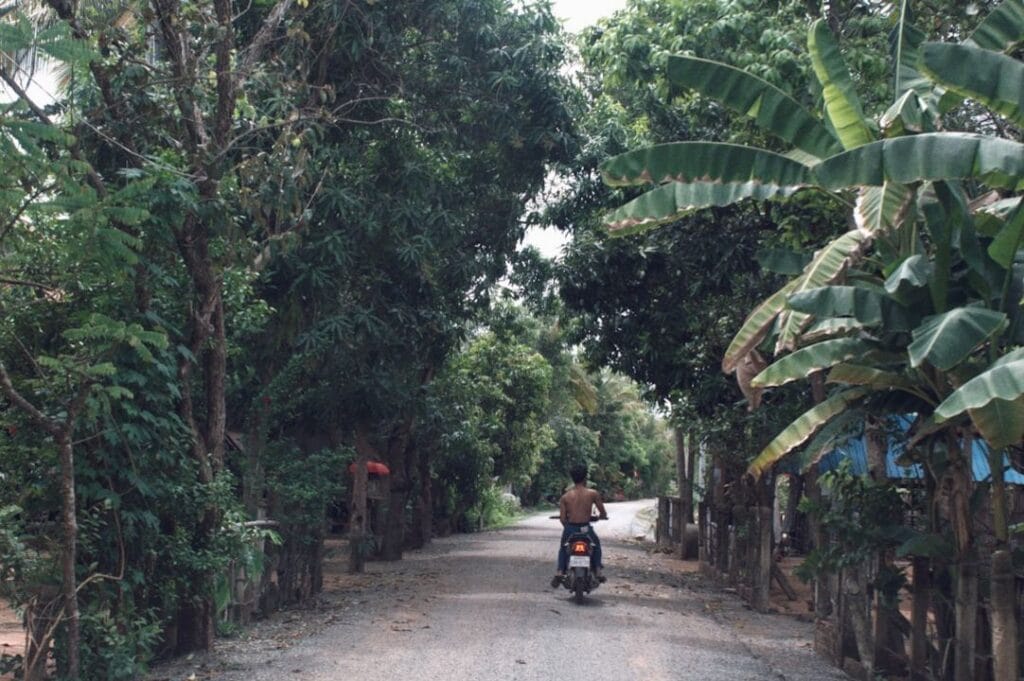
Leaving the usual temple trails behind, you enter a Cambodia where time slows and communities hold onto traditions shaped by the jungle and river. The Cardamom Mountains rise as a green fortress, sheltering villages that live by the land and water, far from the tourist crowds. This is where the real Cambodia unfolds, away from the noise and into the pulse of local life.
Here, the Tatai River’s floating bungalows offer a rare chance to live on water, drifting through thick forest and wildlife calls. Nearby, the sleepy coastal town of Kep and Rabbit Island show a quieter side of Cambodia’s French-colonial past and fishing heritage. The Cardamom Mountains community lodges invite you to walk jungle trails with villagers who know every tree and story. This is a journey into places shaped by people, nature, and history in equal measure.
Off-the-beaten-path in Cambodia centers on the Cardamom Mountains’ community lodges, the Tatai River floating bungalows, and the coastal towns of Kep and Rabbit Island, where local culture and nature blend quietly.
- Tatai River offers floating bungalows that let you experience jungle life from the water, a rare and immersive stay.
- Community lodges in the Cardamom Mountains connect you directly with indigenous villagers and their centuries-old forest knowledge.
- Kep’s sleepy coastal vibe and Rabbit Island’s fishing village atmosphere reveal Cambodia’s French-colonial and maritime heritage without crowds.
See every spot on the interactive map
Filter by country, zoom into each pin, and plan your route on the Pack Lightly Country Map tool.
What Defines Cambodia’s Off-Beat Side
Cambodia’s off-beat travel reveals a side where culture and nature fuse in remote communities and quiet coasts. The Cardamom Mountains and Tatai River lodges showcase a living heritage shaped by jungle survival and river rhythms, while Kep and Rabbit Island preserve coastal traditions far from tourist hubs.
- Tatai River’s floating bungalows stand out as the only place in Cambodia where you can live directly on the water, blending eco-tourism with community support.
- Cardamom Mountains’ community lodges offer authentic access to indigenous groups who maintain traditional forest skills, making this a cultural journey through jungle life.
- Kep’s coastal town and Rabbit Island capture Cambodia’s colonial fishing village roots, providing a slow-paced, local atmosphere unlike any other coastal destination in the country.

Explore Cambodia’s Cardamom Mountains and Coastal Communities
This route links the Cardamom Mountains’ community lodges with the Tatai River’s floating bungalows and the laid-back coastal towns of Kep and Rabbit Island. Expect immersive cultural encounters and unhurried river and seaside vibes, far from the usual tourist trails.

Cardamom Mountains Community Lodges
Arriving at the Cardamom Mountains community lodges feels like stepping into a living village where nature and culture intertwine deeply. These lodges operate in partnership with local indigenous groups, offering jungle trekking that reveals not just wildlife but the daily rhythms of community life. The lodges rely on sustainable tourism, meaning your stay directly supports conservation and local livelihoods. Most visitors rush through with only a day trek, but spending at least two nights here lets you witness traditional fishing, farming, and handicraft making. The trails are moderate but can get slippery after rain, so sturdy shoes are essential. Avoid the popular viewpoint near the main lodge; instead, take the longer path to a nearby waterfall where you’ll encounter fewer people and better wildlife sightings. This is the only spot in Cambodia where community-based jungle trekking feels genuinely rooted in local culture rather than staged for tourists. Combine this with a river trip on the Tatai nearby to stretch your experience from mountain to water. Solo travelers appreciate the respectful atmosphere and the chance to connect with villagers who speak basic Khmer and local dialects, offering real cultural exchange rather than just sightseeing.

Tatai River Floating Bungalows
The moment you float onto the Tatai River’s bungalows, the contrast with Cambodia’s busier spots becomes clear. These simple, bamboo-built lodgings drift gently on the water, surrounded by dense forest and the sounds of river life. The community-run setup means your stay supports local families who operate fishing and small-scale farming along the banks. Most visitors come for a night, but two nights unlock a relaxed pace where you can kayak, swim, or take a boat trip upstream to spot rare birds and monitor lizards. The river currents are mild in the dry season but can be stronger in the rainy months, so check conditions before booking. Avoid busy weekends when local day-trippers crowd the area; midweek stays offer peace and better wildlife encounters. This is the only place in Cambodia where floating bungalows link directly to an indigenous community’s livelihood. Combine with a trek in the nearby Cardamom lodges for a full jungle-to-river journey. Solo travelers will find the family atmosphere welcoming, with simple meals cooked fresh on-site and no need to rush anywhere.
Kep Coastal Town
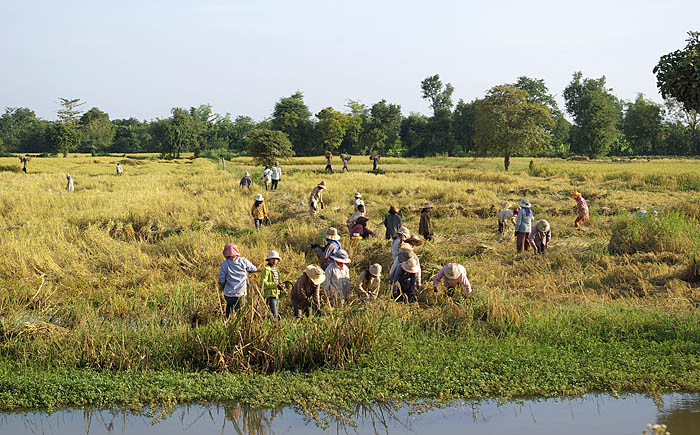
Kep’s sleepy coastal streets offer a break from Cambodia’s temple crowds with a French-colonial charm that still colors its architecture and food scene. The town’s seafood market bustles early, where crab and pepper are the local specialties. Most travelers linger just a day, but Kep deserves at least two nights to explore its quiet beaches, pepper plantations, and colonial villas. Skip the crowded Crab Market stalls at midday and head there first thing to see locals unloading fresh catch. The coastal walk to the nearby Rabbit Island ferry pier is a calm way to spend the afternoon, with views of fishing boats and mangroves. Kep’s pace is slow, but the best way to appreciate it is by renting a motorbike and exploring the pepper farms and small fishing villages nearby. Solo female travelers will find Kep safe and welcoming, with guesthouses around the central plaza offering social atmospheres and easy access to evening food stalls. Kep’s charm lies in its unhurried rhythm and connection to the Cardamom foothills, making it a natural next stop after Tatai River.
Rabbit Island
Rabbit Island offers a quiet coastal escape just a short ferry ride from Kep, with soft sandy beaches and few tourists outside the peak season. The island’s small fishing community welcomes visitors with simple guesthouses and seafood shacks, making it a low-key alternative to Cambodia’s better-known islands. The ferry runs only a few times daily, so plan your arrival and departure carefully to avoid a long wait. Skip the western beaches crowded with day-trippers and head east for more secluded spots where you can snorkel over coral patches and watch fishermen haul nets. The island’s flat terrain makes it easy to explore by foot or rented bike, and local families run small restaurants where you can try grilled fish fresh from the water. Solo travelers will appreciate the safe, laid-back environment and friendly locals who speak some English. Rabbit Island works best as a 1- or 2-night stop after Kep, rounding out a trip that moves from mountains to river to sea.

Planning Your Cardamom Mountains + Tatai River Loop
Navigating Cambodia’s Cardamom Mountains region means balancing rugged jungle tracks with river journeys and coastal stops. The pins cluster around southwest Cambodia’s forested highlands and sleepy coastal towns, demanding a mix of 4WD drives, boat transfers, and local guesthouse stays. Timing river transport and understanding community lodge access are key to a smooth trip.
Cardamom Mountains Trek + Tatai River Community Lodges 7-10 days
Start deep in the Cardamom Mountains at the community-based jungle lodges, where multi-day treks connect villages and forest trails. After 3-4 days, head downstream to Tatai River for floating bungalows that offer a relaxed river experience. Finish with a night or two in Kep for a coastal cooldown. This sequence avoids backtracking on rough jungle roads. Decide between hiring a local guide for the mountain treks or going independently, as guides unlock cultural insights but add cost.
Tatai River to Kep and Kampot Coastal Circuit 5-7 days
Begin at the Tatai River floating bungalows, using the river as your base for kayaking and village visits. Next, drive to Kep for French-colonial charm and seafood markets. Wrap up in Kampot to explore pepper farms and riverside cafés. This order flows naturally downhill and prevents repeated mountain passes. Skip the short day-trip to Rabbit Island unless you have extra time, as it adds transport complexity without much payoff.
Combine with
Extend this loop by crossing into southern Vietnam via the Moc Bai border crossing near Kampot, connecting to the Mekong Delta’s quieter communities. Alternatively, link to Phnom Penh for urban contrast, but expect a 3-4 hour drive from Kampot with limited public transport options.
Off-Beat Travel Realities in the Cardamom Mountains and Tatai River
Off-the-beaten-path travel here hinges on local transport modes, limited infrastructure, and cultural sensitivity. The Cardamom Mountains and Tatai River communities require planning around vehicle types, permit needs, and seasonal road conditions. Understanding these realities keeps your trip efficient and respectful.
Vehicle requirements
The Cardamom Mountains demand a 4WD or high-clearance vehicle. Roads become impassable in the rainy season, and rental companies often exclude coverage for these routes. Tatai River lodges rely on boat transfers, so plan for mixed transport modes. Avoid standard sedans beyond Kampot.
Permits and timing windows
Trekking in the Cardamom Mountains community zones sometimes requires permits arranged by local guides or lodges, especially near protected areas. Book these at least a week in advance. River lodges on Tatai also operate on fixed schedules for boat pickups, so align your arrival times carefully.
Language outside the tourist track
Khmer is dominant, with limited English spoken beyond guesthouses. In Cardamom villages, some locals speak indigenous dialects. Hiring a local guide not only eases navigation but unlocks cultural context and smoother communication.
Road closures and seasonal access
Heavy rains from May to October often wash out jungle roads, closing access to some Cardamom lodges. Tatai River boat schedules can shift with water levels. Check local conditions before arrival and avoid last-minute changes, which are common here.
Off-Beat Travel FAQs for Cambodia’s Cardamom Mountains and Tatai River
1How does this Cardamom and Tatai loop differ from Cambodia’s main highlights?
This loop trades the crowds of Angkor Wat for deep jungle immersion and community stays. Instead of temples, you’ll navigate forest trails, river bungalows, and colonial-era coastal towns. It demands more planning and flexibility but rewards with slower-paced, culturally rich encounters.
2Is Tatai River worth the detour if I have only 5 days?
Skip Tatai if your time is tight. The river experience requires at least two nights to justify the boat transfers and slower pace. Instead, focus on Cardamom treks or the Kep-Kampot coast for a more compact itinerary.
3Can these pins be done solo safely, especially for female travelers?
Yes, solo female travelers can navigate these areas safely by staying at community lodges and using local guides. Avoid night travel on jungle roads and always confirm boat schedules in advance. Kep and Kampot are especially solo-friendly with vibrant guesthouses and social cafés.
4What gear or vehicle do I need that I can’t rent on the main tourist trail?
A 4WD vehicle is essential for Cardamom mountain roads; no standard rental agencies offer this easily in Phnom Penh or Siem Reap. Bring sturdy hiking shoes, insect repellent, and a waterproof bag for river trips. Some lodges provide gear rentals but don’t count on it.
5When does hiring a local guide become necessary here?
Hire a local guide for multi-day Cardamom treks to navigate trails, arrange permits, and connect with communities. For Tatai River stays, guides or lodge staff handle boat transfers and village visits. Solo travelers especially benefit from guides for safety and cultural insight.