


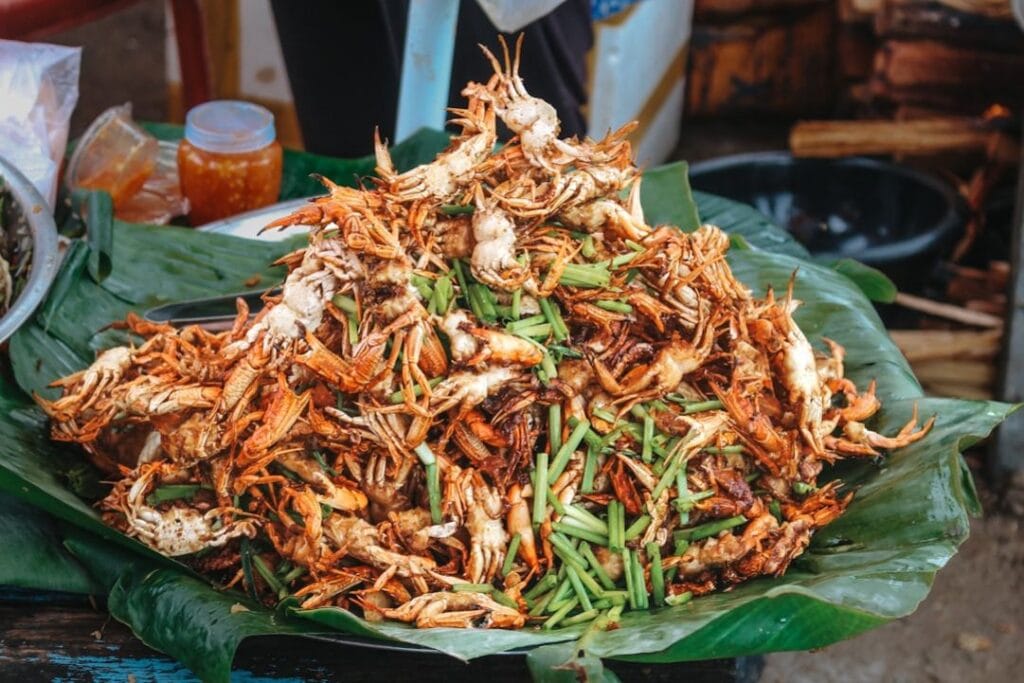
Steam rises from a Mekong fish amok stall at Phnom Penh‘s Central Market, mingling with sharp fermented paste aromas.
Cambodian food centers on fresh Mekong fish and pungent fermented pastes sold at bustling street stalls. Key dishes like fish amok, lok lak, and nom banh chok define daily eating rhythms. The street food scene demands quick decisions and bold flavors, not polished restaurant menus. Expect intense savory balance with heat and sour notes, often from fermented shrimp paste. Markets and cart vendors offer the best access to this energetic food culture. Plan your meals around market visits and avoid tourist traps selling bland versions of these staples.
Quick answer
Eat fish amok for tender Mekong fish in creamy curry, lok lak for stir-fried beef with pepper, nom banh chok for breakfast noodles, and sip palm wine for local fermented sweetness. Try prahok paste stalls for pungent flavor boosts.
Key takeaways
- Eat at Phnom Penh’s Central Market stalls for fresh fish amok and fermented paste snacks.
- Choose nom banh chok at breakfast stalls near riverside markets for authentic morning fuel.
- Plan ~$20-40/day eating street food, focusing on hawker carts and market vendors, 2026.
- Avoid tourist-zone restaurants serving bland lok lak; street vendors offer better flavor and price.
- Book a guided market tour once to understand fermented paste varieties and Mekong fish cuts.
- Drink palm wine from roadside carts in Kampong Thom for a local fermented beverage experience.
Book a food tour or cooking class in Cambodia
Cooking classes, market tours, and street-food walks led by local hosts in Cambodia – skip the tourist menus and eat what locals actually eat.

Local Food & Drinks tool
Open the interactive Cambodia food map – every dish and drink in this guide, plotted on a map with what to order, where to find it, and what it costs.
Why Cambodia eats the way it does

Cambodian cuisine centers on the Mekong River, which supplies abundant fresh fish shaping daily meals. The tropical climate favors fermentation to preserve flavors and add depth. French colonial influence introduced new techniques but local ingredients remain dominant. Public eating thrives here due to urban markets and street stalls serving quick, affordable meals for workers and locals alike.
- Fermented fish paste (prahok) defines savory depth and is used more than soy or shrimp pastes common in neighbors.
- Meals balance fresh Mekong fish with rice and herbs, emphasizing freshness over heavy spices or chili heat.
- Street stalls and markets dominate eating culture, with no fixed mealtimes – people graze all day on small plates.
- Lok lak, a stir-fried meat dish, typifies market stalls rather than formal restaurant menus, showing casual eating preference.
Best for: Solo travelers who thrive on street food and market stalls will get the most from Cambodia’s food culture. Prioritize exploring the central markets of Phnom Penh or Siem Reap for fresh fish and fermented paste stalls.
Must-try dishes in Cambodia

Fish Amok (អាម៉ុកត្រី)
Fish Amok is a thick, creamy curry steamed in banana leaves using Mekong freshwater fish and a paste rich in prahok. The dish balances coconut milk with lemongrass, kaffir lime, and turmeric, creating a mild, fragrant profile that highlights the fish’s freshness. Street vendors often serve it in small cups or leaf containers, making it an ideal snack for grazing. The subtle heat and savory depth come from the fermented fish paste, a cornerstone of Cambodian flavor.
Where to find it: Find Fish Amok at market stalls specializing in Mekong fish dishes and street carts near central markets.
Best for: ideal for lunch grazing at busy market zones
Lok Lak (ឡុកឡាក់)
Lok Lak features tender stir-fried beef cubes tossed in a simple soy and lime sauce, served atop fresh lettuce and sliced cucumbers. This dish cuts through the usual Cambodian flavors with its bright, tangy dipping sauce, often a mix of black pepper and lime juice. Vendors typically grill the meat over charcoal, adding a smoky undertone. The dish is a staple at street stalls, where locals eat it fast and casual, perfectly matching the on-the-go eating culture.
Where to find it: Order Lok Lak from market meat stalls or street vendors near busier commercial districts.
Best for: great for a quick, protein-rich lunch or snack
Prahok Ktis (ប្រហុកខ្ទិះ)
Prahok Ktis is a rich, creamy dip made from fermented fish paste blended with coconut milk, minced pork, and chili. The paste’s pungent depth contrasts with the mild coconut base, delivering a savory, slightly spicy bite. It’s a foundational flavor in Cambodian cooking, often scooped up with fresh vegetables or rice. This dish demands an open palate but rewards with a direct taste of prahok’s central role in street food.
Where to find it: Look for Prahok Ktis in hawker clusters near major markets, especially in Phnom Penh’s Russian Market area.
Nom Banh Chok (នំបញ្ចុក)
Nom Banh Chok is a breakfast noodle dish featuring rice noodles topped with a green fish gravy made from pounded lemongrass, turmeric, and prahok. Fresh herbs, banana flower, and cucumber slices add crunch and brightness. This dish is a Mekong fish showcase, emphasizing fresh, lightly fermented flavors without heavy spices. Vendors in early-morning markets prepare it fresh, making it a popular grab-and-go start to the day.
Where to find it: Buy Nom Banh Chok from street carts lining Phnom Penh’s early morning markets and Siem Reap’s Old Market.
Best for: best as a breakfast or early snack
Kuy Teav (គុយទាវ)

Kuy Teav is a rice noodle soup with a clear, savory broth made from pork or beef bones, topped with fresh herbs, lime, and sometimes fried garlic. The dish balances lightness with umami, often served with thin slices of meat or offal. Street vendors ladle it from large pots during breakfast and lunch, making it a reliable fuel stop. The broth’s subtle depth owes much to slow simmering, a contrast to the intensity of prahok but equally essential to Cambodian street food.
Where to find it: Find Kuy Teav at early-morning soup stalls in central Phnom Penh markets and along busy street-food alleys.
Cha Kroeung (ចា គ្រីង)
Cha Kroeung is stir-fried meat or seafood with kroeung, a fragrant Khmer spice paste made from lemongrass, galangal, turmeric, and kaffir lime leaves. This dish delivers fresh, herbaceous heat without overwhelming chili, focusing on the paste’s aromatic complexity. Vendors often prepare it quickly on charcoal grills, infusing the dish with a smoky edge. Its presence at street stalls reflects Cambodia’s preference for balanced, fresh flavors paired with Mekong fish or local meats.
Where to find it: Order Cha Kroeung from street vendors near riverside markets and busy food alleys in Phnom Penh.
Best for: best for dinner or late-night street eating
Bai Sach Chrouk (បាយសាច់ជ្រូក)
Bai Sach Chrouk is grilled pork marinated in garlic and coconut milk, served on rice with pickled vegetables and broth on the side. This dish offers a mild, sweet-savory profile with smoky undertones from the charcoal grill. It’s a breakfast staple, often sold at early-morning street carts that fire up before dawn. The pork’s tenderness and balance with simple rice make it approachable for any eater seeking a quick, filling start.
Where to find it: Find Bai Sach Chrouk at early morning street carts near Phnom Penh’s Russian Market and local neighborhoods.
Best for: perfect for breakfast or early lunch
Nom Pang (នំប៉័ង)
Nom Pang is Cambodia’s take on a baguette sandwich, filled with pickled vegetables, pate, fresh herbs, and often grilled pork or liver. The French colonial legacy shows in the bread, but locals pack it with local herbs and a punch of prahok or chili sauce for savory depth. Street vendors sell these sandwiches from carts at markets and near offices, making it a popular grab-and-go lunch.
Where to find it: Look for Nom Pang at market stalls and street carts near Phnom Penh’s central business areas and Siem Reap’s Old Market.
Best for: quick lunch or afternoon snack
Kdam Chaa (ក្តាមចា)
Kdam Chaa is stir-fried crab cooked with Kampot pepper, garlic, and palm sugar, creating a savory-sweet glaze with a kick from the peppercorns. The dish highlights coastal seafood, contrasting Mekong freshwater fish with robust flavors. Vendors grill or stir-fry the crab live, serving it hot and messy from market stalls. The pepper’s heat is balanced by the caramelized sugar, making it tempting even for those not usually drawn to seafood.
Where to find it: Find Kdam Chaa at coastal seafood markets and street stalls in Sihanoukville and Kep.
Best for: best for seafood lovers at coastal markets
Samlor Machu Trey (សម្លរម្ជូរត្រី)
Samlor Machu Trey is a sour fish soup made with Mekong fish, tamarind, pineapple, and fresh herbs. The broth delivers a clean tartness that cuts through the natural fish oils, balancing with the sweetness of pineapple and the herbal freshness. This soup reflects the Cambodian taste for balancing sour and savory without overwhelming spiciness. Street vendors ladle it from large pots, perfect for a light, refreshing meal during hotter parts of the day.
Where to find it: Find Samlor Machu Trey at street food stalls near Phnom Penh’s riverside markets and Siem Reap’s Old Market.
Best for: refreshing midday meal or appetizer
Cha Houy Teuk (ចាហ៊ុយទឹក)
Cha Houy Teuk is a popular Cambodian dessert made from agar jelly cubes infused with pandan and coconut flavors, served chilled with crushed ice and syrup. This refreshing street dessert contrasts savory market dishes, offering a sweet, light finish to a day of grazing. Vendors sell it from carts in night markets and along busy food streets, where locals cool off with this simple, satisfying treat.
Where to find it: Buy Cha Houy Teuk from night market dessert stalls in Phnom Penh and Siem Reap.
Best for: ideal for cooling down after spicy meals
Local drinks in Cambodia
Cambodian Iced Coffee (កាហ្វេត្រជាក់)
Cambodian iced coffee features dark roasted beans brewed strong and sweetened with condensed milk, poured over ice for sharp contrast. Vendors often brew it fresh at street carts, balancing bitterness with creamy sweetness that cuts through savory dishes. This coffee’s bold profile pairs well with salty or fried street food, offering a quick energy boost.
When to drink it: Enjoy this iced coffee mid-morning or alongside breakfast dishes like Bai Sach Chrouk for a rich start to the day.
Where to find it: Find Cambodian iced coffee at market stalls and street carts, especially in Phnom Penh’s central markets and busy intersections.
Sugarcane Juice (ទឹកអង្ករ)

Sugarcane juice comes fresh-pressed from street vendors using manual or electric crushers to extract sweet, grassy liquid served over ice. It offers a natural, lightly fibrous sweetness that refreshes between bites of salty or spicy snacks. The juice’s clean flavor cuts through fermented fish pastes, balancing strong savory notes with pure sugarcane brightness.
When to drink it: Sip sugarcane juice anytime during hot afternoons or after sampling pungent dishes like Prahok Ktis to refresh the palate.
Where to find it: Look for sugarcane juice stands in open-air markets and near busy street food clusters where vendors press stalks on demand.
Angkor Beer (ស្រាអង្គរ)
Angkor Beer is Cambodia’s flagship lager, brewed with local rice and hops to deliver a crisp, slightly sweet finish. It’s light-bodied with low bitterness, making it a popular choice for street food fans who want a refreshing, easy-drinking beer. This lager pairs well with grilled fish and meat dishes like Lok Lak or Kdam Chaa, cutting through fattiness with subtle carbonation.
When to drink it: Drink Angkor Beer alongside evening meals or late-night market snacks to cool off after spicy or rich plates.
Where to find it: Find Angkor Beer in bottles or cans at street vendors, market stalls, and small bars around Phnom Penh and Siem Reap.
Palm Wine (ទឹកដូង)
Palm wine is a fermented sap collected from palm trees, offering a mildly sweet, slightly sour taste with low alcohol content. Traditionally tapped in rural areas, it’s served fresh or aged briefly, with natural yeasts creating gentle bubbles. Palm wine’s rustic flavor complements dishes with fermented fish paste like Samlor Machu Trey, enhancing the umami without overpowering.
When to drink it: Experience palm wine during daytime social gatherings or casual meals featuring strong-flavored local dishes.
Where to find it: Locate palm wine at rural market stalls or village vendors rather than urban centers, often served in simple cups or recycled bottles.
Where to eat in Cambodia

Cambodian street food centers on bustling markets and roadside stalls where fresh Mekong fish and fermented pastes shape every plate. Expect vibrant vendor clusters serving dishes all day long, with no fixed mealtimes. Prioritize street and market stalls for the most direct connection to local flavors and rhythms.
Primary setting: Street food stalls and market clusters
These open-air stalls line busy streets and market alleys, packed tightly with vendors grilling, frying, and stirring fresh ingredients. Ordering happens fast – point, pay, and wait a few minutes while your dish is cooked to order. Bring small bills and a reusable bag for takeaway; seating is often plastic stools or standing room only. The atmosphere buzzes with locals grabbing quick meals, negotiating prices, and sharing communal tables.
Night markets
Night markets come alive after sunset with food carts and stalls offering grilled seafood, noodle soups, and sweet treats. Prices stay low, but expect crowds and lively haggling. Night markets are ideal for late dinners and sampling snacks like Cha Houy Teuk.
Small local eateries (khanom jeen shops)
These simple shops specialize in rice noodle dishes like Nom Banh Chok and Samlor Machu Trey. They offer quick sit-down meals with plastic tables and fans, perfect for a casual lunch or breakfast. Prices remain budget-friendly and the pace relaxed.
Roadside grills
Roadside grills focus on fresh Mekong fish and shellfish, often displayed live or freshly caught. Expect smoky aromas and direct interaction with the cook, who grills fish amok-style or stir-fries Kdam Chaa. This setting suits those chasing fresh seafood at street prices.
| Type | Price range (2026) |
|---|---|
| Budget eats | Street food stalls and market vendors: $1 – 4 per meal, 2026 |
| Mid-range | Small local eateries and khanom jeen shops: $4 – 8 per person, 2026 |
| Splurge | Upscale riverside restaurants with Mekong fish specialties: $15 – 30 per person, 2026 |
Eat like a local in Cambodia
Cambodians eat throughout the day with no strict meal times, favoring quick bites from street stalls or markets. Breakfast often happens early with dishes like Bai Sach Chrouk, while lunch and dinner can be flexible, often grazing multiple stalls. The main social meal tends to be a relaxed lunch, especially on Sundays, where families gather around shared plates.
- Use your right hand for eating and passing food – the left hand is considered unclean in this context.
- Pour drinks like Angkor Beer or Palm Wine for others before filling your own glass to show respect.
- Eat from shared dishes such as Fish Amok or Lok Lak with the communal spoon or chopsticks, avoiding direct hand contact.
- Wait for the eldest or host to start eating before digging into shared plates at market stalls.
- Avoid pointing your chopsticks or utensils directly at others; place them neatly on your bowl or plate when pausing.
- When offered Cambodian Iced Coffee or Sugarcane Juice, accept politely even if just a small sip to honor the vendor.
Frequently asked questions about food and drinks in Cambodia
1Is Fish Amok worth trying or is it overhyped?
Yes, Fish Amok delivers tender Mekong fish in a creamy curry that defines Cambodian street stalls. It can be heavy if you prefer lighter dishes, but it’s the best way to taste fresh local fish with balanced spices.
2What does a day of eating in Cambodia cost?
Roughly $10 to $20 per day covers multiple street food stalls and market snacks. Expect to pay about $2 to $4 for dishes like Lok Lak or Nom Banh Chok at Phnom Penh Central Market or Siem Reap Old Market in 2026.
3Is Cambodia good for vegetarians or vegans?
No, vegetarian options are limited. You can find vegetable-based dishes like Cha Houy Teuk dessert or Nom Banh Chok without fish paste, but most savory dishes rely on fish or fermented prahok paste.
4Where can I find the best Lok Lak in Cambodia?
Head to Siem Reap Old Market (Psar Chas) for early-morning stalls serving Lok Lak with fresh stir-fried beef and pepper. These market carts offer the most casual and authentic versions, not formal restaurants.
5What is prahok and why is it important in Cambodian food?
Prahok is a fermented fish paste that defines savory depth in Cambodian cooking. It’s used more than soy or shrimp pastes common in neighboring countries and appears in many street stalls around Phnom Penh Central Market.
6What should I drink with street food like Kdam Chaa or Samlor Machu Trey?
Palm Wine pairs well with grilled seafood like Kdam Chaa from Sihanoukville Serendipity Night Market. For lighter dishes like Samlor Machu Trey, Cambodian Iced Coffee or Sugarcane Juice refresh the palate.
7Is Cambodian Iced Coffee easy to find and drinkable for first-timers?
Yes, Cambodian Iced Coffee is widely available at street stalls and markets. It’s strong, sweetened with condensed milk, and a good energizer during midday market visits.
8How much does street food cost in Phnom Penh Central Market?
Expect to pay around $1.50 to $3 for dishes like Fish Amok or Prahok Ktis in 2026. Drinks like Sugarcane Juice cost about $1, making it easy to graze all day without overspending.
9What are the biggest food mistakes tourists make in Cambodia?
Ordering dishes without specifying no fish sauce or prahok paste leads to unexpected strong flavors. Also, skipping markets like Psar Thmei misses the freshest Mekong fish and fermented paste stalls.
10Can I eat safely at street stalls in Cambodia?
Yes, focus on busy stalls with high turnover in neighborhoods like Siem Reap Old Market or Phnom Penh Central Market. Choose cooked dishes like Lok Lak or grilled seafood to avoid raw or undercooked risks.