


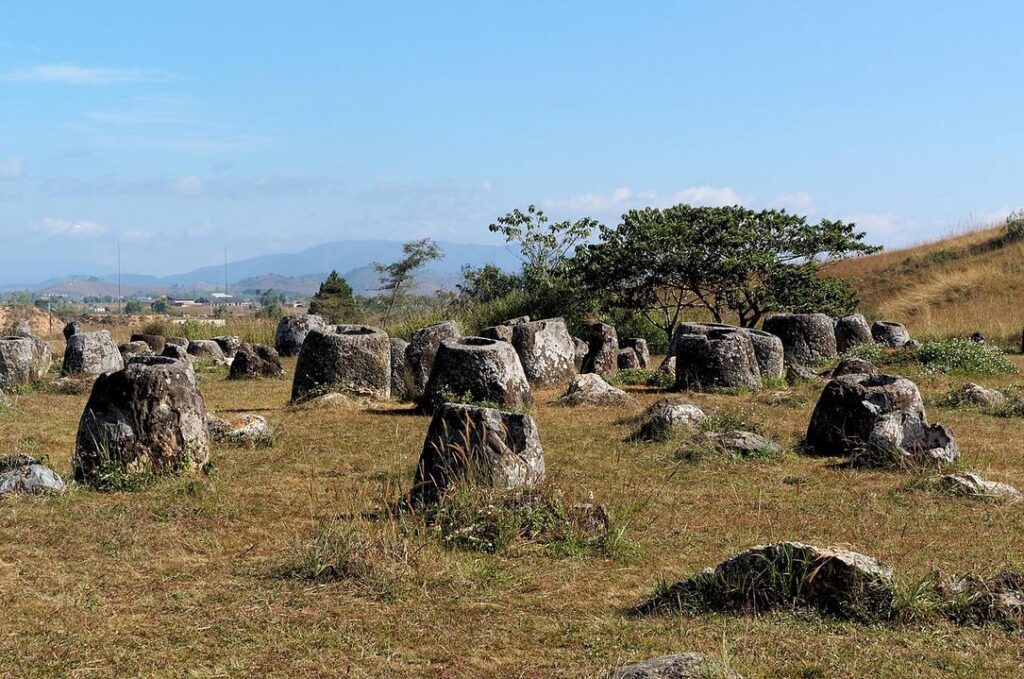
The dry earth crunches underfoot at Site 1, where massive stone jars scatter across the dusty plains near Phonsavan city center.
Plain of Jars is a UNESCO-listed archaeological landscape near Phonsavan, home to thousands of prehistoric stone jars whose purpose remains debated. Visitors come mainly to explore Sites 1 and 3, the most accessible clusters of these enigmatic megaliths. The area’s villages offer insight into local ethnic cultures, with traditional crafts and markets around Phonsavan town. Unlike Laos’s better-known heritage hubs, Plain of Jars focuses on ancient mystery rather than colonial architecture or riverfront charm. The trade-off is a raw, rural setting with limited tourist infrastructure but unmatched access to prehistoric ritual sites. Expect dusty trails, guided walks, and a chance to connect with village life beyond the jars themselves.
Visit Site 1 for the largest stone jars, explore Site 3’s village markets for cultural context, join a guided tour to understand jar origins, and walk the local trails around Phonsavan for authentic rural life.
Key takeaways
- Book a guided tour for Site 1 entry; tickets cost around $10, 2026.
- Stay in Phonsavan town center for easy access to jar sites and markets.
- Visit Site 3 in the morning to avoid midday heat and crowds.
- Local village markets near Site 3 open daily from 7:00 AM to noon.
- Carry bottled water; tap water is unsafe in the Plain of Jars region.
- Hire a motorbike or arrange transport through guesthouses for flexible site visits.
- Avoid weekend crowds by visiting jar sites on weekdays, especially Tuesday to Thursday.
Why visit Plain of Jars
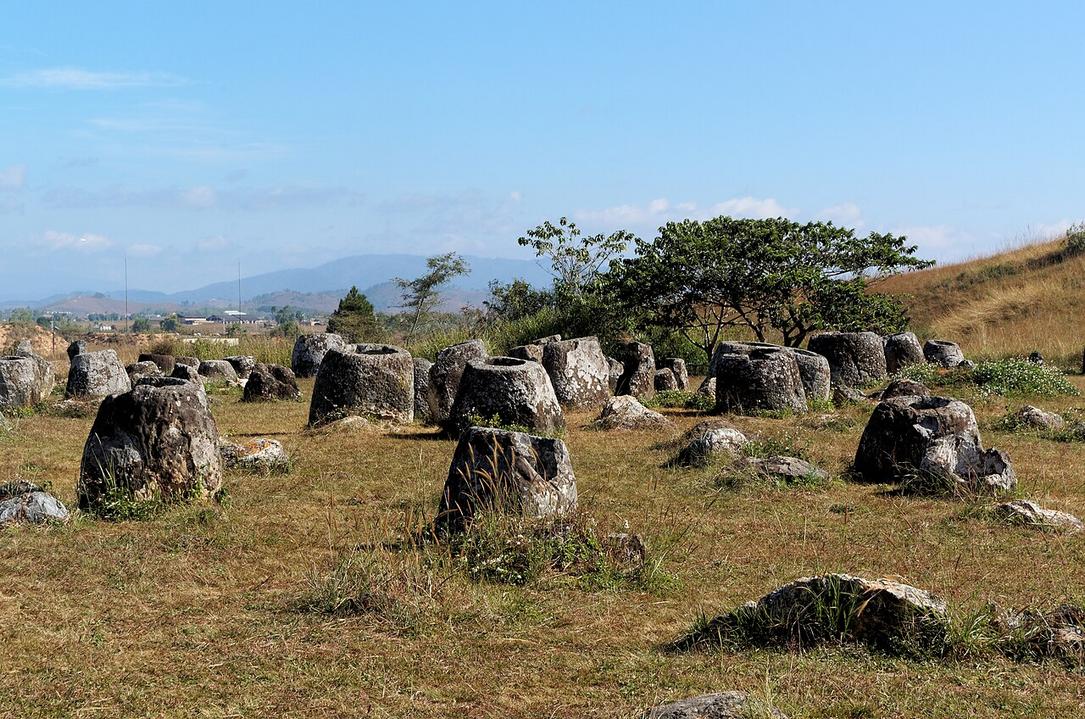
Plain of Jars stands apart from Luang Prabang and Vientiane by centering on a mysterious prehistoric landscape rather than colonial or urban heritage. Its thousands of massive stone jars scattered across the plateau offer a rare archaeological puzzle unmatched elsewhere in Laos. The main site near Phonsavan reveals the scale and enigma of these ancient megaliths, set within rural villages where local life continues alongside excavation. This destination invites you to explore layered history through guided tours and village walks, focusing on cultural context rather than just natural scenery.
- Explore Site 1 near Phonsavan, the largest cleared cluster with hundreds of stone jars in varied sizes and shapes.
- Visit the UXO museum in Phonsavan to understand how unexploded ordnance impacts local archaeology and daily life.
- Book a guided tour with local operators who provide detailed insights into jar origins and regional burial customs.
- Experience village life in Nong Tang, where traditional weaving and farming persist around jar sites.
- Unlike Luang Prabang’s temples or Vientiane’s urban museums, Plain of Jars centers on prehistoric ritual landscapes still under study.
Best for
Solo travelers focused on archaeology and cultural heritage will value Plain of Jars, especially those comfortable with basic transport and rural guesthouses. It suits culture seekers who prioritize immersive village visits over nightlife or polished tourist infrastructure.
Skip if
Skip Plain of Jars if preferring well-developed cities or classic Lao temples; Luang Prabang offers more accessible heritage sites and urban comforts.
Top things to do in Plain of Jars
1. Site 1 Stone Jar Complex ·
Walk among the largest concentration of ancient stone jars, where their scale and weathered surfaces invite questions about their original use and makers.
Site 1 hosts the densest cluster of the massive stone jars, scattered across open fields accessible via a dirt trail from the main parking area. Licensed guides from Phonsavan lead you through the site, explaining the jars’ debated origins and pointing out weathering patterns that hint at their age. The jars range from a few feet to over 10 feet / 3 m tall, many cracked or moss-covered, creating a silent dialogue between nature and ancient craftsmanship. The nearby village offers a glimpse of rural life, with children often playing near the edge of the site. Book on GetYourGuide.
Site 1 offers the most extensive collection of jars in one place, making it the clearest introduction compared to smaller, less accessible sites like Site 2.
- When: Visit early morning between 7:00 AM and 10:00 AM to avoid midday heat and catch softer light on the stone surfaces; dry season from November to April is best.
- Cost: ~$10, 2026
- Duration: 2 hours
- How to reach: Reach Site 1 by motorbike or tuk-tuk from Phonsavan center via Route 7, about 6 miles / 10 km northeast; the dirt road to the site is well marked from the main highway.
Insider tip: If closed
If Site 1 is inaccessible, visit Site 2 for a quieter but still impressive jar cluster nearby.
2. Site 2 Stone Jar Cluster ·
Visit a less crowded but equally compelling jar site featuring dozens of carved stones set in a rural landscape with local village life nearby.
Site 2 lies about 4 miles / 6.5 km southeast of Phonsavan, accessible by a rougher dirt road that deters larger tour groups. The jars here are smaller but more intricately carved, with some showing faint decorative patterns. The site sits near a small ethnic village where you can observe traditional weaving and farming practices. Walking paths wind through the fields, allowing a more intimate pace and interaction with locals who often invite visitors to their homes for tea. Book on GetYourGuide.
Choose Site 2 for a quieter visit that combines archaeological interest with direct exposure to local village life, unlike the more touristy Site 1.
- When: Late afternoon visits from 3:00 PM to 5:30 PM provide cooler temperatures and softer light; avoid the rainy season from May to October when roads get muddy.
- Cost: ~$8, 2026
- Duration: 1.5 hours
- How to reach: Take a motorbike or tuk-tuk from Phonsavan center heading southeast on Route 7, then turn onto the unpaved road leading to the site; expect a bumpy ride.
Insider tip: If closed
If Site 2 is closed, Site 3 offers a more remote setting with taller jars and burial evidence.
3. Site 3 Stone Jar Field ·
Explore a site with some of the tallest jars and evidence of ancient burial practices, offering a deeper layer of cultural context.
Site 3 is the most remote of the main jar sites, located roughly 7 miles / 11 km east of Phonsavan along a dirt track that requires a sturdy vehicle or motorbike. The jars here reach heights exceeding 12 feet / 4 m, standing in clusters that suggest ceremonial use. Archaeological markers highlight burial pits and grave goods found nearby, adding a funerary dimension to the site. The surrounding forested hills provide a quiet backdrop, and local guides often share stories passed down about the jars’ mysterious origins. Book on GetYourGuide.
Site 3 stands out for its archaeological depth, combining impressive jar size with burial context, unlike the more surface-level displays at Sites 1 and 2.
- When: Morning visits between 8:00 AM and 11:00 AM are ideal to avoid afternoon heat and afternoon storms common in the wet season; dry season preferred.
- Cost: ~$12, 2026
- Duration: 2.5 hours
- How to reach: Hire a motorbike or 4×4 from Phonsavan center and follow Route 7 east, then take the dirt road branching off near Ban Phonsavan village; the last stretch is rough and slow.
Insider tip: If closed
If Site 3 is inaccessible, Site 1 offers a larger jar concentration closer to town.
Solo female travel: Avoid traveling alone to Site 3 after dark due to limited transport options and rough roads; arrange guided transport in advance.
4. Phonsavan Archaeological Museum ·
See artifacts recovered from the jar sites and unexploded ordnance displays that reveal the region’s recent history alongside its ancient past.
The Phonsavan Archaeological Museum sits near the town center, housing collections of pottery shards, tools, and human remains excavated from the jar sites. Exhibits also include detailed maps and photographs documenting the extensive UXO (unexploded ordnance) clearance efforts in the region. The museum provides crucial context linking the ancient stone jars to the area’s turbulent 20th-century history. Its compact layout makes it an efficient stop to deepen understanding before or after visiting the jar fields.
This museum offers the best overview of both the archaeological finds and the modern challenges faced by the Plain of Jars, unlike outdoor sites alone.
- When: Open daily from 8:00 AM to 5:00 PM; visit mid-morning to avoid local lunch closures and catch staff for questions.
- Cost: ~$5, 2026
- Duration: 1 hour
- How to reach: Walk or take a tuk-tuk from the central plaza in Phonsavan; the museum is located on the main road through town near the market area.
5. Village Visit near Site 1 ·
Engage with local ethnic communities whose traditions and daily life connect directly to the landscape around the jars.
Villages near Site 1 belong to ethnic groups such as the Hmong and Khmu, whose agricultural practices and crafts have persisted for generations. Visiting these villages involves walking short trails from the jar site, where hosts may demonstrate weaving, basket making, or traditional cooking. Some families open their homes for tea or simple meals, offering insight into daily life shaped by the surrounding ancient landscape. The visit requires respectful interaction and often benefits from a local guide who can facilitate communication and cultural exchange.
This village visit complements the jar sites by revealing the living cultural context, unlike the archaeological focus of the museums and jar fields alone.
- When: Afternoon visits from 2:00 PM to 5:00 PM work best to catch villagers after morning chores; avoid rainy season when trails get slippery.
- Cost: ~$7, 2026
- Duration: 1.5 hours
- How to reach: Reach the village on foot or by motorbike from Site 1; the trailhead is clearly marked near the main jar cluster parking area.
Insider tip: If closed
If village access is restricted, spend more time at Site 2 to experience local farming communities nearby.
Solo female travel: Arrange village visits through a licensed guide to ensure respectful interaction and avoid misunderstandings, especially when traveling solo.
6. Plain of Jars Guided Cultural Tour ·
Book a full-day guided tour that combines multiple jar sites with local storytelling and historical insights.
Join one of the licensed guide outfits in Phonsavan for a full-day tour covering several cleared jar sites, including Sites 1, 2, and 3. The guides provide detailed context on the jars’ debated origins and their place in local history, weaving in stories from nearby villages. The tour also includes visits to small village stops where you can observe traditional crafts and daily life. Expect a mix of walking and short drives on rural roads, with plenty of photo stops and time to explore the stone jars up close. Book on GetYourGuide.
This tour offers the clearest understanding of the jars’ cultural significance compared to visiting sites independently, which lacks the layered historical context and local narratives provided by guides.
- When: Start early between 8:00 AM and 9:00 AM to avoid midday heat; tours run year-round but are best from November to February when the weather is dry and cooler.
- Cost: ~$40-$50, 2026
- Duration: Full day
- How to reach: Most tours depart from guesthouses or the central plaza in Phonsavan; reach the town center by tuk-tuk or motorbike from nearby accommodations.
Insider tip: If closed
If tours are unavailable, visit the Local Market in Phonsavan to connect with regional culture through food and crafts.
Solo female travel: Book tours through reputable operators recommended by guesthouses to ensure small group sizes and avoid late returns on rural roads.
7. Local Market in Phonsavan ·
Browse fresh produce, traditional foods, and handmade crafts to connect with the region’s living culture beyond the archaeological sites.
Explore the bustling market near Phonsavan’s central square where vendors sell fresh vegetables, local herbs, and traditional Lao snacks. The market also features stalls with handmade textiles and simple crafts from nearby villages. This is a prime spot to observe daily life and sample regional specialties like sticky rice wrapped in banana leaves or grilled river fish. The market’s lively atmosphere offers a contrast to the quiet archaeological sites and a chance to engage with locals in a practical setting.
Visiting the market complements the archaeological focus by grounding your visit in the present-day culture and economy of the Plain of Jars region.
- When: Arrive early between 7:00 AM and 10:00 AM when produce is freshest and the market is most active; avoid afternoons when many stalls close.
- Cost: Free to browse; food and crafts priced individually (~$1-$5)
- Duration: 1-2 hours
- How to reach: Walk or take a short tuk-tuk ride from guesthouses in Phonsavan’s historic center to the market near the main plaza.
Insider tip: If closed
If the market is closed or quiet, visit the UXO Awareness Center for a different cultural perspective on the region’s history.
8. UXO Awareness Center ·
Learn about the impact of unexploded ordnance on the region and ongoing clearance efforts that shape local life and heritage preservation.
Visit the UXO Awareness Center on the outskirts of Phonsavan to understand how unexploded bombs from past conflicts continue to affect the Plain of Jars. Exhibits include deactivated ordnance, maps of clearance zones, and testimonies from locals. The center explains how UXO clearance enables safe access to archaeological sites and farmland, connecting heritage preservation with community safety. Staff can provide up-to-date information on clearance progress and local initiatives.
This center offers critical context on the region’s modern challenges, which directly influence access to and preservation of the ancient jars, unlike other cultural sites focused solely on history or crafts.
- When: Open daily from 9:00 AM to 5:00 PM; best visited in the morning to combine with other daytime activities.
- Cost: Free
- Duration: 1 hour
- How to reach: Reach the center by tuk-tuk or motorbike from Phonsavan’s center, located along the main road heading east out of town.
Insider tip: If closed
If the center is closed, spend more time at the Local Market in Phonsavan to explore living culture.
48 hours in Plain of Jars
This two-day plan focuses on exploring the ancient stone jars and the surrounding cultural landscape, designed for a culture seeker who values heritage and village life. It balances archaeological sites with local markets and traditional crafts, offering a deep dive into the region’s layered history and living culture.
Day 1
Morning
Start early at Site 1 to catch the morning light illuminating the stone jars, avoiding the midday heat and crowds that build after 10:30 AM. Arrive just after 8:00 AM when the site opens, and hire a local guide near the entrance to unlock the debated origins of these massive jars. After the visit, walk to the nearby village market where vendors sell fresh sticky rice and grilled river fish, perfect for a light, authentic breakfast.
Afternoon
Spend the afternoon at Site 2, a short 15-minute drive from Site 1, where the jars are more densely clustered and surrounded by small villages. Stop for lunch at a family-run kitchen in the village of Phonsavan, ordering Lao larb with fresh herbs and a side of tam mak hoong (papaya salad). Post-lunch, explore the village’s weaving workshops, where locals still use traditional looms, offering insight into the region’s craft heritage. Return to Phonsavan town by late afternoon to rest before evening.
Evening
Head to the central plaza in Phonsavan for sunset, where the fading light casts long shadows on colonial-era buildings. Dine at a street-side stall specializing in khao soi, a northern Lao noodle curry, priced around $5-$7, 2026. The evening buzz here is low-key but lively enough to observe local life winding down, with vendors packing up and families gathering for quiet dinners.
Day 2
Morning
Shift gears with a morning visit to the nearby village of Ban Phakeo, about 7 miles / 11 km east of Phonsavan. Arrive by 8:30 AM to explore the village’s rice terraces and meet artisans who carve smaller stone jars and ritual objects. This slower-paced start contrasts with Day 1’s archaeological focus and offers a hands-on look at how the jar tradition influences local culture today. Grab a coffee at a roadside stall serving Lao-style iced coffee with condensed milk before heading back.
Afternoon
Dedicate the afternoon to Site 3, the largest and most remote jar site, reached by a 30-minute ride on unpaved roads. The hike around the site takes about two hours and reveals jars scattered across hilltops, surrounded by forest and small hamlets. Pack a picnic lunch from Phonsavan’s central market – fresh baguette sandwiches with local pork and herbs – to eat on-site while soaking in the quiet rural atmosphere. Return by 5:00 PM to avoid the fading light on rough roads.
Evening
For your final evening, explore the night market in Phonsavan’s Old Quarter, where vendors sell grilled meats, sticky rice, and seasonal fruits. Sample grilled river fish and fresh spring rolls at stalls clustered near the main intersection, spending around $6-$8, 2026. The market’s lively chatter and lantern-lit stalls offer a different cultural rhythm than Day 1’s plaza scene, perfect for a relaxed final night.
If you have a third day
Add a morning walk through the village of Ban Phonsavan, focusing on its small temples and traditional wooden houses, to see daily life beyond the tourist trail. Alternatively, visit a local school or community center offering short Lao language lessons and cultural workshops, deepening your connection to the region’s living heritage.
Best time to visit Plain of Jars
Quick answer
Visit from April to June and October to early December for the best weather and fewer tourists.
| Months to go | April to June, October to early December |
|---|---|
| Months to avoid | July to September due to heavy rainfall and muddy conditions. |
The climate in Plain of Jars features a tropical monsoon pattern, with average temperatures ranging from 60°F / 16°C to 85°F / 29°C. April to June offers warm, dry conditions ideal for exploring the archaeological sites and enjoying outdoor activities. The rainy season from July to September can lead to trail closures and muddy paths, making it difficult to navigate the area. October to early December sees a return to drier weather, perfect for visiting the stone jar sites without the crowds. Expect pleasant temperatures and clear skies during these months, enhancing your experience of the local culture and heritage.
Average temperature (°F)
Monthly weather
Cool and dry, great for exploring.
Mild weather, ideal for visits.
Warm and pleasant, good for tours.
Warm and dry, perfect for sightseeing.
Hot with increasing rain, prepare for mud.
Warm but rainy, trails may close.
Heavy rain, difficult conditions.
Continued rain, avoid outdoor activities.
Wet and muddy, not ideal for visits.
Drying out, good for exploring.
Cool and dry, excellent for tours.
Cool and pleasant, great for visits.
How to get to Plain of Jars
Nearest airport
Xieng Khouang Airport (XKH), 3 miles / 5 km from Plain of Jars
From the airport
Take a metered taxi from the airport to Plain of Jars for around $10, 2026. Alternatively, use the public airport bus for about $5, 2026, which operates multiple times daily.
Other ways to arrive
- Vientiane: Take a direct bus to Phonsavan, around 8 hours, costing $15-$20, 2026.
- Luang Prabang: Use a minivan service to Phonsavan, approximately 6 hours, costing $15, 2026.
- Pakse: Fly to Xieng Khouang Airport, then taxi to Plain of Jars, total travel time around 5 hours, costing $50-$70, 2026.
Getting around Plain of Jars
The best way to explore Plain of Jars is by renting a bicycle or hiring a local driver. Both options provide flexibility to visit the jar sites at your own pace.
- Rent a bicycle for around $3 per day, ideal for solo travelers wanting to explore independently.
- Hire a local driver for about $30 for a half-day, perfect for visiting multiple sites efficiently.
- Use tuk-tuks for short distances, costing around $5-$10 depending on the destination.
- Walk between nearby sites if you’re staying in the central area; it’s safe and offers a local perspective.
Day trips from Plain of Jars
These day trips enhance your experience of the region, offering unique insights into Laos’s culture and history.
Muang Khoun
Visit the ancient capital of the Xieng Khouang Province.
Why: Explore the historical sites, including the Wat Phia Wat temple and the remains of the ancient city, which reveal Laos’s rich heritage.
Skip if: You have limited time in Plain of Jars.
Phou Khao Khouay National Park
Experience the natural beauty and wildlife of Laos.
Why: Hike through lush forests and enjoy stunning views, making it a great escape from archaeological sites.
Skip if: You’re not interested in outdoor activities.
Plain of Jars Site 3
See one of the largest and least visited jar sites.
Why: Enjoy a quieter experience with fewer tourists, allowing for better exploration and photography.
Skip if: You prefer the more popular sites.
Combine Plain of Jars with
Extend your journey by connecting Plain of Jars with these nearby destinations for a richer experience.
Plain of Jars to Luang Prabang Plain of Jars, Phonsavan, Luang Prabang
Travel from Plain of Jars to Luang Prabang for a blend of history and vibrant culture, with a bus journey of around 6 hours.
Plain of Jars to Vang Vieng Plain of Jars, Phonsavan, Vang Vieng
Head to Vang Vieng for stunning landscapes and adventure activities, taking about 7 hours by bus.
Where to stay in Plain of Jars
Compare prices across booking sites on the map below and see which neighbourhood fits your plans.
Plain of Jars offers a variety of lodging options that cater to different traveler types. The historic center is ideal for those wanting to be close to local attractions and dining. For a quieter experience, consider the areas near the archaeological sites, which provide a more relaxed atmosphere. If you’re looking for budget options, the guesthouses along the main road are popular among backpackers. Mid-range travelers will find comfortable family-run hotels scattered throughout the town.
Historic Center
Budget accommodations primarily consist of guesthouses and hostels that offer dormitory-style rooms or basic private rooms. These properties provide essential amenities and a social atmosphere, making them perfect for solo travelers or those looking to meet others. However, they may lack some comforts like air conditioning or en-suite bathrooms.
Insider tip: Look for guesthouses that offer breakfast included in the rate; it’s a great way to save on meals while enjoying local flavors.
Near Archaeological Sites
Mid-range options include family-run hotels and boutique guesthouses that provide more comfort and personalized service. Many of these properties feature cozy rooms, often with local decor, and some may offer guided tours or transportation services. While they provide a good balance of comfort and price, they might not have extensive amenities like pools or gyms.
Insider tip: Choose accommodations that offer bike rentals; exploring the nearby sites on two wheels is a fantastic way to experience the area.
Scenic Overlook
For those willing to spend more, splurge options typically include boutique hotels or lodges with upscale amenities and stunning views. These properties often feature well-appointed rooms, on-site dining, and may provide guided tours of the Plain of Jars. While they offer a luxurious experience, they can be significantly pricier than other options.
Insider tip: Request a room with a view of the jars; the sunrise over the landscape is breathtaking and worth the extra cost.
Where not to stay
Avoid the area near the bus station; it tends to be noisy and lacks charm, especially at night.
Solo female travelers
Consider staying at a family-run guesthouse in the Historic Center, which is well-lit and offers a friendly atmosphere for solo female travelers.
Booking through these links supports Pack Lightly at no extra cost to you.
Where to eat and drink in Plain of Jars
Plain of Jars offers a distinct culinary scene shaped by its unique geography and local communities. The region is known for its rice-based dishes and the influence of the Hmong and Khmu cultures, which bring a variety of flavors and cooking styles. Expect to find hearty meals featuring locally sourced ingredients, particularly rice and fresh vegetables, in family-run eateries and bustling markets.
Must-try dishes
Khao Niew (Sticky Rice)
A staple dish made from glutinous rice, often served with various sides.
This dish is a fundamental part of daily life in Plain of Jars, reflecting the local agricultural practices and cultural significance of rice. It fits the category of community-specific dish as it is integral to Hmong and Khmu traditions.
Insider tip: Pair it with spicy dipping sauces for an authentic taste.
Tam Mak Hoong (Papaya Salad)
A spicy salad made from shredded green papaya, tomatoes, lime, and chilies.
This dish showcases the local preference for fresh, vibrant flavors and is often prepared with a regional twist using local ingredients. It represents a city signature dish, popular among locals and visitors alike.
Insider tip: Ask for extra chilies if you can handle the heat!
Larb (Spicy Meat Salad)
A traditional dish made with minced meat, herbs, and spices, served with sticky rice.
Larb is a well-known dish in Laos, but in Plain of Jars, it often features locally sourced meats and herbs, making it a regional favorite. It falls under the category of city-known dish.
Insider tip: Try the version made with duck for a unique flavor.
Beerlao
The national beer of Laos, known for its light and crisp flavor.
While it’s a national beer, Beerlao is especially popular in Plain of Jars, where locals often enjoy it with meals. It represents a local-only brand that embodies the drinking culture of the region.
Insider tip: Enjoy it chilled with your meal for the best experience.
Local drinks
- Lao CoffeeHead to local cafes in Phonsavan, where you can enjoy a cup while chatting with locals.
Strong coffee often brewed with sweetened condensed milk.
Where to eat – by neighborhood
Central Market Area
This bustling area is filled with food stalls and small eateries offering a variety of local dishes and snacks.
Insider tip: Order a mix of dishes to share with friends, as locals often do to enjoy a variety of flavors.
Phonsavan Street Food Stalls
A lively spot where vendors serve freshly prepared meals, from grilled meats to spicy salads.
Insider tip: Look for the stalls with the longest lines; they usually serve the best food.
Daily budget for Plain of Jars
Plain of Jars offers a unique blend of affordability and cultural richness, making it a standout destination in Laos. While costs are generally low, the influx of tourists can drive up prices for certain activities and accommodations.
Shoestring
- lodging – Stay in a basic guesthouse or dormitory.
- food – Eat at local markets and street vendors.
- transport – Use local buses or shared taxis.
- activities – Visit the main jar sites with a budget-friendly guide.
- buffer – For unexpected expenses.
Trade-offs: Expect basic amenities and limited dining options.
Comfort
- lodging – Book a mid-range guesthouse with better facilities.
- food – Enjoy meals at local restaurants with a wider menu.
- transport – Use private transport for convenience.
- activities – Join a guided tour for a deeper understanding of the sites.
- buffer – For small purchases or tips.
Trade-offs: You’ll enjoy more comfort but may miss out on some local experiences.
Splurge
- lodging – Stay at a well-reviewed boutique hotel.
- food – Dine at higher-end restaurants featuring local cuisine.
- transport – Hire a private driver for the day.
- activities – Participate in exclusive tours or workshops.
- buffer – For additional expenses.
Trade-offs: This tier offers luxury but can overshadow the local vibe.
Money-saver tip
Eat at the local markets, where meals can be as low as $2, 2026.
Splurge that’s worth it
Consider a guided tour of the jar sites for around $15, 2026, which provides valuable insights into their history.
Skip to save
Avoid overpriced souvenir shops near the main sites; local markets offer better prices and authentic items.
Practical tips for Plain of Jars
Money
Cash or card. Cash is king in Plain of Jars, especially at local markets and small eateries. Many businesses, including some guesthouses, still operate on a cash-only basis, so keep enough Lao kip on hand.
ATMs. ATMs are available in Phonsavan, but they may charge foreign transaction fees. Stick to ATMs from major banks like BCEL for better reliability and access.
Tipping. Tipping is not customary, but rounding up the bill is appreciated. For example, if your meal costs around $5, leaving a tip of $1 is a nice gesture.
Safety
Plain of Jars is generally safe for travelers, but it’s wise to stay aware of your surroundings, especially in crowded areas. Avoid walking alone at night in less populated neighborhoods.
Local warnings:
- Watch out for sandflies in the warmer months, especially near the jars.
- Be cautious of uneven terrain at archaeological sites; wear sturdy shoes.
Connectivity
Mobile data. Mobile data coverage is decent in Phonsavan, with options from local providers like Lao Telecom. Expect to pay around $10-$15 for a monthly plan with sufficient data.
Wi-Fi. Wi-Fi is available in many cafes and guesthouses, particularly around the central plaza. Look for places like the cafes near the main market for reliable connections.
Language
Main language: Lao. English level: English is spoken in tourist areas, but proficiency varies among locals. You may find it challenging to communicate outside of these zones, so learning a few basic phrases can help.
Cultural notes
- Dress modestly when visiting religious sites; shoulders and knees should be covered.
- Always ask for permission before taking photos of people, especially in rural areas.
Solo female travel
Solo female travelers can navigate Plain of Jars with confidence, as the local community is generally welcoming. However, it’s advisable to stick to busier areas in the evenings and choose accommodations with good reviews.
- Transport: Public transport options are limited after dark, so plan to return to your accommodation before nightfall.
- Meeting people: Consider staying at hostels that cater to solo travelers; they often have social activities that make it easy to meet others.
Frequently asked questions about Plain of Jars
1Is Plain of Jars worth visiting?
Yes, Plain of Jars is a unique archaeological site with thousands of ancient stone jars. The mystery surrounding their origin and purpose makes it a fascinating destination.
2Is Plain of Jars better than Luang Prabang?
No, while Plain of Jars is intriguing, Luang Prabang offers a richer cultural experience with its temples, markets, and vibrant atmosphere. Prioritize Luang Prabang if time is limited.
3How many days should I spend at Plain of Jars?
Two days is ideal. This allows time to explore the main sites, such as Site 1 and Site 2, and enjoy the surrounding countryside.
4What is the best time to visit Plain of Jars?
Visit from November to February for cooler, dry weather. This is the peak season for tourism, with temperatures averaging around 70°F (21°C).
5Do I need a car to get around Plain of Jars?
Yes, renting a car or hiring a driver is recommended for convenience. Public transport options are limited, and a car allows you to explore at your own pace.
6Is Plain of Jars safe for solo female travelers?
Yes, Plain of Jars is generally safe for solo female travelers. Stick to well-populated areas and avoid traveling alone at night for added peace of mind.
7What is the cost of a day in Plain of Jars?
Roughly $65 per day, including accommodation, meals, and entrance fees. Budget for guided tours to enhance your experience.
8Are there any health risks specific to Plain of Jars?
No significant health risks are associated with visiting Plain of Jars. However, it’s advisable to drink bottled water and be cautious of street food.
Estimate your daily budget
See realistic daily costs by tier and category.
More in Plain Of Jars